Letter from the Editor
By John Hardberger

SECOND PLACE NONFICTION IN THE 2016 SUMMER CONTEST
This essay’s voice is so sure-footed, so eloquent, the syntax so full of authority even while depicting fear and vulnerability, that it immediately creates a consciousness of the world that I, as reader, am quick to trust. I admire, too, its “bridging” of various divided senses of identity: half-student/half-teacher; half-apprentice/half-master; half-resident/half-outsider; half loving/half-wary. I love its scope and ambition. – Debra Monroe
He stepped silent into my classroom, having missed the first day, having signed up late. And I asked him a question for which there is no proper response:
Are you in the right place?
What I recall were not his words but his voice, an accent I could not immediately place, and mannerisms transcending generations.
After class we spoke, and he listened very close it seemed, though later he would tell me that most of what I said sunk in while some became lost.
Lost to where, I do not know.
↓
In college in the Green Mountains, I lived in a house on a road with no street lights that dipped and curved and dipped again. On nights when the moon was full I would read while walking—scripts and essays and poems. There were rarely any cars. I would look up from the page and find that I had wandered, without feeling it, from the tall grass on the side of the road to the middle of the street, moonlight on the book in my hand.
→
In writing, I need always a middle tense: not so far removed as the past implies, nor so far as the future. The present satisfies me neither. I need a tense that glances every which way—a tense that implies and infers, that pulls back the curtain a little but does not yet reveal. Perhaps this tense lies in languages not my own. I would not know, as I speak no other language but English fluently—a fact I am aware is one of my shortcomings.
I am drawn to writing in translation because of this. In books that have been translated into the language I speak and write, the language in which I think and perceive, I gain at least the awareness that I am glimpsing, if not fully revealing, another country’s relingos.
←
In graduate school, I study with a professor who says people are more interesting when they read books not written in America. I get excited about translation, do a little myself, publish, give a talk at a conference. I meet translators who are generous of spirit. My bookshelves fill with Tsvetaeva and Pasternak, Zagajewsky, Pavese, Isaac Babel, and Celan. I say goodnight to the English language for a while, because even though I am reading these authors in English, it is not the English that surrounds me every day.
I read Maggie Nelson: “I aimed to be a student not of longing but of light.” These words sidle close to where I would like to begin—back to another day, earlier on:
Here, at my writing desk, on a winter night in Chicago, in my early twenties: an instructor of longing, and a student of light.
↑
Why cities in winter? I will try to explain this.
↓
Let me ground myself:
A graduate student, an instructor of college writing, aware of the falsity of assuming roles. In my classrooms we spread the tables apart so I can walk down the middle between them. I never stay behind the table in front where a teacher traditionally goes. As a student I am quiet, brooding—as an instructor, wildly gestural.
On walks from the train to the school I glance in all the storefront windows to get a glimpse of myself—my gait, my stance, whether I lean forward or back with the wind.
I facilitate lengthy discussions on persona, assigning texts seemingly dense for first-year writing: Maggie Nelson’s Bluets, Fernando Pessoa’s The Book of Disquiet. We discuss the etymology of the word persona, its Portuguese connections to the name Pessoa.
My students make masks and short films, spoken word pieces and paintings. I ask them if they think my teacher persona (so loud, so peppy, so jolly) is the only persona I have. They shake their heads no, but that is where that thread of conversation must stop, as they mustn’t know the rest of me. The rest is off limits.
The rest: blue jeans and cutoffs, ripped shirts and skinned knees, hungover ordering breakfast from bed.
The closest I get to sharing more of me is when I tell my students that I have failed.
I am guessing they think I mean in the past…that I am put together now, that I have my head on my shoulders and walk in a straight line, that I go to bed early and get up on time, don’t gossip and say what I mean.
I am not supposed to tell them I mean right now, today, last night, this morning, this very minute, every second in which I attempt to speak the truth but falter.
→
His favorite book is Ulysses.
Her favorite author is Woolf.
He likes discussing good movies.
She takes solitary walks.
He wants to be the best.
She believes in no Plan B.
She likes The Fault in Our Stars.
He likes sadness and relief.
He likes to gather history.
She likes the colors yellow and blue but not together.
He likes possibilities that can’t happen but do in his head.
She likes learning about religious cults.
He likes rolling the perfect cigarette.
She likes the nineteenth century.
He likes tattoos. She likes tattoos.
She wants to know why women orgasm less often than men (or if they do).
She wants to know what it means to be happy.
He wants to know what happiness means.
She likes writing. He likes writing too…
←
He had come, like so many each year, to the city to study in hopes of finding like-minded people. But in this he said he found himself disappointed. The person who becomes a reader before they leave home often experiences this—non-readers shroud them in invisibility while, to other readers, they become much more capable of being seen.
↑
At nineteen I was silent.
Full of a fear I did not know how to name, I took to writing secretly.
I studied in the mountains where I could be contained.
I admired my young students for living in high-rise buildings downtown, for roaming an unfamiliar city after dark. But I did not envy them.
In moving from the mountains to the city I allowed myself to mourn for a year, even while I did my best to put on a comforting face for my students that first semester I taught writing. I felt a lack of agency, felt I would be stuck forever between the walls of a spacious city which somehow seemed to be closing in.
At nineteen I performed the act of city living, for two months in winter, in a city small and quiet but nevertheless looming to me then. Now, it is a city I hold in my hand on evenings I remember teaching myself how to breathe: standing with my back against the wind beside the reflecting pool outside a church. How boots sound on brick.
I performed this life but did not live it really, did not have an address of my own or a paying job. By night I zipped myself into a sleeping bag on a couch in a friend’s apartment; by morning I zipped the sleeping bag into a trunk out of sight and slipped out of my friend’s routine, as if I’d never been there at all.
I went back to reread the city. I went back and two of my students were going back too. Throughout that semester we had several of those touchstone conversations: I lived at__________ and my school was __________ and you know the __________ and riding the__________ line to the __________ and yes, nodding, yes I know, yes, as we placed ourselves in those spaces so many miles away from this classroom without any windows.
I loved that city as I’ve not loved many things since. I loved its quietness and light, its walkability and curving, cobblestone streets. The city opened itself to me during a year in which I needed to learn how to roam, to get lost in all the ways Walser and Benjamin say is best. No technology to guide me, I learned how to navigate that city’s avenues through the intentional practice of getting lost. There simply was no other way.
↓
I wanted my students to learn how to get lost, to learn it is the only way to learn.
This proved challenging.
I instructed them to take night walks with their hands cupped around their eyes, to write about the ways in which we see.
I said it had to be night because darkness accentuates fragments of light.
And though some reached revelation (How much of the world passes me by each day? How much goes unnoticed?), others returned to class saying they’d felt unsafe; they’d walked through unsafe neighborhoods or crossed the street without looking both ways.
I felt I’d failed then, failed them, as this taught me I might not be able to teach them how to let exteriors fall away—how to follow their own inner rhythms, how to carve out space within landscapes already named.
→
Among the mistakes I continue to make:
Bringing strangers to my landscapes, in hopes they will read these spaces and become strangers no longer, read the space the way I read it and, in turn, read me.
←
Sitting on a pier at the harbor in Chicago, a cold winter evening:
The sky got orange, then violet, and then a deep blue, until the buildings across the lake solidified through the fog. Our feet dangled just above the surface of the water, the water a shade of bluish green. I feel I might slip into it, he said.
He asked me, What is this place? and I told him.
I think I want to remember, he said, laying claim over the rocks; the lighthouses; the pier. I want to remember this place. To come back to it.
“I come back to the geography of it.” –Charles Olson.
↑
“Rereading is not like remembering,” writes Valeria Luiselli. “It’s more like rewriting ourselves: the subtle alchemy of reinventing our past through the twice-underscored words written by others.”
Luiselli’s book Sidewalks, retitled from the Spanish Papeles Falsos, is one I re-read and reread. Between its pages lies a postcard depicting La Calavera Catrina, by the Mexican artist Jose Guadalupe Posada, purchased at some point in Aguascalientes or Mexico City perhaps, pulled from a jacket pocket on a Chicago street in winter, given to me.
Luiselli’s book came in the mail a week later.
Luiselli writes:
“Rereading begins in the comments written in the margins, the underlined phrases and scribbled footnotes; but especially in the objects left behind between the pages.”
I know that many years from now, I will unpack this book from some box while arranging the shelves in a new apartment, or cabin, or home, in some new city or perhaps another country. And I will run my hand across the postcard’s matte finish. And I will remember that I was a girl who walked quickly through cold city streets, that I burrowed in the sleeves of an old woolen coat, that this gift was given for an idea and not for me.
↓
I place objects inside books intentionally, wanting them to live there—a sheet of stickers inside Anna Karenina—to suffuse moments I craft into nostalgic ones before they are even gone. This has always been my way—more a re-living than living.
And yet I can do nothing but trust this instinct, serendipitous as it always proves to be—I found Sidewalks, or rather it found me, only after I read his essays on Mexico; on seeing and walking; on cities and spaces.
Some books are so exactly what a young writer desires to accomplish themselves that they can only crawl into bed, turn out the light, and go to sleep.
Other books, however, one wants to be in conversation with.
→
I think I am re-reading and re-reading Luiselli because I see myself in her sentences, the way I see myself in the student who stays after class just to talk.
The student who stays only stays for the length of a season, sometimes a year, but mostly is gone again once a new semester begins.
And so I begin, not replacing but accumulating these students, the same way I do with lovers and friends: all the Tylers with their skateboards and untapped potential; all the Sarahs who needed more than I knew I should give.
Luiselli: “There are things that produce nostalgia in advance—spaces that we know to be lost as soon as we find them—places in which we know ourselves to be happier than we will ever be afterwards. In such situations, the soul twists itself around, as if in a voluntary simulacrum of seeing its present in retrospect. Like an eye watching itself look from the perspective of a later time, it sees that remote present and yearns for it.”
←
Christmas:
I visit my parents’ house, open a large cardboard box in the closet of my former bedroom, pull out a packet of loose essays written at age seventeen, written before I knew what I was—what an essay was. On the bottom of each one, my teacher’s comments told me.
These early attempts of mine are earnest: they are brief; their sincerity bursts from the page. And I see my students in them too—their halting uncertainty, their moments of reckless abandon. I want to make hundreds of copies of all of these essays, ship them to every student I’ve ever had, say See, I never knew either—you’re okay. You’re okay.
↑
In the café of a bookstore late at night, his English falters.
He tries to speak but cannot find the words he wants to use, words he wants me to understand. Do you really not know any Spanish?
↓
He enters my apartment, where he’s come to take my books away. I am leaving the city for a new, unfamiliar place, and I am giving my books away.
I will keep the Luiselli, with the postcard he gave me, but I will give him nearly everything else. His books are all in Mexico, and he needs to read more, I say.
He stands beside my bookshelf and gazes at the room:
Why does this look exactly like the place where you would live? he asks.
Because it is, I say.
Because I do.
And because—I want to say this, but do not—because I am rooted in cliché, as you have written you are rooted in cliché, and I surround myself with all those things I love.
And, while sitting at the kitchen table drinking small cups of green tea:
You speak lower just before you say something eloquent.
As if I am afraid of who will hear.
As if I am afraid of who will listen, my language falters just before I say something real.
→
Luiselli: “Perhaps learning to speak is realizing, little by little, that we can say nothing about anything.”
←
I get off the bus in Chicago after a translation conference in Milwaukee and walk straight to the library downtown.
I set my suitcase down at the head of an aisle in French and begin crawling down it reading titles. I find a poet who has never been translated into English.
My French is rusty, not having spoken it frequently since I was sixteen.
I believe if I practice rigorously enough, meaning will return to me.
I check out the book and get on the train to my apartment on the north side where, for the rest of the evening, I pace between the living room and kitchen reading French aloud.
↑
Among the places I am student:
The water’s edge, when English fails. When English fails, when roles recede, I give myself over. I give myself over to the waiting lecture. I hope to succeed with minimal effort because to exert effort at the water’s edge would require being seen.
↓
There have been other places, too.
In high school International Relations class, I failed the first time I took the Map Test. I forgot to study. Or, I just didn’t. I labeled only seven countries. The least amount of effort. But my teacher was kind and let me re-take it. For weeks, I breathed maps and maps. Tested myself endlessly until I knew. One hundred and twenty-nine countries.
→
On the second day of a new semester, I lead a discussion on vulnerability.
I tell my students I am someone who allows herself to be hurt repeatedly, but that I still believe it is the only way to live.
The Education major says, What about the people who fail because they have no resources?
I tell her yes, there are many kinds of failure, but that the world does not want us to discuss any of them.
←
I tell his class we are going to read The Book of Disquiet by an author named Fernando Pessoa and he says, Fernando Pessoa or one of his heteronyms?
After class he tells me of a book called Blindness in Portuguese that translates in English to Essay on Blindness though it is a novel.
I ask him how he knows about the heteronyms and he describes a bus ride the summer before, from Aguascalientes to his grandmother’s house in Mexico City—reading a collection of poems, he discovered Alvaro de Campos.
↑
He wrote of walking blind, of his desire to see, of his first attempt to walk to the Mexican neighborhood in Chicago and the dead-end street.
He asked me what I loved about Chicago and I pointed to the bridges in suspension.
↓
It was in that tiny city I pretended to live in that I discovered The Book of Disquiet. One evening while leaving my friend alone in her space, I go to the closest bookstore where I spend nearly every evening reading but never buying.
It is a large bookstore and easy to sit in unnoticed. I have very little money and no intention of purchasing anything. But somehow I pull out The Book of Disquiet, and something about it is familiar to me, though I don’t know why.
In my blindness, I wander to the register and purchase it, then make my way out of the store and onto a city bench in the dark.
→
On that street where I lived in the Green Mountains, on the nights when I woke in the middle of that moonlit road, I would stand and look up at the sky.
I couldn’t understand how I had done it, how I could have been so wrong.
I thought I’d been diligent, clinging to the side of the street within the weeds.
Instead, I had unconsciously led myself to wander down the middle.
←
I live in a city now, a city with a grid system and four diagonal streets cutting through which everyone who lives here can name.
It took a long time for me to learn this grid system. The friends I made when I moved here assured me that as long as I knew the grid I would never get lost.
They said this to comfort me, knowing I’d moved here from the mountains. But I resisted this information; I resisted the grid. And I got plenty lost.
I still get lost when I find myself on those diagonal streets. I get lost on diagonals now because I have adjusted my body to the grid and the grid contains me.
↑
He got lost when I said, Meet me at the theatre, when I said, Meet me by the café.
I said he hadn’t explored enough yet.
It was winter and we had both spent Christmas in that tiny curving cobblestoned city, missing one another in bookstores by only an hour.
I went back to that city to re-read but found I could not—my boots too suited to the grid, my eyes no longer blind.
↓
If we wanted anything from each other it was this: permission to see.
→
If it seems as though some of these fragments are written in a language full of longing, it is because I wish to use a different language—one that is not my own but that I can nestle into, like a city I only perform the act of living in.
I want to crack this language open till a bright light from Lisbon flickers in.
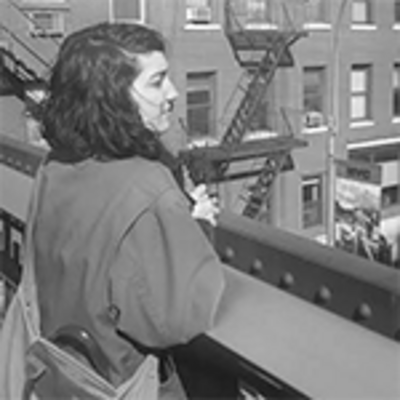
Naomi Washer held a Follet Fellowship in Nonfiction at Columbia College Chicago where she earned her MFA in Creative Writing. Her essays, poems, fictions, and Cambodian translations have appeared in TYPO, wigleaf, Maudlin House, Ampersand Review, Essay Daily, Poor Claudia, and St. Petersburg Review, among other places. She is the co-founder, Editor-in-Chief, and publisher of Ghost Proposal.
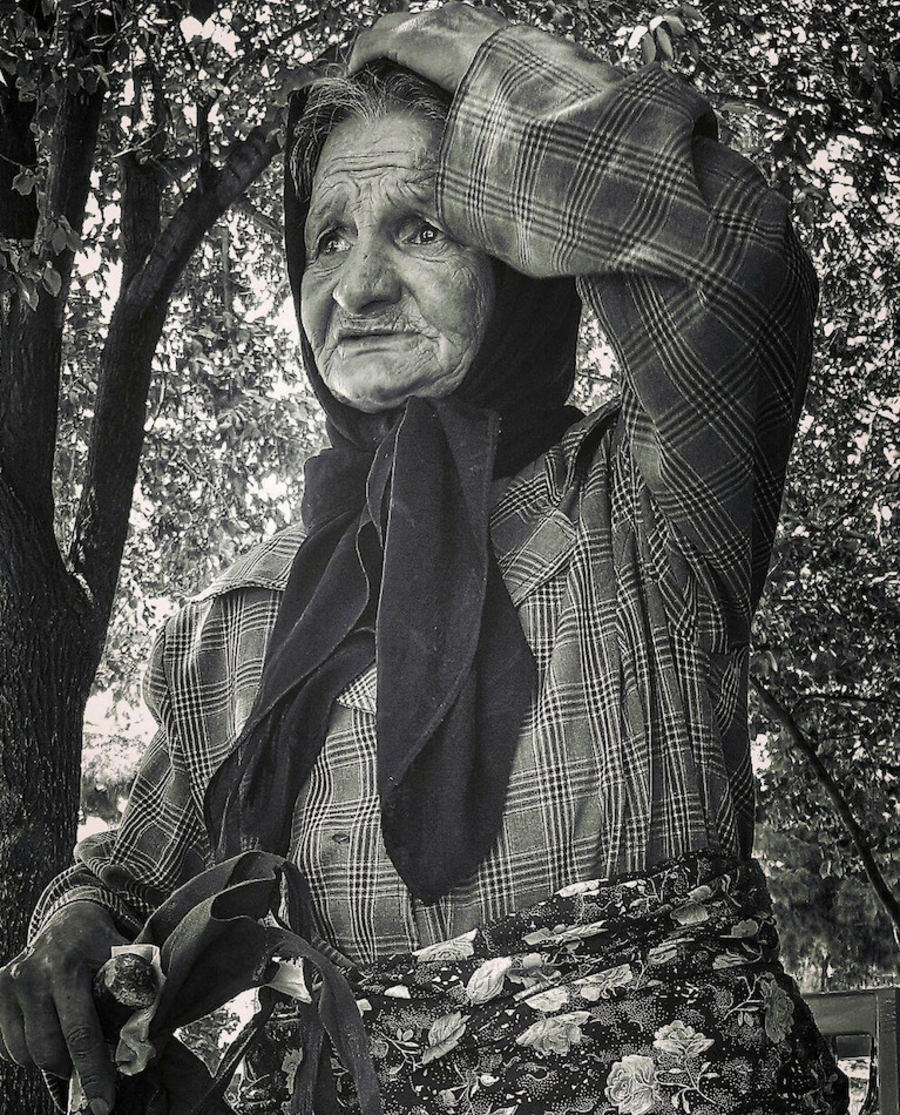
Hossein Abbaszadeh was born in Mashhad, Iran on September 20th, 1979. In addition to photography, they have written three books of fiction in Iran.
By Lindsay Wilson
By Victor Hugo Mendevil

By Windy Martinez

By Jackie Martin
By Samantha Edmonds
By Jeffrey J. Higa