Letter from the Editor
By John Hardberger

This story tied for first place in the Spring 2026 Contest Issue judged by Joshua Wheeler, who wrote: “‘Earthskin’ is a eulogy and a celebration, a speculative reimagining of our experience with an Earth whose seasons batter us and nurture us and, if we pay attention, make us more humane. I hope to one day be on this farm among the earthskins with this wonderful family.”
*
When the earth sheds its skin, you are nine years old. It’s one of those rare summer Sundays when there aren’t any riding lessons scheduled and Mother relents and drives you and your sister to the lake. When you lean over the dock, you see what looks like a paper airplane floating up from the depths to meet you.
Mother, who holds your arm with one hand and your younger sister’s with the other, sees it too. She pulls both of you away from the water. You look up at her and think you see a slump in her shoulders. She looks shorter, somehow.
“It’s not paper,” Mother tells you. You detect something gravelly in her voice. “It’s skin.”
Your little sister, who is only six, clings to Mother and starts to cry. Your sister sobbed when Mother replaced the old van, too. She wept when you got a second dog. Any hint of change threatens her whole world, her safe and tiny routine. Mother sighs and rubs her back.
A great hum of excitement runs through your body. You’ve been wondering when this might happen. Mother does not often talk about sheddings—you’ve always assumed she doesn’t have the time or energy to reminisce, as locked into her elusive and serious adult world as she is. But you’ve become old enough to grow antsy with the repetitiveness of your small world, so you’ve started to read about things that are bigger than you. Things you can close your eyes and feel awed by. You have a book from the school library tucked into your shelf, and you can quote the first line in your head: Once every decade or so, our world renews itself. It is as if the Earth outgrows its old clothes.
The ground beneath you suddenly charges with possibility.
You dart back to the lakeshore, peering between blades of grass while your sister wails behind you. Eventually you find what you’re looking for: a tiny triangle of dead skin poking up from the dirt. Where it touches the ground, it’s translucent, going right through the grass. You grab it as delicately as you can and pull, a little thrill running through your body when it peels up like a hangnail.
The piece of earthskin only comes up an inch or so before flaking off in your fingers, the ghostly film turning solid. You press your eye to the ground, trying to decipher what lies beneath. What will the new world have in store for you, you wonder. It could be anything.
You glance back at your mother. She still looks a little off.
—
When the earth sheds its skin, it’s nothing like the delicate, inside-out tube of a snakeskin. Flakes of dead earth pop up everywhere, separating themselves from the ground. Newly shed, earthskin flakes are white and translucent. The longer the flakes sit out in the sun, the more they yellow and crisp and curl over themselves like the edges of old parchment.
Mother drives back to the place you’ve spent your whole life: a house on a hill and a modest, dusty horse pasture shadowed by a stretch of wet, dark woods. When you get there, your sister runs inside and refuses to come out. She’s terrified of the ground warping beneath her feet, not understanding that such a change isn’t sudden. According to your book, the process takes several weeks. You are irritated, wishing your sister were older, wishing there were someone who shared your curiosity.
Mother acts as if nothing is happening. You desperately want her to say something, anything. Get excited with you. Summer has been long and uneventful but now, finally, finally, something is happening. And it’s the biggest thing, you think, that has happened in all your life.
Once your sister has settled for a nap, Mother says the horses need tending to. She grabs her garden gloves and you trail after her down to the pasture.
From the house, the horses appear as still as board game pieces set out on the field, hardly moved since you left for the lake. On a normal day, the pasture would be bustling with young riders and their parents. Mother would be out leading lessons as the sweat pooled in her armpits and oiled her dark hair. When you draw closer, you can see the horses are thick with sweat, twitching to hold off flies. You wonder if they have any sense that everything is changing underneath their study legs. Perhaps you want to see this place upheaved.
You and Mother stop at the vegetable plot next to the barn. You might not have noticed it yesterday, but there’s another tiny edge of white skin sticking up between the tomato plants. It is a thrill to see something that doesn’t belong here. You resist the urge to grab it and instead watch Mother, who is inscrutable. She could be watching grass grow or staring down the first embers of a forest fire. What she has told you and your sister is vague, that sheddings are an inevitable part of life.
“Look.” You point at the skin.
“I see,” she says. You are unsatisfied with this answer.
Mother selects a chestnut horse for grooming. You follow her into the dusty leather air of the barn to watch. Mother brushes the sweat and dirt off the horse’s body and then lifts its hoof between her knees. She scrapes away dirt from its foot with a pick and trims the hoof wall with a large pair of clippers. Her back muscles strain as she works. You have always admired her strength–always thought of her as a machine that never stops.
“Mother,” you say. “How many sheddings have you seen?
Mother clips off a chunk of hoof. “Three.”
“What was the last one like?”
“It was hard, baby. A lot of work.” She repositions the clippers. “And neither of you girls were born yet.”
“But Father was there to help you?”
“Yes. He was there to help me.”
You know very little about Father. He died when you were so little. Your sister had just been born.
In the books and poems you’ve read, people don’t often mention that sheddings are a lot of work. Mostly they talk about renewal and rebirth. For some people, the books say, it’s a needed reset. A time when the world stops and reckons with a new beginning. Sheddings can change lives for the better. They can mean a fresh ground under your feet. A renewal on the grandest scale.
“Will everything be different?” you ask.
She glances at you a moment. “For a little while, yes.”
You decide to only hear the yes. When Mother’s done, the horse appears as if it has molted, surrounded by a ring of discarded dirt and hair and big toenail-like hoof trimmings. Mother sweeps away the dirt and hair but leaves the trimmings for the dogs to chew. Then she picks up her phone and starts making calls.
—
When the earth sheds its skin, the first few days are slow. Just a few tiny flakes here and there. But soon, the earth picks up its pace. The flakes of skin appear all over the pasture, larger each day—first the size of pillowcases, then the size of you.
Mother is so busy you barely see her. She’s constantly on the phone, canceling riding lessons, stocking up on veterinary supplies, ensuring there’s enough feed for the period when the shed will make it difficult to be on the roads. She hauls hay up and down the driveway with the phone between her ear and shoulder, assuring those who pay to house their horses with her that their animals are being taken care of. She divvies up some of the horses with her friends, trying to share the workload, and when she’s not on the phone, she’s trailering horses to other pastures across town. Her two employees help her out in the beginning, but soon they must return to their own homes to prepare alongside their families and later to clear shedding from their neighborhoods.
You know from your book that in suburbs and cities, communities come together to help clean up the shedding around their yards and homes. But out here, your neighbors’ houses sit far enough away that they’re barely considered neighbors, and it becomes clear everyone will be concerning themselves with their own land.
Instead of playing with you in the garden or following Mother out to watch her care for the horses, your sister lies in bed and stares at the ceiling. Anywhere but the ground. She can’t even look out the window. She throws up if she eats too much at dinner. In between her tasks outside, Mother sits on the end of the bed and rubs your sister’s back, assuring her that change is normal. She lights beach-scented candles to calm her nerves.
You feel like provoking her. “Sissy,” you say. “Imagine if the ground comes up and the dirt is a different color. What if the whole pasture turns blue and the horses each grow two new legs. What if we can’t even walk with our normal shoes because the ground is wobbly like Jell-O.”
She starts to cry. All she wants is everything to stay as it is. But you’re so tired of everything staying as it is. You’ve scarcely been anywhere but here. You know exactly the ways the farm shifts with the seasons, the way it shrivels in the winter and perfumes in the spring and chills in the fall and scorches in the summer. You know all its colors and its smells. Nothing has been surprising to you in what feels like forever. Mother never has time to take off work and shows no interest in trips or adventures. Down the road to the lake is often the farthest she’ll take you. She’s always so focused on keeping things running on the farm. She seems determined to get through the shed like it’s nothing exceptional, like it’s just another season.
But you’ve decided the shed will change everything for you. The whole world is changing. The old one is dying away and there’s going to be a new world in its place. That has to signal something big. You don’t care what Mother or your sister says. They will change their minds. The shedding will be exceptional—a spectacle, heralding new times, you know it. It feels like moving to a new house or being part of an adventure story, only bigger. You have developed a somewhat wild imagination and right now you feel like your life has rollercoasted forward. You desperately want to see what’s going to happen next. You become impatient. You think, if you could just see the new earth, just touch it, you’d feel the change course through you.
One evening you sneak away into the swampy, forested area behind the garden, now littered with flakes of earthskin. Compared to the red chalkiness of the barn, the swamp is like being inside a cave, all moist and midnight green. You read that it’s in humid places and underwater where the shed happens quickest. People in the rainforest and the fish at the bottom of the lake will be the first to see the new earth. The bog is the closest you will get. You pull on Mother’s mud-crusted boots and wade in the muggy water, pieces of parchment floating around your feet like giant fish food flakes. You hunt for hints of the new world under all that old skin. You dig in the dirt and stick your hands in the mud and make incisions in the moss with a plastic knife, but all you find is more slivers of skin.
You resolve not to give up.
That night, exhausted, you dream of a million crimson worms swimming under the surface of your feet, giant veins pumping blood across the whole world. The idea of a new beginning turns in your head. You get goosebumps in your sleep.
—
When the earth sheds its skin, people do what they can to honor and preserve the old world. The elderly neighbors set to work finding all the peeling corners, large and curling now, like bed sheets. They pull up the pieces of earthskin in their front yards and sidewalks. They hang the large pieces of the old skin on clotheslines to air out, to harden into sheets, to sew into quilts and press into old books. They’ll look back on them years from now and say Oh, look. Here was the time that…
You go digging in the attic, a stuffy, overcrowded place you’ve been a million times when bored. As far as you know, Mother hasn’t kept any old skin from the previous sheds. When you ask why, she says she doesn’t see the point in sitting in the past. You just have to keep moving forward.
In the bottom of a dusty bin, you find an old, white pendant you’ve seen before, but this time it catches your eye. When you turn it in the light, you think you see a little slip of textured paper, pressed like a flower petal behind the resin dome. It looks like the piece of skin poking up between the tomatoes. You bring it to Mother. She turns it in her dust-stained fingers.
“I think it was your grandmother’s,” she said. “She used to make jewelry out of the sheds.”
“Why don’t you wear it?”
Mother shrugs. “It was hers, baby. It wouldn’t feel right on me. You can have it.”
“What was she like?”
“She was like me. The farm was hers before it was mine.”
You put on the necklace and don’t take it off even to sleep. Your dreams grow wilder by the night.
—
Mother tells your sister, “We’re going to be okay, baby, we just have to wait and see what the world has in store for us. No matter what happens, we’ll survive.” This doesn’t seem to console her.
Meanwhile, you are still getting caught up in your imagination, in the hum of a colossal change, an immense wave carrying you somewhere new. You can’t wait to greet the new world when it arrives. You can’t wait for Mother and your sister to finally be on the same page as you.
One morning you sit with Mother on the porch, watching empty lumber trucks that look like whale skeletons pass up and down the road. She is hunched like a shrimp in her chair, clutching a water bottle and a hastily thrown together sandwich, taking a short break from all the work. Mother tells you, “Don’t get your hopes up too high.” She’s seen this happen before, she says, and no change is ever quite as life-changing as you hope it will be.
Still, you steal away to the bog, combing through star-shaped moss while frogs pluck guitar strings in their throats all around you.
—
A few weeks later, when the three of you walk out into the pasture together, your heart surges. Your sister has worked up the courage to walk outside, provided that Mother’s hand never leaves hers. You lead the way, wading through a sea of papery earthskin. It feels as if you’re in the ocean. Here, where there are no trees or brush in the way, giant, curling waves of earthskin the size of houses scatter the field. It’s the peak of the shed, and it’s the most amazing thing you have ever seen.
Many more parchment pieces lie in yellowing piles where Mother has cut and stacked them to be hauled off at the end of the road—she’s managed to clear a small section of pasture for the few remaining horses to continue grazing. She’s finally accepted the fact that she’s done nearly all she can on her own. Now she must wait for the plows to make their way down the one-lane road, clearing the debris, until it’s your farm’s turn and she can pay them to take care of the rest. Even if they don’t arrive in a few days’ time, the peel-waves will start to break apart on their own in curved and brittle sheets, flitting to the ground to begin their decay as the new earth absorbs its old casing.
Your sister stands in the shadow of a giant peel-wave and looks up. Despite its size, it’s paper-thin, harmless. She still winces as though it were about to crash down over her head.
Mother looks up with a complicated expression. You wonder what she’s thinking. You wonder if this is anything like the last shedding. What it was like to have Father there to help her haul away pieces of the old earth they both knew, an earth you never got to see.
Despite your elation, you feel a pang of sadness. You wish that Mother and your sister weren’t so somber. You think that all of this is something that should bring the three of you together, but you’re more apart than ever. There must be more to it than this.
—
The next day, you emerge from a thicket in the bog and find what you’re looking for: a moist clearing where the earth has finished shedding. All the peel has completely cleared away here.
You kneel and press your hand to the new skin. You anticipate a bolt of lightning going through your body the second you touch the new earth–some spiritual impact, some overwhelming sense of change passing through you. Though you know it will look no different, you imagine the earth pink, raw, bloody with its new baby skin exposed to the sun for the first time. You imagine a thousand other wild things. You imagine bringing Mother and your sister down here to show them your discovery, to see their joy and awe at last. Instead, you frown.
This is supposed to feel brand-new. It’s supposed to herald the start of your new life. But when you touch the new earth, it’s the same wet, ordinary dirt, the same musty smell that has been emitted from the swampy woods since you were born. It’s the same as you’ve always known it.
Your eyes start to sting.
You find your mother back out on the porch. She’s sunk deep into her lawn chair, looking more slight and exhausted and human than you’ve ever seen her. Your sister just settled down for a nap. You crawl into the chair next to Mother and watch the plows working in the far distance.
“Nothing’s different,” you say.
“I told you not to get your hopes up,” she says with a soft smile meant to cheer you.
You turn your grandmother’s necklace in your fingers. “Will things just go back to how they were before?” You can’t help it; the tears come.
Mother looks at you, and it seems like she really sees you for the first time in weeks. She unfurls, alert, as if once again renewed to her full strength. She squeezes your hand. “Oh, baby. We can make things different if you want.” She pauses a moment. “I can keep lessons closed for a little while. To spend more time with you and your sister.”
“Why do you think she’s been so scared?” you say.
She thinks a minute. “I think this all makes her feel very small.”
“Does it make you feel small?”
She looks at you a long while. “Yes, it does. Sometimes it makes me feel like we’re just bugs, scuttling along something vast and indifferent, renewing itself a million times over.” She stops, surprised at herself.
You wonder if you will become like her one day, maintaining the farm as her mother did before her, keeping it safe through all the cycles of the world that pass over this place. Someone so focused and hardworking as her has no time or space for wonder. You love her, but you don’t want this for yourself. You imagine it’s possible it will happen anyway.
“I like feeling small.” You mean this. It comforts you to feel like there’s something bigger than yourself. Something more than the pasture, the driveway, and the lakeshore, waiting for you, out there, one day.
Mother takes your hand. A silent understanding passes between you two. You look out at the peel-waves and watch the plows slowly inch their way closer, clearing the old world away.

Hana Rehman is a writer from Georgia living in Richmond, Virginia. She received her MFA in fiction from Virginia Commonwealth University, where she served as the VCU Cabell First Novelist Award Fellow, helping administer an annual prize for debut novelists. Her work appears or is forthcoming in The Los Angeles Review and Moon City Review.
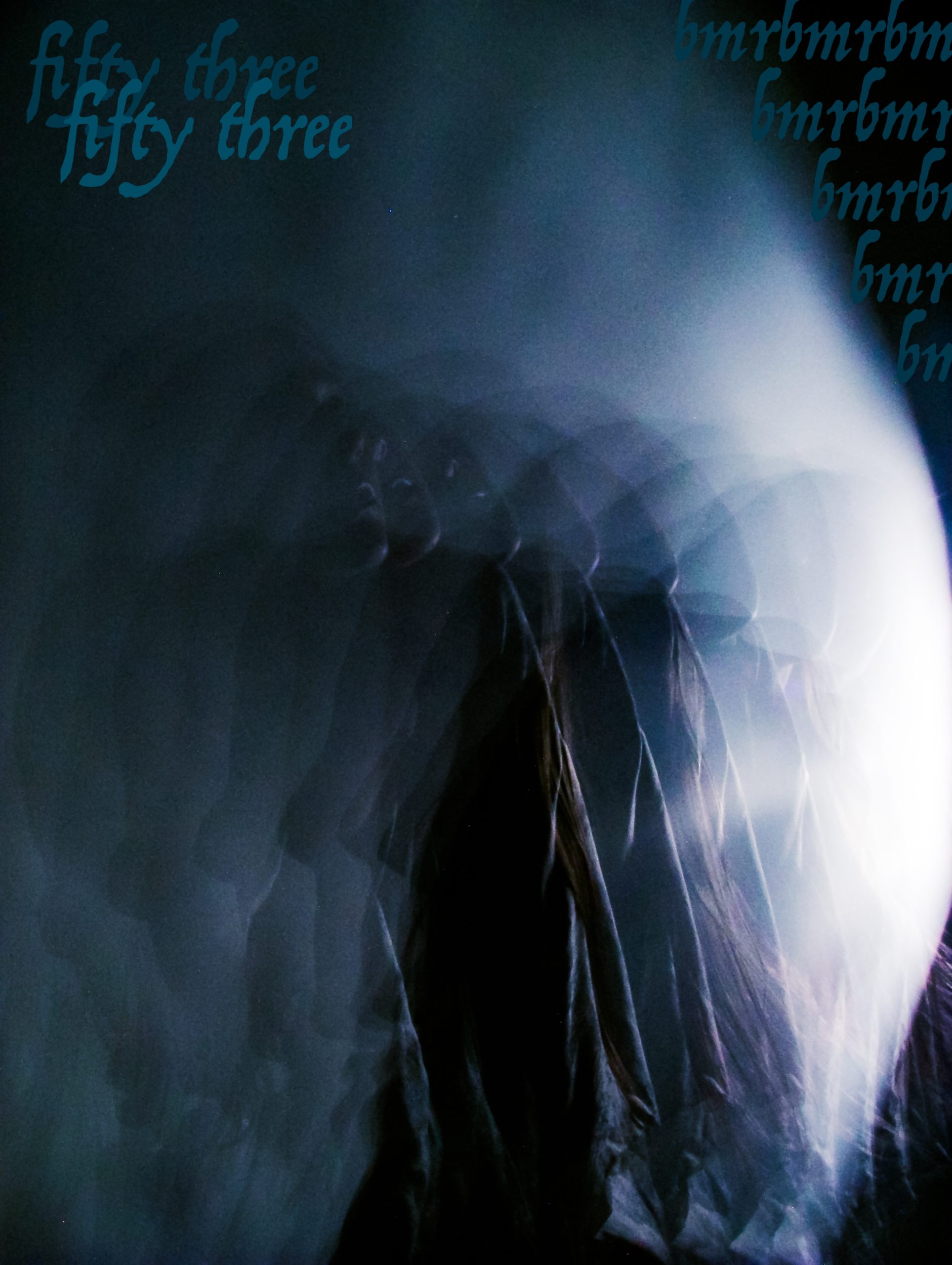
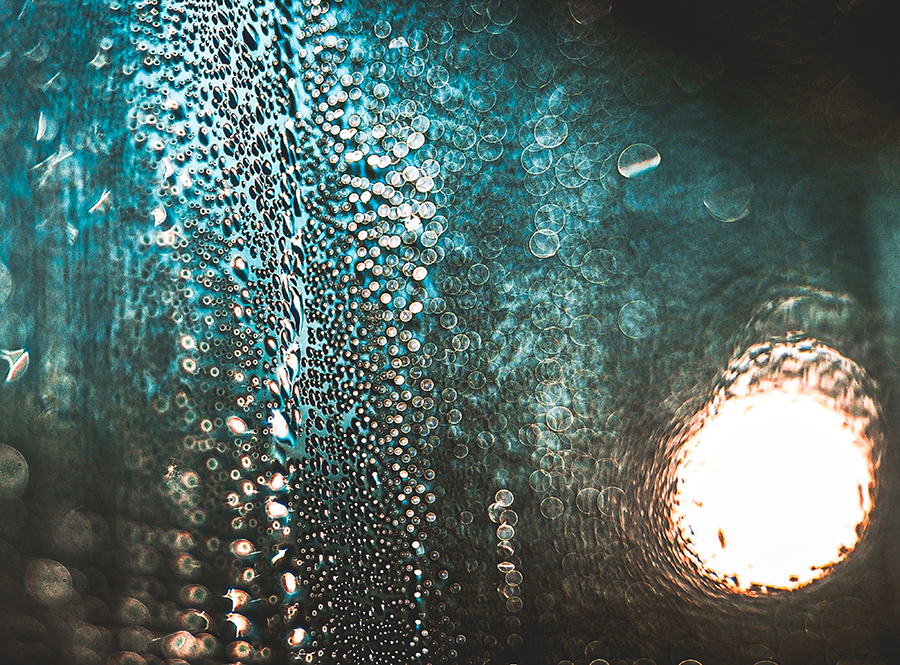
Coriander Focus is a full-time creator, working most in the mediums of Multimedia photography and written word. Coriander spent her youth deep in the mountains of rural Appalachia where her love of wild places was cultivated. She has since captured that love using fine art over the last 15 years. She has had her work displayed nationally across galleries, shows and publications since 2010. Notable highlights of Coriander Focus’ recent career have been Her Voice, Her Vision – Chesapeake Arts Center (2024) Windows to the Inside, Woman Made Gallery (2023) and Sarasvati Creative Space Residency (2022).
By Lindsay Wilson
By Victor Hugo Mendevil

By Windy Martinez

By Jackie Martin
By Samantha Edmonds
By Jeffrey J. Higa