
Letter from the Editor
By John Hardberger

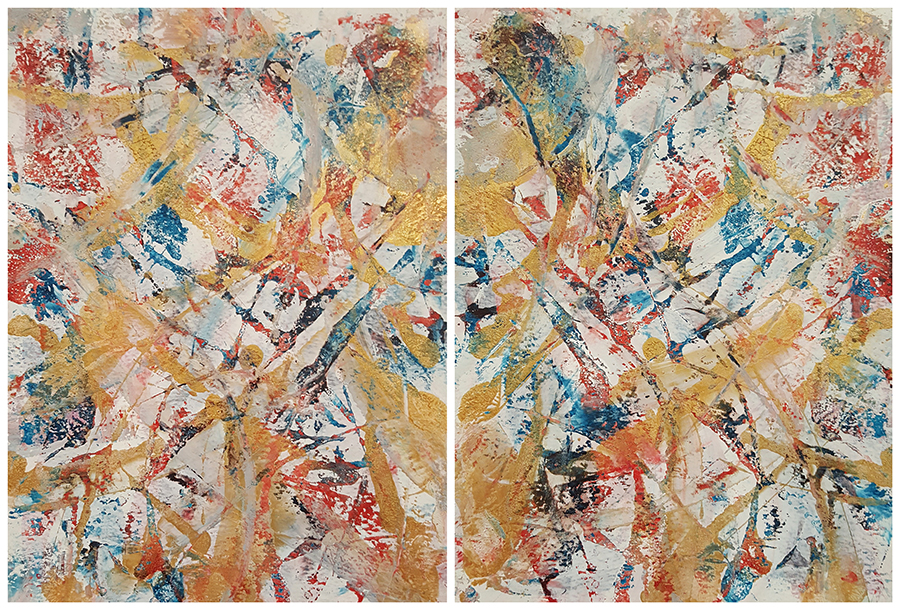
This essay won third place in the Spring 2026 Contest Issue judged by Brittany Means, who wrote: “‘The Cry of the Cicada’ so vividly captures the alienating experience of otherness that comes with being a child of color in a majority white setting. The prose elevates the feeling of living in an inner world to escape the isolation of the outer world. I loved the line, ‘The feeling of achieving agency, escaping from a rigidly structured and predetermined world to the freedom of an imaginary one–my own imaginary world–has never left me, I think.’ The author distills how a creative mind escapes and thrives.”
*
That day, my mom had packed my home lunch Hawaiian-style, with the pièce de résistance, being a manapua, a food so common in Hawai’i that manapua men sold them door-to-door in neighborhoods and manapua trucks sold them to school children during lunch and after school. For those familiar with Chinese dim sum cuisine, a manapua is a char siu bao on steroids, a steamed BBQ pork-filled dumpling the size of two fists. For its long trip from Honolulu to Montgomery, Alabama, my parents had laboriously preserved each manapua in layers of plastic wrap and had nestled them into a styrofoam box cooled by dry ice. This treasure chest from home was a salve to our family for yet another disruptive relocation.
We had moved to Montgomery, Alabama in the summer of 1975 at the height of the cicada eruptions so Dad could attend Air College at Maxwell AFB. He was a Captain, a stepping-stone out of the tenderfoot ranks of Lieutenant, a rank of achievement, to be sure, but also a rank that leaves the short termers behind and puts one on the road of “career military.” Dad had figured that the best post-college career move during the Vietnam War-era was to enlist rather than be drafted. Since his training and career education were all on the mainland, the family marched behind him every time he received new PCS orders. Although I was only nine, Montgomery would be my sixth permanent change of station, my fourth school, and the fourth time I would have to somehow try and fit in.
I realize now that I should have expected the commotion that my unusual lunch would cause, but I was new to the school then. I caused a spectacle with kids coming from all over the lunchroom to gawk while I ate the manapua with soy sauce and Chinese hot mustard. Within minutes, a semicircle had formed around me with kids peppering me with questions as they tried to smell my lunch from their impossibly safe distance. You would have thought they had been observing a cannibal, the way they violently shook off any offers to try the food that I had brought.
Maybe a more extroverted person would have reveled in the attention and played it off like a big top showman but for me, the entire episode exhausted me. So, I answered their questions as best I could: Yes, it was just pork, kind of like a sandwich, no it was not made of fish, and yes, people in Hawai’i ate them all the time. Yet, with each minutely observed bite and reaction, I felt myself shrinking into an exotic exhibit that reinforced the otherness of my social standing. The comfort food of my family had become a public performance I was required to give for an audience I had never auditioned for. When I was given the same lunch the next day, I knew I couldn’t go through with it again.
By late August, the cicadas are much less numerous as the nymphs drop off the trees to go underground for sustenance and we kids shed our summer instars to return in situ to our classrooms. I was assigned Mrs. Schwaub’s fourth grade classroom, a name whose combination of soft consonants and even softer vowels bewildered me and which I would spend the entire school year trying to recall in the correct order. This did not endear me to Mrs. Schwaub. Her long experience with students gave her the ability to sniff out weaknesses like a bloodhound and her disposition gave her the ability to wield fear like the Gestapo. Once, we had to fill out a form in class, she loomed over my desk, her vulture neck poised over the line where I was to write her name. Like a sapper defusing a bomb, I stilled my heart and wrote slowly and carefully, painfully scribing each letter until I got to the end. I looked up at her knowing I had written her name correctly, joy flooding my body from my brush with death, only to be berated for forgetting the “Mrs.”
She was of the generation that insisted on that Mrs. She wouldn’t even acknowledge a Miss, no matter how politely spoken. Mrs. Schwaub was short of stature but with a girth my mom called “merry”, and she wore skirts with sweaters or jackets to class. Her aforementioned vulture neck was always covered by high collars or scarves. Atop her stern countenance was a dust bunny of fine iron-colored hair teased to within an inch of its life and baked into place. But it is her shoes I will always remember. They were always either brown or black with a buckle and a clunky heel. They must have provided superior grip and stability otherwise why wear something so protestant? I suspect she wore them for the terrifying sound they made as her footfalls echoed in the hallways, like the clacking of demonic hooves in conversation.
All of this was reflected in how she arranged her classroom. It is called “classroom management” now, but that implies a corralling and possible give and take among stakeholders. There were no stakeholders in our class, we were all subjects of a despot in Mary Janes.
In her classroom, this microcosm of society, we students were not equal. Sure, she had columns of perfectly aligned desks with the big teacher’s desk at the front with a student-sized hot seat next to it. Sure, other teachers in my past had created seat assignments that never changed from the beginning of the year to the end. I even had teachers that seemed to favor the girls with their vaunted precocious maturity and cuter sartorial choices. But I had never been an inmate of a segregated classroom before.
The three columns of desks closest to the door were the domain of the white students. I wish I could remember any of their faces or names, but as an occupant of the fourth column, I was not welcome in their social milieu. Here in the uncomfortable limbo between white and black, there weren’t enough of us to fill up the six-desk row. In the front sat a Hispanic girl who had a lefty desk. In later years, I wondered if that was another strike against her which is why she was up front where the teacher could keep an eye on her. Behind her was Miguel, a quiet kid who I never saw get into trouble, and then me, the Asian-American kid. Behind me sat three empty desks, a clear demarcation before the final two rows. Rows five and six were furthest from the door but closest to the windows. They were reserved for the black kids.
To this day, my parents maintain that I never told them about the classroom seating arrangements. It seems incredible to me that I never mentioned it, yet, I can see how I would have just accepted this kind of de facto racism as part of my life. If this happened today, I know my Gen Z child would have immediately organized a walkout and called me during the protest to make sure I arranged for a bail bond agent. But we were all Gen X kids who were raised by Silent Generation parents, and while Jim Crow laws died around the time we were born, we knew it was easier to take the heart out of Jim Crow than it was to take Jim Crow out of their hearts.
We students never talked about it either. Not even those of us in the fourth row, where it was quite clear that we were the uncomfortable middle, the brown limbo between the white and the black. How could it not be when our row, the most vacant one, could not be populated with either the white kids or black kids joining us? You start to see yourself as a partition of some kind, or a buffer between the two worlds, especially with the disparate treatment each side received from Schwaub.
After that first week, I learned why the black kids were forced to sit near the windows while the white kids sat on the other side of the room. After lunch, the afternoon sun would make its way across the sky and blast through the windows, baking the kids in those rows, and heating up the floor in that entire area. Those of us in the brown kids row only had to move our desks a little to stay out of the oven, but the black kids had no recourse except to sweat a little more, which led to olfactory challenges on especially hot days. On those days, Schwaub would stroll over to our side and air passive-aggressive complaints about how some of us boys needed to talk to our mothers about “controlling our male odors.” She never singled anyone out by name, but she made it clear by addressing the ceiling on our side of the room.
Ritual humiliation was Schwaub’s dagger and the myriad ways that racism could inspire her imagination always simultaneously infuriated me with its unfairness and amazed me with its bottomlessness. In the old days before texting, we had to pass notes to each other until it reached the intended recipient. The weak link in the chain was always the intermediary passers, who could become agents of chaos by reading the private communication, adding their own flourishes to the note, and/or redirecting or refusing to pass the note along at all. Schwaub would always choose that moment to come down like a wolf on the fold and snatch away the note.
Her sadism lay in the punishment for writing notes. If a white student was caught passing a note, Schwaub would read the note to ascertain the sender and scold the writer while walking away with the note. We never knew what the white kids wrote to each other. If a black student was caught passing a note, she would read the note to herself but make the writer stand up. Then the writer would be forced to read his own note aloud to the class. I don’t remember if people laughed, but what I do remember was that the humiliation was excruciatingly painful to experience as a listener. Sometimes kids were so embarrassed by what they had written that they would pretend not to be able to read their own handwriting so that they could avoid having to say aloud words like “love.” It was a nauseating, debasing experience which was worse than a beating at an age when we really did not know how to comfort each other.
I wish I could say that not everything was sticks, but even Schwaub’s carrots were disguised sticks. Since the first day of class, it had been drilled into us that the grand ambition of every student in Mrs. Schwaub’s class was to be the lunchtime Bearer of Salad Dressing. The student who was deemed the best by Schwaub would have the honor of moving to the front of the lunch line immediately behind her and carring a half-full baby food jar of her personal salad dressing. I don’t know if she had some kind of problem with the school salad dressing, that kind of lore lay beyond the gateway of the Teachers’ Lounge, but everyday a student was chosen. For the white kids, it was a competition to see who could be the Bearer the most often although we all knew it was going to be that one white girl who always color coordinated the bow on her head with her outfits. For the rest of us, we could only pray that we would be picked at least once.
And for some of us, once is the shot we got. Now, this is the only time I will cut Schwaub some slack because she did choose black kids, especially the polite black girls to become Bearer. And when it did happen, the kids were justifiably proud. I imagine those kids went home excitedly to tell their parents of their achievement as best student of the day, and their parents conjuring all their patience as they imagined some old white lady making their black child carry something for her. I, however, was not one of those kids who told my parents when I was bestowed the honor of Bearer of Salad Dressing. I figured that they had enough tragedy in their lives and didn’t need to hear about mine.
On the day I was picked, I don’t remember what I did to warrant the honor. For all I know, maybe every student was picked at least once and my number had come up. But I do remember feeling somewhat justified by the honor, a “Hell, yeah, about time” kind of internal reaction. As I moved from my assigned spot in the lunch line–our brown group nestled between the end of the white kids and the beginning of the black kids, of course–to the rarified air at the front of the line, I held out my hands like Oliver Twist seeking more. Schwaub placed a napkin in my hands and the half-empty baby food jar was placed on top.
“Let’s go,” she said as she turned around and led the way.
Now, I can’t say the lunchroom was that far and there were no hazards like corners or stairs, just a straight shot down the hall past the library. Perhaps if I had thought to ask any of the veteran Bearers for advice or tips, things might have turned out differently. But as soon as we started walking, I knew I was in trouble. No one had told me that Schwaub was partial to Italian dressing and that the oily outside of the jar would be as slippery as a wet baby. In my young mind, I reasoned that the napkin might be the fulcrum that would allow me more purchase on the jar, so I squeezed harder on the napkin and the bottom of the jar. I managed a few more steps before the jar shot out of my hand and sailed through the air like it was trying to achieve orbit. It fell back to Earth with an impressive pop at splashdown and a pond of oil and vinegar appeared among the shards of shimmering glass. The cap lay defeated on its back, a perfect ring of threaded glass still attached, like a mouth in mid-scream.
The line stopped immediately. There was a smattering of other kids who had dropped the jar before, but my usual place was buried so far from the front, I couldn’t remember what was supposed to happen. Like the damned in judgement before Minos, I stood frozen awaiting the verdict about which circle of hell I was to be consigned.
Schwaub took the napkin from my hands, shook open the folds, and like drawing a sheet over a dead body to preserve its dignity, she covered my failure.
I must have instinctively reached for it, for she barked, “Leave it! The custodian will clean it up!”
Leaving Wish-Bone® pond behind, we marched into the lunchroom, where she stopped me with a hand to my chest before I joined the food line.
“Once bitten, twice shy, Mr. Jeffrey,” she said to me. “Once bitten, twice shy.”
She removed her hand from chest and turned to go to the Teachers’ Lounge and my one and only service as handmaid and Bearer of Salad Dressing was over.
For others, the soundtrack that year was Lynyrd Skynyrd’s “Sweet Home Alabama” which had been released only 8 months prior. For me, though, it was the loud and lusty chorusing of the cicadas. When asked, people are fond of making all kinds of comparisons: “Those cicadas are as loud as a Harley motorcycle/lawn mower/chainsaw/old garbage disposal” etc. But when I learned that only the male cicada calls, I wondered if it was a desperate loneliness that drove the single male cicada to screech at the world its secret language for a mate.
I too, partook of that loneliness, for if the classroom was where my dignity disappeared each morning, the cafeteria was where I tried to find it each afternoon. After the initial manapua incident, my lunches had become wholly uninteresting. About the most daring thing I did was substitute honey for jelly in my PB&J. Bereft of attention and consigned to my liminal status, I developed a secret language made up entirely of gestures known only to me.
At the time, I did not know it was loneliness that drove me to become the Noam Chomsky of the fourth grade. All I knew was that lunch was a harsher environment than our classroom because lunchrooms are the place where kids are free to enact the biases they have been taught. Of course, the white kids had the pick of the cafeteria and presumably sat wherever they wished. Their domain encompassed the whole cafeteria except for a row of tables on each side of the food queue. On the right side of the queue, abutted against the wall, were a row of tables where all the black kids ate. A large gap cleaved those tables from the rest of the cafeteria, ostensibly to make space for the queue, although after the queue had dissipated, the black students were as distant as the far shore of the River Styx. To the left of the queue was a row of tables that formed the southernmost border of the white enclave, a row geographically attached to the white mainland, but socially distant. That was where I and the other minorities sat.
For those of us who were neither white nor black in Alabama of the 1970’s, being an other was a stultifying identity. We may have been coerced to sit at the marginal lunch tables but since we weren’t forced to sit close to each other like in the classroom, we took the opportunity to sit as far away from each other as we could. As a result, although there may have been two other kids seated at my lunch table, we preferred to remain strangers.
So after eating, with the expanse of 25 minutes stretched before me like a desert, I sat with nothing to do except pretend that I had a friend that understood me but was sitting at a table across the room. He was far enough away that we could not speak to each other, but close enough that we could still see each other. I think I must have started with just a simple wave, a gesture that I could get away with in a crowded room, and a nod soon afterward like the acknowledgement of his return gesture.
I write he/him but in my mind, my spatially distant but psychologically close pretend friend was neither boy nor girl. Rather, my friend was a kind of manifestation of the word friend, without attributes or even the need for attributes.
It soon became my favorite activity during lunch. I would choose a table by myself and sit facing the vast morass of white kids at their tables. I would quickly eat my lunch and then get down to conversations with my friend, beginning always with that wave. I can’t remember much of my language but over the months, I had developed an extensive vocabulary of gestures and meanings. For example, crossing my arms in an “X” held closely to my chest meant “Really?” A surprisingly common interrogative in a pretend conversation. But that same gesture with the arms reversed, the left arm over the right, pushed away from my body would have been a form of the verb “to go.” Context, of course, would determine conjugation of the verb form because even I wasn’t crazy enough to invent a private sign language that included the past perfect continuous.
I used my arms, my head, and my torso but I kept my movements small to avoid attracting attention. However, every language must grow, even those powered by one-person dialogues, and my extended vocabulary necessitated broader gestures. One day in the midst of my usual long-distance conversation with my friend, I happened to glance to my left and noticed that the kids from one of the black tables were staring at me.
All of them had stopped eating and had unconsciously arranged themselves so they each had a clear view of me. No one was laughing. Rather, their faces held the mystified expressions of exobiologists observing the secret, sacred rituals of an alien life form. Having noticed their attention, though, I shrank like an insect under glass and performed no more that day.
Later that night, I wondered if they had come to any conclusions. Maybe they thought I was dancing because I couldn’t stop from mouthing the words as I conversed, so perhaps I appeared to be singing as well. Or maybe they thought I had a palsy that forced these movements on my body. Or maybe they just accepted my actions as part of the cultural baggage of my alien otherness, like my appearance and food. I did realize that I wasn’t really embarrassed that I was seen performing my language. Maybe if had been subjected to the Schwaub interrogation method and forced to explain myself, I would have been ashamed. Mainly, though, I was just shocked that anyone had noticed me at all.
I’m not sure when I resumed conversations with my imaginary friend, but I think the ghosting period was short. It is not like when you and your best friend have a spat, and the climb back to normalcy is awkward with tender probings and halting conversations. No, the benefit of having a pretend friend is that one can jump right back in with all the zeal there was before, which I did for the remainder of that school year.
Did my rantings and ravings in my private language scare away kids who could have been a real lunchtime friend? Maybe, although it seems to me that the goal of both de facto and de jure racial segregation is to prevent the kind of reaching out that would lead to friendships. Am I sad that I never recorded my gestures into a lexicon that I could reference and reminisce about today? Yes, sort of, but I think it would have been used as proof of my mental insufficiency instead of a historical record of the lexical brilliance I exhibited at such a tender age. I’m reminded of the mighty John Bender of The Breakfast Club who said, “It’s sort of social. Demented and sad, but social.”
But also powerful. The feeling of achieving agency, escaping from a rigidly structured and predetermined world to the freedom of an imaginary one–my own imaginary world–has never left me, I think. I learned that I was the sole author of a narrative who as the protagonist, I could not be excluded or put on display as other. I could script a world where not only was I heard and perfectly understood, but was not interrupted, judged, or ridiculed.
The black kids never questioned or mocked me for my linguistic antics. Though we were young, I like to think that at some level, they understood my need to retreat into a wholly imagined world as a way of achieving the self-agency that none of us had. We were all victims of an institutional oppression that not only constrained our external choices but also colonized our internal dialogues and corrupted our futures.
My secret, gestural language was more than the mere cycadean cry of loneliness, but a psychological resistance, the refusal of accepting the system that defined my outer circumstances control my inner life. The ability to preserve and express my own humanity even when the world insists on reducing me to something less is what drove me then. It is what continues to drive me now as a writer.
My father’s time at the Air College lasted a year, and after the end of fourth grade in the summer of 1976, a new brood of cicadas emerged again from the trees, and Dad received new PCS orders to relocate to Richards-Gebaur Air Force Base near Kansas City. It would be our first time in the Midwest, and again, I was looking forward to escaping our current posting and leaving my Alabama self behind.
In Alabama, I met many people who were frightened of cicadas because of their abrasive noise, their collective deafening loudness, their abandoned exoskeletons that littered sidewalks and porches, and the determined way they flew around without a concern about what they might run into.
But to me, moving at the whim of the military was not unlike the lifecycle of the cicada. Like a cicada, I would be given the opportunity to periodically emerge from a past that no one knew about and shed that empty vessel of myself there before blindly flying out to a new location full of new experiences, new hazards, and new opportunities.
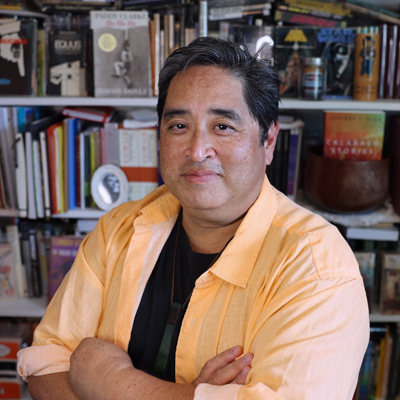
Jeffrey J. Higa is the author of Calabash Stories, which won the Robert C. Jones Prize and was shortlisted for the William Saroyan International Prize for Writing. Stories from the collection, including “The Shadow Artist” received an honorable mention in the Kurt Vonnegut Speculative Fiction Prize from the North American Review and “Christmas Stories” which was serialized and broadcast by Aloha Shorts on Hawaii Public Radio. Despite being published widely in literary and commercial magazines, he still finds memoir exceedingly difficult to write. In 2022, he was a Kundiman fiction fellow at the Sewanee Writers Conference.
Ellen June Wright is an internationally published artist, poet, photographer and former language arts instructor, known for her abstract expressionism. Wright’s dynamic watercolors have been published in journals online and in print, most recently: CALYX, A Journal of Art and Literature, Blue Mesa Review, Abstract Magazine: Contemporary Expressions, NOVUS Literary Journal, and her work was included in the 2024 and 2025 Newark Arts Festivals and the gallery at the HACPAC in NJ. She is an admirer of the works of Stanley Whitney, Mary Lovelace O’Neal, Frank Bowling, Howardena Pindell, Jamaican Artist: Cecil Cooper and others.
By Lindsay Wilson
By Victor Hugo Mendevil

By Windy Martinez