
Letter from the Editor
By John Hardberger

This story tied for first place in the Spring 2026 Contest Issue judged by Joshua Wheeler, who wrote: “‘The Velvet Chair’ is a wonderful meditation on the mysterious impulse to create art in a consumerist society, an homage to the strange places we find fellowship, and a great chronicling of the never-ending search for one good place to sit. I hope we all find our velvet chair.”
*
After six long weeks of waiting for the velvet chair to arrive, I received an email from Joie De Vivre Furniture Store stating that the chair would not, in fact, come tomorrow, but in two, three, or five months. We’re terribly sorry, but we didn’t know there’d be overwhelming demand for this beauty. We love our customers!!! Here’s to the enjoyment of life! Sincerely, CEO Al Hunt.
I stood, re-reading the message as New York City whined and wailed and shouted profanities outside my window. After living in the East Village for a year, I still wasn’t used to its antics, though I no longer ran to the window to see the calamity or spectacle.
When my neighbor came by to return the iron he’d borrowed, I showed him the email.
“Get a refund,” said Garth.
“I can’t do that.”
His round moon face seemed to widen. “They can’t even tell you when it will arrive. How much did you spend?”
“I don’t think it’s about money.”
“What is it then?”
He studied me, as if sleuthing for new clues to put in a bulging classified file called ‘Nora.’ I knew he looked down on the aesthetic life, as did Frederick, because they’d talked about it right before Frederick vanished. The sensory world was illusory, and living that way was idiotic, they’d said, because you’d never discover true reality. As they went on, I’d nodded vigorously, assuming I didn’t belong to the aesthetic camp either. But when I saw the velvet chair online, wingback style with elegantly curved arms and the color of the ocean on a brilliant sunny day, a powerful force strong-armed me, not unlike love.
“It’s a nice chair,” I said.
Garth made a guttural sound. “That word ‘nice.’ It’s so overused it means nothing.”
“It means I think it’s beautiful.”
I liked velvet. As a girl, I had a green velvet dress, which I would absentmindedly stroke like a cat. When I wore it, my mother would look at me warm-eyed and say how well the dress went with my red hair, as if I belonged in a painting. I wore that dress for the 2nd-grade poetry contest, and when I won, the other girls rushed over, encircling me, touching my dress, and I felt the glow of popularity, momentarily.
Every time I stepped into my living room, I imagined the velvet chair in the empty corner, stately and solid, its radiance sending out strong beams, beams that entwined me because, in this picture, I was sitting in the chair, happy. Over the past six weeks, this image had become more real than reality.
I didn’t tell Garth any of this, not wanting to risk further diminishment in his eyes. He was a little older than I was and always wore white button-down shirts and brown loafers without socks, as if shoes were an afterthought. I liked the way he stopped by as if we weren’t in a huge, indifferent city but a neighborhood, and borrowed things from me and then returned them.
“I’m sure Frederick would have a lot to say about this,” said Garth.
It had been nearly two months since Frederick had disappeared. Garth and I had combed over what might have happened to him: a vacation, a death in the family, his death, which we quickly retracted, fearing speculation might warp into the real. Garth returned my iron and left, and I headed to my job, which involved a short commute down my apartment’s narrow hallway into my study and checking my computer to see which AI-made instruction manual needed cleaning up.
My inbox was stuffed with emails, but none from my boss. Hundreds of emails, like a whirlwind of paper, from people who’d also ordered the velvet chair and learned it would not arrive on time. Apparently, the CEO had CC’d everyone who had ordered it.
Two months minimum! Who is this joker??? wrote Micha.
I called to complain and was on hold for an hour, wrote Amrita.
Kara said she’d emailed the CEO and demanded free shipping to compensate for the unacceptably long wait. She received an email back, stating the CEO was traveling. Francesca from Italy thought the chair embodied the essence of Italy, even though it was shipped from America and made in Thailand.
Has anyone actually sat in this chair? I wrote.
That created a pause in the cyclone of emails, as if one reality had clashed with another, tearing open the fabric of both, because no one had actually seen or sat in the chair. The pause ended when Anton changed the subject: Why no explanation for the delay? What happened? The CEO at least owes us that! A new rupture of emails about whether an explanation was owed ricocheted like ping-pong balls off the digital walls. If his wife or child were sick, they’d give him a pass, several chair people wrote. If he were just another bad businessman, making lousy decisions, that would be another matter.
An hour later, I was still chatting with the chair people when my boss pinged me. I forced myself to open the work email and start editing, turning the convoluted, incomprehensible instructions for the Digital Can Opener with Alarm/Clock/Timer into consumer-friendly language. Despite the mundanity, I found pleasure in the precise, concrete details. Use a small screwdriver to open the back of the clock, I wrote. You’ll find the screw at the bottom of the can opener. I subscribed to Consumer Reports and studied their writing style, collecting turns of phrases, and tried to avoid imperatives so I wouldn’t sound bossy. I worked hard to establish a friendly, upbeat, supportive tone.
My parents, professors at the University of Nebraska, were alarmed and dismayed that this was the only job I could get with my English degree. I, too, had other aspirations, but my boss was delighted with my work, which pleased me to an embarrassing degree. I imagined a promotion with a raise sometime soon. My boss said I had a real gift for dumbing things down so a kindergartener could understand them, something I didn’t tell my parents.
After working for hours, depleted and headachy, I headed to the gym to clear my head. My boss had also said I was too slow and needed to work faster. With exercise, I thought I’d have the energy to finish the instructions by the end of the day. I also wanted to take my daily walk by Frederick’s apartment to see if he had returned.
**
I had met Frederick at Nob’s Café the year prior. A man in his late seventies or early eighties, he had excited eyebrows and a nose with a sad slant. He was husky, witty, and supremely learned, the kind of man who willingly handed you all the knowledge stored in his brain. I’d been working on my novel at the café when I happened to glance over. He smiled shyly and said my refined concentration was breathtaking, given the staggering amount of aggregated sound in this confined space.
I thought he might be hitting on me, but he was so old, with an intricate maze of wrinkles on his face, a musty smell and a tremoring right hand, and I was 24 years old. He got going, talking about Tocqueville, Darwin, Nietzsche, Planck, the desolation of affluence, and John von Neumann’s feverish mathematical mind, and as he talked, he didn’t look at me, his gaze turned inward, as if he’d stepped into the privacy of his own mind, a mind that was like a skipping stone, skidding five, six, ten times over great pools of knowledge. When I told him I was writing a novel, his eyes brightened, and he said, “Oh, the humanities, good for you. I’ve never dared to write a novel. Just a little poetry.” He had a PhD in physics and dabbled in—he laughed, sounding like a ticklish child—nearly everything else. When he resumed talking, I felt him retreat into himself again, as if he were pulling open drawers of knowledge, one after another, experiencing immense self-pleasure. He could have been talking to anyone; I was just the lucky recipient. I inhaled it all.
After that, we began to meet weekly at the café, first by chance, then by design. I invited Garth to come with me, and he easily joined the conversation, offering platters of computer science and coding stuff, a whole new landscape of knowledge for Frederick, who interrogated him as if Garth were a witness to a crime. When Garth and I headed back to our apartments, he called Frederick an interesting old dude who, at his age, was lucky he hadn’t lost his mind.
On my way to the gym, I walked by Frederick’s apartment on Eighth Street. I pressed the buzzer, and, as usual, received no answer.
At the gym, I rode the stationary bike, staring at the screen attached to the handlebars, which sent me on a mountainous, forest-infested road with deep blue shadows and an occasional black cow. Frederick had said routine was mind-numbing and to be avoided at all costs. “We’re all in the process of becoming, Nora,” he’d said, “but you can speed things up.”
The music blared, but I barely heard it; I was transported to a dark forest. I didn’t ride my usual 50 minutes, but 40, not because of Frederick’s pattern-disrupting suggestion but because I wanted to hurry home and check on the chair people.
**
They were in a passionate discussion about their favorite objects.
I’ve got a refrigerator that’s 20 years old, wrote Francesca. What a loyal friend she is.
Mine died when it turned five, wrote Chanda.
I love my KIA Soul, wrote Sid.
I told them that when I was young, I had a favorite yellow blanket with a soft, silky edge, which I named Mel. On Saturday mornings, I’d sit with Mel in front of the TV on my parents’ nubby blue carpet and watch cartoons, falling into a zombie-like trance, the world winnowed down to the TV, my face so close I glowed blue. I’d suck my thumb while stroking the soft, silky, comforting edge. When I turned ten, Mel disappeared. My parents said I must have lost it, but I knew I didn’t. I knew they threw Mel away, tired of my thumb-sucking and silk-stroking and dreaming.
They should have let you suck your thumb, wrote Tae.
Others chimed in, agreeing. Sometimes, you become the thing your parents want you to be. Watch out for that. Out the window, blackbirds tried to decide which tree to settle on. Back and forth, from the sycamore to the spindly birch. I knew I should get back to work, but now many chair people were emailing me, saying my parents overreached. Maybe you needed Mel more than anything, some chair people wrote. They were sorry I had to go through that; who knew what harm it did to me?
I didn’t think it did any harm. I thought of myself as a seeker before and after the blanket incident, though I didn’t know what exactly I was seeking. My theory was that most people were seekers, but they got tired of the search and settled down, ending up in a house or apartment with a mate, matching cups and plates, children, and a dog or cat. I didn’t disparage this and often longed to do precisely that, but I was determined to keep searching until I found happiness or satisfaction or maybe something else, whatever it might be.
From my discussions with Frederick—or rather Frederick’s orations—I knew there was clock time and human time, and the latter involved the feeling or experience of time. My experience was that I hadn’t spent enough time with the chair people, but I also recognized this might be an excuse to avoid work.
When my boss sent an email marked URGENT! CAN OPENER??? I reluctantly said goodbye to the chair people. It took a long time to dumb down the manual because I toggled between my work and the chair people, back and forth—can opener to chair people, can opener to chair people. I told myself the chair people were helping me work, letting me vent about the missing chair.
**
Garth had become increasingly gloomy. I guessed his mental state was due to the promised job at the think tank. He was tired of his coding job and worried he’d lose his job to crummy AI. Frederick had promised he would call the CEO of The Near Future, who owed him a big favor. Over the weeks since Frederick’s disappearance, Garth’s eyes flickered from bright assurance to doubt, then stayed firmly glazed with doubt and shadows of gloom. Often, the back of his collar was raised, and part of his shirt hung out like a surrender flag. When I would tell him the job thing would work out, his face would briefly lighten and brighten before returning to something darker. I really wished I knew objective reality so I could say so for sure.
I handed Garth a beer, and he sat on the couch, the lone piece of furniture in my living room, and said he had coded for hours and couldn’t remember if he had eaten anything. I gave him a bowl of pretzels. He ate them, one after another, in a mechanical way, staring at my laptop screen on the couch next to him.
“Any news?” he said.
I knew he meant news about Frederick. “No.”
Recently, we had decided Frederick had gone to a conference with thought leaders in Prague. Garth had read about a gathering in Europe, thinkers trying to figure out the underlying structure of the universe, and we could both picture Frederick at a podium, in a tweed suitcoat, speaking, waving his big hands around as if orchestrating.
Garth gestured to my laptop. “You seriously like doing this?”
I was working on instructions for building a swing set—AI had made a real mess of it. “It pays the rent and gives me time to work on my novel.”
“How’s the novel going?”
“It’s not.”
He sighed loudly as if I had confirmed some deep, terrible truth about life that sat in his core. I flashed forward, picturing him packing up and moving back home to Washington state, back to the land where moss grew on everything. After college, he’d lived at home with his parents, and the other day, he said if all else failed, he might go back.
“We were involved with Frederick’s decision to leave,” said Garth.
“Why do you think that?”
“OK, call it a hunch, which I know is pretty weak.” He rubbed his chin, a gesture he’d picked up from Frederick.
“He wouldn’t do that to us.”
“Why not? He thinks he’s sort of a big deal.” He smiled quickly and let out a strained laugh. Garth had poked around and discovered Frederick had not been rehired as an adjunct professor at Bronx Community College.
“It’s probably for the best,” I said. “His mind needs to roam.”
“You really are into him, aren’t you?”
“He’s sort of a genius, and I have no idea why he’s giving me the time of day.”
“I have some ideas.”
“What?”
“Well, you’re young and beautiful.”
I was incredulous and flattered. “Are we talking about the same man? He’s not trying to seduce me.”
“Could have fooled me. The way he leers at you.”
“He looks at you the same way. He’s intense. He leans in close.”
He rubbed his face. “OK, whatever. I don’t know up from down right now. I’ve worked for hours and I’m not done.”
I suggested we walk around the block to get fresh air and watch the light change from purples and pinks to midnight blue. It was a time of day we both enjoyed. Garth’s face always softened, his cheeks turned pinkish, and he talked looser and loosened up. He seemed to step back in time, to a younger, more optimistic self. During our second loop around the block, he remembered he had eaten a soggy ham sandwich for lunch. We went around a third time, and Garth thanked me and said he felt better and should probably head back to finish his work.
I went home and tried to write, but nothing felt alive. The problem was that I couldn’t decide what the novel should be about. A young woman moves from a small town to New York City, hoping her life would become bigger and better—but that was where it stopped. The rest was a mystery, and though Frederick had said one had to be comfortable with mystery because it was true reality, I wasn’t.
A loud boom shook the flimsy apartment walls. Something in this city was always being built or torn down. When I went to the window, I saw a man in a cow costume juggling red balls. I watched, imagining I was him, a cardboard box for money on the sidewalk, feeling sad that very few people had dropped anything into it. I tried to read a book that Frederick had recommended, something about the major blind spots in science, but I understood nothing.
I finally gave in to what I wanted to do all along. The chair people were exchanging chutney recipes. I added mine, and we moved on to banana bread and salsa. June told everyone she had a doctor’s appointment tomorrow. She feared she was going blind; the world was hazy, slightly gray, and slightly tilted to the left. An outpouring of support flooded the email chain. Amitav wrote that he had to lay off someone at his shoe shop to cut costs, and he felt awful about it. Another outpouring. I told everyone that my muse and good friend had probably moved away without telling me. I tried to put into words what felt ineffable: his kindness, generosity, big mind, and weekly meetings to talk about the most esoteric things.
Another gush of support and suggestions for how to take care of myself, and it felt like I was back in middle school, with my gaggle of friends helping me get over my crush on Bill Blake, who failed to return the sentiment. There was more bad news.
I’m moving in with my boyfriend, wrote Elaine, and—brace yourself—the chair is too big for his apartment. I’m sorry to say I had to request a refund.
It was as if a family member had died.
I’m so sorry to hear this!
Thinking of you during this hard time!
Gurmeet said she could argue it’s not a chair but a loveseat.
It’s no loveseat, dude, wrote Max.
I’m with Gurmeet, wrote Ava. Two people could easily sit there.
Naming things is our way of coping with the incomprehensible world, I wrote, paraphrasing from one of the books on Frederick’s list of recommended reading. It has nothing to do with the essence of the thing.
Whoa, wrote Zach. The girl has a big mind!
You go, Nora! wrote Charol.
I felt secretly and wonderfully happy, and also like a fraud since it wasn’t my idea but Gustav Herbenhauer’s, whoever he was.
**
A month passed, and I continued to ring Frederick’s apartment, but the blare of the buzzer increasingly sounded like a sad mule. It was June, cloudy and hot and humid. A squat woman struggled up the stairs, a brown kerchief on her head. “No one wants whatever you’re selling,” she said.
“I’m not selling anything.”
She squinted at me as if I were crazy. “Everyone is selling something.” She slammed the front door of the building and rattled it to make sure it was locked, then jabbed her finger at me.
I went down to the sidewalk and looked longingly up at Frederick’s apartment, remembering when Garth and I had been invited inside. We’d met at the café when Frederick remembered he had to make a phone call. He demanded we come along.
Frederick went into his study, and Garth and I sat in his living room, with books stacked everywhere—on shelves, on the floor, on the couch—teetering towers of books; the kitchen table had only one small clearing, enough for a single plate and utensils.
“I knew it would look like this,” said Garth, his voice full of awe and envy.
“Assholes!” Frederick yelled. Garbled words, then, “No, No! I will not…”
Garth shrugged, wandering over to a bookshelf. I’d never heard Frederick yell before and was alarmed. On top of a stack of books by my leg was a small book of Frederick’s poetry, A Frog in the Pond. I opened it to a random page: Mud flings in my face, time ticks. I have to piss. Where are the sun and wind and the voice of a beautiful woman? Crickets.
For the most part, the poems were awful, and I felt embarrassed for him and also relieved. He didn’t know everything; he wasn’t good at everything. I surreptitiously slid the book into the middle of the stack.
When Frederick came out of his study, he clapped his hands and smiled. “Where were we?”
“Is everything OK?” I said.
“A misunderstanding, that’s all. Money owed, money not paid. Unfortunately, we live in a world of matter. Like this apartment,” he said, gesturing around. “Rent is due.”
I offered to help him—I didn’t have a lot of savings, but if he needed—he brushed it off, said it would all work out; he’d lived here 27 years, and they couldn’t get rid of him, even if they wanted, the greedy bastards. Then he had taken off talking again, though as I stood on the stoop now, I couldn’t remember what he said, only that he seemed to swell with excitement and that whatever had happened on the phone no longer existed for him.
After the gym, I went home and tried to read The NonSelf by Ernst Wettehauer. The writing was awful, as if written by AI, and I automatically began revising sentences in my head, cleaning them up, and dumbing them down so a kindergartner could understand them.
When Garth came by, he stood in the living room, staring at the empty spot where the velvet chair should have been.
“I had a horrible dream last night,” he said, still staring at the spot. “For the record, I don’t put any credence in dreams, but this one was so real. Frederick was walking in the financial district. I don’t know what he was doing down there. He hated those tall buildings, the men in suits, soul-crushing capitalism. Anyway, the light turned green, the crosswalk sign came on, and he, whistling, happy, thinking whatever he was thinking—it was over in a flash. Frederick stretched out on the concrete by a semi.”
A cold shiver ran down my back. The dream felt prophetic. Once, we were walking, just Frederick and I, and he was waving his big hands, going on about something, when he ran into a telephone pole, hitting it headfirst. He stumbled backward, and I grabbed his arm so he didn’t fall. We were near my apartment, so I brought him up and gave him an ice pack. That was when he remarked on the lovely emptiness and asked if I might have any bourbon. He stretched out on the couch, an ice pack on his forehead, and discussed how color is an illusion and not part of the real world.
Garth had kept talking, and I’d missed some of what he’d said. “Most of the time,” Garth said, “he thought people were laughable creatures.”
I’d heard Frederick make comments like that, but not often, and I refused to reduce a handful of his words to the gestalt of him. I was happy when Garth left. All that Frederick had given us willingly and tirelessly, Garth dismissed, saying that since Frederick no longer had a job, what else did he have to do but lecture us?
When I checked on the chair people, three more had asked for a refund. The usual followed—so sorry! We’ll miss you. Because we knew we’d never hear from them again.
The remaining chair people found renewed, vibrant anger. How had so much time gone by and no word from the CEO? In the middle of this, a woman named Ginny emailed everyone to say her husband, Eberhardt, who ordered the chair, had suddenly died. Eberhardt, who had written to everyone that he was struggling to find a purpose. We’d urged him to take up a hobby, such as woodworking, making ceramics, or bird watching.
Ginny wanted to be removed from the list. Then, suddenly, 25 people asked to be removed from the list. That night, I couldn’t fall asleep.
**
On Monday, out of the blue, I received an email from the CEO of Joie De Vivre Furniture Store:
We hope you’re happy with your new chair! We’re so glad it arrived earlier than expected! We apologize again, but we’re sure it was worth the wait! Love your chair! CEO Al Hunt.
I went into the living room and stared at the spot where the chair should be. I looked outside in the hall—nothing. In the lobby—nothing. I asked my neighbors: No one had seen it.
Other chair people had received the chair, and they posted photos. It was worth the wait! It’s gorgeous! Beautiful! So stunning!!! Wowzer!
Everyone was so happy, I didn’t want to dampen the mood, so I chimed in, adding my superlatives, and I imagined when I did receive the chair, in the near future, I would feel the same way I was pretending to feel. Then, I emailed the CEO to tell him my chair had not, as he assumed, arrived. I received an automated email reply stating that the CEO was traveling.
When Garth stopped by, I told him what had happened, and he shook his head. “Maybe a time warp.”
I’d tried to read about time warps—an essay that Frederick had written—but barely got through the first page.
“You know, even if you got the chair, eventually, it would become just another chair. After a while, you wouldn’t even see it. It’s familiarization of the defamiliarized.”
I felt like crying.
Garth looked at me, and the sharpness of his green eyes softened. “I’m sorry. I know how much you wanted that chair. Maybe it was stolen.”
He came over to me and hugged me, and I nestled my face into his shoulder, only the smallest gap between us. His white shirt was soft, he smelled like aftershave, and I couldn’t remember him ever smelling like that.
“I’m sorry you never got that think tank job,” I said, stepping out of his embrace.
Garth’s posture collapsed, and he looked like an old man who was missing his cane. “I’ll find something else. Maybe.”
**
It was a wet morning, and a light rain fell. It wasn’t dark, but the shadows were gradually enfolding everything, resembling twilight. Out of habit, I walked by Frederick’s apartment and pressed the buzzer.
“Hello?” he said.
My heart flipped madly. “Frederick?”
He buzzed me in, and I ran up the stairs, breathing in the dust and the stench of kitty litter in apartment 3 and listening to the little dog barking frantically in apartment 5, all of which made me incredibly happy.
Frederick stood in his doorway, looking the same: thick, bushy hair and fierce, dark eyes, maybe a little tired, his eyelids sagging a little more.
“Good to see you,” he said casually.
“Where were you? We didn’t know what happened to you.”
“The good news is I’m moving upstate. The wonderful Syracuse University has hired me. They gave me a stupendous, very generous offer, paying me far more than I expected.”
He went into his kitchen. He was cooking a steak. He announced he was leaving at the end of the month. His feet were braced in an athletic stance, hands on his hips, looking triumphant, as if he might show me a trophy.
“You and Greg will have to carry on without me.”
“Garth,” I said. “His name is Garth. We were so worried about you.”
Before I could say another word, I saw the chair. My chair, my teal velvet chair with its broad back and wide arms, next to his coffee table.
“Is that my chair?”
He smiled a smile that seemed to hold judgment and disappointment. He wasn’t looking at the chair but out the window at the gleaming new building across the street.
“I ordered it,” I said, “and everyone got it but me. Is it mine?”
How had it gotten here? Had I accidentally given the company his address? Was it mine or had he ordered one, too? If he had ordered one of his own, we would have had something profound, like an indescribable essence, in common. But that thought flicked away when I saw the smile on his face, which now looked condescending and haughty.
“It was in the lobby of your building,” he said. “I didn’t know it was yours. How could I have? It was half in a box, half out, no signage. I thought someone was getting rid of it. People are so stupid. They get rid of the most beautiful things.”
He went on, saying how true it was that reality remained behind a veil, everything filtered through thoughts, and as he talked, I caught a whiff of him, mothbally and acidic, like apple vinegar. The coffee table piled with books separated me from the chair.
“I thought you said if I worked hard at it,” I said, looking at the chair that seemed to shimmer and then at him, “if I parsed through the knowing and not knowing, I could know true reality.”
“For most people, objective reality will remain hidden. And anyway, most people choose to live in a dream because reality is too terrifying. In that dream, objects are called chairs, sofas, and vases but remain unverifiable.”
Garth had said he rarely knew objective reality, but occasionally, he’d glimpsed it—almost like fog on a window had cleared. There was still the glass between him and what was real, but at least he could see it. “And believe me,” said Garth, “if I can see it, so can you. And don’t let Frederick tell you any differently.”
I saw in that moment, through the glass, Frederick, in all his pompous assholishness. I felt like shouting and crying at the same time. How stupid I’d been, how willing I was to adore and lavish praise on him, pushing aside the niggling feeling that something was off, that I was becoming nothing but a reflective surface, showing him himself in all his grandeur over and over.
“You were gone for three months and didn’t even tell us you were leaving,” I said.
He said something about how things were fixed and defined, and, at the same time, becoming and unraveling. It was the nature of the universe, and if I didn’t like it, it didn’t matter. This was the true reality of things, and he was revealing to me something deeply erudite.
I already knew, at some level, that everything gained would be lost, that all the things and people I loved would be lost, and I didn’t need him to tell me. His voice sounded like a blustery cold wind funneling in my ear. As he went on, saying more things I already knew or would figure out on my own, I went to the chair and ran my fingers over the velvety cushion. A prickling thrill traveled over me.
I discovered I had immense strength and easily lifted the chair. I imagined mothers felt like this when their children got trapped under the wheels of a car, and they had to hoist it up single-handedly.
Frederick stepped toward me, his face reddish now, shiny, and I could hear him breathing heavily, like a child who was building up steam for a full-blown tantrum. The smell of burning meat filled the room.
“You promised Garth you’d get him a job interview at that think tank. He’d be really great at it—he’s always thinking and is a lot better at it than you. Do that before you leave. At least do that.”
I walked out the front door and down the first flight of stairs, holding the chair in front of me like a weapon. After the second flight of stairs, the chair grew heavier, and my strength waned. He didn’t follow me, and I realized I expected him to, for him to say something, apologize. He didn’t even shout at me, as if I no longer existed for him.
Outside, I set the chair down on the sidewalk, my arms aching, back seizing. I sat in the chair and leaned back, and the chair sculpted to my body, as if it had been waiting for me, hugging my sides and bottom and back, like a big hand holding me, telling me to relax. I caressed the velvet, soft and lush, stroking it over and over, and felt something well up, something like rage, but it was coming from deep down, something underneath anger. A sob caught in my throat.
A woman in a black coat stopped and crouched beside me. “Are you OK?”
Tears flowed down my face.
“Can I call someone?”
People streamed by me, around me. I was a thing in the way. Who could I call? I felt so alone in New York City. The only chair person who lived nearby had asked for a refund long ago and disappeared. But of course, Garth would come.
The rain had cleared, and the skyline was enveloped in the vastness of late morning. On the sidewalk, little black birds congregated by my feet, not eating crumbs or imagined crumbs but standing there as if the search was over and it had led them here.
“I just want to sit here a minute and take it all in,” I said.
The woman stood and touched the back of the chair. “It’s very beautiful.”
“It is, isn’t it? It really is.”

Nina Schuyler’s novel, Open the Floodgates, will be published on September 15, 2026. Her short story collection, In This Ravishing World, won the PEN Oakland Josephine Miles Literary Award, the W.S. Porter Prize, the Prism Prize for Climate Literature, and was a finalist for the Northern California Book Award. Her novel, Afterword, was part of San Francisco’s One City One Book program. Her stories have been published by Zyzzyva, Chicago Quarterly Review, Fugue, Santa Clara Review, and other journals. She won Best Microfiction 2025 and 2025 Best Small Fictions and teaches for Stanford Continuing Studies.
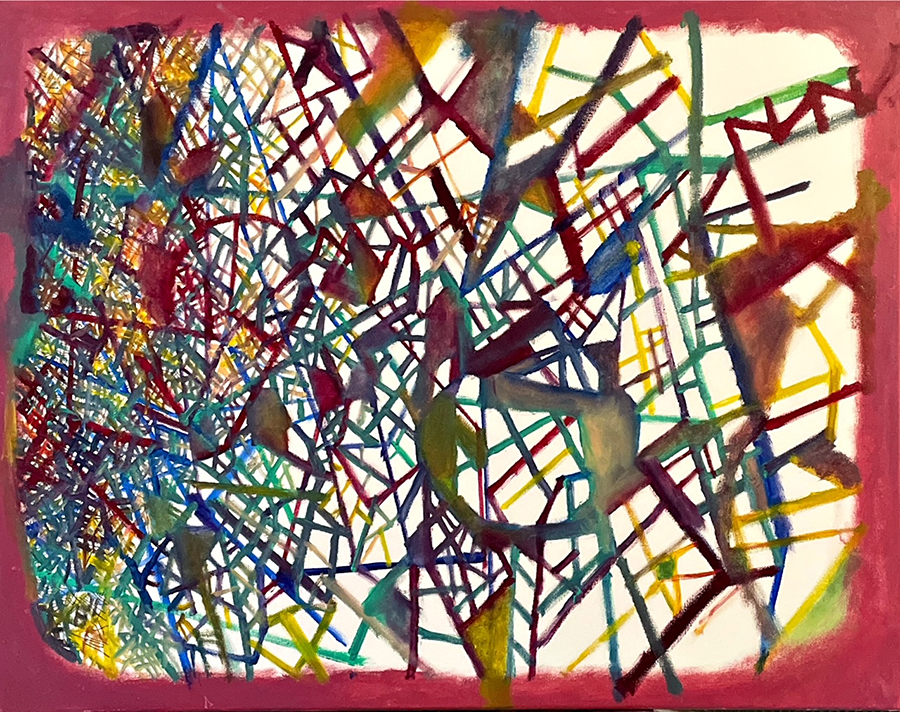
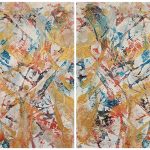
Robb Kunz hails from Teton Valley, Idaho. He received his MFA in creative writing from the University of Idaho. He currently teaches writing at Utah State University and is the Art and Design Faculty Advisor of Sink Hollow: An Undergraduate Literary Journal. His art has been published in Peatsmoke Journal, the NonBinary Review, and New Delta Review. His art is upcoming in Phoebe, Reed Magazine and Thin Air Magazine.
By Lindsay Wilson

By Victor Hugo Mendevil

By Windy Martinez

By Jackie Martin

By Samantha Edmonds
By Jeffrey J. Higa