Letter from the Editor
By John Hardberger

This essay won second place in the Spring 2026 Contest Issue judged by Brittany Means, who wrote: “I chose ‘Swamp Heart’ in part because of the striking prose and memorable descriptions, but also for the author’s unflinching self-critique. There were many moments in this essay that must have been difficult to remember and distill, and I admired the author’s candor. I also loved the tenderness of dialogue and moments of physical affection. It really captured the exhilarating confusion of young queer love. There were so many lines that made my heart sing. Too many to list, but I particularly loved, ‘Holy water everywhere and not a drop to drink.'”
*
In Florida, there is no such thing as a safe body of water: swimming pools, park fountains, the run-off that collects on the side of highways after a rain, puddles you can’t see the bottom of—any of it could contain an alligator, which to my family meant it all contained an alligator. This is a good warning to heed anywhere in the state, but it is particularly true of Lake Okeechobee deep in the Everglades, whose spindly canals—known as Alligator Alley—surrounded my grandparents’ trailer on three sides. I’m not a Floridian, and maybe because I’m not, I believe the legend; even though I rarely saw a wild alligator while visiting my grandparents on winter breaks from school, I knew the price of doubt. The neighborhood was full of stories of cats gone missing and small dogs torn right off their leashes. They’d snatch up a kid like you and have you drowned before you’d even get the chance to shout, said Mamaw Ruby, who was fond of telling spooky stories in the dark just before the grandchildren were going to bed. Okeechobee was always a place of possibility, magic both kind and terrible. Even its name, all vowels and rhyming sounds, felt slightly mystical in my child-mouth.
Despite these whispered warnings, I often found more wonder than fear in the swamp. The days I got up before my cousins were my favorites. My grandparents’ trailer looked across the canal, the water dark green and often still and shimmering as glass, and in the precious few minutes between dawn and sunrise, fog floated like a friendly specter off the water and pooled across the entire neighborhood, covering the gravel roads, lapping at the bottom of the stairs on the porch. By noon the weather would be ninety degrees, not a cloud in the sky; I dressed in denim shorts and brightly colored tank tops and rarely wore sunblock, so the morning breeze that blew across my sunburned shoulders was cool, light, like a greeting. That first step out of the trailer every morning felt like dipping a toe into the monstrous water, thrilling and dangerous but not frightening, like stepping off the planet and into a new and enchanted universe. Frogs ribbited under lily pads, falling silent when you got close. Muffled airboat motors hummed far across the water, toward the greater lake, but the only company I had were the lightning bugs, which I called faeries.
In Ohio, eleven months out of the year, I lived inside, trapped on a busy street full of zipping cars and two-laned traffic without sidewalks or streetlights. My parents, Pentecostal and conservative, were (as far as child-me was concerned) protective and overly cautious; they didn’t even let us walk to the park down the street or play in the front yard. But for one month a year, every December, they let us run feral on the lakeshore, where not even dogs were allowed to roam. They are country people at heart, first-generation Ohioans more accustomed to the rural South than suburban cities. So they taught us to run zigzag to the nearest tree and climb as high as we could if we were ever being chased by an alligator and then they let us loose. The men went out on the lake every morning before dawn to go fishing while the women went to town to buy corn and tomatoes from roadside sellers, and in the evenings the adults sat on the screened-in porch and played cards. The children were left alone in the swamp. There, the gators became our constant companions, or so we assumed, looming like ghosts in the corner of our eye, lurking always under the rippling water.
For most of my childhood, I was, by and large, an obedient daughter. This is probably because I love my mother, but not as much as she loves me, and because my mother loves me, but not as much as she loves God. So even when the water glistened and the turtles promised and the mist beckoned, I kept my legs curled under my body on the docks instead of letting them dangle off the edge. After lunch, I fished off the shore with balled up pieces of bread and used my thumb to pull the fishhooks from bluegill mouths before tossing them back. At dusk, I gathered shells from the bushes near the water’s edge. But always, I stayed dry. Even now, decades later, despite everything else I’ve done, but for the occasional droplets off a flopping fish or the rare splash from a tossed rock, my skin has never touched that forbidden water.
*
And then I met KP Walker, who told me she’d been swimming in Alligator Alley. This is one of the first things I remember learning about her, shortly after we met in a pre-calc class our junior year of high school in Ohio, spring 2010. She’d invited me to an advanced showing of How to Train Your Dragon and I’d said yes. Maybe it was the reptilian look of the dragons in the film or perhaps the parking lot had simply filled with a certain low spooky fog that always, even now, reminds me of predawn Florida mornings, but as we lingered by our cars after the movie, I told her about spending winters in Okeechobee. Then she said, No way! Me too. It turned out her grandmother lived on the same canal, in the neighborhood next to my grandparents. She, like me, had spent more Decembers than she hadn’t in Florida getting a sunburn, and she, unlike me, had every year swam in the canal at lunchtime just to cool off, waded waist-deep in the bushes hunting frogs as the sun was setting, splashed her feet off the dock while she fished. I asked her if she had been frightened and she shrugged. Not really, she said. My dad has been doing it for years. This was the most impressive thing about her to me, even more than her blue-blue eyes and her pink clear cheeks, her calculus-quick brain, easy laugh, gentle heart. Someone who could swim in the canal without being eaten—without even being afraid—was surely someone not entirely of this world.
KP and I became fast friends after that. You were so charming and cool, she told me later about her impression of me when we first met. I knew I had to be friends with you. She joined theater at my invitation, and we bonded further over our shared loneliness. She was going through some friendship drama with her best friend and so was I. I had been steadily growing apart from my friend Olivia for the last year—we had fallen out repeatedly over boys, too many to name now. She had started dating and I hadn’t, and I couldn’t articulate why that bothered me. Most folks assumed it was jealousy, and in my private moments I would confess they were right, but it wasn’t for the reason they thought. So when KP told me about how cold her friend Hannah had become, and how much that hurt and confused her, I understood. We were texting late at night after having just spent the evening together at rehearsal. The dim glow of my phone was the only light in my room. I totally get it, I told her. It’s like suddenly I don’t exist anymore.
We’re in the same boat, then, she said.
In the same boat, on the same sea, I responded, quoting a line from the musical we were building the set for that semester in theater, but really, I was thinking about that canal in Okeechobee, the place I’d been warned never to go. She texted me back and said that was exactly the song she was thinking of, too, and after that I do not remember a time when I did not love her with every beat of my monstrous swamp heart.
She liked fantasy and science fiction as much as I did, and we communicated in a combination of Doctor Who quotes, Harry Potter references, and Lord of the Rings speeches with such fluency it was like we had a private language. We often spoke of magic, but what we meant was destiny. And when we spoke of destiny, we were talking about each other. We learned our families had known each other for generations—my dad had grown up with hers—and so we crafted a new creation myth for ourselves: Though we had only known each other less than a year, having met at seventeen, we began to talk about how we must have known each other since we were tiny little babies in Florida, obviously, or even before that—when we were but twinkles in our fathers’ eyes. This origin story felt truer than facts, because in such a short time our lives had become so entwined we felt we couldn’t possibly have lived any significant amount of time without knowing the other.
I probably passed by your grandma’s house on my walks, I told her.
She agreed. And if I was there then I probably even walked by you.
We could’ve been fishing on the canal at the same time, I said.
It’s like we were made for each other, she replied.
Only once did we ever go together to Okeechobee, the summer between our junior and senior years. Her grandmother’s yard ended at the canal’s edge, which even then I would not wade in. On the first day, I asked KP if she had ever seen any alligators in the above-ground pool in the backyard and she laughed. They can’t climb the ladder, silly, she said, tapping my nose. We spent hours in the pool water that afternoon, playing a game I called “koala,” in which I climbed on her back and wrapped my legs around her waist, my arms around her neck, while she twisted and turned to see how long it would take to thrash me off. She never did. I held tight, alligator-strong.
In the photos from that trip, we are always touching. There we are in the bedroom, me on my stomach on the bed we shared, KP on top of me with her chin on my head. There we are squinting in the sunlight, arms around each other, cheek to cheek. I was completely enchanted by KP, whose body I cherished more than my own. She almost never wore makeup, her skin flawless and unblemished where mine was spotty, acne-scarred even under the foundation I applied; her eyebrows were so pale they were nearly invisible, so that her eyes became the centerpiece of her face, all the bluer for the easy pinkness of her cheeks. She considered herself a redhead, her light brown hair tinted ever-so-slightly orange, and I used to tease her by insisting she was not red at all but brunette. When other people called her ginger, I would feign outrage, insisting her hair was a strawberry-kissed brown, because it thrilled me to think of all the ways I could describe her more accurately than anyone else.
Back in Ohio that fall, we were nearly inseparable our senior year, but neither one of us recognized the obvious romantic undertones to our friendship. We had unrequited crushes on two of the male actors in the drama department, best friends we spent the entire second half of our high school careers pining over. We dreamed about the double dates we could have with them, because even in our heterosexual fantasies we couldn’t imagine the two of us not being together. Our crushes on boys we never dated were just another thing that bound us, and we both stayed single throughout most of high school, totally content to never talk to boys and instead only talk about them with each other. It was the kind of adolescent female friendship that results in obsession. I used to call KP the friend who stayed in my journal entries.
When we spent the night at each other’s houses, we shared the same bed—a not uncommon feature of girlhood sleepovers, except KP slept with her arm around my waist in the big spoon position—and I learned she had a habit of talking in her sleep, sometimes even drifting off in the middle of a sentence which she would then finish subconsciously, more or less coherently. You could have entire conversations with her without waking her up.
KP, what do you think of Chicken Boy? I asked her once, trying not to giggle. It was the nickname we had given a boy at our school, the younger brother of one of our theater friends. Eventually the name would become derogatory in my mouth, after KP took to calling him by his actual name and I refused, spitting Chicken Boy like an insult from between my clenched teeth, but it had not started out that way. It originated, maybe, because of the thinness of his legs? Or did he just like eating chicken? Who can say anymore?
Mmm, no, she replied, her eyes closed. Not Chicken Boy.
He has a crush on you, you know. I was laughing. The thought of KP dating him was so ridiculous I did not give in, at first, to jealousy: he was only a sophomore, after all, and besides, she was hung up on Derek Culvers, her half of the friendship duo we fantasized about. More importantly, of course, she was with me.
She mumbled again—no, no—and turned over in her sleep. Then I said, Who is your best friend? and she said, Sam, my name a sigh on her lips, and I added, Is she your favorite person?
Yes, KP said; then, a little bit grumpily, Sleepy, sleep. In the morning she never had any memories of these conversations, but I would relay them to her in detail, laughing hysterically while she blushed a charming, sunburned red. Even awake, she told me she had no interest in Chicken Boy, so imagine my surprise when he wore her down eventually, as high school boys do, and they officially started dating in the spring of 2011.
I was so furious I didn’t speak to her for weeks. It was a spiteful, wounded, adolescent response. At the time, of course, I thought I was the one with the moral high ground: You told me you didn’t like him and now you’re dating him, I said when I finally confronted her, so either you lied to me then or you’re lying to him now and either way that’s not okay. I teamed up with Chicken Boy’s older sister, a long-time friend also in our senior class, to gossip and rage; she was also upset and a little bit weirded out that one of her friends was dating her younger brother, and I used this to justify my own anger. You didn’t even ask her how she would feel about this, I said. I can’t believe you would be so inconsiderate.
I was cruel to KP; I am sorry for this now, but it’s true. Most of our friends, those who didn’t side with me and the sister, assumed I was jealous simply because KP had gotten a boyfriend before I did. Even I assumed this was true, in the deepest secret parts of me, when I was willing to acknowledge privately my own irrational behavior. I never once suspected what is now so glaringly obvious: I was jealous because I loved her in a way that was not meant for friendship: fiercely, monogamously. Chicken Boy was taking her from me and I was devastated. My broken heart made me mean. I wrote her a note that was essentially a break-up letter: You were the most important person in my life. And I was supposed to be yours. But now that you have Chicken Boy, he’s going to be the most important in your life. So I’m going to have to find someone else to be my person. Because you can’t be my Number One Person if I’m not yours.
The letter she wrote back, slipped into my hands at the end of a school day, is devastating to read even now. I hate this so much. You’re breaking my heart. You ARE my number one person, Sam. I love you more than anyone else. A boy is nothing—not compared to you. So who is going to be your number one now?? Sarah? Kayla??? God, this hurts so much, worse than losing Hannah, worse than anything I’ve ever felt. KP and I are little more than addresses on a Christmas card list to each other now, but even still I am sometimes brought to tears when I reread this letter. I cannot believe I once caused another person—my favorite person at the time—this much pain, but it’s also not so hard to believe when I think of all the things we did not know about ourselves then. This feels worse than losing my best friend, KP continued. I feel like I’ve just been dumped. Which, of course, she had been.
Despite—or maybe even because of—my rage and her sadness, KP dated Chicken Boy through graduation and most of the summer. I don’t know anything about their breakup—or hell, even their relationship—because even though we patched things up between us by the end of the school year, she never talked about him with me. I had made it clear I didn’t want to know. I’m more often warmer than I am cold, but I’m selfish, too, with a judgmental streak that cannot just be excused by virtue of being seventeen. Nonetheless, we parted friends—I don’t remember the specifics of our reconciliation, but I know we wrote more secret notes to each other with invisible ink that could only be read with a UV-light from a matching pen set we’d bought. Even in our distance, no one else understood us but each other.
This was also around the time KP, an atheist, started coming with me to church. It was August 2011. In less than a month, I would begin college. She had joined the Navy. She spent her last two days in Ohio with me (having finally, if I recall my timelines correctly, broken up with Chicken Boy before leaving for bootcamp, making me the clear winner). We played Magiquest, a live action fantasy game that made us feel like we’d just met Harry Potter in Middle Earth, ending our relationship as we had begun it: fighting dragons. On her last day at home, a Sunday, she sat next to me in church, holding my hand throughout the service. I had never wanted church to end, but of course it did. Then we were alone in front of her car, an old teal Trapper falling to pieces, and I embraced her until we were both crying. She never knew this, but I ran after her to the end of the parking lot and watched her going down the road in that junker until she reached the stop sign and turned right. The week before she left, I had similarly watched as KP had waded waist-deep in the church’s baptismal pool and disappeared, only to reemerge someone new. Holy water everywhere and not a drop to drink.
*
Shortly after I started college and KP finished boot camp, we got together for Christmas and I was once again judging the hell out of her new boyfriend, despite being in an exciting new relationship myself. The boyfriend made a joke about her sleep-talking, a sign of their burgeoning intimacy: I can ask her anything while she’s asleep without even waking her up, he said. It’s like talking to a hypnotized person.
I know that, I said sharply, enraged that this man who had only just entered her life would dare to tell me anything about her like it was new. He called her Kaitlin and she let him and I hated them both for that. How could he even fathom the ways KP and I had been circling each other for years? It would’ve been my parents’ van next to hers on the I-75 highway headed south all those years, my hook already in the bluegill if she were to catch one that had broken a line, my footprints in the sand if she went to the canal to hunt frogs, my voice in the fog if she ever called across the water and heard an answer. Not his. His grandmother lived in Idaho.
Four years later, KP would marry him. I was the maid of honor. They moved around with the Navy a while and then lived in Washington, maybe, while she attended college; meanwhile, I moved to Tennessee and later Missouri, and the miles and years between us did their usual work. It wasn’t until six years later—ten years after high school—when I was having dinner with KP and her husband after not seeing them for several years that KP and I finally named, out loud and laughing without embarrassment, what we had in high school as more than friendship. We were so into each other, I said, and she replied, God, like, stupid in love. And that was it. She went home with her husband to Idaho or wherever and I went back to Missouri. We never went back to Florida. I never stepped boldly or even timidly into that forbidden canal.
*
Every time I remember KP and that last fleeting conversation, I remember the otters I once saw playing in the pond behind my grandparents’ trailer. They were sleek and quick, just flashes of feet and tails, then their little brown heads would poke out between the lily-pads, cat-like, just long enough for me to gasp There! before they dove under. That there were otters as well as alligators in that water mattered little to my parents, but it changed everything for me: Why is it so easy to assume there is more to fear than love in what we cannot see?
I spent every morning of future visits to Okeechobee looking for the otters again but never managed another glimpse. The water was always swallowing things up that way—even my earliest memory of that canal, at no more than five years old, is one of disappearance. I was playing near the edge of the boat ramp with a rubber alligator toy Mamaw Ruby had bought me earlier that day. I was close enough to the first few inches of water to see minnows swimming. I had my alligator in my hand, not much bigger than the minnows, making it crawl slowly across the broken shells toward the water, waiting to pounce. Someone, Mamaw or Dad, shouted at me, You’re too close! Get away from the water! I don’t know what happened after that, which is what makes this a story of loss. All I know is when it came time for bed, I didn’t have my toy anymore, and I cried and cried and cried, causing an entire family-wide search party to form in the dark. The alligator was never found.
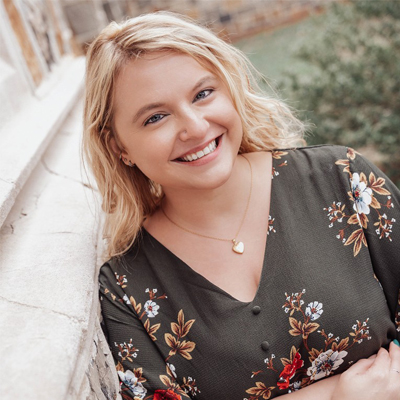
Samantha Edmonds is the author of the story collection A Preponderance of Starry Beings as well as the chapbooks Pretty to Think So and The Space Poet. Her work appears in The New York Times, Fourth Genre, Ninth Letter, Michigan Quarterly Review, Mississippi Review, Creative Nonfiction, and McSweeney’s Internet Tendency, among others. She’s an Assistant Professor in the creative writing program at Berry College and lives in Rome, Georgia.
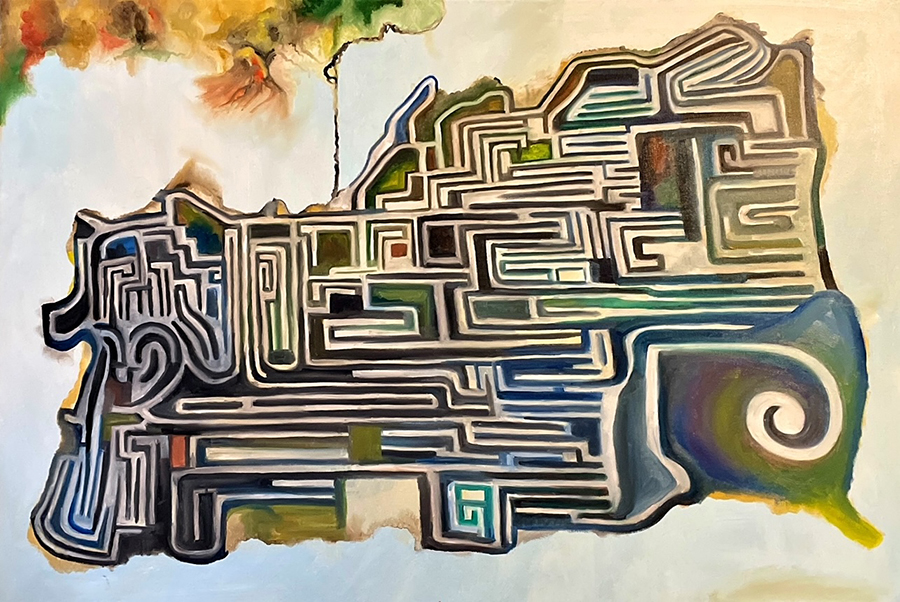
Robb Kunz hails from Teton Valley, Idaho. He received his MFA in creative writing from the University of Idaho. He currently teaches writing at Utah State University and is the Art and Design Faculty Advisor of Sink Hollow: An Undergraduate Literary Journal. His art has been published in Peatsmoke Journal, the NonBinary Review, and New Delta Review. His art is upcoming in Phoebe, Reed Magazine and Thin Air Magazine.
By Lindsay Wilson
By Victor Hugo Mendevil

By Windy Martinez
By Jackie Martin
By Jeffrey J. Higa