
Letter from the Editor
By John Hardberger

He thinks we vibe. Over lana del rey? platanos? bochinche y chismes? I’m sure D— could continue with his list. He sees me as some kind of sentimental: I flirt, I tease, I laugh, I tell him his dickprint looks good in the pic he sent. I am his Florida retirement plan. I am his gay dads at the PTA meeting. I am his removal from the Bronx. I am everything he wants me to be because I let myself be. No mirror image but an image of his: his is his is his is his. But what is D— to me? Just that: D.
Remember this before you forget: The second month after moving to New York a fortune teller tells me I was born into a great and terrible sadness. Remember how this made you feel all levels of grandeur and relevance. Now the sadness bores. There’s little telenovela glamor in it. A year later, when bringing a friend (who? can’t remember) the basement business was surrounded by yellow tape. The old Puerto Rican woman sitting on the stoop told me, “Que la mataron.”
the eyes brown diamonds, lips centered opulence, skin brown and
Sex without a condom. Again I am dumb so freaking dumb dumb dumb. Neither of us bother to ask if the other is fucking other guys. He thinks we are a thing. Hah! Hahaha. He does not know I fuck him without a condom out of vengeance. The bizarre and unutterable hope I will catch something and bring it back to E— so he can know pain like the pain I knew when he fucked A— B— C— and who knows who else. This body becomes the vessel of my great revenge.
The fortune teller tells a prophesy of the past, a past erased, a past with no future, a past
Recanting his aesthetic philosophy that all art should be in the pursuit of pleasure, Oscar Wilde wrote in his public letter to Lord Alfred Douglas titled “De Profundis,” “I now see that sorrow, being the supreme emotion of which man is capable, is at once the type and test of all great art…there is no truth comparable to Sorrow…out of Sorrow have the worlds been built, and at the birth of a child or star there is pain.”
—sick of the sorrow—
The leaky body, the diseased body, the disintegrating body—they tell me I am to fear this. A history not too long ago tells them so. Stripped masculinity. Pissing on oneself without one’s consent. Spoon fed by a mother not afraid to touch lips leprous. A tia who refuses to drink from a coffee mug because she fears contagion. Four letters which robbed us of a generation of men who laughed who loved who fought who fucked who cried who lived who died who never even were
“Dale! Metele! Dale! Metele!” It is the swerving of the L on the tongue during sex which is
A month before I was born my uncle died. No one really knows how. No one really questioned any of it. No one knows who his boyfriends/hookups were who might have loved him when this death to be first manifested. No one knows what life he lived after he took off from that small New Jersey town. There is just my mother blurting out the fear in four letters and my grandmother who quiets anytime I whisper out the four letters of its Spanish counterpart to get her to fess up to some memory. This was the fortune teller’s prediction.
Wilde’s De Profundis was created because of betrayal. The betrayal of a lover. The betrayal of community. The betrayal of an aesthetic. The betrayal of everything you believed to be true. Betrayal begets sorrow begets clarity begets truth begets life. Betrayal is the beginning of a better story: ____________________________________________________________________
The fear of death made so by the history of four uppercase letters brought together without spaces between them. Assotto Saint knew he was going to die from these four letters. He did not fear death, nor its pains (so I would like to believe, or so I have convinced myself). He feared vanishing beyond the veil of time. The consequences of stigma after his passing. “i do want to discuss my dying and my death,” he wrote. “dying” is made into a gerund, a noun, no conjugating work lassoing the verb into a fixed point in time. The noun because it is fixed is eternal. It is timeless and timely. Saint’s “dying” is ever present, ongoing, stubborn continuation.
He knew to really die was to not be remembered, to be a name on the tip of no one’s tongue. Saint knew this, and he fought to be loud, to be a diva, to tell the leakiness of his body, to weep, to live his identities wrathfully. That famous slogan—Silence=death—he tells me “remember it.”
E— smiles when he says those words. The indent of his dimples. Brown eyes glisten. He means it. Too much, in fact. On his lips it becomes customary. They are no longer transcendence, they no longer are a ravage. I do not bleed when they are spoken like I once did. The letters of the word l-o-v-e tell me—
The pronouns sandwiching these letters hail no one. The dulled syllables deafen. No impact anymore.
There is a poem by Saint titled, “De Profundis: for eleven gay men in my building.” No clear connection to Wilde. No betrayals. The poem is abbreviated portraits of men who were and no longer are. It is a poem documenting, in brevity, in an extreme brevity, the abyss of loss, its unfathomable depths, the never sucking never fucking never bottoming never topping never kissing a beloved again—loss as having no bottom, the waters eternally
—much like love
E— says those three words to me and, on the rarest of occasions, concludes the statement with my name. This is startling to me. I am/am I uprooted? Palpitation of the body. Twitch of the eyelid. Vibration of the lips forming some kind of sound. Undone at the pronunciation of my name. It feels like
—vibe
Assotto Saint was not the given name of the writer. He was born Yves F. Lubin in the country of Haiti. “By using the nom de guerre of Saint,” he wrote, “I also wanted to add a sacrilegious twist to my life by grandly sanctifying the loud low-life bitch that I am.”
When E— tells me what he has been doing the ruse is up. There is an A—. There is a B—. There is a C—. There are more letters, and the letters repeat. My letter M— is no longer the only one. I am no longer made to feel special. I can no longer convince myself that what we are is something true, pure, untainted. The dysfunction of my mother and father which I said would never be mine is now all mine. Their inheritance is this pain.
De Profundis means from the depths in Latin. Wilde and Saint, at the time of both of their compositions, are writing from the depths. Rock bottom, or near it, they write at their lowest: Saint, who will live and die from an acronym consisting of four letters, and Wilde, who will live and die because of the “love which dare not speak its name.” To write from the depths is to write from a place unspeakable. It is Saint’s rage and bitterness, his insistence and urgency in writing himself into existence before he is taken from existence. It is Wilde’s petty accusations over how he fell from grace, his antipathy towards all that once hailed him as genius. These depths, if they are to be known, must be experienced for its dank darkness, the isolation, the inescapable nature of it. From the depths the writer is always looking up, sun deprived, at what they do not have, at what they cannot have. To write from the depths is to write what is for a will be that is not yet so.
He makes me remember I am a body: impulse, vibrational matter, hair tingle, velocity rub—he makes sound out of me, this is the sound: [ ]
Wilde does not write “De Profundis” to exonerate his lover, Bosie, for his incarceration. He does not write out of friendliness, or to mend relations. There is a tone of pity, perhaps, and certainly an undercurrent of rage, but otherwise the letter is a testament to love. Loving to its limits, the extremities of love. The being that is being exposed to love. The letter is a letter written to love, to the love given to Bosie, and of a love that was. An obituary to love’s loss. “Its joy,” Wilde writes of love, “like the joy of the intellect, is to feel itself alive.” Loving in the past tense is a means of its staying alive. The duress of time passing, love going, yet resuming its hold, the momentum from a past done and over with still building. The becoming past tense of love is the hardest part knowing it will someday be past tense lived as a present. The decreasing in intensity, the diminishment of the syllable impact, a weakening of its surge—love’s prophetic doom. “The aim of Love is to love: no more, and no less.” The art of loving in minimal. The bare minimum. The expression of love, its grief its desire its history its desecration its damnation, to express love as continuation of a past and a present and a future. Love happens all at once. Love is all times. Love is being compromised, the bounds of yourself in jeopardy, vulnerable to the pain Love brings, “You were my enemy: such an enemy as no man ever had”—then is that what love is? To live and have lived and will live a lifetime, as violators as enemies as a discord itself, the onset of this love lifetime shadowed by a betrayal to be, a beginning—an end, the anticipation of betrayal’s realization? Wilde, my comrade, we are victims to, as well as perpetrators of, love. Caught up in every tense of it.
When D— and I fuck I call him Papi. I even put on my best non-white boy voice I can muster. He bites his lower lip, intensifies, eyes blaze narrow, thrusts, brow ripples concentration. This triggers him because he hates his father, his Papi. He thinks his father is a Dominican stereotype. Left his mom when he was a baby, check. Gossips unendingly, check. A beer belly sponsored by El Presidente, check. It is because of him you inherited your six foot six height, I want to plead to him, forgiveness lindo. Maybe the rage at his father and me calling him Papi is why he fucks so well. Trigger after trigger triggering triggers. Forgiveness can wait.
us vibing, the matter at hand, believing it, want to believe in what he believes in: our vibing—our mutual agreement of sensational pulses, the harmony of body to body, skin equivalence, the being that is being in tandem, our accord—not that though: it is He and I, the pronouns singular, the “and” a border stalling our unity—ours, if we are to have our plural, possesses no friction, ours is the absence of the tense pulse, no quiver of the skins, nowhere near the precipice of our unbecoming, the slow unraveling of all that we are on no foreseeable horizon—ours, if it is anything, is a negation, the canceling out immediately, the gradual waning of lust, the immanence of our ending, our transcendence into nothing—He and I and Us and Ours no more nor never was
Saint’s “De Profundis” is in the honor of eleven gay men. No more, no less. He tells us of their “strolls through chelsea.” He gives us the ordinary details of craving “french fries kiwis gin” after a night out dancing. He reminds us of the what will be:
i tried to see anything but his casket
gorged by the ground
the tears were for myself
one day
i shall be in this
darkness
love’s suffering, the suffering of loving, losing love, love dawning, the withering of love, the darkness that is to love in all the present tense verb of it—this has been the condition through time for kinds of loving that are not
Loving as a burial grounds of names that you will join…—D— and E— and A— and O—…Dare not spoken, spoken only in daring The Ghost, it is A-I-D-S- The curious predicament of the man who loves other men. He is a disease. He carries disease. He gives disease and in giving it he gives regeneration. Death as a life as a means of living as a memory. He regenerates in those who come after him. This is his loving, this darkness all shall be in.
D— and E— are the entire island of DR to me. Flesh I make expeditions on weekly. They are my conquest and my land and my steed. They are history I ride, I suck, I bite, I fuck in the making. They are
Vengeance is the ultimate act of __________________________.
[forgiveness]
[pettiness]
[revolution]
[selfishness]
[love]

Marcos Santiago Gonsalez is a PHD candidate in English and Literature at the Graduate Center, CUNY, and teaches writing courses at Baruch College. His short fiction can be found in Latino/a Rising: An Anthology of U.S. Latino/a Speculative Fiction, and Duende Literary. He is currently seeking representation for his first novel, and is working on a memoir about trauma, racism, and growing up with undocumented Mexican parents in rural New Jersey. He currently lives in New York City.
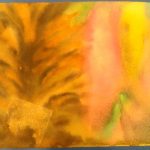
By Lindsay Wilson
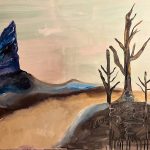
By Victor Hugo Mendevil

By Windy Martinez

By Jackie Martin
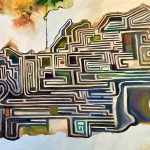
By Samantha Edmonds
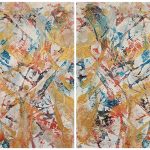
By Jeffrey J. Higa