Letter from the Editor
By John Hardberger

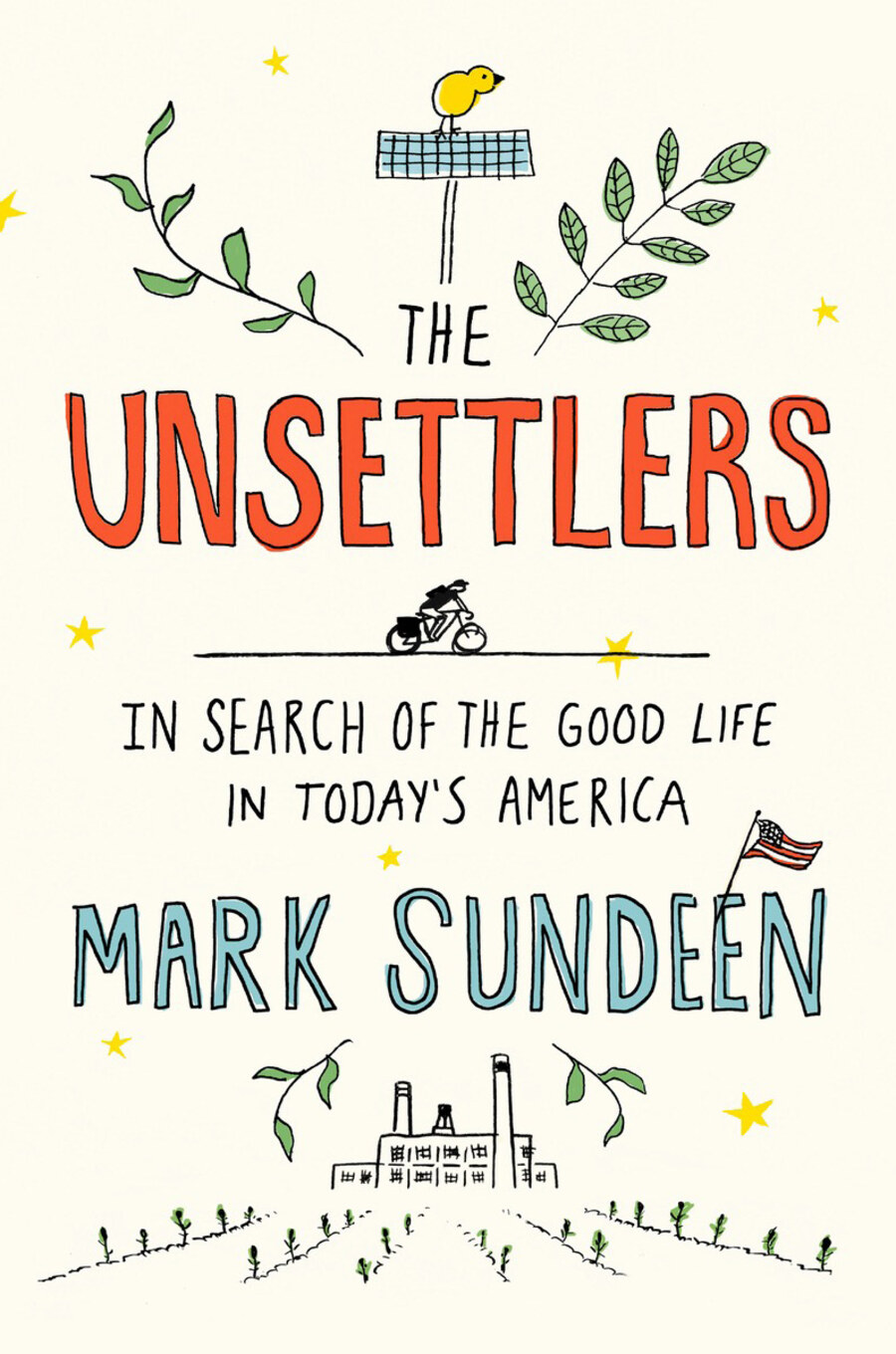
Last summer, writer Mark Sundeen moved to Albuquerque as the Russo Chair in Creative Writing at the University of New Mexico—as well as the faculty advisor to the Blue Mesa Review. He is the author of Car Camping (2000), The Making of Toro (2003), The Man Who Quit Money (2012), and The Unsettlers (2017). He has won fellowships from The MacDowell Colony, The Montana Arts Council and The Utah Arts Council. A contributing editor for Outside Magazine, his work has appeared in the New York Times, The Believer, Vice, and McSweeney’s. David O’Connor sat down to speak with him about his work.
Mark Sundeen arrives on time at the coffee shop in Albuquerque with his rescue dog. We sit outside near the busy street. I’ve read all his books. I’ve prepared questions. He asks if the sound will record. This man has been interviewed before. He is professional. The previous night he hosted a party for his new writing students and colleagues. If he was any more laid back, he’d be horizontal. Then I realize, this is just experience. He reeks of intelligence. I want to understand his shift from experimental fiction to longform journalism and nonfiction. I want to know how he got here. I want the secret to his success.
He takes off his shades and speaks slowly, occasionally pausing with insight. He is deliberate with words, open, generous, and sharp.
Blue Mesa Review: How about a little free association to warm up…
Mark Sundeen: We got some nice turquoise colored sunshades… we’ve got traffic and hot sun on the clean brick building…we’ve got shade…
BMR: How about I say a word and you say a word? Utah.
Sundeen: Sure. Alright. I’m afraid to say mountain biking.
BMR: Santa Cruz.
Sundeen: Also mountain biking.
BMR: Road trips.
Sundeen: Moab.
BMR: Literary magazines.
Sundeen: Tin House—first one that popped into my mind.
BMR: Editing.
Sundeen: Becky Saletan, my editor. Becky is a very good editor.
BMR: Elections.
Sundeen: Depression.
BMR: Work ethic.
Sundeen: 1000 words a day. Jack London.
BMR: Time management.
Sundeen: Drawing a blank on that one. Okay, I picture a stopwatch, but I don’t use one.
BMR: How do you feel about this new chapter in Albuquerque and at UNM?
Sundeen: I’m thrilled about it. There’s only about five places in the US where I would be willing to apply for a teaching job and this is one of them. I wanted to be in the West, close to natural beauty, Tucson, Salt Lake, Missoula, Laramie… there aren’t many towns with a good university near nature.
BMR: Boulder? Could you do Boulder?
Sundeen: I don’t think they could pay enough for me to afford to live there. We just moved from Fort Collins and I think I prefer it there. Low key. But of all of those places, they all seem very white and expensive and Albuquerque is neither of those things. I find it interesting culturally, historically; the proximity to the pueblos and Navajo Nation.
BMR: Speaking of West—except for a foray into Detroit—all your work is set out West. What do you think of the East?
Sundeen: I lived in Brooklyn for a year or two. I teach at a low-res in New Hampshire, but I like the West, the architecture, the wide openness. I like the conversations in the East, but it comes with a self-importance, like “we are the center of the world.” Especially in publishing. Life out here is as equally interesting and it can be frustrating.
BMR: Speaking of publishing, when I picked up a copy of Car Camping, you were blurbed by George Saunders and Hubert Selby Jr. Anthony Bourdain wrote the review in The New York Times. How did you get that coverage? What was the process of publishing your first book?
Sundeen: I was a graduate student at USC in LA. I came to the program with a lot of these chapters already written, self-published. I took a class with Hubert Selby and I ended up selling the book to a publisher when I was still in school. It came out the next year. I was like 28. George Saunders was kind of a slightly unknown back then. I was working in Mexico, and we had just pulled in to a trailer park and I checked my email,—they must have had a computer—and I got this great blurb. I had never heard of him.
BMR: Amazing.
Sundeen: 1999.
BMR: And the review? The review told more about Bourdain than the book.
Sundeen: It was a horrible review. I’ve held a grudge for 20 years now. It was a weird thing. It came out in paperback, not a large print run, a first-time author who had never published anywhere…it was a takedown review as if I were someone who needed to be taken down. But that was before he was famous. Kitchen Confidential had not come out yet.
BMR: What was the process for the second book? The Making of Toro…
Sundeen: My agent went out to lunch with an editor from Lyons Press and they cooked up a scheme. I was gonna go to Mexico and do a similar book to Car Camping, but about bullfighting. I’d never been to a bullfight. I had zero interest in bullfighting. I found the whole idea repulsive and derivative. The idea was so starkly a “wannabe Hemingway,” but I needed the money. So I took the contract. Before I even went to Mexico, though, I decided I wasn’t going to write the book I was contracted to do. I wrote a mate—a making of… and I just made fun of the book I was supposed to write. Of course, they didn’t want to publish it, so we had to give them the money back. It wasn’t very much, like $4000. Then we sold it to Simon & Schuster. It worked out well.
BMR: Then how many years before The Man Who Quit Money…?
Sundeen: A long time, I want to say nine years.
BMR: There seems to be a stylistic, shall I say, philosophical shift…
Sundeen: Yeah. The first two were very personal and idiosyncratic and hardly edited at all. Neither of them sold much. No awards. I was still broke and felt like I had sung my song. But I still wanted to keep writing, but not the same style of book…
BMR: Was there an emotional toll? Like post-publication depression or…
Sundeen: Yeah, totally. I mean, The Making of Toro was almost about the heart break of the first book. It’s hard to spend all this time putting your soul into these books and they are ignored. I decided to try my hand at journalism. I started writing for Outside Magazine, The New York Times, and National Geographic. At the same time, I wrote a very conventional novel. I spent three or four years on it. I sent it out, but the responses were lukewarm. I probably could have gotten it published but it wasn’t going to help my career. I was desperate. I just put it away.
BMR: What was it about?
Sundeen: A multi-generational family thing in which the main character was out in Utah hunting bones. Anyways…
BMR: Let’s talk about the shift to journalism. Was it hard?
Sundeen: Yes. But because I had two books out, I could skip straight to features. I loved getting paid to travel and get out of house. But still, nothing was winning awards or giving me the breakthrough I was looking for… I’d almost given up on that novel when my agent called about a ghost writing job for the captain on The Deadliest Catch. I wrote that book on spec—on contract—got paid. It was basically for fans, but I felt like it was better than the novel, just in terms of achieving what it was trying to achieve. Maybe not a literary masterpiece, but a good book about a good person; very well-structured. It had no unrealistic ambitions. Basically, it tells the guy’s story, and it was a New York Times best-seller.
BMR: Ghostwriting is just a flat fee?
Sundeen: No there are percentages. It was enough to live off for a year. So then, in 2009, I had the glossy publications and a commercial success, and they called me to write about this guy living in a cave without money in Moab. And it turns out, I knew the guy. That felt more personal and innovative than the magazine work, less sarcastic and smart-assy than my first two books. I hit my stride and felt like I had done something right. It was weird. I had done all this striving to succeed, but the reason that book succeeded was because of all the years I spent living in my car being the dropout. Those years allowed me to really understand the guy more than any New York magazine writer anyway. I don’t think anyone else could have written that book the way I did.
BMR: Did doing justice to the subject free you from doubts and insecurities?
Sundeen: I think the early literary experiments helped me explain the lives of people living radical experimental lives.
BMR: Which brought you to The Unsettlers…
Sundeen: The last two books have a very similar style and voice, personal, with journalistic and novelistic sections. To me, I still feel like I am doing experiments with nonfiction, but no one ever notices that.
BMR: Just the facts please!
Sundeen: I’m just writing about people who are interesting—that is why people read the books. But, I’m always excited about this idea of the omniscient narrator who can fly around on one page and be speaking personally like a memoirist on the next page and then philosophizing or researching some arcane monetary law or farm bill and the next chapter will be in some other character’s head, more classically novelistic.
BMR: Seems like you learned a lot from your subjects in the later books…
Sundeen: In The Unsettlers, I didn’t set out to write about married people with children. I thought I’d find loners and dropouts. Then I met one couple, then more, and I found their stories so much more interesting, ‘cause the stakes are higher if you have children. I mean it’s a free country, you can just fuck off and do what you want, but when you expose your children to the experiment, the stakes get high and you start to have all this judgement from the rest of your family or society. I was also interested in women living this way, because it is always about men, the Thoreau-model, man alone in the woods. Anyway, there were not any single women with kids living this way, and at least from my research, no same-sex couples either. No single men with kids either, it’s just too hard. I started intellectually being drawn towards families with children. It turned out that at the same time I was writing the book, I was getting married to my wife who had come from a background like this, an off-grid, back-to-the-land family. And—I didn’t realize this till the final revisions of the book, after three years—I was really looking for role models. People who could get married and have children and still not sell out. Ok, bad phrase, people who were still idealistic, anti-materialistic. A lot of people have kids and say well, we gotta do the private school, the minivan, the piano lessons, and then weirdly the parents say they are doing it for someone else. It’s weird, if you look at gated communities, probably everyone in there would say I live here for my children. I wanted to meet people who had children and still stuck to their ideals.
BMR: After the book did you just say goodbye or did you keep in touch?
Sundeen: Just to answer the question, I learned a lot from the people and saw two of the three families on the book tour.
BMR: How do you wear the caps of author and writer?
Sundeen: I can’t get enough. I don’t see them as two different things. I guess my writing has always been commercial. I don’t have an amazing imagination. I can’t just sit at my desk and make up shit. That’s why I need to go out into the world and find subjects. I know what I want to write about but I can’t just sit there and do it. I have to go out and find it. And when I do write fiction, I am always second guessing and doubting, no one is going to believe this. The things I need to happen in the story don’t seem believable, but if they have already happened in real life then I can make it work.
BMR: What are you working on now?
Sundeen: I want to write about Vets and PTSD. Like, tomorrow I’m going to a graduation for Vets with PTSD who have trained their own service dogs. Maybe it won’t end up being a story. But I’ll be there. In fiction, you make up the facts to make the story. In nonfiction you make up the story to fit the facts. You get these true things but you might not have the form.
BMR: How do you like teaching? You are more of a writer who takes a teaching job, not the typical teacher-writer.
Sundeen: I love it. I mean a book tour takes 20 days. The other 340 days, I’m not just sitting around.
BMR: Do you have a daily routine?
Sundeen: I did. I have. But since finishing The Unsettlers, I went to Standing Rock, I haven’t written anything for eight or nine months. Like a lot of people, I think I fell into a depression after the inauguration. Which brings me back to teaching. The world just seems so bad right now, I like the idea of being in contact with people, in some way, to influence them and make sense of things. And teaching seems a more direct way of doing that than writing a book that will come out three years from now and maybe people will read it and maybe not…
BMR: And maybe it will be outdated. Hopefully he has resigned by then…
Sundeen: Yeah, I doubt it.
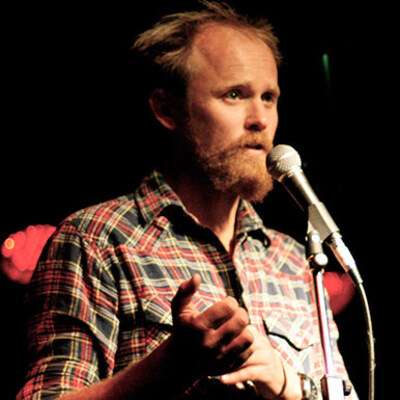
Last summer, writer Mark Sundeen moved to Albuquerque as the Russo Chair in
Creative Writing at the University of New Mexico—as well as the faculty advisor to the Blue Mesa Review. He is the author of Car Camping (2000), The Making of Toro (2003), The Man Who Quit Money (2012), and The Unsettlers (2017). He has won fellowships
from The MacDowell Colony, The Montana Arts Council and The Utah Arts Council. A contributing editor for Outside Magazine, his work has appeared in the New York Times, The Believer, Vice, and McSweeney’s.
David O’Connor pursued a career in Theatre and Film and has worked on both sides to the camera and stage. Currently he blogs at The MFA Years and reviews literary magazines for The Review Review and is pursing an MFA in Fiction and teaching at UNM. His work has appeared in various publications including: Collective Exiles, Bohemia Journal, BlueStem, The Literary Yard, Fiction Magazine, Electric Windmill Press, The Kite Mag, Barcelona Metropolitan, The New Quarterly and The Guardian. www.davidmorganoconnor.com

By Lindsay Wilson
By Victor Hugo Mendevil

By Windy Martinez

By Jackie Martin
By Samantha Edmonds
By Jeffrey J. Higa