
Letter from the Editor
By John Hardberger

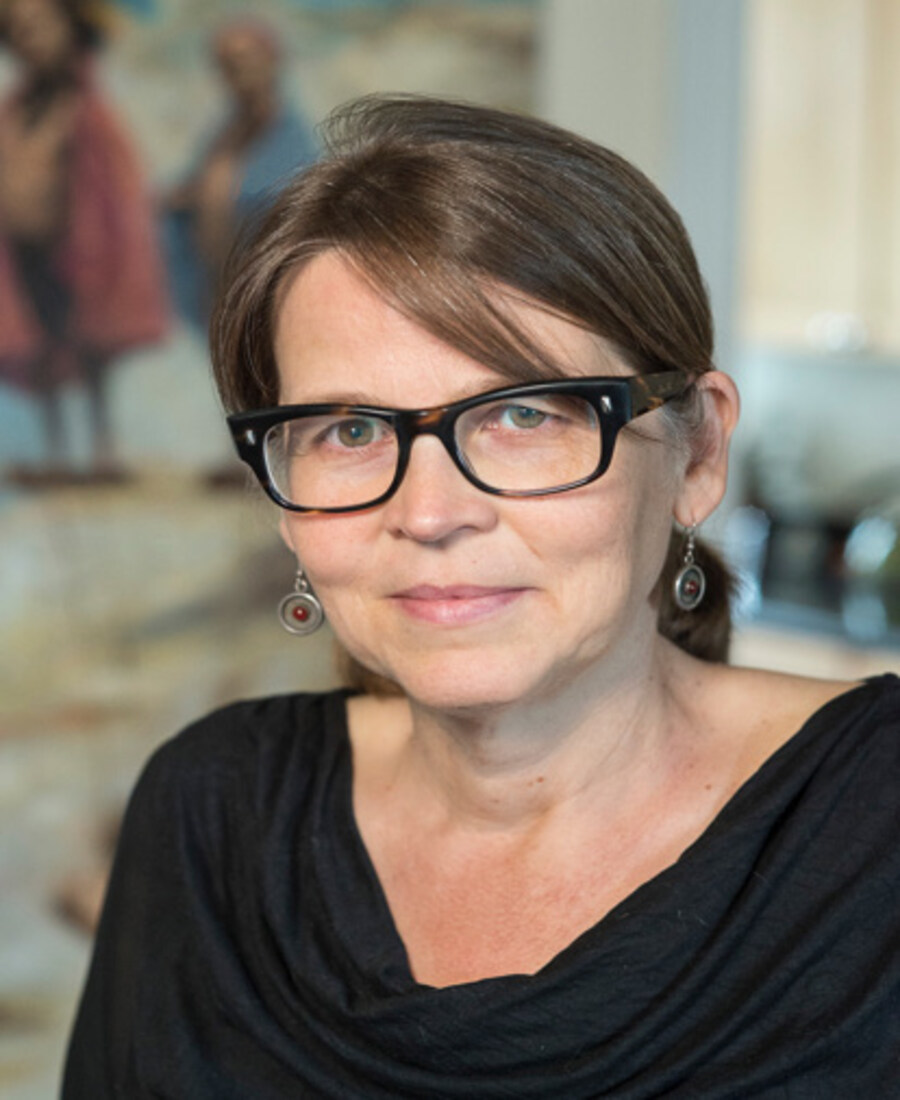
Lori Ostlund’s debut short story collection, The Bigness of The World, won The Flannery O’Connor award in 2008. Bringing a wry Midwestern eye to Spain, Belize, New Mexico, Morocco, Indonesia and Malaysia, these stories not only explore lesbianism, racism, tourism, global versus local-living, but gaze deeply into the human condition. Scribner reissued the collection in early 2016.
Ostlund’s debut novel, After the Parade, was been released in paperback by Scribner this year. After the Parade was shortlisted for The Center for Fiction First Novel Prize and was a finalist for the Ferro-Grumley Award for LGBT Fiction, and also a Barnes and Nobles Discover Great New Writers pick. Her stories have appeared in the Best American Short Stories and the PEN/O. Henry Prize Stories, ZYZZYVA, The Southern Review, and the Kenyon Review. She is a teacher and lives in San Francisco with Anne Raeff and their two cats.
David O’Connor: I’ve heard writers say that talking about a book is a second career. How do you feel about interviews and promotion?
Lori Ostlund: Some say that the difference in being a writer and being author is like the difference between a tourist and traveler. So, I don’t mind talking about my book, but I don’t love craft essays. I like when people tell me their stories.
O’Connor: Do you ever write craft essays?
Ostlund: When I taught composition, I was always looking for way to quantify. When I teach writing, not so much. I feel like I have figured out my way of looking at things.
O’Connor: As for readings, do you get nervous? Do you give yourself a pep talk?
Ostlund: I prepare, yes. But I switch into this whole other mode. I like doing it, but I like knowing that I get to go home after and do nothing. I can’t do it for an extended period. I don’t know how people can.
O’Connor: Is there like a reading hangover after?
Ostlund: A little, the next day, I find I’m much worse responding to emails and people. I might do a Netflix session. But I do like public readings, especially when talking about how the story came to be. Focusing on story is the key. On Saturday, I did a fundraiser where we spoke for twenty minutes about how we became writers and how our books came to be. What was interesting to me, was trying to think through all these little important moments in my life. When something switched over, maybe because I grew up in this place that was so small and isolated the first thing I knew I had to do when I left was to just figure out how I was going to interpret that world. To write, I have to position myself between my old world, the one I write about, and the world I live in now, which is who I am writing for, in a sense, to interpret one world for the other. For me, it’s about perspective. People assume I didn’t always want to be a writer because my first book came out at 44. I did. I just felt ill-equipped. I felt an MFA wasn’t what I needed. I needed to go completely out into the world. After my Masters, in my mid-twenties, I moved to Spain and read what I felt like. Then I started travelling. Morocco, Turkey, completely outside of my reality. The plan was not to go back to academia, it would be just another small town, and I’ve done small towns.
O’Connor: And you survived by teaching ESL?
Ostlund: I was teaching for the Princeton Review, a test prep centre. Mainly GMAT, GREs, verbal section. I became the lead verbal teacher. I had done the test, but I had no idea what the score was. I was good at math. I’ve always been good at standardized tests. My brain is good at following directions. They hired me.
O’Connor: From Spain to the publishing world, it’s a large step, you were really out of the writer’s community.
Ostlund: I wasn’t doing any writing there. Anne (Raeff) and I got together in Spain and she was writing away on an old typewriter, hundreds of pages. I had a library card to The British Council Library there, and basically I read everything I could. At Morehead, as an undergrad, I did some creative writing workshops and wrote a lot. Then, I was invited to join this group in the community, they were older and I was shy. Kinda the young one. There was an atheist pastor, who wrote his sermons in a dive bar that I frequented, and a woman who was in a rock band. We’re still friends. One night she was coming home from a gig and the trailer full gear caught on fire, so she became a writer. Here I was at 21, with these people who had lived full and interesting lives. I had something to learn from these people. I think that was the moment I became a writer.
O’Connor: And did you continue doing workshops?
Ostlund: We tried snail-mail for a while but it fell apart. Since then, Anne has been my best, first and only reader.
O’Connor: Did you ever dabble in poetry?
Ostlund: I started out writing poetry, but I think the last poem I wrote was in the late 80s. I still read a lot of poetry. Poems are like the perfect balance between cerebral and emotional.
O’Connor: But your stories are very image based. Do you start with and image? Do you write around an image?
Ostlund: Sometimes. With fiction, there is always something that takes you into the story. You pursue it, and the story either stops being about that thing—maybe the thing just launched the story and disappears, or you realize that one thing is so integral to the story that you can never take that thing out. I like when it’s an image or a memory, like Clarence in After The Parade and his tusks. Like falling off the float at a parade. O’Connor: Like totem poles in the centre of the story?
Ostlund: Kinda, like what Robert Boswell would call spandrels. If I don’t find those, then that’s a problem. What I like about Boswell’s essay is he acknowledges that you can’t plan for them. O’Connor: So, you don’t start with the spandrels?
Ostlund: I might, but it’s still a lucky thing. If I’m working on my story and I don’t have my spandrel, then all is kinda lost. Especially at the end, because that is when your top story has to fall back.
O’Connor: Do you write any nonfiction? Memoir?
Ostlund: My fiction has everything to do with my life. I don’t have it in me to write nonfiction. I feel far too vulnerable. I need that fictional mask. The minute I try to write nonfiction, something happens. There are certain questions people ask, and I’m not confessional, I catch myself hedging. I need the fictional happening. When the book was coming out, the publicist asked me for a bunch of personal essays to shop around. I was so bad at it.
O’Connor: But you did it?
Ostlund: I did. They sounded distant. That is my natural tendency.
O’Connor: You travelled so much, have you tried travel essays?
Ostlund: No, but I would like to.
O’Connor: Do you ever do things for stories, so you can write about them?
Ostlund: No one had ever asked me that before, then two weeks ago a student asked me and I thought it was such an interesting question. I do things to have an experience, but while you are doing them, you realize that you are doing them because this will be in a story one day. I have a fondness for dive bars. And San Francisco is a haven for dive bars. Old men really like me and tell me a lot of stuff and we usually end up having great conversations. When I was in college, still trying to figure out how to go out and be in the world, I started this really stupid habit. I’d just bought my first car and at night, I would go out and pick up hitch-hikers. Anyone I saw, mostly drunk-frat guys that were happy to have a ride. I picked up one woman, whose clothing was ripped, something had obviously happened. She leaned against the door and cried and I realized how young I was and had no idea what to do. Another time, I picked up this old man—well, he’s probably my age now—he just wanted a ride to the liquor store, but in Minnesota they were closed. He seemed so sad, so I drove him to Fargo, in North Dakota. He got his cheap whiskey and I drove him home. Nothing bad ever happened.
O’Connor: Let’s talk about ESL teaching, it pops up frequently in your narratives. Is this a conscious decision? How do you use it?
Ostlund: I’m someone who has always loved and respected subtly, silence and restraint. But as you know, ESL teaching doesn’t allow for any of that.
O’Connor: Your sentences are so well constructed, do you think about grammar when you write?
Ostlund: I do. I love grammar. I grew up in a very traditional small town, with a traditional approach to education. We diagrammed sentences and I loved it. Still do. But as I began moving, I started to feel over my head. I was around people who all went to Ivy League schools or their parents had all gone to college and they grew up travelling. Language became increasing important to me, as something to perfect. I lost my accent, it just disappeared. I wasn’t trying to pass as something. I just didn’t want to be messed with. People can be real credentialists. They follow check-lists.
O’Connor: And now you teach a lot of fiction workshops?
Ostlund: I’m always teaching something I have no credentials in. I have no ESL degree, nor an MFA. The bond in teaching is vulnerability. Proceed with gentleness. I’m a bottom-line sort of person. I like to know what’s working. I like to be told. I don’t need the sandwich thing, just give me the meat in the middle. I don’t need the nodding. My characters who teach ESL knock on the table as I did. I don’t knock on the table in fiction workshops.
O’Connor: I’m sure you get asked this a lot: short stories to long form. How?
Ostlund: I get bored quickly. So, I like changing things completely. I thought I was a short story writer, period. Novels are messy and much more forgiving. The novel is more of an imperfect form. I like short stories and operating under the illusion that I’m working on something that can be perfected. The novel will always have a sag, you can digress.
O’Connor: Can you see the sags and digressions?
Ostlund: Afterwards sometimes. But the editor helps. I see them much easier in a short story.
O’Connor: Do you see your novel a lot differently now then when you published it?
Ostlund: I think so. My editor helped, I need someone to step in, someone who had the books best intentions at heart, she helped me see. We cut close to 100 pages. It was all about pacing. Why digress here, when we are trying to get there? It became a different novel.
O’Connor: When you read, do you read the same section?
Ostlund: I used to, but now I mix it up. I used to read only the funny bits. Some parts just work better for performance. Dialogue driven helps. When I read out loud, it’s the way I expect it to be heard. It’s Minnesotan and very dry.
O’Connor: Is there is a through-line in your writing?
Ostlund: The thread is being shaped by a place and inside it or being shaped by the fact that we are completely outside the place. That’s why I travel. I’m not the type of person that would arrive in Bali, and say I know Bali. I like the feeling of being an outsider. I mean that’s the theme, looking at the ocean and seeing that bigness. There are so many people that see the ocean and want to retreat, but when I look at the ocean, I love the fact that the world is big. I feel comforted by that. I understand the overwhelming.
O’Connor: How did you order your short story collection?
Ostlund: I ordered it for The Flannery and the logic, especially online, which is read in order. It’s basic wisdom: best first. The screening judges might not read them all.
O’Connor: How did you know which one was best?
Ostlund: I started with “The Bigness of The World” because if you walk into a bookstore, you know how it is, you start reading the first paragraph, and I thought that’s the one that would appeal to the most people. It had a voice and forward motion. Also, I had all the lesbians stories stock-piled at the beginning, and after winning I was advised to spread them out. We wanted to make it even, balanced.
O’Connor: Had you published 20 years ago, you’d be put on this special bookshelf, hidden at the back of the shop, special interest or something.
Ostlund: This writing would not have gone. I mean I’ve been reading collections with all straight characters for years and it’s odd to me when people don’t blink when a book has only straight characters. I live in a varied world, gay and straight, both gay and straight people have always helped me and are close to me. I don’t want to use the word ghetto-ize, but there used to be that tendency for gay people to keep to themselves and I understand why, it’s easier.
O’Connor: Safer, yes.
Ostlund: Especially when you’ve been rejected by family or friends. Estranged. But when I sit down to write, I often write gay characters, but not for necessarily a gay audience.
O’Connor: Do people try and label or ghetto-ize your writing?
Ostlund: Sure, some people do. Or try to.
O’Connor: Did the publisher?
Ostlund: No, not at all. I think in the past you had to make a decision, you were either gay and wrote gay characters and were put on the shelf you were talking about or you wrote straight, like Edward Albee, one of my favourite authors, and gained acceptance into the mainstream literary community.
O’Connor: I guess minds have opened?
Ostlund: I’m endlessly surprised by the people that contact me and are touched by the book. It’s often not gay people. I mean gay people read it, but the people who reach out are kind of middle-American, small-towny, happy to see themselves portrayed. The world has changed so quickly. In the past—and I think people of color have dealt with this too—if you were writing a gay character, it had to do directly with identity, with a direct understanding, those coming-out stories filled the market. Early on I read a review on Goodreads and the man liked the book but said Aaron, the protagonist, shouldn’t be gay because he wasn’t coming out.
O’Connor: For me, that is so two dimensional versus three, it’s a non-issue. In the past, you needed the 2D platform to educate, people needed that, but now—
Ostlund: You know for me, things happened to Aaron because of his childhood, the book is not about coming-out, it’s just so strange that this Goodreads guy thought Aaron should be straight because it wasn’t a book about coming-out. I left it at that because I didn’t want to summon the trolls. That said, I get a lot of feedback from teachers and middle America. Writing about Minnesota is not so hip. The first cover they came up with looked like an inspirational religious calendar, with little roads, the way a New Yorker sees the fly-over states, with corn and the nice sunsets.
O’Connor: So, you fought the cover choice?
Ostlund: We were very diplomatic, but my agent and editor helped with that one.
O’Connor: What are you working on now?
Ostlund: A novel called The Proprietresses about when Anne and I ran a furniture store in Albuquerque. Normally, I can’t write about a place when I’m it, but this time, I got 200 pages off quickly. I have another short-story collection almost ready to go. One of them is moving towards a novella, which I have no objection against.
O’Connor: Would you go the contest route again?
Ostlund: I don’t know. Scribner has first shot. But who knows? I might approach them with both together and see how that goes.
O’Connor: Any film-rights sold? After the Parade would make a great film.
Ostlund: Not yet. It’s very narrative, I’d love to see it made. I have visions of Linda Hunt, she was great In the Year of Living Dangerously, set in Indonesia, playing a journalist. The paperback comes out in July, and it comes out in Germany in August, so we’ll see. The German rights sold super fast. But there is so much competition for attention. A book’s shelf life is six weeks, and we’re onto the next thing, so I’m trying to create a little splash.
Excerpt from After the Parade
The following excerpt is from the opening chapter of After the Parade:
Aaron had gotten a late start—some mix-up at the U-Haul office that nobody seemed qualified to fix—so it was early afternoon when he finally began loading the truck, nearly eight when he finished. He wanted to drive away right then but could not imagine setting out so late. It was enough that the truck sat in the driveway packed, declaring his intention. Instead, he took a walk around the neighborhood, as was his nightly habit, had been his nightly habit since he and Walter moved here nine years earlier. He always followed the same route, designed with the neighborhood cats in mind. He knew where they all lived, had made up names for each of them— Falstaff and Serial Mom, Puffin and Owen Meany—and when he called to them using these names, they stood up from wherever they were hiding and ran down to the sidewalk to greet him. He passed the house of the old woman who, on many nights, though not this one, watched for him from her kitchen window and then hurried out with a jar that she could not open. She called him by his first name and he called her Mrs. Trujillo, since she was surely twice his age, and as he twisted the lid off a jar of honey or instant coffee, they engaged in pleasantries, establishing that they were both fine, that they had enjoyed peaceful, ordinary days, saying the sorts of things that Aaron had grown up in his mother’s café hearing people say to one another. As a boy, he had dreaded such talk, for he had been shy and no good at it, but as he grew older, he had come to appreciate these small nods at civility.
Of course, Mrs. Trujillo was not always fine. Sometimes, her back was acting up or her hands were numb. She would hold them out toward him, as though the numbness were something that could be seen, and when he put the jar back into them, he said, “Be careful now, Mrs. Trujillo. Think what a mess you’d have with broken glass and honey.” Maybe he made a joke that wasn’t really funny, something about all those ants with bleeding tongues, and she would laugh the way that people who are very lonely laugh, paying you the only way they know how. She always seemed sheepish about mentioning her ailments, sheepish again when he inquired the next time whether she was feeling better, yet for years they had engaged in this ritual, and as he passed her house that last night, he felt relief at her absence. Still, when he let his mind stray to the future, to the next night and the one after, the thought of Mrs. Trujillo looking out the window with a stubborn jar of spaghetti sauce in her hands made his heart ache.
Lori Ostlund will judge fiction for Blue Mesa Review’s annual summer contest this year, alongside her partner, writer, Anne Raeff. A modified version of Chapter 2 of Lori’s novel, After the Parade, was published in The Common under the title, “Leaving Walter.”
By Lindsay Wilson
By Victor Hugo Mendevil

By Windy Martinez

By Jackie Martin
By Samantha Edmonds
By Jeffrey J. Higa