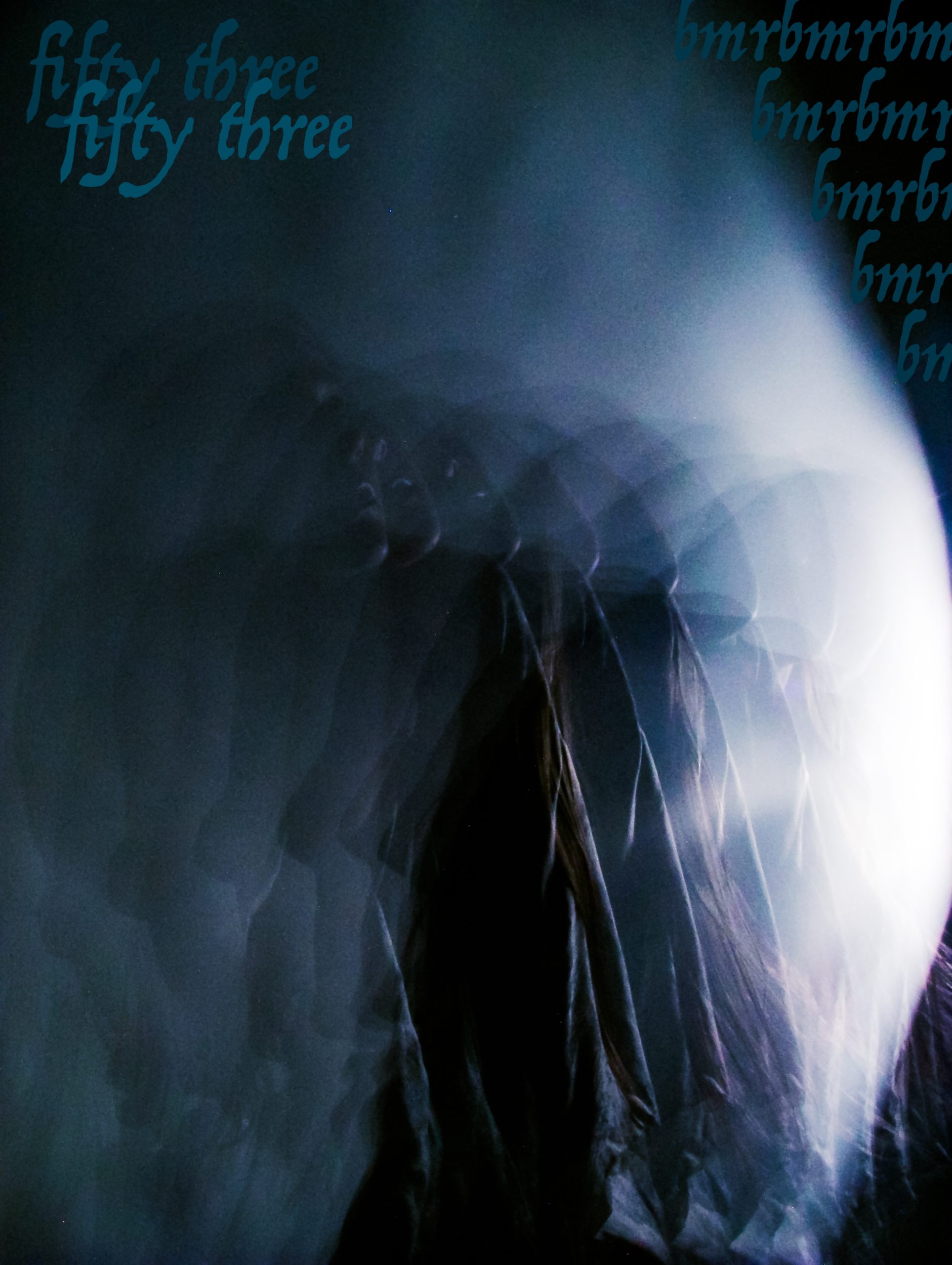

Letter from the Editor
By John Hardberger

Six months from now in Odsburg, Pennsylvania—after several rounds of arduous lobbying by OdsWellMore (local pharmaceuticals manufacturer, major employer, and claimer of responsibility for Odsburg’s meager economic prosperity)—all pharmaceutical testing and sales regulations will be provisionally lifted. Within the village limits, prescriptions and even patents for all types of medication will be rendered unnecessary. Following a brief period of confusion and distrust, market activity will erupt.
The number and variety of medications flooding the market will be staggering. Of course one will be able to find the old standbys—pain killers, antidepressants, antibiotics—but these will be joined by a slew of additional compounds only the lab rats will have tried. No prescriptions or physicians’ notes will be necessary, with everything over-the-counter and available at the nearest gas station or corner market, while supplies last.
The ethical debates will be fierce. Some will tout the change as a beacon of a new chemical utopia. Others will tell cautionary tales of people going mad on unregulated drugs and killing or maiming friends, relatives and neighbors; or, if not that, then killing themselves with the untested toxic compounds. The municipal government, for its part, will decide to let the whole thing play out as a grand, libertarian experiment. The village councilmembers will fold their hands and utter in perfect unison, Caveat emptor. There will be murmurings that the mayor is an Adderall addict, but in truth his pockets (and the pockets of several influential councilmembers) will be thickly lined with cash from OdsWellMore’s coffers.
Two weeks after deregulation, a bearded ‘pharmacist’ (truthfully more like a bartender) will lean casually over the service counter of the Gas-’n’-Go minimart, resting his weight on his elbows, waiting for Agnes Blinn to make a decision.
Agnes, 26, bored and bemused, will stand close in front of the counter, wiggling her fingers, looking up at the overhead menu board.
Frog Whompers.
Clear Blue Skies.
Apple Brown Betties.
The names will be whimsical, evocative, but not terribly informative. She will consider asking for a recommendation. She will consider turning around and leaving empty-handed. But her feet will remain planted, and she will continue to scan the list.
Okay, Agnes will say. I’ll try the ‘Spinning Jinnies.’
The pharmacist will duck into the maze of bins and canisters behind the counter, and after five minutes of rustling, scraping, and tapping, he will return with a small white paper bag.
Twenty bucks, he’ll say.
Most things will be twenty bucks. Most business will be in cash. Despite deregulation, people will feel uneasy about creating paper trails tracking their purchases.
Twenty bucks, Agnes will echo.
She will hand the pharmacist, whose name tag says Bill, a bill.
Receipt? Bill will ask.
Agnes will shake her head and exit carrying the little white bag. She will take it to a neighborhood park a few blocks away, sit down on a bench, open the bag, and lift out a small brown glass bottle. She will reflect on the fact that it would probably be safer to try a new drug in the safety of her home, but she will weigh that against the pull of the outdoors, the comfortable earthy expanse, and will decide to stay on the bench.
Agnes will then click open the white cap on the little brown bottle and shake two capsules into her palm. With no instructions, contraindications or dosages, she will decide that two seems like a reasonable number, and pop them in her mouth. She will swig her water, swallow and wait.
For a few minutes nothing will happen. Then, slowly, the leaves on a nearby sugar maple will start to spin, catching the wind like thousands of little pinwheels, picking up speed until the whole tree becomes one enormous whirling mass. Agnes will shake her head and the blur of green will burn a windsock trail behind it. She will turn her gaze from the tree and find it is not just the sugar maple spinning. The blades of grass by her feet will be tiny flagellate turbines, which spin separately and in tandem, creating a pulsating, undulating carpet of green. Agnes will then blink, and another layer will weave into the mosaic. She will sense not just the leaves and the grass spinning, but the cells of the plants themselves vibrating, jumping from their places and refusing to stand still. As she watches, the green of the grass will bleed into the deeper green of the leaves; the dirt-brown of the path will seep into the bark-brown of the maple trunk; and her own clothes and skin will throb and swirl, right down to the blue buttons on her yellow felt coat.
Through all of this, Agnes will breathe. She will breathe, and the scene around her will breathe as well. She will draw the scene down into her lungs, and the scenery will absorb her in in return. Eventually, there will be only breath and swirling color and Agnes’ abiding awareness. And then there will just be awareness itself—no more Agnes. At that moment all the weight of human existence will evaporate. At that moment all self-conscious murmurings will dissolve into the humming of chimes. And at the very next moment after that, the Spinning Jinnies will wear off and Agnes Blinn will be back on the park bench being herself again.
Agnes will continue to breathe—to feel the gentle rise and fall of her abdomen, chest, shoulders—and she will realize that she is not actually, or not fully, herself again. She will have left some piece, some portion of her worldly weight, in the swirl of colors and vibrations. In doing so, she will have absorbed some lingering magic of the enveloping, vibratory whirl. Slowly, quietly, almost imperceptibly, she will rise from the bench and walk home.
Three days after her transformative pharmaceutical experience, Agnes Blinn will go permanently blind. OdsWellMore will deny responsibility for the outcome, as they will with all drug-related incidents. They will insist that when regulations and controls were lifted, all adult citizens of Odsburg implicitly took upon themselves all risk of injury stemming from any substances they might choose to consume—all prior contracts, guarantees, and claims of safety, null and void. Agnes will nevertheless file a suit against OdsWellMore and will settle out of court for an undisclosed sum. She will be seen frequently thereafter walking in the village with a seeing-eye dog named Rufus. Observers will frequently remark that they move as if one. And Agnes, her eyes unreadable behind dark glasses, will respond: But don’t we all?

Matt Tompkins is the author of two chapbooks: Souvenirs and Other Stories (Conium Press) and Studies in Hybrid Morphology (tNY Press). Matt’s stories have appeared in New Haven Review, Post Road, and online at the Carolina Quarterly. He lives in Virginia with his wife (who kindly reads his first drafts), his daughter (who prefers picture books) and his cat (who is illiterate).
By Lindsay Wilson
By Victor Hugo Mendevil

By Windy Martinez

By Jackie Martin
By Samantha Edmonds
By Jeffrey J. Higa