Letter from the Editor
By John Hardberger

SECOND PLACE FICTION IN THE 2016 SUMMER CONTEST
This story is so full of heart. I appreciated the uniqueness of the setting and plot, both of which were rendered marvelously. And the story’s humor worked so well with the deep and resonate sadness beneath the surface. – Jensen Beach
After they were evicted from their apartment in Phoenix, Ren and Larry bought a 1970 Ford E200 pop-top camper van from the salvage yard and towed it two hours west, into the Bureau of Land Management territory outside of Quartzsite, Arizona, where they could camp for two weeks for forty dollars, which was ten dollars more than they had after purchasing the camper.
“Eviction is the quickest path to freedom,” Larry said, as he parked the camper between two giant RVs. He pulled an elk skull from behind his seat and fitted it over his face like a mask.
“Freedom is a luxury of the rich,” Ren said before climbing down from the camper. Ren suspected Larry of having a secret stash of mommy’s money somewhere, a real honest-to-god bank account he was too proud to admit, which put a real strain on their relationship. Sure, Ren might’ve taken the money had she known where to look, but even she knew that you couldn’t keep secrets and people both. Something had to give.
Outside, Ren stretched her limbs, her body sticky and tight from too many waterless days. She wished more than anything for a shower, but the camper, for all its luxurious amenities, didn’t have one. It had a single-burner stove and a miniature oven, a tiny metal sink and a toilet in a closet, none operational. Neither Ren nor Larry were interested in mechanical secrets.
The park was the same as all RV Parks, except full to overflowing. “Like Burning Man, but for rocks,” Larry said, and it was true. Every January, a million people flooded the small desert town of Quartzsite, Arizona, population 3,000 out of season, to attend the Quartzsite Showcase and Swap-meet, the largest gathering of rock and gem shows in the world. Here, in the middle of the golden desert, a rock enthusiast could buy anything from selenite roses to geodes to fossils, and all available land was filled to accommodate them. The wilderness of the desert subdued.
Larry walked a whole ten yards away to piss on a creosote bush, ignoring the stares of their new neigh bors. Men and women lounged on camp chairs drinking beer in cosies and smoking. They threw cigarette butts on the ground and compared treasure hoards with the only other people on the planet who would give a rat’s ass about a bunch of goddamn rocks. This was their vacation. For some, the older ones, this was their retirement. Living out of rented RVs, driving through the desert like fools, stopping for two or three days here and there, collecting souvenirs on the windowsills of their moveable homes. Snow globes and hula girls and cartoon cacti tacked down with chewing gum. Pretending the folks they met along the road were family, when they weren’t, could never be. Ren knew the type; she was born of the same stock.
As a girl, Ren had spent a few odd years with her daddy in a trailer park, a neighborhood of permanent campers where everyone paid in cash. The rent was cheap and the community was constant, if inconsistent. “An unending stream of babysitters,” her daddy said. The trailer park was located in a floodplain, and when Ren was twelve, rains came and washed them out. They shored up in a friend’s basement that smelled like cat piss and weed and hot glue, and Ren spent her days at the public school even when school was out. Then, one day, Ren’s daddy came home from a drive and said they were moving. He had met a woman, “a real high-class piece of ass,” he said, at a Love’s truck stop on I-10, and she had offered them a place to live.
“You’ll have a real home,” he said.
“This is real,” Ren said. She was building a trailer home out of pipe cleaners for her paper doll, the kind with brass brackets for joints, the kind you could bend any which way, twist their arms, their legs in circles, and they wouldn’t break. Ren had spent whole days imagining her world through the bulging 2D eyes of her paper dolls. How simple it would be: paper-thin belly, never hungry, body so thin you could turn sideways and become invisible, limbs you could un-bracket and remove at will, prune yourself down to the necessities, fit compactly in anyone’s pocket. Ren spent all her birth day wishes, first star wishes, and 11:11 wishes on such a transformation.
Ren and her daddy packed up the next day and drove west, Ren sitting high in the passenger seat of her daddy’s big rig. The world looked small from up there, and for once, Ren thought she understood why her daddy kept leaving. A few weeks later, when her daddy didn’t come back from his latest trip, she thought she understood that too. Some people are good at cupping their hands over your eyes without you even feeling their touch.
“I had a daddy once too,” Celia said. It was evening, and the two were sitting on the pool deck, watching the sun’s watery wake. There was no question that Celia would keep Ren just as long as Ren wanted to stay.
Now, little kids ran barefoot circles in the RV Park, kicking up whorls of dust that threatened to extinguish the whole place. Watching these kids run, watching their magic feet fail to erase what shouldn’t ever have been, Ren wanted to pull them into her camper and drive them somewhere else, somewhere real. Of course she couldn’t do that. She could hardly save herself. Ren closed her eyes against the desert sun, eye-level now, and ran her fingertips over the pale ridges that lined her wrists. She picked a scab and the quick exposure of blood to air gave her just enough room to breathe. Cutting was a bad habit, like her relationship with Larry, but unlike Larry, she wasn’t planning on kicking it any time soon.
Larry strolled the avenue between RVs, offering polite nods and taking orders for coffee on an imaginary notepad. Behind his elk skull, his voice—Evening, ma’am. Would you like a cup of coffee, sir?—was muffled. She should tell them, the old folks, that they didn’t have any coffee, they didn’t even have any running water, but it didn’t matter. Every single one of them waved Larry on. Keep moving, buddy. Not interested. Larry wasn’t exactly what you would call trustworthy, neither was Ren.
When Larry reached the end of the aisle, he spun on his heels and bowed. The elk skull fell facedown into the dirt, and Larry continued on into the open desert beyond to commune, presumably, with his ancestral brothers. The old folks, still in their chairs, turned from Larry to Ren, looking for an explanation, but she had none. Larry was who he was, his one redeeming feature, and this was not something Ren could explain.
Instead, to the collective she asked, “Which way’s the camp host?” A little girl with raven black hair and bare feet pointed west, toward the sun.
The camp host had spread woven rugs over the desert floor and set out some upholstered reading chairs as though this little patch of desert were her living room. Ren figured most people would feel sorry for this woman, alone and sunburnt in the desert with nothing to lay claim to but a goddam RV, but Ren didn’t. People made choices and they lived with them and there were worse choices to make than this one. Ren should know. She paid the woman what she had and wrote an IOU for the rest, and as she was leaving the faux living room she cupped a plastic wine glass, half full in her palm, like the thief she was, like her daddy’s girl.
The wine was dry and cheap, like everything else in this place.
Back at the camper van, Larry had returned from his desert wanderings and was sharing a joint with a skinny old man in a patched jean jacket and leather boots that seemed too heavy for his bones. An FM radio played Willy Nelson, and the old man sang along, his voice hoarse and high, not unlike Willy’s.
“Welcome to the good life,” Larry said, spreading his arms wide to encompass everything.
Behind Larry, behind the old man’s RV, a plaster saguaro stood fifty feet tall, its paint-chipped arms raised to the purpling sky. Ren drained the wine and lifted her arms in imitation of the cactus, and the old man laughed so hard he started to choke.
Ren dropped the plastic wine glass, which couldn’t break, and walked toward the fairgrounds to survey the job site.
The Desert Gardens Gem & Mineral Show, the largest of the four rock shows in Quartzsite, occupied an RV Park on the edge of town, bordered by Hwy 10 on one side and what the map labelled as “Once a Military Appliance Runway” on the other. In between, 200 professional and amateur lapidaries spread their wares across aisles of pop-up tents and accompanying RVs, selling rocks, gems, and minerals to daily visitors and wholesalers alike. Currently, the map told her, she was standing a few aisles north of “You Are Here.” The sun was nearing its bed, and the salesmen and women had packed up for the night, trading their gemstones and cash boxes for camp chairs and cooking fires.
Ren had been here once before, three years ago, with her stepmother Celia. That was the winter after her daddy left for good. They had driven Celia’s new-to-you RV from Imperial, California to redeem the money Ren’s daddy had borrowed with no intention of ever paying back by selling geodes to horny cowboys. Every morning, Celia strapped on her push-up bra, which show cased a sea of sun-dried skin, wrinkled and freckled and free for the taking. Celia was a good stepmother, but a cheap date, at least she pretended to be.
“Nothing worth having comes free,” she’d say to the men snooping around the geode table. At ten dollars a rock, Celia made a lot of money that winter, enough to replenish what Ren’s daddy had stolen the summer before. On bad days, when the beast that was her daddy reared up inside of Ren, she reminded Celia that it had been her who’d made the first move. “You picked him up,” she’d say, as though proving something. Celia only held Ren’s face in her palms and said, “Just because you look like your daddy doesn’t mean you’re the same.”
But Ren would always be her daddy’s girl, a trailer park baby with bad teeth and very few hard-wired morals, and for all her good, Celia knew this too. There’s only so much a stepmother can do.
That next summer, Ren stole the Folger’s coffee can that held all their winter earnings and bought a bus ticket to Phoenix. Living with people you loved gave them too much control, and it wasn’t good for other people to have too much control. If there was any hope for survival, you had to keep hold of the reins.
Now, standing in the aisle of the Desert Gardens Gem & Mineral Show, Ren lifted her arms to the breeze that skimmed off the desert floor and cooled her skin. She reached into the pocket of her hoodie for a smoke. When she agreed to come here with Larry, to work the gem show for petty cash, she had tried not to think of Celia, of what would happen if they ran into her. She had not realized that somewhere, at the base of her spine maybe, or just below the surface of her skin, she had been hoping just the opposite: that Celia would be here, after all these years, like a storybook mother, waiting to welcome Ren home. She picked at a scab on her arm.
“You looking for something pretty?” an old woman asked, holding up a tray labelled fire agate. It was too dark to see their color, but the stones reflected the campfires and flashlights like eyes. The woman plucked a single stone from the tray and held it up. “Pretty,” she said grabbing Ren’s arm, talon-strong, and though Ren resisted, she managed to tuck the stone into Ren’s palm.
“Pretty,” the woman said again. She wore a necklace of garlic and a long black dress.
“I don’t have any money,” Ren said, trying to give the stone back, but the old woman closed her kohllined eyes and shook her head. Garlic rattled against her breast, the sound of onion-skin paper and bones.
“If she’s giving it to you for free, you must really need it,” another woman said. Ren turned around and saw a circle of women sitting around a small charcoal grill. The one who had spoken was younger than the first, and bigger. Her rear barely fit in the one-size-fits-all camp chair.
“Fire agate is the stone of integrity,” the woman in the chair said. She wore a red bandana over her coarse brown hair. Freckles spanned the bridge of her nose. The angle of her chin, the tilt of her voice, reminded Ren of her stepmother, and she felt drawn to the woman like a magnet.
“I already have integrity,” Ren said. She made a show of tossing the stone toward this woman’s feet, hoping this would prove something, but the stone, small and light, barely made a dent in the sand.
The big woman leaned forward, tipping the camp chair onto two precarious legs, and picked up the stone. She blew the dirt from it in one puff. Good lungs, Ren thought. The older woman, the strange one, hurried past Ren and knelt amongst the women. She took the stone in her hands like the Host and rested her cheek against the large woman’s knee, cooed like a child. Her voice was small and indecipherable, and Ren had the impression that pretty was the only English word she knew.
“Come,” the big woman said. “Get warm. Eat.” But something inside Ren had already shifted toward the women. A column of smoke rose from the vent in the grill—beef, from the smell. Ren sat in the dirt cradling her knees in her elbows.
“My name’s Lottie,” the big woman said. “And these are my sisters.”
The strange one, Birdy was her name, watched Ren from the corner of her eyes but did not lift her head from her sister’s knee. Instead, she raised the string of garlic to her nose and inhaled.
“She’s afraid of witches,” Lottie said, and laughed.
The other two women continued their conversation about the healing qualities of amber, whether it mattered what kind of body was entombed inside, if any, and whether the process of sap pooling around the living felt like drowning.
“Are you afraid of witches?” Lottie asked Ren. Tattoos covered Lottie’s arms—all black ink and flowers with sleeping faces, eyes closed and mouths puckered as to receive mother’s milk. Maybe it was a trick of the light, but she thought she saw one move.
“I don’t believe in witches,” Ren said.
Lottie lifted the lid to the grill, and a shower of sparks rained out. Birdy lifted her chin to watch their rise. The meat inside was bloody still; small pools of pink wet, gathered at the surface. Lottie speared and turned the steak, the sound of fresh meat on the hot grill like a scream. She poured red wine from a box on the table behind her and offered the drink to Ren before filling her own glass.
“To each their own,” she said, lifting her glass.
Birdy mumbled vowel sounds, and the other women held small black stones to their eyes, dropped them in their wine glasses.
Lottie ignored them all. “This your first time at the gem show?” she asked.
Ren flooded her mouth with wine and nodded yes. The chances that this witch woman knew Celia were too slim, and not slim enough.
“Well, we been coming here for years, so if you need yourself a tour guide, you just let Mama Lottie know,” Lottie said, “Right, girls?”
The two sisters disengaged from their conversation and turned to Ren. Their eyes were bluer than Ren thought possible and whirled, like cat’s eye marbles. One pulled back her lips, not quite a smile, to reveal the black stone held between her teeth, and the other lowered her mouth over her glass and spit. Birdy hid behind her shield of garlic and pointed at Ren’s arms. Her sweater sleeves had fallen back to reveal the thin white scars that lined her forearms, and Lottie reached out to touch her.
“Oh, my girl,” she said. “Please, no.” The register of her voice slipped close and warm, like a mother’s, and Ren’s heart broke for wanting Celia.
When Ren was younger, when she had lived with Celia in her lemon-scented house in Imperial, she cut in the yellow light of the upstairs bathroom. She was good at cutting shallow, drawing just enough blood to feel better, to breathe. Her cuts rarely went deep, but when they did, Celia was always there to pull butterfly strips across the wound, bind it together so a new stretch of skin could bridge the handmade rift and hide it. Celia would draw Ren’s arms to her lips for a healing kiss, but she was not Ren’s mother and never told her to stop.
Now, the four sisters leaned towards Ren, reaching out, trying to pull Ren into their coven, but they were not Celia. None of them knew Ren, who she had been and why, and Ren ran.
She ran past the other RVs with their lanterns and string lights, past empty tables, tents chained closed for the night, public restrooms, and into the desert at the edge of everything, hoping the open space would give her room to breathe. She pulled at the neck of her shirt and lifted her chin.
The dry air was punctured by coyote yips and the rapid put-put-put of cactus pygmy owls. Her vision tunnelling, the saguaros looked like giants telling her to stop. Go no further. Go home.
Ren pressed her fingernails into her palms, branding her skin with eight crescent moons.
Not enough.
Back at camp, Larry sprawled across the bed in the camper, already asleep. Ren found Larry’s straight razor, the one he used for cocaine when they had the money, clean now, and slipped it against the skin of her arm until a drop of blood rose and fell. The relief was instantaneous and short-lived. She cut again and again, careful not to rush, careful to let each cut expand like an external lung before making the next incision, until the pain bloomed large and filled her whole body, until she could finally, finally breathe.
*
The next morning, Ren pulled on the same gray hoodie, careful to cover the Band-Aids that lined her arm with her sleeve, and examined her face in the small mirror that hung over the sink. Her hair was slick with grease, and a spray of zits reddened the skin on either side of her mouth. Her eyes, once round and bright, were dull. Celia had taught her beauty tricks—swipe Vaseline under the eyes for a quick jolt of wide-eyed bloom, dab a pearl of gloss in the middle of your lower lip for a fuller pout—but she doubted any of them would be of use now.
Ren turned from the mirror and woke Larry, who groaned and rolled over, pressing his face into the vinyl cushions.
“Let’s get this over with,” Ren said.
“What’s the rush?” Larry said, wrapping his arms around her legs. He tried to pull her onto the makeshift bed—the kitchen table had been lowered between the two bench seats to make one flat surface—Ren shoved him off.
“Don’t be a tease,” Larry said, rolling onto his back and rubbing his eyes with his palm heels.
“The people here are freaks,” Ren said, feeling a wave of guilt. Despite her best efforts, Ren couldn’t separate Celia from these people, this place, and everything she did felt like another betrayal. She pressed her thumbnail against the bandage on her arm and inhaled.
“I thought we had a deal,” he said. Larry had agreed to quit coke if Ren agreed to quit cutting. A perfect one-for-one sacrifice.
“It was just this once,” Ren said.
Larry opened his mouth like he wanted to ask a question. Maybe, Why now? or more simply, Why? But they had made an agreement never to ask for more information than needed. Instead Larry passed a hand over his face like he was sweeping away cobwebs. He dug through the pile of clothes on the floor until he found a soft pack of Marlboro Reds.
“Freaks still have money, Ren baby,” he said. “Eyes on the prize.”
Ren softened her voice. She and Larry had shared a bed for two years, an apartment, an eviction notice. Surely that was worth something. Surely she had leverage.
“Let’s keep driving,” she said. “There are other tourist sites, ghost towns a few miles on. Come on, Larry, let’s just go.” She knelt on the bed beside him, held his arm tenderly with both hands, kissed his shoulder, the tattooed heart on his collarbone. He shook her off.
“I can’t do the lighter with you hanging on like that,” he said.
Ren snatched the lit cigarette from between Larry’s lips and threw it to the floor.
“The fuck,” Larry said, scrambling to rescue the smoke, his bare bony ass swinging in the air. “You crazy?”
“Just get dressed,” Ren said, and went outside. The desert was pink in the morning light and cool. She closed her eyes and let the wind blush her cheeks to match the sky.
*
They arrived at the Desert Gardens Gem & Mineral Show a little after nine, and already the crowds were rolling. Larry packed a lip and leaned against a stand of fossils. Giant snail-like crustaceans pressed out of rock slabs like they were trying to escape. Their shells marbled tan and brown, their expanding spiral smooth and carefully drawn. Ren traced her finger from its center outward, until there was nowhere left to go.
“What’s our first target?” Larry asked, scanning the crowd.
After a beat, Ren pointed to a young woman, mid-twenties, who was selecting gemstone bracelets with her daughter, eight, maybe ten years old. The little girl had five different bracelets on her arm. They were comparing the color and quality of stones as if they were precious, which they weren’t.
“They’re distracted,” Ren said, “It’ll be easy.”
Ren waited while Larry walked by, slipping a hand into the young woman’s drawstring purse without even looking. Ren couldn’t deny it: Larry was the best petty thief she’d known, and she’d known plenty. She watched as he carried the woman’s wallet away, watched as the little girl decided on a bracelet the color of a bruise, watched as the woman reached into her purse for the money that was no longer there.
Larry and Ren reconvened in the shade behind a food tent. The wallet, the long kind with a tri-fold, not yet faded at the creases, had the woman’s ID and debit card and the jackpot: one hundred dollars in crisp twenties.
“Bingo,” Larry said, slapping the bills against his hand. “The path to success is as wide as it is sweet.” Larry grabbed Ren and kissed her on the lips before throwing the wallet in the trashcan. Ren thought about retrieving it—it was a nice wallet—but didn’t.
They spent the rest of the morning this way: Ren scouting targets. Larry doing the deed. Not all of the jobs were as lucrative as the first. By lunchtime they had nearly four hundred dollars, a collection of family photos, a few condoms, and a gift card for a free milkshake from Wendy’s.
“That’s a wrap, sweetheart,” Larry said. “Let’s get us some grub.”
Ren stood in the shadows of the food tent, their home base, watching Birdy, the woman who’d tried to give Ren the stone of integrity the night before, push magical gemstones at passersby.
“Pretty,” Birdy said. “Want something pretty?”
Lottie waited by the RV like a guard dog.
“Let’s do one more,” Ren said, and she pushed Larry toward integrity.
Instead of keeping watch, as was their deal, Ren snuck over to Lottie. She was sitting alone this morning, no sign of the other sisters, and Ren wondered if they had even existed. Ren glanced over and saw Larry casually browsing nearby tables. He hadn’t yet made his move, but she didn’t have much time.
Ren opened her mouth to speak, but Lottie spoke first.
“When Birdy was a girl, she was obsessed with molted snake skins. Disgusting things. Papery and white and scaled all over. Our mama, she didn’t let Birdy keep the snake skins in the house, so she dug a hole beneath the whitethorn acacia tree in our backyard and buried them there. Said the acacia would keep them safe for her, like a charm. One day, Birdy went out to the tree to visit her skins and found them gone. I don’t know what beast eats dried-out snake skins, but something sure liked the taste. After that, Birdy was never quite the same. Didn’t trust the magic of the desert no more.” Lottie paused and squinted up at Ren. “All of us searching for something in this world,” she said. “But none of us will ever find what we’re looking for if we’ve nothing to trust.”
“How can you trust a broken thing?” Ren asked.
Lottie opened her mouth to speak, but a terrible howling issued from the aisle and both women turned.
Larry had been caught red handed. Birdy had his arm in her talon-strong clutches, and his fingers were still wrapped around her tasselled coin purse, which was knotted to the belt that cinched her loose-fitting dress to her waist.
Birdy shrieked indecipherable sounds, thief, help, and the tray of fire agate stones lay scattered at her feet.
Lottie left Ren and ran to her sister just as Larry pulled his arm free and made a break for it. He ran for the clearing, for the desert on the edge of the fairgrounds, and as far as Ren could see, he made it. Ren wondered if he would return to camp and wait for her—he was always waiting for her—or if he would break for the highway and hitchhike his way somewhere safe. She wouldn’t blame him for leaving—it’s what she would do—even still, the thought of returning to an empty camper made her heart swell against her sternum, choking all the air from her lungs. She had given him too much for too long. She should’ve known better.
While Lottie held her sister in the aisle, Ren snuck away.
In the dusty desert on the edge of the fairgrounds, Ren breathed in the sweet milky smell of the whitethorn acacia, the loamy cavernous earth smell of geodes, the sun, and she remembered her stepmother. She remembered her house in the hills and the kidney bean pool with clean saltwater, so easy to move through. She remembered collecting geodes in a wide-open desert the summer after her daddy left, all golden sand and light and blue. That was the last good time, Ren thought, if only for their mutual awareness that they were on the edge of something big, inescapable. Like that time they went to the abandoned mining towns near Yuma and stood on the edge of a giant hole, their toes tempting whatever was down there to pull them in.
Beneath the setting sun, the desert was red and yellow and long shadows stretched purple across the sand, leading past hidden rattlers, coiled beneath brush, and anthills as big as cities. The highway, when she reached it, was unending.
“I thought I’d find you here,” Larry said. He was leaning against the Hwy 10 signpost, spinning Birdy’s drawstring purse around his fingers. “You can’t kick me that easily,” he said. “We’re a team.” He tossed her Birdy’s purse. Ren fingered the soft fabric, the small gems inside hard and loose like bones.

Debbie Vance’s fiction has appeared in The Conium Review Online Compendium, Flyway, Alligator Juniper, and elsewhere. She is a 2015 Pushcart Prize nominee and an MFA candidate at Colorado State University, where she teaches composition and research.
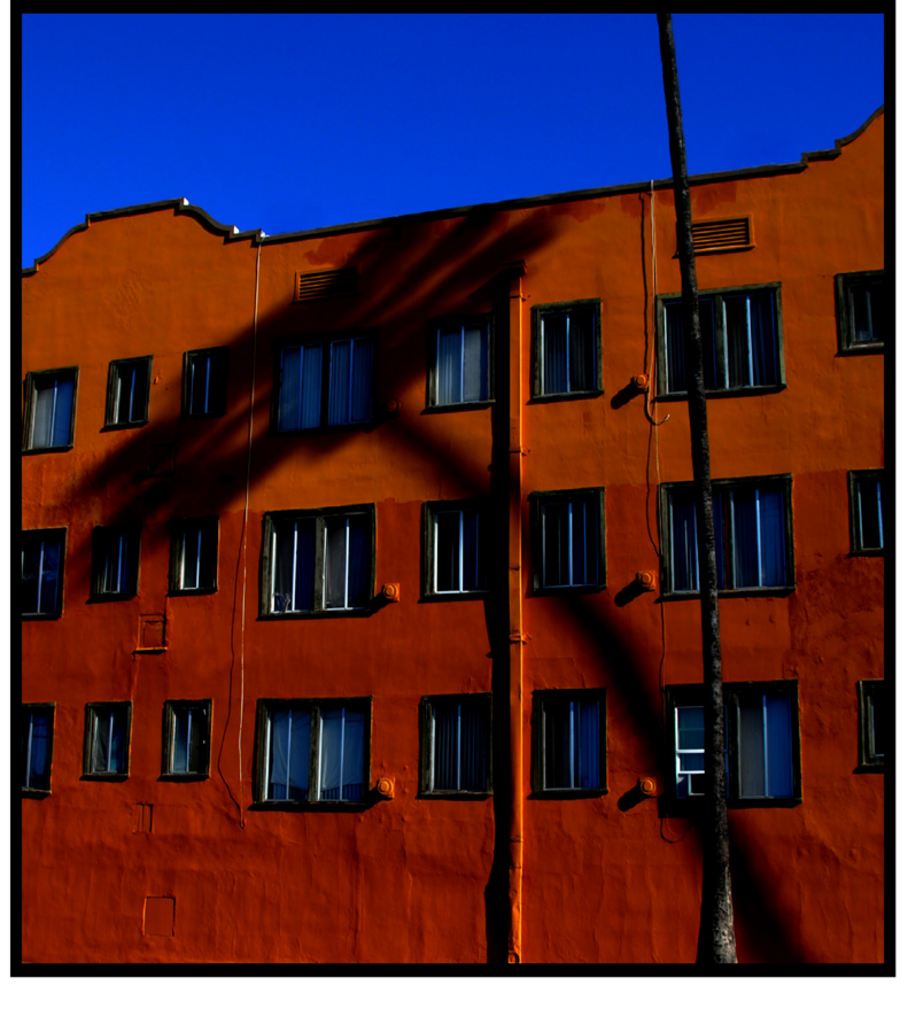
Thomas Gillaspy is a northern California photographer. His photography has been featured in numerous magazines including the literary journals: Compose, Portland Review and Brooklyn Review. His work can be viewed at http://www.thomasgillaspy.com.
By Lindsay Wilson
By Victor Hugo Mendevil

By Windy Martinez

By Jackie Martin
By Samantha Edmonds
By Jeffrey J. Higa