Letter from the Editor
By John Hardberger

On the radio a man calling himself DJ Ron Hitz has a big, beautiful voice. Me and Plata listen to him every Friday. She tells me, “Oldies, baby. He’s gonna play some Chi-Lites, Big Joe Turner, Betty Everett.”
“Those people have all been dead a hundred years.” I say back. I don’t know why. Cause I know that it hurts Plata to feel old. She wants so bad to be young and beautiful. Always showing me pictures of her when there were only two colors: black and white. Back then her boobs weren’t dragging the floor. And she had all her teeth, gold ones too, and didn’t have to chew slowly the meat we can’t afford. Right now, though, her hurt runs tiny. Small enough for her to peel off her knee brace and shake her ass a few times to the music.
Her dancing makes baby birds fall out of trees and silver coins replace the new moon. Plata is dancing now and nothing is gonna stop her but a dagger set through the center of her lace-paper heart. When I hear DJ Hitz I think about expanding nebulas and comets. In my mind, there are circus banners filling the sky and the two-lane highway cutting through the town don’t have cars zooming 100 MPH passed. Instead, it has Arab caravans dragging along lines of camels across cinnamon sands. I call the DJ and beg him to play a song. Any song, just as I long as I hear my name on the radio. Over the phone his voice makes me tear up. Just a bit.
All that dancing gives Plata a coughing fit. Meaning her emphysema is kicking in. And despite the pain of breathing each new breath she wants a drag. Plata knows I hate her smoking so she heads outside without complaining. Sitting out there by herself there’s a good chance a vision’s gonna speak to her. She’s a stranger to most things except to stuff newly born. Hearing, for example, a baby first’s heartbeat before anybody else or tasting tomorrow’s rain today. Those visions eat her up sometimes though. For what she can’t see. What no one can.
After smoging up the porch, Plata stumbles back in. The door slams behind her and the framed Jesus picture with Roman soldiers shooting dice near the cross goes crooked. Plata hikes up her baggy shorts while asking. “Did you call the DJ? Did you tell him to dedicate a song to my girl Michelle?”
“No, I forgot,” I lie. Saying this cause it happens every year for the past twenty. Plata getting older and her marking the calendar on the day Michelle died, July 27th. That’s today and I should know this. I do know this but want to forget that day. I was there, too. In the car that wrecked all our lives.
“Listen, Plata. Hear the music playing. You don’t need to call the DJ. He knows what song to spin.”
The song’s old but perfect. Something me or Plata never heard before. That girl singing, her one-person voice sounding like a choir ascending. ‘My, my, my, my, my’ she sings as if she sees the whole of the suffering world like it’s a bunch of crisscrossing strings and wires that her song is gonna straighten out.
We sit and listen. The DJ plays that song over and over. After the fifth-time Plata tells me to turn off the radio. “I don’t want to hear it no more,” she keeps saying, her voice sounding like a lost little dream.
I push the off button a couple of times before the music stops. Already I miss the DJ. I want to say so, but I’m tired of arguing about this and that. All the small things that grow big when the shouting starts. Plata walks right by, moving slowly to Michelle’s altar propped in the living room’s corner. It’s nice. It’s got an orange cloth that when the morning light hits right, sparkles like flakes of pure gold. The altar sits on a small table, a present from our neighbor Lottie and Baby Roses her tiny pug, who every now and again meows like a lady cat.
We set up the altar yesterday. Staring with Michelle’s graduation picture, so faded that it’s also moving toward black and white. I put a bunch of seashells cause Michelle liked the sea. Even though the closest we ever got was the dinky river at the edge of town. I also put down a snow globe lifted from store in Reno, a cat’s eye marble that Michelle told me was once a money’s paw and a letter she typed to the makers of Beanie Babies begging them to bring back Garcia the Bear. And since I couldn’t help it, a deck of cards from some dead-end casino.
Plata added the candles, a box of Jolly Ranchers and half a pint of drugstore vodka. All the stuff she likes. She also crushed some garlic cloves and had me tie fresh pine needles into small circles. We put five down. Today, I ask Plata if this is some-kind-of-Mexican witch thing. She smiles, reaches for some balance by grabbing at the air and missing, then says,
“Some people bury eggs thinking it will bring them luck. But if you stand on the spot where the egg is buried you’ll lose money or your love will turn to sand. Sometimes children’s left eye will go milky white if they walk too close to a buried egg, especially after disobeying their parents. Anyway, bad things are gonna happen. Garlic tricks the pain, making it less bitter.”
I’m noticing that without the music, the noise of Plata, the sandpaper grit in her steps and the slow spit swallow coming from her throat brings some heat. With the fever burning from the outside in. I switch the ceiling fan to high and get caught up in the confusing shadows they make. I imagine the blades chopping up the summer air into hot little angry fists and hands that can’t help but poke and punch.
“But how do you know where the eggs are?” I ask, hoping to avoid ever encountering one.
Plata chews at her bottom lip like she’s wading through some big thoughts, then says, “Well, that’s it, you don’t. Your Uncle Lalo once whispered to me in secret about black butterflies hunting for buried eggs, wanting to find one and dig it out. And if they get it, they soon crack them open, sucking up the sweetness inside.”
“Then what?” I ask while washing some dishes in the sink. Way back when, Plata helped out but not since she cut deep into two fingers with the broke end of a wine bottle. I can’t remember the details but still recall wiping up blood pooled on the floor while Michelle took her to the clinic.
“They turn into big-boned priests,” she says and then re-arranges the altar’s candles, two by two, in front of Michelle’s picture frame. I watch the rusty dish water eat through the soap bubbles. Their tiny pops and rainbow shine make me grin for some reason.
After cleaning the dishes, I go to the altar. A cricket trapped somewhere in the house is chirping and Plata is talking about a man she knew who ate a 38-oz. steak in 43 minutes flat and died 72 hours later. “All bad numbers,” she claims. I’m listening but really only pretending to. Instead, I’m admiring the red and yellow plastic flowers I bought with loose change at Abel’s Discount Flower Mart. I move a pair of car keys sitting on the altar and an almost invisible feather from an angel’s wing hovers like a flame over a string of little copper bells. I don’t know who put the bells on the altar. Maybe the angel with the missing feather who I swear now is keeping time in the body of the chirping cricket.
Plata moans from the soul-center of her chest, saying, “My head needs a pill. It’s my birthday and I feel like nothing can be born today.”
The song is over, the radio off. Years of hurt spider forward. Climbing high for me. A thick fog rises from Plata filled with made-up memories like her saying that it’s her birthday when it isn’t. In truth, it was mine. Or it was on the last day of last month when I took her to eat blueberry pancakes and she complained about the Quick Pic machine being busted and said my hair was thinning cause I had “jumpy blood.” Scared I get into a mood, I looked around the Suzy Q diner and spotted Michael Vigil, a twice-decorated Iraq vet spilling oatmeal into his toothless mouth. “Hey Plata, there’s Mike V. Didn’t Michelle go to school with him?” I asked. “He must have been a senior when I was a freshman.”
Without looking up from her breakfast, Plata grunted out, “He’s a crazy one. Ever since he came back from Iraq. Wanted to get with your sister since she was so pretty. But she wouldn’t have him. Michele was always too good for that kind of mess. No fault from him, though. Blame that Agent Orange smoke from Saddam burning up Kuwait.”
“It’s not smoke. It’s a chemical.” I said, irritated that she didn’t know the difference.
“Chemical, smoke, whatever it was, made him crazy. You want to know something. Want to know why he’s got no teeth without being old. He took them out himself. That’s right. That’s what he did. After he got discharged he said all kinds of stupid things. Said he saw his ghost father one night at the VA hospital. Said he told him to become Buddhist and pull his teeth. Said Buddhists don’t need to eat hardly anything. You gotta eat even with no teeth. Your stomach still pains even with no teeth, Buddhist or no Buddhist. Mine got lost the natural way: hard candy and grape soda.”
After Plata spoke, the blueberries in my pancakes didn’t look so real anymore, so I said, “Let’s head to the dollar movies. I’ll buy you a Dilly Bar and we can sit in a part of the theater that ain’t so cold.” She fell asleep there after eating her ice cream. I don’t remember the movie much except for the man on the screen saying to his girlfriend right before he dumped her, “Let’s rebuild the stars and begin a new life.”
Just the same, nobody really knows how old Plata is. When she was born and how long she will go on. I know I haven’t called her mom in a long time. She’s just Plata Samienego to me. Came from Mexico, a place called Bolanos. After crossing over she met my father. “He was a thief, took my virginity and left me with nothing but bills,” she once told me although I didn’t care to listen. Later she hooked up with Michelle’s father: a handsome man with the cleanest ears and teeth. Plata likes to mention how he carried around Q-tips and cinnamon-flavored tooth picks in his shirt pocket. “He smoked Kools but that’s not why I loved him,” she’s said many times. “I loved him cause he gave me my green-eyed girl.”
While the music was playing it sounded so beautiful that I forgot for a bit the metal staked across my body, erasing the ease of my bones. Sometimes when the ache hits strong like it does in rain or cold, I’ll try picturing what I call the North Star. That blue light on the hill atop the radio tower. Shining far throughout the city and beyond darkness. Turning back alleys and freight yards, really any of the most lonely scary pieces of dirt, into places where music can find itself clean and clear.
“I’ll get your medicine,” I finally say and go search for her pill bag. Plata thinks pills should be kept in the frig. “Fresh as cream,” she’s told me more than once. Opening the frig I find that the milk’s turned and the inside light’s just about broke. Coming back to Plata, I see her rocking a little, like she’s keeping in tune with the hum of a restless land. I also notice right off that her grey hair has sunk to a dirty yellow. Watching her face right now feels like looking into a weak sun, a dying faraway star.
“Did I ever tell you about ice in July?”
Plata is talking and messing with the TV, going channel to channel. But ever since they switched to digital, the pictures always freeze and the only thing without static showing is called 8 % Octagon where some men and one woman wrestle alligators in a funny looking shark tank. I’ve thought about playing a record. I could never spin like DJ Hitz but Plata’s got a stack of old LP’s: Jean Knight, Fontella Bass, P.P. Arnold, stuff I’d never heard of.
“Next July there’s going to be ice everywhere,” Plata starts. “On the roads and rivers and green grass too. You know how I like to make icy pitchers of whiskey lemon Kool-Aid in July. Going to be too cold for that. The cicadas in the trees will get silent and the bees roaming the almond orchards will buzz back to their hives. Even the little coyote pups howling at their first moon will have frost on the rim of their howls. It never happened before but it will. Ice and cold in God’s little kingdom here with us in July. You’ll never see another one like it. Never, but that’s how it’s going to be.”
“I know, Plata. I see it too,” I lie again. Just then I thought about putting my hand on the bony ring of her shoulder or helping to adjust the slipping end of her knee brace. I thought I should cool her dry lips with a damp washcloth then straighten all the crooked pictures on the walls. But I don’t. Instead, I crack at the tension collecting in my knuckles. Then I let my eyes go soft and I lean into Plata, who by now has moved into the glow of a floor lamp and is picking at an imaginary sore on her arm, wanting to make it real. I lean into her body, feel wet on her and say, “Let’s get you to the bathroom and clean you up.”
After getting her changed I’m staring into the bathroom’s red linoleum floor and I began wishing we could both be reborn into small forest animals from a fairytale land or maybe even a kid’s puzzle with all its bright color pieces locked inside a never-opened box. All the talk about the cold has made Plata shiver even though it’s gotten too hot to speak. The shiver forces a cough and then a bunch more. Plata’s lungs sound loose like they’re about to give way. There’s no doubt about it, we’ll have to see Dr. Peshar next week. Get some more pills. But before we do we’ll wait in the lobby and the music playing there will be the dead kind, the kind that makes life feel stony, like you got nothing inside but a mix of old rocks cut with moss and the thorny hooks of hungry insects roaming around underneath.
It all makes me wonder, are there any more songs worth singing? Today, the music coming from the DJ fit good. It can make my heart whole for a time. It can make my dimples show and even make Plata shake and move like she used to. But tomorrow and the day after, what happens then? I mean, I don’t know much but when I’m looking at life real close, my life alone and that with Plata, all I’m seeing is a bunch of unhappy spaces.
Leading me to the beginning. The very beginning when there was us three: me, Plata and Michelle. We lived in a yellow house on Martin Street that Michelle called a submarine. There was a cactus garden and a school nearby. There was a small river on the other side of town that when you closed your eyes became the sea. There were Christmas lights in July and each weekend Plata throwing an all-night party. There was me and Michelle playing Crazy Eights, watching the grown-ups drink and dance. Listening to their music blasting and them getting fall-down drunk. We saw and we learned, I guess.
And somewhere between the beginning and now, I must have stood too near a buried egg. One that Plata sunk into the ground years before. Wishing that her bad luck would turn good. That she could stay young and pretty a little while longer. That she could have a man by her side who wouldn’t run when the bills came due. Maybe even wishing she wasn’t stuck with two kids, always hungry, and gray with fear on the nights their mom didn’t make it home.
The cricket angel is done chirping. I’m still singing the girl’s song in my head. But I know it can’t last forever. Since its Friday night, police sirens ring out. Somebody’s opened-up the fire hydrant on the corner and water is gushing down the street. The neighborhood kids are splashing outside. Their Spanish voices hang loud, rocking again and again through the air. Tomorrow they’ll be mud everywhere but the honey smell of kids running night games in the street will keep on.
Plata’s going from room to room. She’s tired. I can hear her worn muscles clicking. Her blood moving thick as used motor oil. Her hard liver weighing her down. She’s looking for her teeth but don’t want to say so. Lately, she’s gotten in the bad habit of spitting out her dentures. Hating the ‘glue’ taste they give is why. But then Plata forgets where they fell. Once I had my head resting on a pillow, felt a lump, reached under and found the evil looking choppers staring back at me.
Seeing her wondering around toothless makes me think on Mike V. slurping up his breakfast. How’d he turn that way? I ask myself without buying into Plata’s explanation. I mean, you’d think that after all he eyed in Iraq, what he needed most afterward was the peace of being normal. ‘Get married and have some babies,’ people must have said when he came back home.
But then again, something else must have been talking too. Something low and hidden, speaking sly, saying, ‘No, you can’t have that. Not after what you seen. What you done. You gotta live your days like this and this way only.’ It probably sounded like a storm to Mike V, one troubled with anger and spiked by fear.
It’s like the feeling I get and can’t shake off. Like someone’s gone and mixed-up my days, braking them apart, chopping them up, taking them out of their natural order. They follow somehow like numbers on a dial but don’t make much sense.
Toward the end of the night Plata gets her final vision. Telling her that before there were words there were fish.
“They swam in the oceans. The whole world was an ocean back then. Music appeared and it made land. The land made us. But I made you and your sister Michelle from the sweet mud,” she says.
I hear her but I got visions of my own to catch and let go. That belonging to starving birds landing on the highway. They looking for road kill to lap up. That of cars crashing. That of liquor and beer. That of witches laughing. Police cars rolling. That of a hot sweat July day with Michelle playing cards. That of strands of jagged metal cutting like biting dogs. That of kings and queens, one-eyed jacks and bloody jokers scattered and screaming on the car floorboard. That of doctors and operations, braces, incisions and scars.
“It’s late, Mama, rest now, sleep. Tomorrow we’ll go somewhere, the petting zoo maybe. We can feed the baby goats, eat animal crackers by the box and watch the swans in the green fountain pool. I’ve heard it’s all free when you don’t got no money.” I lie for the third time. Or it sounds like a lie, working its way through me still and spare, without much room left for truth.
Before closing her eyes, Plata counts down the years since last seeing Michelle. Then she touches my arm, feeling for the points that were once soft mud.
“Brown like the richest farm land,” she says. “Sad like the music we use to hear.” She then asks me to turn on the radio. I do but the DJ is long done, taking his songs with him. I watch her fall asleep then wake startled and confused several times before dreams grab ahold and she’s gone.
Alone in the kitchen with only a single bulb to fend off the night, I’m thinking how strange it is to hear Plata talk like that. It like she’s speaking to me from beyond the grave. As though I’d been the one that died that day and Michelle had lived instead. But you know, that’s how I think every song worth singing usually ends. Sad, like the music Plata hears night after night.
Mario J. Gonzales’ short fiction has appeared in the New England Review, the Sonora Review, the Rio Grande Review and other literary journals. He has participated in writers conferences in Taos (2012) and Bread Loaf (2016). He is currently putting together a short story collection called Descansos. Born in Fresno, California, he was raised in a small farm-worker community, Parlier, located in the middle of California’s San Joaquin Valley. He has a PhD in cultural anthropology from Washington State University. Currently he lives and works in Santa Fe, NM.
By Lindsay Wilson
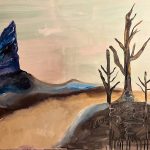
By Victor Hugo Mendevil

By Windy Martinez

By Jackie Martin
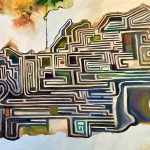
By Samantha Edmonds
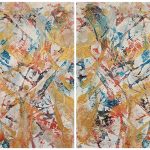
By Jeffrey J. Higa