Letter from the Editor
By John Hardberger

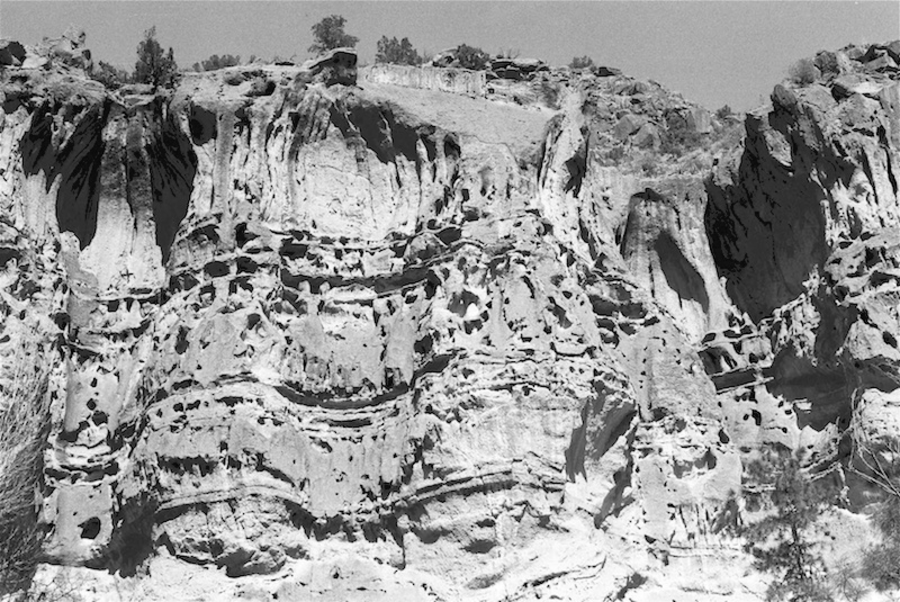
We lean against building walls while the dancers pray with their movements. Elisha and I stand alongside the rest of the onlookers, buckled against adobe, eager for shade against the sun. Today is Sandia Pueblo’s feast day – a day honoring San Antonio – and to be here is to witness the merging of two cultures, Spanish and Native. I am both and neither; I am a mutt of the great Southwest, an onlooker, my back against adobe. San Antonio (Saint Anthony) is the Pueblo’s patron saint, and Elisha grew up in the City of San Antonio TX, but this comparison is overlooked as she eats cherry-flavored shaved ice and the dancers dance and pray in the sun. She bought the shaved ice from one of the many vendors as we walked our way into the Pueblo’s main village area. Today is the feast day, one of both celebration and prayer, vendors and ceremony. Today there is room for both. And it is Saturday and storm clouds are moving in from the west. Dancers dance and pray in the sun. Elisha eats shaved ice, her lips bright and red, even her teeth tinged the slight color of cherry. I have brought Elisha here to witness, to see, to watch.
My friend Luke lays buried just to the north of where this dance is occurring; I imagine his body six-feet underground and wrapped in a blanket, lifeless and barefoot, his soul dancing with the dancers who are praying and moving in the sun. He was killed by a drunk driver a few years ago, and I think of him often, his widow and two young daughters dancing during feast days such as this, dancing in bare feet and praying for him who lies buried just to the north of the village dance-grounds.
After Elisha and I witness the feast-day dance, we drive up the road to the Pueblo’s casino. Ringa-dings and flashing lights from the slot machines plow a great commotion into our ears as we enter through large glass doors, cigarette smoke and air-conditioner-cold greeting us. It is here Elisha teaches me how to play the roulette table, and we bet it all on red. Red is the color of earth and desire in the southwest. She bets it all on red, and wins. And it is more than luck that follows her and me on this day, it is destiny, and I struggle to stay sober even with a baby in my belly. My friend Luke was killed by a drunk driver. And I struggle to stay sober, betting it all on red at Luke’s casino, colors flashing, his daughter’s dancing, Elisha eating shaved ice and smiling as the teller at the window hands her the winnings in twenty-dollar bills.
Hózhó is said to be the most important word in the Navajo language and is loosely translated as peace, balance, beauty and harmony. To be “in hózhó” is to be at one with and a part of the world around you.
I first heard the word as a child. Hózhó. But more recently I saw the word written in red, a beautiful graffiti near the railroad tracks near Montaño Street. Red letters spray painted on fading brick, the letters outlined in black, and shattered windows of the abandoned warehouse just to the left of the capital letter “H.” To be “in Hozho” is to be at one with and a part of the world around you. Ho¢zho¢, Beautyway. What is it’s significance? What does it mean in this moment in time? I see two men driving bulldozers. The afternoon wind is picking up. I am afraid that I will drink again. After the baby is born. I am quiet about this. I am silent. Beautyway.
I was born in this Great American Southwest. I am of this place. And tonight the sound of rain wakes me, and I lie in the dark, not rising to meet or greet the rain, but instead I lie in the dark, only listening.
In the morning the air is fresh and cool and clean and the storm is gone. On the six AM train a man is drunk still, and he tries talking with a stranger who really doesn’t want to talk, but rather leans into the window of the commuter train, straining to ignore the eager drunk man. The drunk man’s voice is loud and proud as he describes chugging vodka and Sprite the night before, and suddenly I relate to the drunkard in more ways than one. It is morning and he is still drunk. As the drunkard gets off at the Downtown station I look to the east where the sun is beginning to rise, residue of rain everywhere, the air cool and clean. A cool May morning, and a man crudo from Monday vodka – the day is already speaking to my soul in more ways than I can account for, and the sun is rising.
Where does beauty originate? Where are its sources, the emergence place?
July and my mother lays on the bed of her bedroom, her hair nearly gone as the chemo works to kill the cancer, and I pray the rosary with her, soft and repeated words, a meditation offered to the Mother of Jesus, Mary, her image captured in porcelain on the bedroom wall, hanging just above the mirror outlined in wood. I’ve lit a candle and placed it on the windowsill near the nightstand. It is Sunday morning. Summer heat pushes in through the open window screen, but my mother is covered in blankets, “I’m cold,” she states. I get her another blanket. Father has gone to mass, and I am here with my Mama, praying on the beads she held on to when her own mother died, long weeks turning into months on a nursing-home-bed. My mother is not dying – I tell myself this. Not yet. The rosary beads I hold are red, and my fingers move slowly from bead to bead… “Hail Mary, full of grace….” My mother repeats the rest of the prayer as I finish the words “…of thy womb….” My mother’s rosary beads are a soft shade of white pearl; the string holding her beads together is not strong nor tight enough to hold her fear.
This year for Mother’s Day, before the cancer sickness took hold, I gave my mother a silver bracelet, a petite but brilliant turquoise oval centered in the middle. I purchased the bracelet on a Thursday, spring was in the air. The moment I tried the bracelet on my wrist I felt the weight of the silver, heavy and immediate, and I knew it was hers, knew I had to purchase it for her. It was Navajo-made, the salesman said, and I paid for it in cash, right on the spot. I knew the bracelet was hers, the silver and the turquoise together in a lovely song that would grace her thin wrist. I walked out of the store and into the sunlight, proud of the piece of jewelry I had bought for her, found for her. And yet what I really wanted to give her instead was a piece of myself. I wanted to give her all of my foolish and sentimental self. I wanted to give her an eternity of sobriety, to begin to erase the mountains of destruction and hurt that I caused during all those days and months and years. What I wanted to give her was my weakness and heartache, knowing she, and she alone, could make it better with her love. But instead I gave my mother a bracelet, a silver and the turquoise bracelet. “It’s lovely,” she said when she tried it on, and I smiled, and she smiled. It was all either of us could say.
We are eating Wonton Tacos at Applebee’s courtesy of a gift card. Miguel asks me if I remember much about my last drunk almost one year ago. I shake my head “yes” but don’t offer any spoken details. Instead there is a silence between us, long and lingering, and then I ask him what he remembers. It was the morning I called him, and over the phone, I admitted with my own voice and words that I was an alcoholic. “Obviously, I wasn’t surprised, and I don’t know if it was that you were physically tired or what,” he says reaching for his large glass of water the waitress has just refilled, “but you just sounded really tired.” His words are revealing, and suddenly I realize I’d never thought about how he felt that day. I was relieved, he said. You sounded tired, he said.
Even now I struggle to stay sober, and beauty precipitates from adversity, the sharp, harsh outline of life. Show me unbeautiful, the poet says to the sunrise, and I realize that in and amongst every cliché there is a truth, a blameless splinter of red-rising truth. Hózhó is that undeniable beauty, a state of being, a state of becoming, a repeated cliché my heart cannot name.
On our way to a place called Tseyi, I wonder about the movements we make from ordinary to sacred, from casual to powerful, from oblivious to a state of deep and intended gratitude. Ron’s pack of cigarettes sit inside the cup holder of the car’s center console, L&M Blue Pack 100’s. He coughs as we drive west, and I wonder how long he’s been a smoker – years, decades, a lifetime? I do not ask. I see rain in the distance, falling miles and miles away; the Great American West allows for this sort of view, the kind that stretches on for miles, and miles, almost lifetimes. I think of the Rain Spirits. I think of Rain Spirits dressed in timid and canvas, remaining unrecognizable to those who do not know them. The blue and the greyness of sky, the weightlessness of clouds that bring us water, the way Ron grips the wheel of the car with both hands, smell of cigarettes never leaving him, driving north, closer to Arizona than we were an hour ago. This is the vessel of today’s sobriety. I grow sleepy and know that it has been years since I have hiked up a mesa.
In Gallup we stop at a gas station. I run inside to use the restroom. Ron remains outside, his large Santa-Clause-belly leaning into the trunk as he settles himself into a stance. He lights up and pulls on the cigarette with a breath that seems urgent rather than enjoyable. We are deep in the heart of Navajo country now. Big sky country. Navajo country. The landscape where legends of the West were made. There is a beckoning; I sense it traveling through the distance of this great expanse, relentless yet un-wanting. And I understand for a moment that we belong to this world, death and joy alike, and if I remain in the moment then I will have lived well, regardless of what my accomplishments are or are not. And while Ron’s breath pulls hard on his cigarettes, my own hand tugs on the wrapper of a chocolate bar, and in the parking lot of a rail-road-town we embrace our small addictions as casually as the sky embraces breeze. Ron is smoking L&M Blue Pack 100, the white stick of tobacco lingering between his fingers, an unconventional prayer, so delicate, so momentary, and his breath pulls in, in, in. To take it all in, to remain, and then to exhale. The sound of the busy interstate beside us, the vast expanse of a western sky reminding me of today, only today.
Leeanna T. Torres is a native daughter of the Great American Southwest, with deep cultural roots in New Mexico. She has spent the last fifteen years as an environmental professional working throughout the West. Her essays have been published in regional literary magazines such as Pilgrimage, and Bosque. Her work is also forthcoming in The New Mexico Review.
By Lindsay Wilson
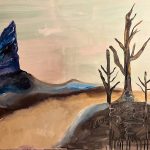
By Victor Hugo Mendevil

By Windy Martinez
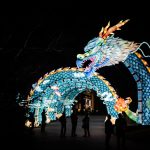
By Jackie Martin
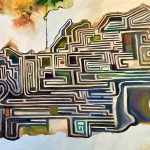
By Samantha Edmonds
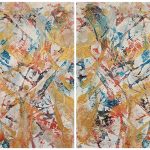
By Jeffrey J. Higa