
Earthskin
By Hana Rehman

Like many others of my generation, I read Rudolfo Anaya’s epic novel Bless Me, Ultima when I was in high school. After high school, I attended the California Institute of the Arts where I earned my BFA in Music Composition and went on to earn my Master of Music from the San Francisco Conservatory of Music. Since then, I have devoted my life to telling the stories of the Hispanic community, particularly those that draw on the Mexican American cultural experience. Mr. Anaya’s novel stayed with me throughout the years. Once I established my opera career and company, Opera Cultura, the novel immediately came to mind as something I wanted to adapt. In 2015, I had the opportunity to propose the opera to Mr. Anaya.
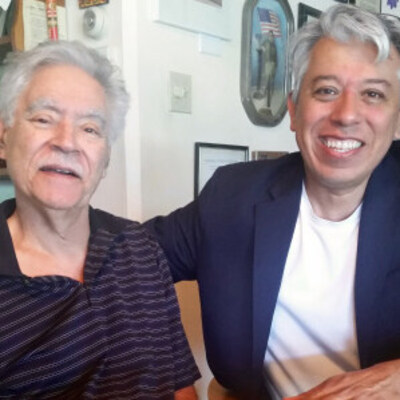
I never expected that I would have the opportunity to create an opera based on the novel. As part of my process in procuring the rights, I met with Mr. Anaya in 2015. We went to the home of his sister, Dolores, who had a piano. I wanted Mr. Anaya to hear some of my live music. Should I be fortunate to get the rights, I knew we would work closely on the development of the libretto, so it was important that we get to know each other personally. The piano was in a large room overlooking el Río Grande. As I played some of my music, an eagle flew by and was visible from the other side of the room’s sliding glass doors. Mr. Anaya took it as a good sign and that was the beginning of our relationship.
Over the course of a year, I flew from my home in Oakland several times and consulted with Mr. Anaya as I wrote the libretto. At first, he was intent on writing the libretto himself, but I knew from previous experience that this was not the best route. I understood the difficult for any novelist to part with characters, scenes, and subplots. These elements are near and dear to them. For someone else to adapt their work, the adaptor needs to distill the most important elements of the original. To that end, Mr. Anaya asked me to focus on three critical themes in the novel: destiny, good and evil, and Catholicism versus the natural world. Originally, the opera was going to be in four acts but that proved to be too long. The Opera Southwest asked me to keep it under two hours and it was a wise decision, but it would not be easy to explain to Mr. Anaya. I had already removed a number of characters and scenes. After many discussions, we agreed on what I would keep and what I would remove. I believe the opera is stronger because of the necessary cuts to the synopsis and the original scene-by-scene.
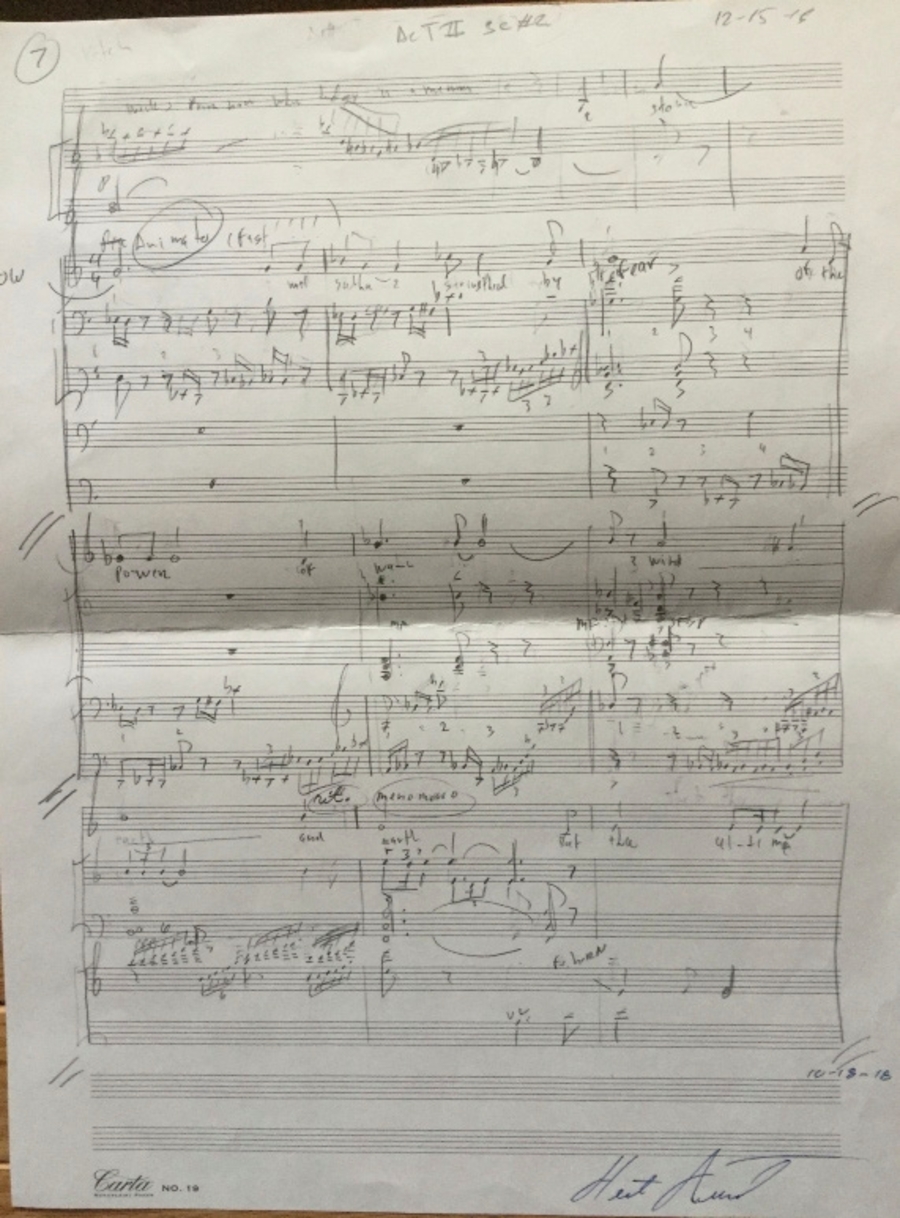
Condensing such a rich piece of fiction and coming-of-age story into three acts presented an incredible challenge, but I felt it was important to focus on the themes that Mr. Anaya identified as central to the novel. My process begins with a synopsis and then develops into a scene-by-scene outline. I work simultaneously on musical themes (motifs) as I develop the synopsis, scenes, and libretto. The musical themes need to capture the essence of the characters, moods, and settings. For example, in Bless Me, Ultima there is a particular musical theme for the River (El Río), the Plains (El llano) and, of course, one for Ultima.
The opera begins with a Prologue, which is a dream sequence that captures the birth of a child. Two families quarrel over his fate, setting into motion the main spiritual and psychological conflict that pulls at Antonio. María of the Luna clan wishes for her son to become a priest while Gabriel of the Márez family dreams of returning to his vaquero roots, and these warring ideals structure the opening duet between mother and father. The duet gives voice to the mother’s hope and the father’s frustration, and these chords structure Antonio’s birth, his young life, and the primary theme of destiny that structures the opera and the novel. Meanwhile, Ultima and her Owl spirit watch over the birth scene on a hillside. The dream folds into real life as Gabriel arrives to take La Grande (Ultima) to live with the Márez family.
Acts One, Two, and Three focus on key scenes and sites from the novel, like the rural town of Guadalupe, New Mexico, the home, the saloon, the river, and the Llano. Other sites and scenes like the school and the church had to be cut completely, but these sacrifices of content nonetheless created a unique literary license that makes the opera all its own. We changed and adapted other narrative threads in order to keep the opera concise. For example, at the start of the novel the Sheriff informs the Márez family that Lupito has killed his brother, but in the opera Narciso, the town drunk, is the messenger. The creative decision to give Narciso this role did not change the impact of the opening scene, but other changes delved more deeply into the formation of minor characters. For instance, Mr. Anaya and I explored Tenorio’s motivation. In the novel, Tenorio’s character is uncomplicated, but we developed a back story for him in the opera. In short, the townspeople falsely accused Tenorio of a crime he did not commit and his once long-time friend, Prudencio Luna, did not come to his defense. Prudencio is patriarch of the Luna family, so Tenorio’s daughters curse his young son as retribution for their father’s past injustices. The curse signals a turning point in the novel and the opera, for it is the moment in which Ultima alters destiny and ultimately opens herself up to her own fate.
One of the main departures that I made from the novel was the creation of the Owl character. I decided to animate this character with a countertenor, or a male singer who is able to sing in mezzo soprano range. The Owl appears in traditional New Mexican garb to underscore the spiritual and regional importance of Ultima’s animal spirit. The sound of a countertenor can create a spirit-like, eerie quality. In the opera, the Owl understands the fate of Ultima, particularly when she decides to cure Tony’s uncle. The interaction between Ultima and the Owl firmly establishes her destiny, which is one of the principal themes in both the opera and novel.
In regards to the music style of the work, I tend to write within a neo-romantic operatic style while still incorporating styles that reflect the Mexican American cultural experience. As part my effort to create more musical authenticity, I visited New Mexico several times and did research at the University of New Mexico’s Center for Southwest Research and Special Collections in Zimmerman Library. After spending most of the day there, I discovered two pieces that would be the musical backbone of two arias in the opera. The first was a drinking song that I used to create Tenorio’s aria, which appears in the bar scene in Act Two. Second, I found a piece for violin and guitar. I used part of the violin melody in the very opening of what I call the Luna Farm Harvest scene in Act Three. The harvest scene is a joyous piece, where the characters both dance and sing. All of the music reflects a careful composition of sound and character that speaks to the underlying themes that Mr. Anaya and I identified as essential to the novel. For instance, Tenorio’s aria draws on the traditional Mexican corridos (ballads) that I researched in the UNM library, and the musical accompaniment of his daughters creates a feeling of dissonance and chaos. Meanwhile, Ultima’s songs reflect the power of the natural world with the sound of clarinets and wood winds. The sounds of the Llano and the River bring them to life in a way that animates their character as they appear in Mr. Anaya’s novel.
Bless Me, Ultima had its world premiere in February 2018 at the National Hispanic Cultural Center (NHCC) in Albuquerque, New Mexico. With a fabulous production by the Opera Southwest, the opera included a cast of debut performances by Daisy Beltran as Antonio Márez, José Luis Muñoz as the Owl, Javier Abreu as Gabriel Márez, Carelle Flores as María Márez, and Javier Ortiz as Narciso. The opera was also the debut for Conductor Guillermo Figueroa, Stage Director Octavio Cardenas, and Costume Designer Dorothy Baca. In all of these ways, the Bless Me, Ultima opera put into practice my mission to diversify the opera community and make classical music relevant to Mexican and Mexican American communities on both sides of the border. With special thanks to Maestro Anthony Barrese and Executive Director Tony Zancanella of the Opera Southwest, the Bless Me, Ultima production was nationally broadcast in September 2020, in the shadow of Mr. Anaya’s passing. With the national broadcast, more individuals will learn about Mr. Anaya’s great work now that he has passed into the spirit world of Ultima.
The Bless Me, Ultima opera honors the most sacred parts of Mr. Anaya’s classic novel while also creating new characters and voices for the next generation of opera fans. The Owl character in the opera, for instance, compliments Mr. Anaya’s Ollie Tecolote (Owl) books for children. In this way, the opera pays tribute to a classic novel while also opening up opera to a new generation of listeners who can identify with the musical motifs and characters on the stage. As I look back at the time I spent with Mr. Anaya, I realize that his journey continues to inspire me. The obstacles Mr. Anaya had to overcome convince me that we must often build our own road when opportunities are not readily available. Most importantly, our stories have a right to be told and we must tell them ourselves. Bless Me, Ultima fulfilled my lifelong mission to explore the Mexican American experience through a new lens—opera—and to recalibrate this lens to include Mexican American people on stage and in the audience. Thank you, Mr. Anaya.
By Lindsay Wilson
By Victor Hugo Mendevil

By Windy Martinez

By Jackie Martin
By Samantha Edmonds
By Jeffrey J. Higa