Letter from the Editor
By John Hardberger

1st Place
Fiction 2020 Summer Contest
I wish I could say I knew horses and horsemanship. Well, now I do. I know what it is to love animals and sentient life. The story advanced at a compelling place, carrying me along in the special world of San Juan del Corazon Roto/St. Juan of the Broken Heart, set in any possible familiar and loved New Mexico towns, where life presents its hard choices and its everyday brutality. The protagonist, a thirteen-year-old girl, is the hero of this tale. In this pandemic time, we see an increase in cruelty to our animal friends, and yes, it is systemic and terrifying. When a person is oppressed, they will oppress. The story teaches us that no matter our age, our station in life, we can stand up, speak out, live the truth of our lives, against all odds. I applaud the writer for the tight kernel of strength and power this story is. Home. What is Home? Our interior truth. This is what the writer shows in what is a taut and unforgettable tale of moral courage.
– Denise Chávez
The mare backs out of the rusty trailer that was never meant to haul a horse of her size. She doesn’t miss a step as her freshly shod feet find the ground. She approaches Roy and me as though we are her old friends, not strangers she met for the first time at the sale barn this morning. Standing before Roy, she lowers her head, but no greeting leaves her throat. Roy unbuckles her halter and slips it off her head; he replaces it with the new one he bought for her at the feed store this morning. Roy lifts the mare’s thick forelock through the halter, and then struggles with the buckle.
“Got-damn, the neck on her!” he says. “I’ll have to punch another hole in this strap.”
“What’s her name?” I ask.
“It’s on her papers,” Roy says. “Brouhaha. Cashier the sale barn said it’s German or some damn thing.”
“Can I name her then? Something different?”
“We’ll see,” he says.
This means he hopes I will forget. But I won’t. Spending the summer here with him and naming one of his horses is as close as I’ll ever get to having one of my own. I know it, Roy knows it, and my parents know it. Which is why they sent me down here alone, no little siblings or cousins to tend, until school starts in New Mexico.
“Being the oldest, it’s hard,” my mother told me when she dropped me off at her parents’ house in South Phoenix. “It’s like being a mother, except without the good parts. You deserve some time to yourself, honey. Have a little fun.”
And so I have. But summer is almost over, and I am homesick for my little brothers’ pestering and noise, for their elbows and heels digging into my ribs when they’ve fallen asleep in my bed after a scary story. And I miss my sisters’ pranks, and the way they hear what I mean, not what I say. They would all love Roy’s new mare.
In the corral, the mare’s new family await her: two indifferent geldings, a Shetland pony who’s always trying to pick a fight, three mares who are half-sisters, and two foals born only six weeks ago. Roy has always resisted conventional wisdom by corralling horses and ponies, mares and geldings, together on his small acreage. They all walk over to the fence, the way curious horses will do, heads up and moving fast like they’re late for an appointment. I wonder how this little band that has been together a few years will take to Brouhaha. And how she’ll take to them.
Roy tosses me the lead rope. “Hold onto her for a minute. I mean, who the hell ties ribbons in a horse’s tail, huh? Charlie Roscoe, that’s who. Fancy bastard. I paid a lot of money for this horse. I don’t need no ribbons to see I beat them Roscoes this time,” he says. “D’you see them tipping their hats at me on our way out? Yeah, they know it, too.”
The Roscoe brothers own a big farm not far from here, just beyond the orange groves, and breeders and ranchers come to South Phoenix from all over the country for horses. And the Roscoe horses have always been priced or pedigreed beyond Roy’s reach. Until today.
Roy walks to the truck, laughing low and growly as he does when he has out-maneuvered us kids at cards, or when drives the truck close to the road’s edge on South Mountain while my younger siblings and cousins and I hold onto the wheel wells in the back. He is never happier than when he gets over on someone—usually, it’s us, his grandchildren who don’t know how to read him. We have a more difficult time decoding Roy than he has with the diner menu and the stockman’s register.
If the mare wanted to run away, I could not stop her. A skinny, thirteen-year-old girl at the other end of this rope is only a gesture. She is the tallest horse I’ve ever seen, except for the Roscoes’ Clydesdales. She must be seventeen hands at the withers, maybe more. And she is flawless: a true bay, no sabino anywhere on her gleaming body so brown it’s almost red, and her mane and tail are blue-black. Every inch of her shines.
The cowboys at the sale barn rub baby oil on the livestock. If the cows and pigs are at all fat and healthy, or if a horse is all muscle beneath the sheen, like this big mare, that’s what bidders see from the bleachers above the arena. And I have to admit, here in the brilliance of late afternoon in August, that little trick is devastating. Brouhaha shines past all ideas I ever had about what beautiful might be.
She is calm, her eyes half-closed while she shifts her weight from one hind leg to the other. She seems to know what’s expected of her. She needed no pushing, either, from the cowboys at the auction arena. I hold a grudge against those men who wield electric shock prods to move the animals through the chutes and pens to the arena, shocking the calves whose pink tongues can’t help licking the baby oil from their curly coats. Roy says any horseman or cowboy who zaps an animal with electric hardware is a no-good sonofabitch, that’s what.
The mare tosses her head, and pulls the lead rope through my hands. I take hold.
“Whoa, now. Settle down,” I say. “Come on, honey. Let’s be friends.”
She lowers her head, nudges my arm. I don’t have any grain or sugar cubes in my pocket, but the mare shoves her nose into my shirt front, and sniffs me as though she knows different.
The other horses whinny. The mare doesn’t answer the way she ought to, the way polite horse manners require. Dolly, a pinto and the oldest of Roy’s mares, leans over the fence and nickers repeatedly. Still, the new mare does not respond.
Roy is back with his wire snips. He begins cutting away the bright pink, green, and yellow ribbons braided through the mare’s glossy black tail. She sidesteps away from him.
“Whoa, now,” Roy says. “It’s gonna be okay, darlin.” He places his free hand on her rump, to let her know he is there. “It’s okay.”
He takes hold of her tail again, and this time she lets him finish the job. The ribbons float to the ground, and the mare swishes the skirt of her long black tail in Roy’s face. Twice. He steps beyond the reach of her tail, and laughs the way he does when one of us kids accidentally knocks off his Stetson in a dirt basketball game or forgets to set a spoon down for him when we’re eating ice cream at night. It sounds friendly, unless you know the code. If Roy’s quiet laugh were printed on a page, it would read,
“Don’t even think about doing that again.”
Roy walks around the mare to look her in the face. He takes the lead rope from me, and rubs Brouhaha’s nose.
“She’s kinda big for a Thoroughbred, but it’s on her papers. Isn’t she beautiful?” he says.
“Yeah, Roy, she is.”
“She’ll be in season soon, too, is what they told me. It’s all in them papers.”
I am embarrassed for us both. Roy pretends to read, but the truth is he can’t. The name on his birth certificate is “Baby Boy”, but most people call him Roy. So do I, unless I’m upset; then I call him Papa. He reads traffic signs and price tags, and he is proud of his driver’s license. He could learn to read, really read, if he wanted to, but who is there to teach him besides his grandkids? And who wants that? Not Roy Turner. His wife, our grandmother Maureen, could teach him, but then she’d have the upper hand somehow. So, he pores over his paperback Webster’s dictionary and his Western Horsemen magazines at night. Long after we’re supposed to be asleep, I hear him at the kitchen table trying to pronounce words he has circled in blue Bic, words that sound strange in his uncertain whisper: “pos-i-tive” and “pal-o-min-o” and “in-ter-est rate.”
“Can I look at her papers? Her name, I mean?” I say.
“Yeah, sure,” he says.
“Can I name her? If you’re not gonna call her ‘Brouhaha’?”
“We’ll see. Open the gate.”
The heavy gate is steel and iron, the panels purchased from Farm and Ranch, and the only piece of this entire corral Roy didn’t build himself from scrap pipe and old highway signs. The farthest side of the corral is a mural in faded day-glow warnings nailed between two-by-fours: “Yield” or “Slow” or “Construction Ahead.” The gate swings easily, and the soapy and vanilla smell emanates from the hinges Roy maintains with generous coats of WD-40. I always struggle to stop the gate from opening too fast and wide after I’ve lifted the latch. Roy has told me holding back the gate is good for me. Opening it slowly, dragging my bootheels in the dirt, will train my muscles, make me strong. He says corral gates should open inward, a deterrent to runaway horses. But none of Roy’s horses has ever tried to run off, even when the gate is open.
I lift the latch and step onto the bottom rung of the gate. I reach up to grasp the top rail as I would the monkey bars on the school playground, and I kick off from the fence.
“Hey, don’t do that,” Roy says. “You’ll wear out the gate.”
I jump down and strain against the weight of all that steel swinging on greasy hinges.
“But it’s too heavy, Roy. It gets away from me.”
Roy leads the mare past me into the corral and slips off her halter. “Shut it,” he says.
I push the gate closed again, and latch it into place.
The mare shakes her head, and then walks to the opposite side of the corral, joining the other horses in the shade beneath the willows and cottonwoods, though she does not greet them.
“She’s probably tired,” he says. “The sale barn is a long ride from here, and Roscoe’s is just the other side of them orange trees, not three miles away. So I don’t know why they couldn’t let me pick her up from their place tonight,” Roy says. “Anyhow, she must be tired.”
“Yeah,” I say. “She’s probably tired.”
“Welcome home, Brouhaha,” Roy calls.
She turns and faces us, her head high. Even in the shade, she shines.
***
In the cab of Roy’s truck, I find the large envelope stamped “Roscoe Farms”; inside it are sales receipts and vaccination records. The mare’s name, on all these documents, is Bruja.
My uncles speak mostly Spanish to us kids, and we’ve picked it up, too, from the grandmothers— everyone’s grandmothers—in San Juan del Corazón Roto, our latest hometown. And anyway, Spanish is easier than the Irish my father’s grandmother spoke in long distance calls when I was little. Spanish is real life in New Mexico, and how we learn in school. So I know this word Bruja when I read it on the Roscoe papers.
Through the cracked windshield of Roy’s truck, I see Bruja craning her neck and baring her teeth at Dolly, who trots away and surrenders the spot under the willows and cottonwoods, abdicating her role as boss mare. Then Bruja charges one of the geldings, who runs to join Dolly on the other side of the corral. The other mares walk to an opposite corner, driving their foals before them.
I jump out of the truck and join Roy at the corral gate where he stands watching the horses, waiting. He is tense, and his posture as he holds onto the gate says he is about to jump over it, or he is bracing for impact.
Across the corral, the big mare faces us again. She lowers her head and kicks the fence behind her, over and over. Her steel-shod hooves splitting the wooden rails and peeling road signs is thunder cracking on a cloudless day.
“What the hell,” Roy says. “What in the got-damn hell, Brouhaha.”
“It’s Bruja,” I say. “She’s Bruja. A witch.”
***
The other horses are stirred up, trotting aimlessly around the corral. The foals’ awkward gaits and long skinny legs are no match for the chaos they’re swept up in as they run after their mothers. Roy runs to the truck, and calls to me over his shoulder. “Don’t move. Don’t open the gate, no matter what. We have to get her outta there.”
Bruja has demolished a section of the back fence into a pile of kindling, and the only thing keeping her inside the corral is a proper fence on the neighboring pasture. Beyond that, a wide irrigation ditch separates the properties. The mare gallops from one end of the corral to the other, back and forth. She is mighty, majestic, and the scariest thing I’ve ever seen.
Dust clouds rise thick and fast where the horses stop and pivot around each other. Roy slips through the gate, a long lariat coiled in one of his gloved hands and a section of old garden hose in the other. He draws one end of the hose through a belt loop on his Wranglers and walks slowly in Bruja’s direction. He raises the lasso and swings it slowly overhead in an ever-widening circle. The other horses cluster together in a far corner of the corral. But Bruja runs circles around Roy, and pays him no mind as he lets the lasso fly. He hardly ever misses, and why would he, anyway, on a day as lucky as this? His first throw finds her neck.
Roy loops one end of the rope around a thick cedar post set in the ground at the center of the corral, and runs out the slack, positioning himself so the post is between himself and the mare. He digs his bootheels into the dirt, and pulls the rope hard. Puffs of sawdust rise like smoke as the rope burns into the cedar. Bruja must give up or choke out.
But she does neither. She backs away and rears up, and the harder Roy pulls, the harder she fights. She stamps the air with her front hooves, and then stands on her front legs and kicks her hind ones, over and over. Each time she rocks back on her hind legs, she tosses her great mane, a whirlwind of long black hair. Finally, most of the play in the rope is on Roy’s end, and Bruja is drawn within a few feet of the post. She stumbles, only once, and then Roy relaxes the rope. The mare is winded.
“That’s it, girl. Settle down,” Roy says. “Whoa, now.” He pulls the rope taut around the post, even though Bruja seems calmer.
She doesn’t lower her head, no matter how sweet he talks. She snorts hard, and then stands perfectly still. Roy reaches up to take hold of the rope on Bruja’s neck. When his hand closes on the lariat knot at her throat, she head-butts him, knocking off his Stetson and sending him tumbling into the dirt like a rag doll. Roy scrambles away, barely avoiding the hooves that crush his hat.
“Go get Tony,” he yells. “Get help!”
But I do not move. I cannot move.
Roy jumps to his feet and gives the rope several hard yanks, pulling Bruja close to the post. He ties off the rope around the post, and draws the garden hose from his belt loop. Roy raises the hose above his head and brings it down against Bruja’s neck. She pulls hard against the rope, and when she chokes and stumbles again, he whips her back and belly and shoulders—anywhere the hose can strike.
“Roy, please,” I scream. “Stop, Papa!”
But he keeps on. He beats her until the sweat pours off his face, until his shirt is soaked through. Her attempts to pivot or jump are thwarted by only a wood post and a nylon rope; she can’t get away. Roy ignores her screams and mine. He beats her until she is lathered in sweat and blood, until she surrenders and folds on herself. She goes still. Her eyes are the only thing wild about her now, and Roy gives her enough rope to collapse into the dirt.
I’m on the ground, too, just outside the corral, on my knees. I know I should run for Tony, our nearest neighbor, but I can’t take my eyes off the mare. Her front legs curl under her, as though she intends to stand. Her chest and belly rise and fall in great, shuddering breaths. She looks up at me, or I imagine it to be so, and I lose myself to the sobbing I’ve been holding back.
“Hey, no cause for that, Maggie,” Roy yells. “Stop that crying right now. She’s gonna be fine,” Roy says. “Just fine.”
He retrieves his hat, slaps off the dust and reshapes it with two punches of his fist. He ducks through the corral slats and stomps past me. “Who tricks somebody into buying a crazy horse? The Roscoe brothers, that’s who. Got-damn sonsabitches.”
***
The headlights of Maureen’s Buick swing into the dirt driveway and, for a few seconds, catch me perched on the corral fence. The car door creaks open, and then it closes again. I hear my grandmother step across the almost-lawn to the porch behind the house. Her heels click across the concrete and through the back door, and the kitchen light comes on. She stands at the window, fills a glass from the tap, and takes a long drink. The fingers of her free hand worry the gold chain at her neck, a gift from the telephone company for fifteen years of service.
Maureen’s long shifts keep this place afloat, as they have since the accident that ended Roy’s job as a crane operator on a roadbuilding crew. Maureen’s wages pay the mortgage on their two-bedroom house and the adjoining three acres here in South Phoenix. Her paychecks buy the alfalfa and carrots and grain for the horses. And since her promotion last summer, Maureen can afford brand-name ice cream, and dry cleaning for the beautiful skirts she wears as a supervisor. It’s Southwestern Bell Telephone, not Roy’s horse operation, that keeps everything going – Southwestern Bell and the woman who gazes out the kitchen window and into the darkness, looking right at me, but not seeing me. Grandma Maureen retreats into the house now, and I lose sight of her, too.
The mare is still tied to the post; Roy forbade me to let her loose. But when he left, I loosened the rope so the mare could roll to her other side, or stand without choking. She hasn’t moved much. But she is back on her feet, her head lowered before the post that subdued her.
The back porch light comes on, stippling the yard with the shadows of locust shells in the fixture that hangs crooked around the bulbs. I leave the fence and return to the mare’s side. She doesn’t flinch at the touch of my hand on her muzzle and, though her muscles twitch slightly as I stroke her shoulder, she doesn’t resist or protest. I’m careful not to touch her anywhere else. Dust clings to her oiled body, even her long eyelashes are coated with it, and in the scant yellow light from the back porch, she looks as though she is painted up in mourning.
Bruja lets me cry into her neck. I swear I can feel her labored breathing in my own chest, and she shudders when a truck passes on the nearby road.
Grandma Maureen calls to me. “I seen you on the fence. You alright?”
She is a silhouette of a woman moving toward me, her back to the 60-watt bulbs over the porch.
“I’m okay,” I say. “But she ain’t.”
Maureen has exchanged her suit and heels for Levi’s and a pair of white Keds. She ducks through the corral rails and walks over to me. She looks over her shoulder to the blank space in the driveway where Roy’s truck should be. “Where’d he go?”
“Said he was going for medicine. An hour ago. He didn’t even unhitch the trailer.” Maureen pulls an Eveready from the back pocket of her jeans. She trains the light on the mare’s body.
“Who done this?” she says.
“Who d’you think?”
“My God,” she says. “Oh my God.”
“I shoulda gone for help. Tony. Or somebody.”
Maureen takes my chin in her free hand. “Hey, now.”
My knees give, but Maureen holds me upright. There is comfort somehow in the signature fragrance of her body, a mix of Chanel Number Five and Tide laundry detergent.
“Maggie,” she says. “This here is not your fault. Do. You. Hear. Me.”
“Yes, ma’am.”
“You can help her now. Run get a bucket of water—from the pump, not the trough, and bring some grain. I’m gonna get a few things from the house, but I’ll be right back.” She looks me hard in the eyes, a wild mix of stern and tender. Then she releases me. “Run,” she says.
But that’s exactly what she does—she runs like I’ve never seen her, in those pretty sneakers. She stops on the porch, and yells into the darkness. “When Roy gets back, let me talk to him.”
Maureen and Roy hardly ever speak to each another. I’ve asked her why, but I can’t decipher her code. All she has ever told me said is that, before Roy’s accident, things were an ugly kind of hard and she is glad things changed before I was born. After Roy’s crane rolled from the highway and down a ravine outside of Tuba City, twisting him up in the operator’s cab, he quit drinking.
I return with grain and water. Maureen has untied Bruja from the post and led her closer to the gate, into better light. She loosens the rope around the mare’s neck, and then guides the lariat over her head.
The horse complies with Maureen’s every motion.
“Hold this light on her,” Maureen says.
I set down the buckets before the mare, who seems disinterested, and take the flashlight from Maureen.
“S’alright, hon,” Maureen says, to me or maybe to the mare. “It’s gonna be okay.” And I believe her.
Maureen reaches into a brown paper Food City bag at her feet for the supplies she gathered in the house. The mare doesn’t startle or flinch, doesn’t take so much as a single evasive sidestep while Maureen pours peroxide over the lacerations and wipes away clumps of oily dirt. She slathers on ointment, and under the beam of the Eveready I hold above her shoulder, the wounds form a glistening constellation across the mare’s great body. The work is slow and Maureen’s motions are surprisingly tender. All I know of her ministering of affection are the hot meals she cooks even in the heat of summer, and the “hard-scrubbing” she gives the small kids when they play in the muddy irrigation. Maureen doesn’t dispense hugs and kisses, never baby-talks babies, let alone animals. But here she is, her voice soft and broken and unrecognizable, speaking soothing words to the mare.
I’ve seen Maureen’s features configured in anger, surprise, and disappointment, but never in like this. Never in pain. Maureen’s work on the mare seems a mercy to them both, and I can’t help thinking one of the strangest English words for which I wish I knew a Spanish translation: painstaking.
“You got to hold up those buckets for her,” Maureen says. “It’s hard to bow after a beating. She’ll need some grain, too.” Maureen returns the medicines to the grocery bag. “I’ll go fix you some supper,” she calls over her shoulder.
“Maammaw?” I say, calling her by the little kids’ name for her, a word I haven’t spoken since I was a little kid myself.
Maureen shoves the grocery bag through the rails of the corral, and then ducks through. She stands on the other side now, her curls straying around her head, a haloed figure backlit by the porch lamp.
“What, hon?”
“Nothing,” I say. “Just, thank you.”
Bruja takes a long draw from the fresh water, sucking down most of the bucket before Maureen speaks again.
“You’re welcome, hon.” Her voice is again strange to me. “See to her, and then come on in. You need sleep. Your mama and the littles will be here tomorrow.”
***
Maureen is at the stove, cooking Saturday breakfast: fried eggs, bacon, biscuits and grits. She wears ankle-length jeans, an apron over a short-sleeved button-down shirt, and the pink fuzzy house slippers. Her graying auburn curls are damp, and her hazel eyes are tired.
I dress quickly, and run to the back door to find that my boots are again the only ones parked there.
“Hold on, now. Whyn’t you sit down and have your breakfast?” Maureen asks, but it’s not a question. She sets down a jar of my mother’s plum jam. “Your mama will be here soon to pick you up. I don’t know if they’re staying the night, but anyway, I’m glad we got to have just you this summer. Not that we don’t love having all you kids here. You know what I mean.”
And I do. It has been fun, but also lonely here with my grandparents. I miss my siblings and, this morning, the pain is acute. Not even Maureen’s fluffy biscuits can raise my appetite. I swallow guilt and sweet melted butter, and chase it with the coffee my parents don’t know I drink.
“I checked on the mare first thing,” Maureen says. “She ate the grain, and a big flake of hay. You got to eat, too, hon.”
I part Maureen’s fancy JC Penney curtains on the kitchen window. Roy has unhitched the trailer, but his truck is gone again.
“He said he was going to the feed store,” Maureen says.
***
Bruja stands in the shade of the willows. She is still, her head low. The other horses are circled around her—close enough to satisfy their curiosity, but keeping a safe distance. The foals run at each other, play-fighting as they do, and none of their mothers attempts to cut them away from the herd. As I approach, Bruja raises her head. Her height is still overwhelming, and for a minute I consider running to the gate. But she nudges my shoulder, and lets me rub her soft muzzle.
“I’m so sorry, honey,” I say. “How ya feeling?”
There is no reason to expect anything other than the angry welts and open cuts on her body. But the sight of her injuries and the warmth of her sigh on my shoulder while she smells my shirt break me into a million pieces.
Roy’s truck lumbers into the yard. He jumps out, slams the door, and runs to the rear where he lowers the tailgate. All I can see of him are the top of his crumpled, sweat-ringed hat and his shoulders in motion. He stands back from his work, removes his hat and passes his arm over his sweaty forehead. The sleeves are rolled up on the same shirt he wore yesterday—a faded blue snap-button, patterned in sweat and dark smears.
Roy looks up, calls to me. “Hey, come on out of there. She’s dangerous.”
He pulls a long rod from the bed of the truck. Bright orange, with a strap Roy pulls over his wrist. He flicks a switch on the handle casing, and the bite of current into the air is a thousand stinging bees, then it’s silenced with another flick of Roy’s thumb.
“What’re you gonna do, Roy?”
“Teach her how to behave,” he says.
“Wait, Roy!” I run to the corral gate. “I mean, who does that—right?”
“Who does that? I’ll tell you. Roy Turner, that’s who.”
***
Roy doesn’t look like the fifty-three-year-old man I knew him to be only yesterday; the stubble I’ve never seen him allow on his face is more gray than black. The morning sun washes out his face, and there are dark circles under his eyes that seem gray now, too, not blue. He is small and sad, a stack of crooked lines that don’t form a man.
Bruja trumpets. The band is agitated, trotting and loping around the corral, and pivoting away when they cross the border of Bruja’s place beneath the trees. We are all on the edge of something.
“Help me get the rest of them into the other pen,” Roy yells.
I lean against the gate, and fold my arms.
Roy stares at me. Maybe he doesn’t see me the same, either. Maybe I am not to him who I was only yesterday, a thirteen-year-old girl child who never gave him any trouble.
“Help me now, and I’ll give her to you. You like her so damn much, you can have her.” Roy should know better. He has taught me it’s impossible to command a horse whose loyalty and obedience never depended on reward or a harsh word. When she decides she is done, the creature whose loyalty and labor have been freely offered, there is no changing her mind.
“Whatcha cryin for? I said I’ll give you a got-damn horse. You want that witch out there? She’s yours—but we got to train her.”
I don’t move. I don’t argue. I respond as Maureen does in moments when he attempts to goad or humiliate her. I nothing him.
Roy gives up. He weaves his way across the corral, as if the ground is tilted beneath his feet. He approaches the geldings first, waving his arms and whistling as he does when he wants to gather or move them. They oblige by trotting to the far end of the corral. The mares are slower to respond, but they follow the geldings, foals in tow. The crazy Shetland grunts low at Roy. But even her resistance is overcome with one loud clap of Roy’s hands. He tumbles into the dirt.
Bruja has not moved from the shade of the cottonwoods, but her head is up and she is breathing hard. Roy brings himself nearly upright, then folds again, head bowed and arms outstretched on the ground, looking as though he could sink into prayer or crawl away. I am as still as my pounding heart will allow. I don’t know if it’s violence or devotion rising in me as I look on Roy’s crumpled form.
I call to him, softly. “Roy. Are you okay?”
He struggles to his feet, takes up the prod again and waves it in my general direction, flicking the switch, over and over. The threat is buzzing and percussive, scary and irritating.
“High voltage,” he yells. “This here is stun gun quality. Special made. Longer reach.” His words are syncopated with persistent zaps from the prod.
Roy turns his back on me and walks to the knot of trees, to Bruja.
“Don’t do it,” I yell. “Please don’t. Papa.”
Maureen slips through the gate. I never heard her coming. “Let me handle him.”
She runs to Roy, her apron flapping at her knees and clouds of dust rising in the wake of her furry slippers. “Roy, come inside,” she says.
He looks up, puzzlement across his forehead. “No. Take that girl in the house.”
“Roy, come on. You can sleep this off.”
“Got-damnit,” he yells. “Leave me alone.”
“You know what, Papa?” I yell. I take a couple of quick steps in his direction, and then step backward when he turns to look at me. “You know what?”
“Spit it out,” he says, and then he turns away.
“You’re a no good son of a bitch, that’s what.” I pick up dirt clods and chuck them at him. A couple clumps of dirt strike his back, but they are dry and small, and disintegrate.
I feel sick again, but this time it’s not because I don’t know what to do. It’s because I know what I must do, and it scares the hell out of me.
Bruja gallops to the empty end of the corral, opposite the other horses who nicker and groan, a collective low murmur emanating from the cluster of their pinto and sorrel and dappled heads and rumps. Maureen steps behind Roy and snatches the prod from his grip; the rip of the Velcro strap from Roy’s wrist is loud and satisfying. Maureen throws the prod out of Roy’s reach. He lunges for her, and then falls down again.
“Roy,” she says. “Get up. Let’s go inside.” She kneels beside him and reaches into a pocket of her apron for a cloth. She dabs at his head. “Now.”
Roy leans into Maureen, and she pulls him to his feet and drapes one of his arms across her shoulders. I unlatch the gate to let them through.
“Get rid of it,” Maureen calls over her shoulder. And I know she means the prod.
She helps Roy across the yard and onto the porch, the two of them bobbing along together, out of rhythm. Roy stumbles on the porch steps, and then he and Maureen step haltingly inside together. The door swings closed behind them.
I latch the gate again, and walk over to the prod in middle of the corral. Then I feel Bruja’s breath on my neck. She nudges my shoulder again, and I turn around.
“I ain’t got nothin, honey. And there’s nothing I can do.”
But we both know different.
Bruja follows me to the gate. She whinnies low, drops her head. I’m sorry the littles won’t get to meet her, and I won’t see their awestruck faces or hear them ask how tall is she and what is her name and can we ride her.
I lean into Bruja’s neck, and breathe in her scent—sweat, dirt, baby oil and pure-dee horse. She lets me gently push her away from the gate. Her sidesteps with my hands on her withers feel like a dance we’ve rehearsed. Or a blessing. She tosses her head. I raise the latch, and slip to the other side of the gate. I step aboard the frame, and kick off hard. I ride the heavy swinging gate until it is as open as it can be, a fact reported by the peal of colliding steel and iron, and by the reverberations in my hands and feet when the gate slams into the fence.
Bruja trots through the gate and never looks back. When she is clear of the yard, she lopes down the dirt road, her head high and her body gleaming in the morning sun. She disappears into the orange groves, headed where, I hope, she is expected.
There will be big trouble over this. And it will start with a long string of curses followed by pointless questions.
Why’d you leave the sonofabitchin gate open? he’ll say. Where’d the got-damn mare go?
He will look at me hard, biting his lower lip and trying to take in my features that are no longer readable to him.
Home, I’ll say. She went home. She was always gonna go home.
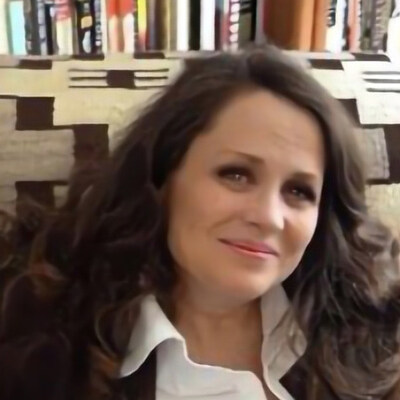
Mary Winsor has spent most of her life in the American Southwest, the setting for many of her stories and essays. She is a recent graduate of the MFA program at George Mason University. Her work appears or is forthcoming in Atticus Review, La Presa, Plougshshares, Longreads and Carve. These days, Mary can be found on a small, urban farm that grows the best tomatoes in Utah.
Jennifer Tubbs is the Fiction Editor for Blue Mesa Review.
By Lindsay Wilson
By Victor Hugo Mendevil

By Windy Martinez

By Jackie Martin
By Samantha Edmonds
By Jeffrey J. Higa