Letter from the Editor
By John Hardberger

1st Place Fiction
2018 Summer Contest
This story lifted off the page like a swarm of butterflies. The narrative is so assured, the central mystery of the story so heart-breaking and the descriptions of both family and dance so right that the story reads like a piece of the music that keeps this mother alive for the two sisters at its core.
– Luís Alberto Urrea
All nature is but art unknown to thee.
– Alexander Pope
I was sitting on the front porch with my sister when she told me she wanted to find Mom. We were waiting for our father to get home from work, our thighs stuck to the hot plastic of the porch swing. Emily was wearing the same turquoise tank top as I was, but she had safety-pinned a fabric panel featuring a peony onto hers—now that we were almost teenagers, she did not want to dress identically anymore. I’d told her earlier that the improvisation looked dumb, but really, I wished I’d thought of it, and she knew it. I eyed it jealously while she scratched at a mosquito bite on her arm.
“I’ve been thinking,” she said. “We can find her, Emma.”
“What?” We normally reserved talking about Mom for Sundays, when we snuck up into the attic while our father was at church and listened to her music, sitting among her things.
“Mom. I think we can find her. I mean, she’s alive.” Emily looked to me for confirmation, her eyes marbled like bloodstone in the midsummer day’s glare.
“Yeah,” I said.
Our father was pulling into the driveway. Soon we would hear the familiar jangle of the things he kept in his pocket. I watched the sun slash his windshield and was blinded for a moment.
Mom disappeared at the beginning of another summer, when we were eight. That day, Emily and I were going to the lake with Mom for a picnic. We spent the morning in the kitchen, making ham sandwiches, peeling hard-boiled eggs, decorating brownies one sprinkle at a time. Mom was wearing our favorite sundress. It was a clear, ocean blue, and decorated with small wildflowers, which reminded me and Emily of twirling jellyfish. The charm bracelet she always wore sounded delicately from her bony wrist—our father gave it to her on their first wedding anniversary, we’d been told many times.
It was hot when we got to the lake, which was a quivering mirror in the bright sunlight, the dense crowd of trees around it glittering like emeralds. Our mom walked far ahead of us, and the outline of her lean dancer’s body was thinned in the glare. Emily and I jogged to keep up with her, but her long legs always carried her a little out of reach.
We ate on a flat-topped rock, the water a few feet below us. When we were finished, Mom took off her rings and her bracelet and gave them to Emily to hold. She did a series of slow arabesques, one of the shades from La Bayadère. Emily set Mom’s jewelry down and we copied her. When she danced, Mom looked like an orchid tethered under water—solitary and weightless. My knees and Emily’s knees were a blotchy red from being on the ground—Emily’s turned out gracefully in a way mine would not. We got tired long before Mom did, so we rested side-by-side on our backs and watched the bottom of Mom’s dress flutter above our heads.
When Mom stopped dancing we sat up. She announced that she had to go to the bathroom, that she’d be right back. She danced into the trees, a chain of happy little hopping steps. Brisès volès. Emily and I laughed. This was the last time anyone ever saw her. The few other people at the lake that day confirmed that they saw her dance into the woods, but no one spotted her after that. When Emily and I found our way back to the parking lot to get her cell phone, the car was still there, undisturbed.
There was an investigation, but it was inconclusive. There were no signs of a struggle, no body, and none of her possessions were missing—they found her jewelry where we’d left it on the flat rock. They even sent divers into the lake. The only thing they ever found was her hair clip, abandoned only a few feet into the woods. The only fingerprints on it were her own. There was never a memorial service or anything—our father kept telling us she’d turn up somehow, until eventually he stopped talking about her altogether.
We could hear him crying sometimes in his bedroom when he thought we were asleep. When they eventually told him they’d have to call off the search, he began going to church every Sunday. Almost a year later, when Emily and I came back from ballet class one night, we found all her things missing. Dad had packed it all up and put it in the attic. There was never any answer; only our silent pain. It was as if she had risen, dancing, into the air, and let her hair loose at the last minute, before the dewy summer sunlight extinguished her.
We had to wait until after dinner—sushi, as usual—to continue our discussion. Our father was already up in his bedroom, where he would watch the small, black-and-white television that sat on the empty dresser that used to house Mom’s clothes. We could still hear him moving around upstairs, metallic jangling accompanying his heavy footsteps. Emily and I stayed behind in the kitchen to take care of the dishes. I scrubbed at the hardened nubs of rice, the brown smears of soy sauce, and Emily rinsed and arranged the plates in the dish rack.
I slid the sponge around the rim of a glass. “So, where is this coming from, all of a sudden?” I asked.
“What?” Emily scratched at her arm with a wet hand and her fingernails left a shining trail of soapy water on her skin.
I looked toward the doorway and then leaned in closer to her. “You know what.”
Emily rinsed the last dish but kept the water running. “It’s not all of a sudden. I think about her every day. Don’t you?”
“Of course I do. But, I mean, you never said we should look for her.”
She sighed. “It just bothers me that there’s no answers.”
I knew what she meant. It was the answerless questions that held the wound open, even after years had passed. I’d remember Mom’s easy smile, the artful network of veins on the tops of her feet, the muffled line of her sternum, the organic column of her spine, the furrows at the corners of her eyes. I remembered all these things as experiences from just yesterday, but when I’d try to reach them, I’d become staggeringly aware of the incomprehensible distance that now hummed between us. And trying to form some closure around that distance was like trying to swim to the surface of the ocean without knowing up from down.
I said, “What makes you think she’s still alive?”
“I just have this feeling.”
I nodded. “And how do you think we’re going to find her? After all this time?”
“We’ll search the last place we saw her. And we’ll find something. We were just kids then, but now— we’ll find something.”
Emily shut the water off then and we went into the backyard to practice our échappés sautés. We always tried to return to the ground floating like Mom used to, but neither one of us ever got it right. That night, Emily climbed into my bed with me. The twin mattress was no longer big enough for both of us, so I was squeezed in between Emily’s body and the side of my nightstand. Emily whispered to me that we’d begin the search on Saturday. We fell asleep with our fingers entwined.
When our mom danced, we saw a fluid melancholy in her that otherwise never bled through. Her body contracted with an elastic tension, bone and muscle gyrating beneath skin, face transformed by ecstatic pain. When she danced, our mom transcended herself; she became something beyond our mother, something beyond her body. She suspended herself in each movement, defied gravity with her grace. Every pulsing rib, every burgeoning vein, every wooden tendon propelled her through the music. She was the gnarled, yet persistent growth of a tree root deep into earth. We always tried to mimic her, but we could never match her beauty.
On Friday, Emily and I rode our bikes home from ballet class. We were sweaty from dancing, and the hot air that rushed past us as we rode evaporated the moisture, leaving the salt to stick to our faces, an abrasive mask. When we got home, our father was already in the kitchen, unpacking tall paper bags of Chinese takeout.
We helped him set the table, and we ate under the weighty presence of Mom’s favorite China. It was all enshrined in the antique cabinet in the dining room—the floral set she bought when she lived in France before she met our father, the square plates with silhouettes of ballerinas hand-painted in the centers.
Our father said, “How was class?”
Both of us responded, “Fine.” Then I said, “Mrs. Blunt says both our turnouts are getting better.”
“Can she actually tell you two apart?” he asked.
“Usually,” I said.
“A lot of people can,” said Emily. Then, with a quick glance toward me, she said, “Our summer recital is coming up soon.” I could feel the hope waving off her. “Are you going to come?”
Our father stared at the space between our bodies as if it represented us both. “I don’t know, kiddo. You both know I want to, but I’ve got a big case coming up.” He tossed a greasy water chestnut into his mouth with his fingers. “This one’ll have me working around the clock.”
Emily looked at me again. I knew what she was going to say before she said it—maybe the air between us shifted. Maybe I felt her pulling at the threads of the veil we’d woven between ourselves and our father. Yet, I didn’t stop her, even though I knew her words would hurt our father; even though I knew she wouldn’t get the answer she wanted, mostly because she didn’t know what answer she wanted. “Dad,” she said, “when we dance, do we remind you of Mom? Is that why you never watch us?”
Suddenly, the rims of our father’s eyes were red, as though he’d been crying for years. “I think—” he began. “How about this: we’ll go out for a really nice dinner tomorrow. We’ll go to Ophelia’s—you girls can order anything you want. That’ll be nice, right?”
“We can’t,” Emily said. “We’ll be busy.”
I thought I saw our father’s shoulders slump a little, but he just said, “Well, you’ll come with me to church on Sunday, won’t you?” It was his practice to ask us to go to church with him, even though we never did, so he didn’t wait for us to answer before he stood up and began clearing his dishes, which still contained his half-eaten dinner. He reached out a hand to Emily and me. “You girls done?” he asked.
We shook our heads.
He carried his plate into the kitchen, and soon we heard running water from the faucet, a harmony for the jagged percussion from his pockets. Emily and I leaned toward each other until just our hair was touching.
Four days before she disappeared, Mom came home from her class smelling of salt and calendula cream. She was red in the face, and her curly, cornsilk hair—identical to ours—floated like seaweed around her face. She had danced so vigorously that she had rubbed the skin of her feet open. Our father saw her limping in and led her to the love seat in the living room. While he went to get the first aid kit, we watched Mom remove her shoes and socks. Her toes were bright red, and bent like spider’s legs. There were bloody blisters at the base of her big toe, on the balls of her feet, and at the back of her heels. She saw us staring at her feet and smiled, almost apologetically.
Our father returned with the kit and sat next to Mom on the love seat. She put her bare feet in his lap and he began to treat them.
“Look at this,” he said. “Why won’t you wrap your feet?”
“Because it interferes.” Mom was still smiling, but her eyes were creasing at the corners—I could tell that our father was hurting her.
“But the other dancers do it. I’ve seen it. Pretty soon you’re not going to be able to walk anymore, let alone dance.” He rubbed the antibacterial cream into her cleaned blisters with his fingertips.
“I’ll always be able to dance,” she said. And then, more quietly, “I never used to get blisters.”
“Doesn’t make sense to me,” he muttered as he wrapped her feet in gauze.
Mom lifted her feet and wiggled her stiffly bandaged toes under our father’s chin.
Our father caught her feet in his hands and kissed them, one at a time. “You’d dance yourself to death if I let you.”
“Dance to death, live to death; everything we do is to the death.”
For the first time, our father smiled. He said, “Oh, shut up.”
Emily and I giggled at his informality, and then screamed in disgust and delight when Mom rested her feet on his shoulder, leaned forward, and kissed him full on the lips.
Our father was standing in the kitchen drinking a cup of coffee when Emily and I came downstairs on Saturday. It was early in the afternoon—later than we’d wanted to get started. Our father always slept in on Saturdays. I gave Emily a look that meant, act natural. She went over to the refrigerator without hesitating and began pulling out the things we’d need for our packed lunch. I smiled at our father, who was alternately sipping at his coffee and glancing at Emily with one eyebrow raised.
He said, “Where are you two headed?”
Emily didn’t answer him, so I said, “We want to ride our bikes around before it gets too hot.”
Outside, we balanced ourselves on our bikes with our backpacks, which contained our lunch boxes, as well as the other items Emily insisted we’d need—flashlights, compasses, magnifying glasses, tissues, bug spray, tweezers, and plastic baggies (It was on CSI, Emily told me). I began to pedal, traveling slowly, with Emily a bit ahead of me. Once the house was out of sight, Emily slowed so we were riding side-by-side.
She leaned toward me and asked, “Do you think he knows?”
“I think he’s suspicious,” I said.
A pause.
“I don’t think he knows anything,” Emily said.
This is something I’ve never told Emily. On a Friday night a little over six months before Mom disappeared, I was home sick. I hadn’t gone to school that day, and my parents wouldn’t let me go to ballet class. I was in bed with our father’s old black-and-white television perched on my dresser. The muted noise from the basic cable show that was on was lulling me to sleep, but my throat was as sticky as half-eaten candy. I wanted a glass of water.
I got out of bed and started down the hall toward the stairs, but I could hear my parents’ voices coming from behind the half-closed door of their bedroom. They were speaking in hushed voices, but it sounded as though they were arguing. My curiosity deadened the thirst, and I crept toward their room and crouched against the wall beside their door. I couldn’t see them without being seen myself, but I could hear them clearly.
“I don’t get it,” my father was saying. “Wouldn’t most dancers kill for him to choreograph something for them?”
“Let them have it, then,” said Mom.
“But ever since the girls were born, you’ve been telling me your career is over.”
“It is.”
“It isn’t, Alina. The company wants you back—you would’ve never turned down an opportunity like this. Don’t you miss the company?”
“I have a family now. My priorities have changed.”
“But what about your ambitions? I know the freelancing and the teaching aren’t cutting it for you. This could be your chance to get back to doing what you love.”
“I am doing what I love,” she said.
I heard my father sigh. “But what about your first love? When I met you, you told me ballet was your entire worldview, your everything.”
“Anthony, you remember what it was like—classes, rehearsals, performing until late at night, and then by the time I got home I was exhausted. You’re always injured, you’re starving, and there’s no room for anything in your head but dance. I have two daughters now. Our daughters. They don’t need me to be a ballerina, they need me to be their mother. I’m much too old for dance now, anyway. I had ballet; now I’m free to have my life. I made my choice.”
There was a long silence. For fear of getting caught eavesdropping, I began to creep on all fours back to my bedroom. Then I heard my father’s voice again.
“Do you regret it?”
“Every day,” she said. “And not at all.”
I crawled back to my room and shut the door as quietly as I could. I settled myself back into bed, water forgotten. I didn’t know what to make of the last thing I heard my mother say. Maybe Emily and I had ruined our mother’s life. I had never been so aware of the sacrifice she’d made for us, and I knew Emily was unaware of it too. Like the time I’d accidentally discovered the dirty channels on the television downstairs, this felt like something I shouldn’t tell anybody. Not even Emily.
I was still awake when Mom brought Emily home an hour later, but when Emily entered our bedroom I pretended to be asleep. Months later, when Mom disappeared, that whispered argument would come back to me. Mom’s sacrifice was like burnt sugar—simultaneously sweet and foul. Emily took to trying to guess where Mom had gone—maybe she’d been kidnapped; maybe she’d been abducted by aliens; maybe she’d fallen into an invisible hole in the forest. And the whole time, I’d be thinking of Mom’s tension-ridden face as she danced, and I knew that I could never voice the thought that stuck like a burr in the back of my mind, that smarted whenever I thought of her, whenever I heard the noise of her charm bracelet and her wedding rings, which Dad had taken to carrying around in his pockets: maybe Mom just left us.
The lake was a glassy wound, the trees stitches in the distance. We had been to the lake with our father exactly twice after Mom’s disappearance, but never back to the same rocky picnic area where she was lost. Each time was like visiting a grave, but this time was different. As Emily and I walked our bikes along the trail that led to the rocky beach, it was as though I was fighting against a magnetic force that was repelling me. In a persistently physical sense, I felt I didn’t belong here anymore.
Emily and I did not speak as we leaned our bikes against a tree next to the trail. We walked forward and stood on the flat rock where we’d had our carefree picnic four years ago. For several moments we could only stand there. Emily reached over and grabbed my hand. Her palm was as tender with clamminess as mine was.
“Emma? How do we do this?”
I didn’t know. “I guess we just retrace her steps and hope we find something.”
Emily dropped my hand. “We will find something,” she said.
She took off her backpack, set it on the ground, and began rummaging through it. She pulled out her magnifying glass, a plastic baggie and tweezers. Then she looked at me as if accusing me of something, so I took my backpack off as well and retrieved the same things.
“We’ll retrace her steps,” said Emily. “Just like you said.”
We started at the rocks, where I could still feel the rush of air from Mom’s twirling dress. When the wind pulled at the world around us, I could swear that the clamoring leaves brought me her scent— rosewater and apricots. The echo of her in this landscape was almost too much for me to bear, but Emily was determined. She insisted that we both examine every inch of the ground that once bore our mother. She took pictures of the shore, studied the cracks in the rocks with her magnifying glass. At some point I stopped and asked her what she thought we’d do if we found anything, but she didn’t answer, so I kept searching. The few people at the lake left us alone—they either knew who we were, or assumed we were just being kids. Eventually, as the rocks grew uncomfortably hot under the sun, the other people began to filter out.
We worked our way down the path where she had danced into the woods. For me, every speck of dirt, every pebble, every blade of grass became suspect. Everything around us had witnessed her disappearance with an omniscience, or an objectivity—I wasn’t sure which—that we did not have. I wanted to dissect everything I saw, find some kind of physical core that could tell me finally what really happened that day. Perhaps Mom’s disappearance began before she even reached the trees; perhaps she began to disintegrate as she danced away. I remembered how, on that day, the strong sun made a shadow of her— did her mystery begin then? Or did we do this to her? Maybe she began falling away when Emily and I were born and she sacrificed her career.
Every day. And not at all.
When we reached the woods, we stopped for a moment.
“They found her hair clip in here,” Emily said, reaching almost unconsciously for me. I took her hand. She looked so small. And I knew looking at her was the same as looking at myself, but still, she seemed so young to me.
“If they’d looked harder,” she said, “I know they would’ve found something else. We’ll look real hard. We’ll find what they missed.”
“What could they have missed?”
“Anything,” Emily snapped.
She pulled away and walked into the woods.
Emily and I started pointe at the same time. Emily was able to roll up onto the box of her shoes right away, but I wobbled. Once I was up all the way, I felt feather-light and taut. There was pain, too—my toes felt hot, my ankles stretched. I was reminded of how Mom looked when she danced—that painful ecstasy on her face—and I thought that I must be feeling whatever it was she felt. Pointe brought me closer to her, the lightness a celebration of her, the pain a penance for having lost her.
We spent hours in the woods, Emily marking trees and checking her compass now and then so we knew how to get back out. Some time in the late afternoon we squatted up against a tree and ate. Then we continued searching. We didn’t say much to each other. I knew Emily wasn’t really mad at me—I knew she was just as scared as I was that we wouldn’t find anything, or that we’d find something worse than we could’ve imagined.
When the sky began to take on a pinkish tinge, I suggested we go home, continue our search the next day. But Emily said, “We can’t stop now.”
“Dad’s probably already wondering where we are. How long do you want to stay out here?”
Emily looked at me as if I’d slapped her. “As long as it takes.”
I grabbed her by her shoulders. She glared at me. “I want to find her just as bad as you do, you know,” I said.
“I know,” said Emily.
“Listen to me. For me, even if we find her bones, it’s better than not knowing. But you want to find her. You want her to just appear, wearing that same dress she was wearing when we lost her.”
Emily’s eyes watered. “Of course I want that,” she said. “You don’t?”
“I do, but I want it the same way I want to be Sara Mearns—I know it’ll never happen. Mom’s gone, Emily. I’m just looking for a reason.”
Emily stepped away from me. “I am too. But that doesn’t mean I give up hope. Why are you even here?”
Without waiting for my answer, she began walking away from me, but I saw her shoulders shaking, and I knew she was crying. I grabbed her again, and she tried to jerk away from me, but I wouldn’t let her. I forced her to sit with me. She stopped fighting and collapsed into me, her temple against my collarbone, and began to sob. I always cried when my sister cried. I stared up at the scraps of reddening sky showing through the tops of the trees as my own tears dripped into Emily’s hair.
Though my throat was tight and sore, I began to hum. La Bayadère. Emily’s sobs slowed, and she began to hum with me. After a while, Emily took off her shoes. I followed suit. Emily stood and pulled me up by my hands. Still holding hands, we raised ourselves up onto demi-pointe, relevé, up onto the tips of our toes. It was awkward in the dirt and without our pointe shoes, but we held each other steady. We began to dance as we’d seen Mom do on so many occasions, making it up as we went along, reaching for our mother in the weightless space of our dance, but not quite lighting upon her.
The sunlight, darker now as it began to wane, transformed the dust particles in the air into bobbing stars. Emily released my hands and arched forward into an arabesque en pointe. So far as I knew, it was her first time doing it without the support of the barre. She wobbled a little because of her bare feet—our toes were white by now—but I could see the concave panel of her abdomen where it wasn’t supported by her ribcage; I could see the vein at her temple; I could see the spiny column of her trachea. Her arms stretched back toward the exalted leg. She resembled a horned animal. And her head, thrown back. On her face, that painful ecstasy.
I said, “Emily, don’t move. You have her.” I had stopped dancing.
She didn’t answer me. I suspect she couldn’t speak, strained as she was.
Her suspension in that pose—the failing, dust-filled sunlight her spotlight—was timeless. Even when she lost her balance and fell out of it, the moment lingered. Soon, it got dark, but we had stopped searching. We propped our flashlights up against a tree and danced. Here was our mother. We danced our mother. We had no way of knowing what time it was, and neither of us was thinking about it. We got hungry again, but we ignored it. The dance took up everything. The woods were not woods, but the womb. The dance was not dance, but prayer, awe, grief. I saw a light coming toward us. For a moment, I thought I was going to see our mother, floating in a circle of heavenly aura. Emily saw it too—I heard her sharp intake of breath. The sound of metal jangling against metal was resonant in the woods, like a bell.
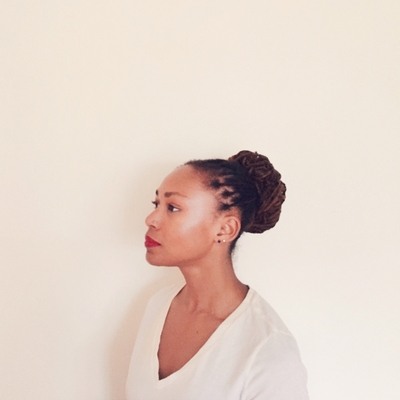
Nicole Cuffy is a proud Brooklyn emigrant who enjoys yoga, ballet, and writing literary fiction. Her work can be found in Mason’s Road and The Masters Review Volume VI, and her chapbook, “Atlas of the Body,” was an editor’s choice and a finalist for the Black River Chapbook Competition, and winner of the Chautauqua Janus Prize.
Nicole holds a BA in Writing from Columbia University, and an MFA in Fiction from the New School. She does her best writing when she’s writing by hand, and she is a high-functioning book addict. When she isn’t reading, writing, or yogaing, she is most likely dancing. She can be found muddling her way through Twitter and life in general here: @nicolethecuffy.
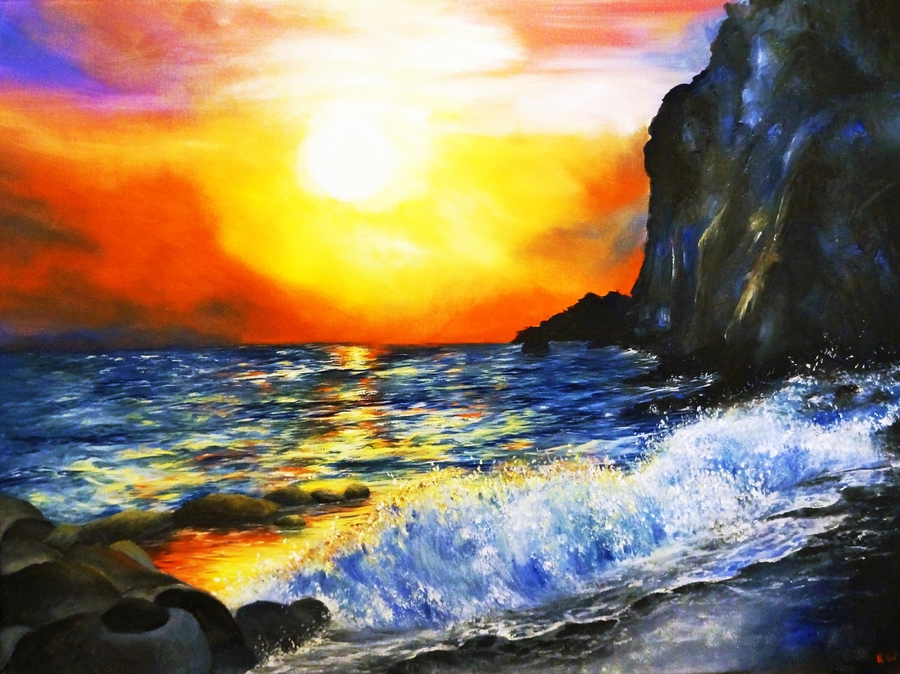
I am a traditional and abstract artist, focusing on energy and peace through color, rhythm, and texture. As a result, I want the painting to be an experience for the viewer. I am from a small town on the Eastern Shore, where I spent a lot of time in nature. I really enjoy being in and painting nature, especially sunsets. When I paint landscapes, it is my way of escaping, and helps me relive those memories.
The thing that I enjoy the most about art is how I can incorporate my own feelings and emotions into it. Although I do love painting landscapes, I most recently began venturing into the wonderful world of acrylic fluid painting. It provides the same feeling that painting landscapes gives me; the feeling of expression, freedom and liberation. I also enjoy the experimentation of colors and chemicals, which give varying results. I love the mystery and surprise of it all.
By Lindsay Wilson
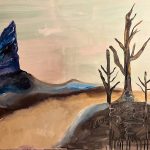
By Victor Hugo Mendevil

By Windy Martinez
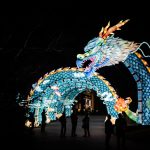
By Jackie Martin
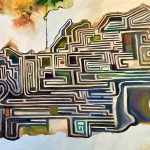
By Samantha Edmonds
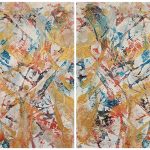
By Jeffrey J. Higa