Letter from the Editor
By John Hardberger

1st Place Fiction
2017 Summer Contest
Though it is quite different from our own work and even our own reading aesthetics, it is a really well-done absurdist story that relies on restrained dialogue and has a compelling voice. Stories often start strong and then fall apart (or at least fall down), but this one grew stronger. It is fully realized in just four pages. Very nicely done.
– Anne Raeff and Lori Ostlund
On a warm Sunday morning in the suburban desert of Southern California, roughly two days ago, while driving in the parking lot of the VONS grocery store, I suddenly realized that my car was never going to leave the parking lot. My car, which had been circling the lot for almost three hours now, had decided on its own accord to circle the lot indefinitely.
Not that I minded. The parking lot was fairly nice. Its proprietors included not just a VONS but several decent restaurants, a gas station, a laundromat, and in fact, in one of the restaurants, there was a help-wanted sign which could be used to my benefit in the event that I would need to make some money.
The parking lot was, like so many supersized, highly-unspecific parking lots, a perfect mix of every parking lot that had ever existed and all the parking lots that would at some point exist.
What I’m saying is that it was nice, this lot, a break from the speed of the freeway. The thing I liked most about the parking lot was its total indifference to everyone that came and left it. I would see large vans full of children, buses carrying the elderly, sports mobiles, stick-shifters, teenagers in Toyotas. All of them would come and go in due time, and the parking lot would remain utterly unchanged.
As I circled around, I noticed an attendant outside of the VONS who was smoking a cigarette and eying my car. She wore blue lipstick and ashed her cigarette by the trash can.
“What are you doing?” she asked.
“Oh, just circling,” I replied, rolling down my window halfway.
“Well can you do that somewhere else?” She pointed to the VONS logo on the lapel of her uniform. “My boss wants you to stop circling.”
“I’m sorry,” I said, and rolled up my window, and kept circling.
The real beauty of the parking lot was that no one, except for the occasional attendant, was aware of my presence there. I could circle around forever, smiling and waving at drivers in cars, beeping at others, none of them knowing that I had been smiling and beeping for hours. It was liberating, to gain such a mastery of the space, to understand its ins and outs, all of its divots and bumps and pockets of shade.
The parking lot was special precisely because it was a place from which I could imagine myself elsewhere. I could imagine myself in any parking lot that had ever existed throughout history. I could imagine myself in a parking lot in 1940’s Arizona and I don’t even know what that means. I could imagine myself in a parking lot on Mars in the year 2190 with a milkshake and a moon stick. I could imagine myself driving in a parking lot owned by a totalitarian government that owns parking lots and Dairy Queens. I could imagine that I am a parking lot, and that I’m driving in myself.
When I passed the VONS again, there was a cop car with its lights on waiting for me. An officer approached my car and told me to roll down the window.
“Can I help you officer?” I asked.
“What are you doing, son?” he responded through his mustache.
“Just circling,” I said.
“Circling, huh?” answered the officer, taking a moment to think.
“Yeah,” I replied, rolling down my window all the way. “You see that restaurant over there?” I asked, gesturing to the help-wanted sign. “That’s where I work.” The officer nodded. “And you see that gas station over there?” I said, pointing to the gas station. “That’s where I get gas.” The officer nodded again. “And in my free time, I circle the lot.”
The officer looked into my car and then back at me. The car was empty except for a couple moon sticks and laundry. I pressed hard on the brakes to bring the car to a full stop but the brakes wouldn’t budge and the car kept rolling ever so slightly, the officer walking befuddled alongside it, eventually gave up and looked on as I slowly peeled away from him.
“Well alright then!” the officer shouted in my direction. “I guess this means you can go!” And so I rolled up my window and peeled out around a corner, avoiding a shopping cart, hand honking wheel, toe tapping brake, sunroof exposed.
In the passenger’s seat, my cellphone was buzzing. I looked over and saw my ex-lover calling.
“Hello?” I answered.
“David. Where are you?”
“I’m in the parking lot.”
“What parking lot?”
“I’m driving in circles.”
“David. What are you talking about?”
“I’m driving in a parking lot.”
“Which one?”
“You know, the one.”
“Are you okay?”
“Yes.”
“Are you sure?”
“Yeah.”
“You need to get out of that parking lot.”
“Do you think about me often?”
“What?”
“How often?”
I hung up, the sun was getting low. The thing about driving in a parking lot was that it got kind of repetitive. One rotation became the next, and then the next, and I sort of lost track over time. Which was okay. It was nice to lose track of things, to slip into a somewhat automatic state in which time goes forward but you remain in the same place for all of it.
After a few rotations, I noticed a blue Honda in my rearview and watched it as it followed me around a corner and then past the VONS and then around another corner. I pressed on the gas to speed away, but as I accelerated, the Honda accelerated as well, following in close pursuit, nudging my bumper. What one doesn’t realize about a car chase in a parking lot is that even if you evade your chaser, which I was sure I could do, they’ll catch up to you on next loop, which is what happened, and the blue Honda rolled up next to me, my ex-lover inside, staring over incredulously.
“What is going on?” she said, rolling down her window.
“Oh thank god you’re here!” I stammered, trying desperately to bring the car to a full halt.
“What’s going on, David?”
“I just… I don’t know.” My car began to roll slowly away from my ex-lover’s and she tapped on the gas to catch up. “I guess I’ve just been circling here for a few hours, haven’t I?” I said, looking over and smiling.
“You’ve been circling here for five years.”
“Five years?”
“Yes.”
“Has it been that long?”
“It has.”
“I see.”
“You need to get out of here.”
“Do you still think about me?”
“David.”
My hands rested on the steering wheel and I stared straight ahead, looking out over 1940s Arizona, or maybe it was Mars. It was somewhere.
“I’m still in love with you,” I said, keeping my eyes straight ahead.
“And I love you, you know that.” My ex-lover’s voice was as I’d remembered. “We just can’t.”
“I need you.”
“I can’t right now.”
I sped away from my ex-lover, pulling up next to the gas station and filling up my tank. The blue Honda pulled up next to me and my ex-lover stepped out.
“David,” she said, walking over. “You know I love you. And I’m telling you, you have to get out of this parking lot.”
“I can’t,” I said. “The car. It won’t.”
“It will. You have to.”
“I don’t want to,” I said. “It’s fine here. It’s got everything I need.”
“David.”
“I can’t. It’s just, I can’t.”
My ex-lover leaned down and I turned my head to look at her. Her face was warm and glowing, and the wind in the gas station blew against it softly. “David,” she said, and leaned down to kiss me gently on the forehead. “It’s time.”
“Time?” I said.
“It’s time.”
“I know,” I said. “I know.”
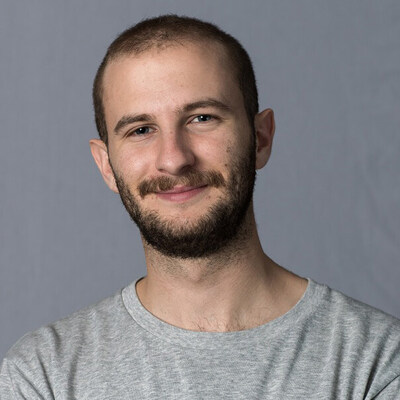
David Connor is a writer based in Los Angeles, California, recently graduated from the California Institute of the Arts with an MFA in Writing. His work has appeared in Potluck Magazine, Running Moon, and his story “The Tornado is in a Seltzer Bottle in the Kitchen” was named as a finalist for the Robert and Adele Schiff Award in Prose at The Cincinnati Review. In his free time, David develops new languages for communicating with his neighbor’s dog. He is working on a novel, Oh God, the Sun Goes, which he hopes to complete soon.
By Lindsay Wilson
By Victor Hugo Mendevil

By Windy Martinez

By Jackie Martin
By Samantha Edmonds
By Jeffrey J. Higa