Letter from the Editor
By John Hardberger

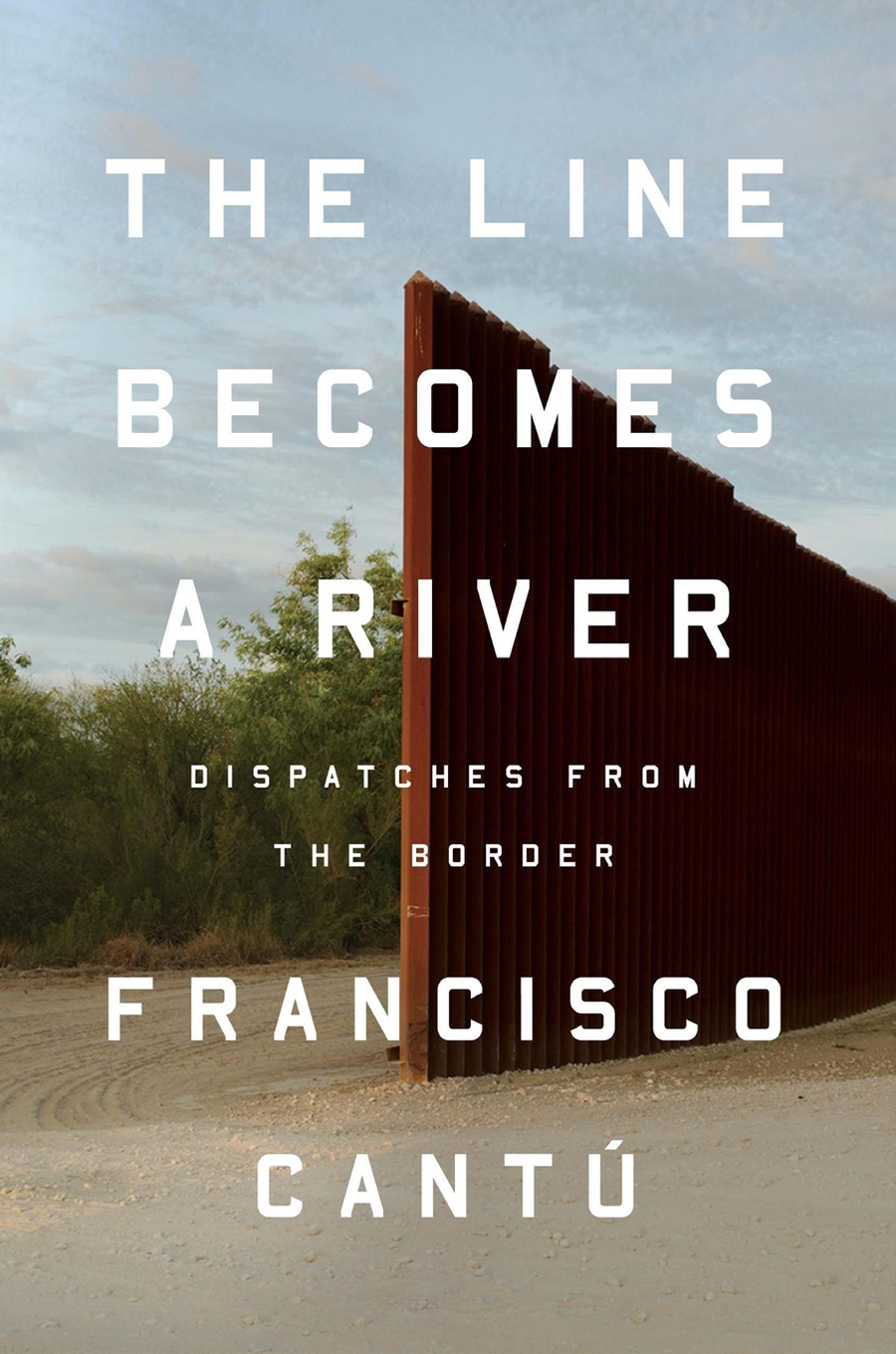
Albuquerque’s Bookworks recently hosted Francisco Cantú, author of The Line Becomes a River. Cantú’s book tells of his time working as a U.S. Border Patrol agent after graduating college with his bachelor’s degree in international relations. He later received his MFA in Nonfiction from the University of Arizona. Cantú explored the reasons he joined the border patrol and the events that led to him leaving the institution, which included its dehumanizing ways.
Cantú was joined for a Q&A after the reading by community member Rafael Martinez from the New Mexico Faith Coalition for Immigrant Justice. The two discussed topics from the books and other issues raised by the standing room only crowd, including immigration reform and the U.S. Border Patrol. The warm welcome offered by the Albuquerque audience was a contrast to some of Cantú’s previous book tour stops where protestors reacted to an NPR tweet quoting Cantú’s work, but was later seen to be taken out of context. After the event, Francisco sat down with our staff reader Olivia Padilla for an interview.
Olivia Padilla: Did you have the mustache while you were a border patrol agent?
Francisco Cantū: I only had the mustache for a short period of time while I was in the border patrol. Actually, this exact mustache is the only kind of facial hair you are allowed to have. There are all these rules, like your facial hair can’t come below the corners of your lips, and you can’t have side burns that are longer than your earlobes. So, if you ever wanted to have facial hair, a mustache is as far as you could go.
OP: Was that your inspiration for the mustache?
FC: Actually, I shaved my beard into a mustache right around the time I was graduating with my MFA. I thought it made me look more like a grown man, so I kept it. Also, it has a good “80’s Dad” aesthetic that I really like.
OP: How do you compare your experience as a border patrol agent to what has been previously written about the border patrol, such as in Luis Alberto Urrea’s The Devil’s Highway?
FC: Honestly, I think that Luis’ book The Devil’s Highway comes the closest to capturing some of the tension of that job. I think a lot of the books that exist about border patrol are either memoirs or war stories by former agents. There are a few important journalistic critiques of the border patrol. As well as a history of the border patrol, called Migra, which looks at them as a colonizing force in the Southwest.
There is a whole genre of veteran literature, by writers like Tim O’Brien, where people who have the experience of being soldiers and have come back from the war are trying to process what they have participated in, and the violence of it. I don’t think that really exists for the border patrol. So, I didn’t have a lot of guides when thinking about what this book would be. I also did not want it to only be a book about the border patrol. It’s a book about the border, and the border patrol is the thing that brought me closest to it.
OP: In the beginning of the book your mother states, “The border is in your blood.” This is a curious statement because most people try to further themselves from the border and all its hardships. Yet there is an incorporation of the border in your identity. Why do you feel that you must continue to recognize the border, rather than disassociate with it?
FC: Part of it is looking at different generations of immigrants. There is a part in the book where my mother is explaining that the first generation that comes into a new country is hyper concerned with fitting into a new model – a new culture – and preparing their kids to be Americans, and clearing out all the obstacles to do that. The second generation grows up feeling American, but also hears Spanish spoken in their home and are more closely tied to the tension of their family as immigrants. By the time you have the third generation, a lot of times people are very removed from such tension. So, in my experience, I didn’t grow up hyperconscious of my Mexican identity or the border, or even the Spanish language because I didn’t grow up speaking Spanish. I think a lot of times when you’re part of the third generation you get older and you start to look back at your family. I mean I think a lot of people have that experience, right? When you get older you start to think more about who came before you, what put you where you are, and what makes you unique. For me it came later. And because I was already interested in the border, I became interested in knowing more about that connection and knowing about my grandfather’s story.
OP: Can you describe the transition from being an agent to becoming a published author?
FC: It was a very long transition. I did it primarily through academia. The first thing I did was leave the border patrol to do a research fellowship with a Fulbright Scholarship. That was the first time it was my job to report and interview people and try to write from a more academic research standpoint. I liked it and I wanted to continue to do that form of work. I applied for an MFA program, and that’s when I really started to think about writing down my experiences. It made sense for me to step into an MFA program after coming out of an institution because it was a structure that made sense to me and it was a very clear path forward. I think a lot of writers struggle with having such structure and with the idea of calling themselves writers. A lot of times, until you have a book, people are very shy to call themselves that. I think one thing that is very beautiful about MFA programs, is that they train you to think of yourself as a writer.
OP: Did you feel you had more knowledge and perspective while working as a border patrol agent than some of your colleagues because of your background in international relations?
FC: When I first stepped into the Border Patrol Academy, I was like “Uh, I don’t want to be the know-it-all college boy.” So, I really didn’t talk about the fact that I had just finished my degree. But I quickly found out that a lot of guys in the border patrol had college degrees. Some people in my class even had master’s degrees. And of course, a lot of people had a law enforcement background. But I was surprised. Maybe I shouldn’t have been. But I was surprised by how many different types of people I encountered in the job.
OP: Can you offer any advice for aspiring writers from the Southwest?
FC: One piece of advice is to lean fully into what makes the Southwest what it is, because I think there are a lot of times when the Southwest and the border get defined by people who aren’t from there. I think for writers who are from the Southwest, I think it is up to us to correct that and present the places that we’re from with nuance and complexity in a way that honors the true nature of this place. I think it’s important to not shy away from those labels. Embrace the label of a Southwest author. Don’t let it pigeon hole you but embrace it. I think that it’s an honor. There is a great literary tradition in the Southwest. The other piece of advice that I always think about that was really powerful for me in my own life is, no one is ever going to give you permission to write the thing that you want to write. So often as writers we’re kind of like, “Ah, you know I would really love to write this essay about this thing, but there are other people who are so much more educated about it than I am. So, who am I to write that essay?” You have to put that out of your mind. You have to give yourself permission to write that essay. If there is something out there that you wish somebody would write about, be the one to do it.
OP: Did you feel that the people you encountered in the desert felt more comfortable with you being a Hispanic male who is also bilingual?
FC: Speaking Spanish is absolutely the most powerful tool that I had as a border patrol agent. It enabled me to connect and understand people. It also kept me safe and enabled me to have more control in dangerous situations to communicate more clearly. I really think that the moment of being apprehended in the desert is such a moment of extreme vulnerability. There are few moments like that. I think that just being able to hear someone speak to you in your own language, it sounds like a small comfort, but so many people are told by coyotes that if they are captured by border patrol, that they are going to be killed. I think it was really important to me to engage with people as human beings because I don’t think the job necessarily encourages it. I think it is important to push against those things that don’t encourage us to see each other as humans and interact as human beings.
OP: What makes up your latinidad?
FC: To me, first and foremost is Selena. Tejano music, I love Tejano music. Norteño music. Food is a big part of it: birria and Sonoran hotdogs. The language. I didn’t grow up speaking Spanish, but slowly I built up the ability to switch in and out of languages. There are so many phrases that are better expressed in Spanish. One of my favorite things about living in El Paso, when I used to live there, was that you could more fluidly switch in and out of those two languages.
And also, the warmth of Mexican culture and border culture is profound.
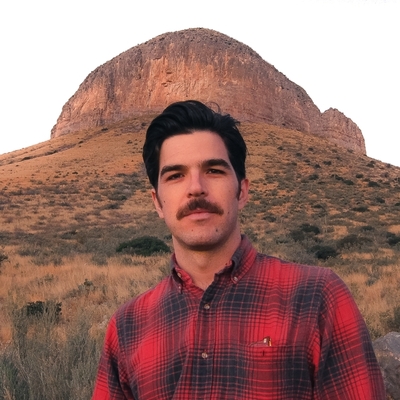
Francisco Cantú, author of The Line Becomes a River. Cantú’s book tells of his time working as a U.S. Border Patrol agent after graduating college with his bachelor’s degree in international relations. He later received his MFA in Nonfiction from the University of Arizona.
Olivia Padilla is a reader for Blue Mesa Review

By Lindsay Wilson
By Victor Hugo Mendevil

By Windy Martinez

By Jackie Martin
By Samantha Edmonds
By Jeffrey J. Higa