Letter from the Editor
By John Hardberger

Erika L. Sánchez’s YA novel, previously titled Brown Girl Problems, will be published by Knopf Books for Young Readers in fall 2017. Her debut poetry collection, Lessons on Expulsion, is forthcoming from Graywolf in July 2017. She is a poet, novelist, essayist, and a graduate of the University of New Mexico with an MFA in Creative Writing. She has received many awards including a Fulbright Scholarship, a CantoMundo Fellowship, and a Bread Loaf Scholarship. Erika grew up in the Mexican working class town of Cicero, Illinois, which borders Chicago’s southwest side. As a daughter of undocumented Mexican immigrants, Erika has always been determined to defy borders of any kind. And, not surprisingly, her clothes perpetually smelled of fried tortillas when she was a child.
Blue Mesa Review: You have a poetry book and a young adult novel coming out. On social media you’ve also mentioned that you are writing a book of essays. How do you juggle the genres?
Erika L. Sánchez: I’m not very organized, to be honest. I just work on whatever I become obsessed with. I love writing and revolve my life around it. I find the genres liberating in completely different ways.
BMR: In your bio, it says you didn’t like Albuquerque. Is that tongue in cheek? In retrospect, do you feel the same way?
ES: I am half-kidding. I didn’t love it at the time because I was young and had moved there after spending a wild year in Madrid, Spain. I’m a city girl, so Albuquerque was hard to adjust to, but now that I’m older I look back on that time somewhat fondly. I do miss the mountains and the smell of green chile.
BMR: How do you structure your writing day?
ES: I don’t. Haha. I’m all over the place. One minute I’m working on a poem and the next I’m listening to Philip Glass, and then I get distracted by a particularly ragged pigeon. Later on that day I might work on an essay about my first period. I’m very unpredictable.
BMR: You’ve been very vocal about the role of Buddhism in your life. How has it impacted your writing?
ES: Buddhism has transformed me in such profound ways that it’s hard to articulate. I started practicing about a year ago, and ever since then, I’ve developed a much deeper appreciation for my life. I think that it has made me more acutely aware of my fortune and everyday beauty I encounter. It has also given me a sense of peace and confidence that I’ve never had before, which makes me much more productive. The concept of turning poison into medicine has particularly resonated with me, so I try to use my suffering to make art.
BMR: Feminism clearly impacts your nonfiction–you’ve written extensively about ethnicity, poverty, reproductive rights, etc. Many vocal feminists are often harassed or attacked on social media. Have you gotten that kind of pushback?
ES: I’ve received plenty of hateful messages, which is always scary. It’s unfortunate that women are often targeted and it’s considered an occupational hazard. I just delete and block whoever makes me uncomfortable. There’s not much else I can do.
BMR: When you write poems, do you have an ideal reader in mind?
ES: Never. As soon as the reader enters my mind, the poem is ruined.
BMR: Are your poems finished or abandoned? Are you a big reviser, what is your process?
ES: Some feel finished and others abandoned. I revise obsessively, but there comes a time that you need to let the poem go before you strip it of its spirit and ruin it. Some poems continue to bother me well past their publication, but I try to be ok with that.
BMR: How does being bilingual influence your writing?
ES: Mexican Spanish is so lively, beautiful, and often hilarious. I’m so glad that I’m fortunate to speak it. I think and feel in Spanish, so it always manifests itself in my work.
BMR: When did you start writing? What the first thing you ever wrote? Was there a moment when you decided to be a writer?
ES: I started writing when I was 12-years-old after reading Edgar Allan Poe. I fucking loved that guy. “The Raven” blew my little world apart. My first poem had an image of the moon as “a nightlight to the earth below.” My teacher loved it and that made me think that maybe I had some talent. That image though! I certainly wasn’t sharp enough at the time to see the irony in using a man-made object to describe the natural world.
BMR: What are your favorite books in the last six months?
ES: Second Empire by Richie Hoffman; Paradise by Toni Morrison; The Buddha in Your Mirror written by Woody Hochswender, Greg Martin, and Ted Morino; Thief of the Interior by Phillip B. Williams; Chord by Rick Barot; and Vagina by Naomi Wolf.
BMR: What have been your highlights and lowlights as a writer? What advice can you give to female writers of color struggling with the lack of diversity in publishing?
ES: Man, I’ve had so many lowlights. Some people seem to think I have it made as a writer, but I struggled for a long time. I’ve had some terrible jobs to pay the bills. Corporate America makes my soul barf. Making a living doing something you love, particularly something as impractical as writing, is tough. Even in my darkest moments, when I felt that what I was doing was pointless, I kept going because there is nothing I love more than writing. I honestly don’t know what or who I would be without it, so in a way it wasn’t even a choice. My advice is to keep going, even when you feel defeated. I’m 31 and both of my books were just now accepted for publication because I’m a stubborn bastard and always aimed high. Don’t settle for less than what you think you’re worth. It’s frustrating, but if you work hard enough for a long time, people will notice. The world often expects women of color to fail or give up. Don’t. We deserve to be recognized by prestigious institutions, but unfortunately, we have to work harder than others.
BMR: Any regrets or plans you want to share?
ES: I regret the last cocktail I drank last night. I will complete my book of essays this year. I also expect that my novel will become a movie because I’m delusional.
Erika L. Sánchez’s YA novel, previously titled Brown Girl Problems, will be published by Knopf Books for Young Readers in fall 2017. Her debut poetry collection, Lessons on Expulsion, is forthcoming from Graywolf in July 2017. She is a poet, novelist, essayist, and a graduate of the University of New Mexico with an MFA in Creative Writing. She has received many awards including a Fulbright Scholarship, a CantoMundo Fellowship, and a Bread Loaf Scholarship. Erika grew up in the Mexican working class town of Cicero, Illinois, which borders Chicago’s southwest side. As a daughter of undocumented Mexican immigrants, Erika has always been determined to defy borders of any kind. And, not surprisingly, her clothes perpetually smelled of fried tortillas when she was a child.
Paul Bilger is an experimental photographer. His work has been featured in the literary journals Brevity, SmokeLong Quarterly, quarrtsiluni, Hot Metal Bridge, and as cover art for the musical collectives Dead Voices on Air, Autistici and Brian. More album art can be viewed at Discogs. In 2012, he was a featured artist for Kompresja, a Polish journal of Art & Science. He teaches Philosophy for Penn State University and Chatham University. He lives in Pittsburgh.
By Lindsay Wilson
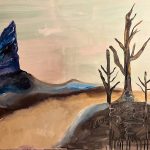
By Victor Hugo Mendevil

By Windy Martinez

By Jackie Martin
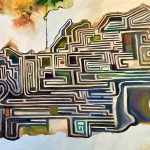
By Samantha Edmonds
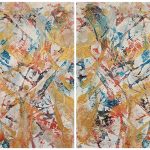
By Jeffrey J. Higa