Letter from the Editor
By John Hardberger

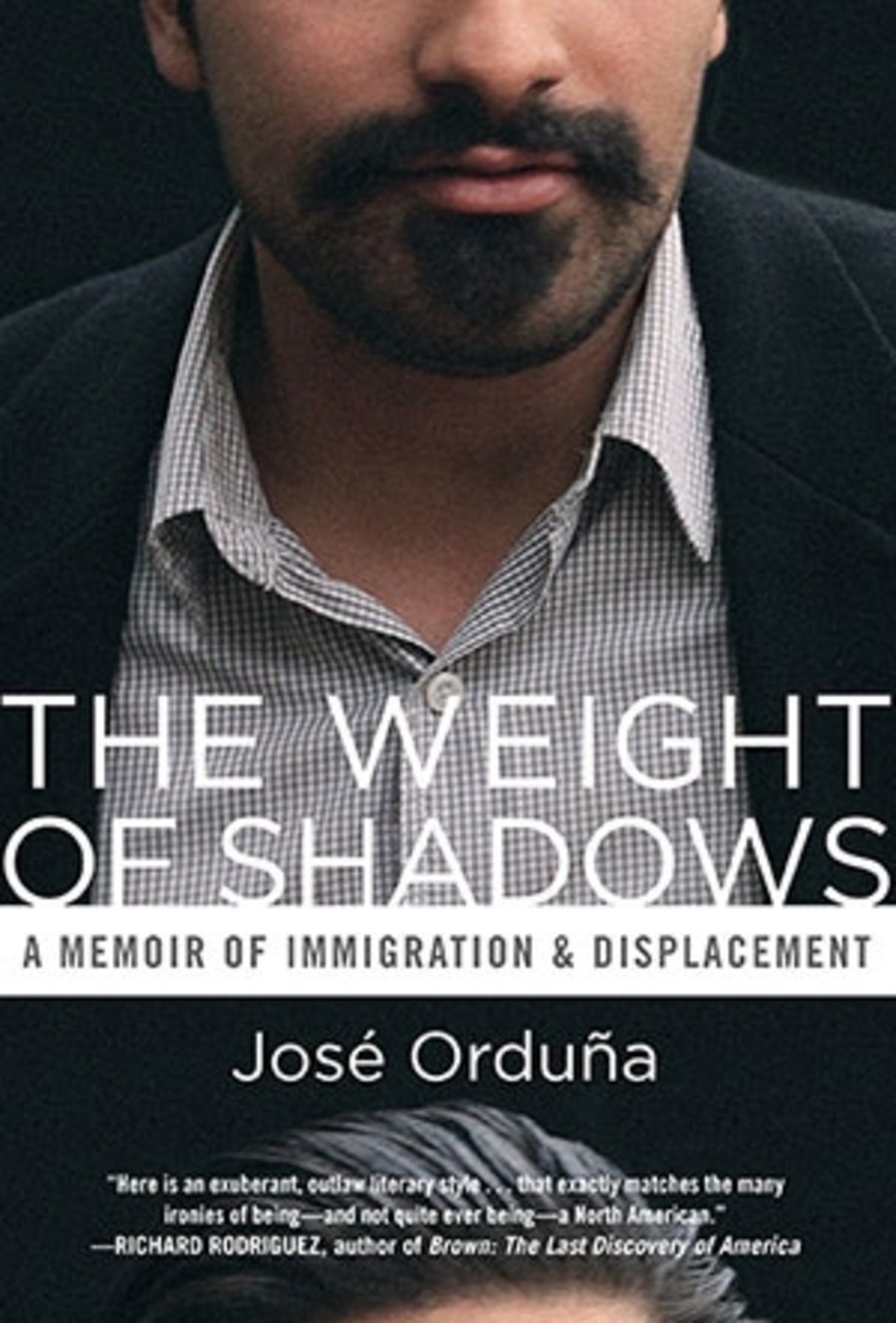
Jose Orduña’s The Weight of Shadows: a Memoir of Immigration and Displacement was published by Beacon Press earlier this year. Theoretically a memoir, it contains eleven standalone essays in chronological order that cover the process of becoming an American citizen while undocumented. Orduña was born in Cordoba, Veracruz and immigrated with his parents to Chicago at two years old.
Blending the investigative with the personal, Orduña’s writing is honest and intense. By cataloguing bureaucratic absurdities, family history, and the intense anxiety of surviving America undocumented, Orduña exposes the continuous non-sequitur policies on immigration and the economic forces that have turned the US-Mexican borderlands into killing fields.
Orduña graduated from the Nonfiction Writing Program at The University of Iowa and is active in Latin American solidarity. If the current president-elect’s poisonous rhetoric of “building the wall” ever comes to fruition, Orduña, along with millions will be heart-broken. Orduña is one of the few that have the passionate articulation and disciplined erudition to explain the culmination of these horrific choices by the US government.
Blue Mesa Review caught up with Orduña, pre-election, at the Humboldt Coffee Shop in Albuquerque, near University of New Mexico, where he is the current Joseph M. Russo Chair in Creative Writing.
Blue Mesa Review: Are you up for a little free association?
Jose Orduña: Sure.
BMR: One word or sentence only please. Ready? Ok. NAFTA.
JO: Wow. One word? Only a sentence… wow. (long thoughtful pause) The dissolution of Mexican farmers. The end of Mexican farming. The movement from rural to urban…
BMR: Alien?
JO: Green creature from another planet.
BMR: Promotion?
JO: Getting more money?
BMR: Discipline?
JO: Foucault.
BMR: MFA?
JO: Pointless if you don’t do it write.
BMR: The New York Times?
JO: Sometime a rag, sometimes PR.
BMR: Restaurants?
JO: Hierarchies.
BMR: Facebook?
JO: Mostly where I get my news.
BMR: Streamline?
JO: The vanishing point of justice.
BMR: Socialism?
JO: A possible alternative to our dysfunctional-crony-capitalist-faux-democracy
BMR: Socialismo?
JO: Spanish for socialism.
BMR: Cabron?
JO: One of my mom’s favourite words.
BMR: Arizona?
JO: Theater of immigration.
BMR: New Mexico?
JO: New home.
BMR: Iowa?
JO: Old home.
BMR: Marriage?
JO: Really exciting and different than I ever thought it would be…
BMR: Citizenship?
JO: More attached than should be.
BMR: Bureaucracy?
JO: Systems of oppression.
BMR: Obama?
JO: A disappointment and actively harmful.
BMR: Herbert Hoover?
JO: The Repatriation.
BMR: Naturalization?
JO: Completely unnatural.
BMR: Frontier?
JO: A local restaurant and also a zone of existence.
BMR: Ok, take a breath… enough free association. So, when did you first start writing?
JO: As a kid, I used to draw. I was always drawing comic books. Marvel and Spiderman stuff. I thought I was really good, until I met one of my oldest friends who could really draw well, so I started keeping a journal, before I really knew what journaling was… like a mental sketchbook, lists, doodles, the notebooks became more elaborate.
BMR: Do you still have them? Do you ever go back to them?
JO: Yeah, I do. I’ve lost some but it’s kinda scary because sometimes I feel I used to be a better writer. Like some of my sentences as a teen are so powerful and clear. I wish I could still produce sentences like that sometimes.
BMR: Was there ever that lightening bolt moment when you knew you wanted to be a writer?
JO: Actually there was, it was a class I took—a film and video class at Columbia College in Chicago. The course was really technical. I got into location audio. Also, I took some incredible classes with Marcy Rae Henry at a local college and she was really nurturing. Then I took an essay class with David Lazar, who is now kinda like my essay-father. He is an incredible essayist. I took a few of his workshops and he helped me situate myself in the essay tradition.
BMR: And from there to Iowa?
JO: I worked in restaurants. I was a permanent resident then but among the undocumented labour. Easily deported. Just think of the terms: “Back-of-the-house, Front-of-the-house.” So racially fraught. Class structures became so clear. I was the host and I occupied this role, a role I had occupied so many times in my life, the figure that could slide between zones and move freely…
BMR: The intermediary?
JO: Yes, but in a precarious way. Then I moved to Dallas, and worked in a community organization, stopped writing for awhile. I was looking for a career, a way to make a living. I thought there was no way to make money as a writer. I shifted gears to try and make money. I applied to jobs I didn’t want and then Grad-school and got in to a bunch.
BMR: Were you writing about the same themes then?
JO: Yes. But more squarely personal essays.
BMR: Did your thesis become your book?
JO: Kinda. I was writing really experimental stuff. Video essays. Modular.
BMR: Yeah, Not My Home, I loved that.
JO: Yes, I like that stuff and hope to continue. But I was going through the Naturalization process as I was going through Graduate school. Early drafts became chapters…
BMR: How was Graduate School for you?
JO: I felt very isolated, even though I had good friends, people who cared about me, I think I isolated myself. I felt isolated in Iowa.
BMR: You kinda have to do that to write, don’t you?
JO: I used to believe that, but feel it’s just a myth. If I were in isolation, I couldn’t write what I am writing now.
BMR: Growing up in Chicago, did you feel isolated from the Mexican community?
JO: Not really, we have a historical community there. But there are long-standing communities throughout the Mid-West—hundreds of years—but they are outside of cities, out of sight, and were migrant workers, itinerant labours coming and going with the seasons, until restrictive laws prevented them from coming and going.
BMR: In the 90s?
JO: No, it was The Bracero Program, from World War II to the 60s. They had to formalize and had to stay. Crossing the border was no longer an option.
BMR: Let’s talk about the book, how’s your relationship with it now? I mean readings and interviews…
JO: I’m glad it’s done. I’m proud I wrote the book I wanted to write. Working through it was very satisfying. I’m proud I got that book published, because there was a lot of interest in a different book.
BMR: The title was changed, wasn’t it?
JO: The working title was The Naturalization.
BMR: Tell us about the publishing process.
JO: Well, Coffee House Press were super nice, they informally offered to give it a home but said to try the bigger houses. I submitted a one-page pitch to an agent. I was so under-prepared. I had no idea how to pitch it. He took me on and helped me develop a proposal. He sent it to all the major houses and it was rejected by all of them. Some of the rejections were thinly veiled racism and classism. Then I suggested Beacon. I mean I’ve always loved James Baldwin and he was published there and they expressed interest in the actual book I was writing and it found a home there.
BMR: How long did that process take?
JO: About a year. My agent really guided me. Then I had a year contract to deliver. I went over a few months, but my editor was super helpful both conceptually and with line edits.
BMR: There are some beautiful lines.
JO: Thanks. It comes from living with a poet. My wife, who I met at Iowa, is my first and best reader and editor. Our heads stay together at night. Osmosis.
BMR: The genres are as far apart as you can get…
JO: I don’t know, for me, the essay and poetry are close, closer than fiction anyway.
BMR: Your title, The Weight of Shadows, comes from a painting by Remedios Veros called Fenómeno. Why?
JO: That particular painting stands out because it is spare. Most of her work looks like Hieronymus Bosch, full and bold and busy, but this one is different, sparse.
BMR: Let’s get into the themes. There is a section in the book where you go to the Philippines, you step out from the US-Mexican umbrella, and somehow step into the colonizer’s role. Was that intended?
JO: Immigration in the US is not just a Mexican thing. Not just a Latin-American thing. I wanted to write through my experience, but I wanted gestures in the book that this was not the whole story.
BMR: Much of the book deals with desert crossing and the danger.
JO: I mean the structure of the book was to follow my process of naturalization and going to The Philippines happened in the middle of that, and I thought, how can I not write about that. In The US, until I speak, I’m read as a Mexican or Latino. In Mexico, when I speak, I’m seen as an American. In a third place, it’s more ambiguous. I have benefited from being an American and I didn’t want to create a character of myself that was morally flat. I didn’t want to be “the good immigrant” because I’m not.
BMR: Typical immigrant question. Do you think they can ever go home?
JO: I think the answer is obvious. Yes. I have several homes and I feel comfortable in several places, but I think the question has a lot of political realities attached. It’s linked to this century and the nation state, on how you construct national identity. I feel the local is a more intuitive scale, and the global. I feel I am a Chicagoan and also a human being. The local and the global are what we should use to form our identity. The nation state is very strange. I’ve never understood flag waving. I never wear flags. To answer your question, I find home in specific localities.
BMR: Do you think we get access to global life through education?
JO: Not education. I mean, it’s easy to get a passport and travel for us. Most of the world will never have access to a tourist visa to most of the rest of the world. They have to establish their class, by showing money and property to get a visa. There are so many people who will never board a plane.
BMR: And language, how do you feel about Spanish?
JO: I read and write Spanish. It was my first language. When I started school, I pretended to speak English through jibber-jabber. Then through school it became my first language. My parents learned English quickly. They studied hard, so I never had the full burden of being the family translator like many others.
BMR: Before we go, what are you reading these days?
JO: On my bedside table, Women and Other Aliens, by an incredible author called Debbie Nathan. Lately, I’m supper jazzed on Arundhati Roy, especially her non-fiction. I read a lot of academic articles and legal history. And the big ones, James Baldwin, John Berger… of course my wife’s work, Caitlin Roach.
BMR: Do you like Hunter S. Thompson? That essay “Tasers, Drones and Cold Chicken…” in the Huffington Post reminded me of him.
JO: Oh, I love him. That was a very strange experience.
BMR: What are you working on now?
JO: I’m trying to write about historical material perspectives on violence and Ciudad Juarez. But I’m really reading around things and establishing links, which is how I work.
By Lindsay Wilson
By Victor Hugo Mendevil

By Windy Martinez

By Jackie Martin
By Samantha Edmonds
By Jeffrey J. Higa