
Letter from the Editor
By John Hardberger

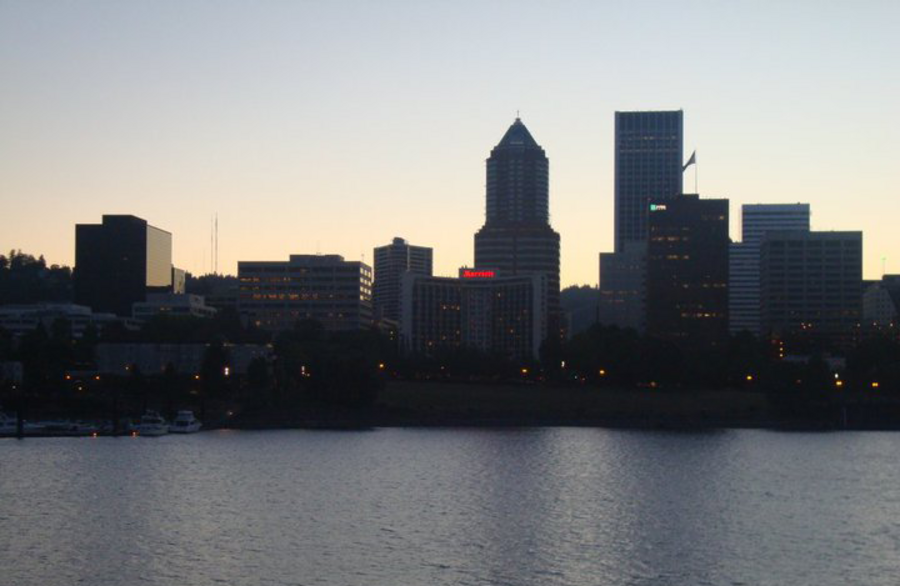
2nd Place Fiction
2018 Summer Contest
This story is beautifully narrated and shows bravery and wisdom.
– Luís Alberto Urrea
There’s a club we used to go to near the river, a place meant for people like us. This was before you, before everything. The club was downstairs—you had to descend into it, and it always felt like crawling down a throat. The bathroom stall doors had fallen off and been carried away. I remember that. But the club itself was nothing. A little fist of darkness on the dance floor. A pool table with a rut down the middle. The sweaty-chinned bartender.
There was nothing official about the club. No drag shows or rainbow flags. In fact, not having a real name kept the place from gaining much of a reputation. I didn’t even think of it as gay bar, just a place with less rules about how bodies should be arranged. The few times I’d ventured into other bars I sensed immediately a whole set of laws for how men should stand next to one another. I mimicked the boxy stance—arms crossed, chest inflated, head on a swivel. Guys stood as if they were each encased in a refrigerator-size force field and they did not get any closer unless they absolutely had to. There were of course little exceptions when men were expected to touch, but any platonic hand on the shoulder or elbow to the ribs had to be done with a calibrated casualness I never quite got the hang of.
We didn’t go to the club to be inside. We went to smoke out front. To climb up and down the stairs. To sneak into the back alley and kick our toes into the curb. To toss empties into the dumpster like glass grenades. Sing was the bouncer. We went for him too. Every night he propped himself on a stool and didn’t move unless he had to. I’d never seen anyone so patient with violence, so calculated in doling out pain. Even nights when we could see a fight coming from a long way off, Sing waited as long as he could. And then he only hit as hard as he had to. I think it made people test him more often—he gave them the chance to get an exact measurement of what they could get away with.
I watched once as Sing put his fist into a man’s bulging stomach. The man had been yelling for a while, his words whiskey-loose as if the stitching that held one sound to another had come undone. Sing’s expression did not change. He waited until the man thrust his red face too close and then he delivered one quick blow to the man’s gut. The man stumbled back toward the street; it would have been easy for Sing to shove him to the ground and take another shot or two, but he didn’t. Instead he looked off the other direction while the man stood doubled over, gulping air.
Sing never revealed a whole lot about himself, but we spent plenty of time guessing at the particulars of his life because even in that small town where everyone was tied to the same string, we never saw him anywhere but at the club. When he left he seemed to evaporate into the night, though I heard he lived out in Bonner somewhere. We’d also heard that he grew up in Guam, that he’d been a Marine, that he lived on the Rez, that he was divorced, that his dad was a Hmong guerilla fighter, that he had a baby who died in some freak accident, that he’d done time for a DUI—we heard enough to know it couldn’t all be true. But his dark features disguised his age well, and we had trouble even settling on how many decades he’d been around. What we wondered most, of course, was whether Sing worked at the club because he belonged there or because it was a job he could keep. We never put words to it, but we were all watching him the same—trying to catch his gaze settle on any one person. But it never did.
Occasionally, I saw people from the club at the gas station and the grocery store and most of the time they locked eyes with me and nodded. Sometimes they pretended not to see me. None of them ever said anything. So many of us might never really come out, and here we were locking eyes with strangers who we’d seen grinding up against one another. I liked the feeling of holding the secret between us, fragile like a blown-out eggshell, but I could tell most of them did not trust me with it.
I did not really have friends then. I had a trio of guys that I met up with. Theo, who was rail-thin with bright orange hair and knobby elbows. Abe, who had a square head and one grey tooth. And Link, who was half-native and kept a sling-shot in his back pocket at all times. We were not a good match, and I think we could all tell that we were simply placeholders in each other’s lives until something better came along.
The four of us moved toward the club the way we might move toward the scent of a rotted fruit, as if we could not tell whether we were compelled by appetite or disgust. When I edged up to the dance floor I found I was mostly repelled by the people there. Their mouths hung open, their eyes rolled back in their heads, their limbs did not match their bodies. But even as I watched the most wretched of them swirl around each other, I could not quite pull myself away.
None of us ever stepped out on the dance floor. We shifted around the club as if every time was our first time. We acted overwhelmed by the stink and the sweat, by the man with the undone tie and the woman with the dreadlocks. We eyed the men sneaking into the bathroom together and traded looks of disbelief. We poured out the back door and kicked around the alley, pretending that we did not want to be there. We claimed to come because the liquor was cheap and no one bothered to check our ID’s. We talked often about moving to Seattle.
Sing popped into the alley sometimes. He took smoke breaks back there. But he didn’t really smoke cigarettes as much as he let them burn to cinders between his fingers. On the rare occasion that he talked to us, he did so impersonally, as if he could be talking to anyone. One time he claimed he could see the space station right above us. None of us knew what to say, but we all looked up and watched a little blue/ red blinking light slide across the sky. I think it was just a satellite.
I was still going to school then. My senior year. Theo was in my class. Abe had dropped out and gotten a logging job. Link was a junior, but he looked older than the rest of us. He talked about working the gold mines down in Nevada when he graduated. He wanted to work with explosives. Looking back, it’s strange to think how careful we were to not talk about sex. Somehow, we just glommed together and knew better than to put words to our common ground. An instinct that dims after adolescence, I think.
During the week we met at the California Street Bridge and walked down to the river. Link tried to slingshot rocks to the opposite bank. On the weekends we met up outside the club, and we always spent a few minutes pretending to decide whether we really wanted to go in. Sing respectfully ignored our fake deliberations and bumped his fist on our shoulders as we passed him on the way through the door. He smelled like campfire and stale tequila.
All of us had been leered at. We’d had men offer to buy us drinks. Twice I had a man hook his fingers into the pocket of my jeans to pull me closer. Once a hand slipped under the back of my shirt and stayed against my skin until I pulled away. I was drawn to those interactions, but the pleasure seemed to come from declining the offers. I could not be sure what that meant for me. Figuring out my own sexuality felt like trying pick out the shape of an object by looking only at its funhouse shadow.
The club is long gone now. I passed through Montana a couple years ago and found a little shit bakery there. The stairs they’d left the same. Each step had the slicked concrete edge of a million footfalls. But the door had been replaced and everything inside was turned around. The bar itself had been completely removed.
I used their bathroom and bought a coffee, which had the burnt pumpkin taste that some coffee gets. When I paid, I wanted to tell the woman something about what the place had been, but I knew how grotesquely intimate that would be, like lopping off an ear and dropping it into her hand. Instead I asked, “How long you guys been here?”
“At this location? Three or four years,” she said. She had a chirping voice meant to cut off the possibility of more conversation.
“And before this?” I asked, even though her gaze had already flitted away from me.
“It was on the other side of the bridge, I think. That was before me,” she said.
“Before you?” I said. I wasn’t ready to be left alone.
“I’ve been here a year and a half.” Her eyes met mine and I could see a fleck of black in the gray of her left iris.
“I used to come here,” I said. The base of my throat tightened. “Before it was this.”
“Oh,” she said. I could see that she’d dealt with her fair share of lonely middle-aged men in her life. No matter what I said, she wasn’t going to ask a question that might prolong the conversation. In fact, when she saw I wasn’t moving along, she looked past me as if there was another customer waiting even though I could have called her bluff simply by looking over my shoulder.
“Thanks,” I said, lifting my coffee. She nodded. I took my change and left, dislocated by my own nostalgia.
The last night I ever went into the club was in the middle of October. I remember because a few overeager people were already dressed up for Halloween. Winter had laced itself into the air and the cold stung my nostrils on the walk up from the bridge.
The four of us huddled together for a minute on the corner before we made our way up the street. Sing stood in his usual spot just outside the mouth of the staircase, his body thick, a hat pulled over his ears.
“Boys,” he said, nodding as we slipped by.
The club wasn’t too busy. A few regulars, a group of girls who leaned on each other, two men in work boots playing pool. The place smelled of sweat, spilled beer, and the cool dampness of a tunnel.
I sipped whiskey and coke. The lights looped, purple and green, across the low ceiling. A man stuck his ass out too far as he leaned into his pool shot. Theo got in my ear about our upcoming English paper and kept at it even when I tried to change the subject. I didn’t want to talk about school; one of the benefits of coming to the club was that it cut off feeling to the other parts of my life, left them numb like dead limbs. I drank my drink too fast so that I could back away from Theo and get a refill.
I set my empty on the bar. I could feel the heat of the man sitting on the stool next to me. “Another?” the bartender asked. He had too many creases in his face. Abe said he used to be a meth head. Got clean after his wife overdosed and died in the bathtub.
“Thanks,” I nodded. I turned away from the man on the stool to look at the dance floor. A man and woman clutched each other, swaying out-of-sync with the dance beat. She had ratty hair that hung all the way down to her waist. The bartender slid a cool glass into my hand.
Already the whiskey had loosened the marrow in my bones. The man on the stool swiveled toward me just slightly, but I didn’t look at him.
Link stood by the back door. When my gaze swung over him, he caught my eye and held up a pack of cigarettes. I nodded, put up one finger to tell him to wait for me. I paid slowly, slipping the bills from my wallet one at a time. The cash stuck to the beaded moisture on the bar, wetness blooming in a cloud around Washington’s glum face. I didn’t turn toward the man on the stool, but I moved my hip into his space just to test the fever between us. Then I pivoted away and headed toward the door.
“You seen Abe?” Link asked. Already he had an unlit cigarette between his lips.
I scanned the edges of the room. “Is he outside with Theo?” So much of our conversation was just keeping tabs on one another.
“Maybe,” he shrugged. Then he flipped his hood up and turned toward the exit. That’s when we heard it—the laughter. It was enough to make us both pause. Everyone in the place turned toward the sound. I realized for the first time that even with the constant thrumming of the music and the patter of conversation, nothing in the club was ever very loud. The laughter turned the air into something brittle, something I could hold between my teeth.
Just inside the entrance a half-dozen guys breathed into their hands. They were not much older than us, from the college probably, and each of them wore an ill-fitting dress—their chest hair spilling out, their legs goose-bumped, their shoulders too square. Immediately I could see that the costumes were a joke.
“What the fuck?” Link whispered.
“It’s Halloween,” I said, even though Halloween was weeks away.
The men at the door stomped their feet as if they’d walked through snow to get there.
They stood with their legs wide apart.
“What’s good here?” one of them asked, half-shouting. If the group had a quarterback, it was this one. He had an easy grin and those light-up eyes like he’d never had anyone say no to him. His dress was made of gold sequin and had only one shoulder.
“Fuck if I know,” the short one said. He fidgeted as if he needed to prove how uncomfortable he was in his outfit.
The quarterback surveyed the room and gave a little wave like he was doing us all a favor just by showing up. I might have slipped out then if Link wasn’t standing in my way.
“Carry on,” one of the guys yelled to the room at large. He looked like the quarterback’s right-hand man. A little thicker through the middle and meaner around the eyes. The quarterback liked the attention, but this one didn’t want to be stared at. His dress looked like something a great aunt would be buried in. Floral and high-necked with buttons down the front.
The men at the pool table got back to their game. The bartender tipped whiskey into a shot glass. Link and I were still frozen. He hadn’t even taken his hood off. The guys moved in a pack toward the bar, the fabric of their dresses catching on their skin and hiking too far up their legs. The quarterback leaned onto the bar as if he was a woman with cleavage to show off.
“Seven shots,” he said.
“Of what?” the bartender asked without looking up.
“Tequila.” The quarterback had this sing-song voice that was maybe part of the costume. The bartender lined up the shot glasses and filled them by sweeping the bottle over them in one fluid motion. The quarterback pulled a credit card out of the front of his dress and the guys in the horseshoe around him snorted with laughter. I felt the pressure of the room ratchet up.
“Keep it open,” he said, tipping the card into the bartender’s hands.
I checked on the dance floor, which had emptied. That’s when Theo and Abe reappeared. They must have been out on Second Street because they came in through the front door. Theo had a way of entering that made it seem like he’d been shoved from behind. I tried to catch his eye, but he didn’t see me.
“What’s this?” he said. He seemed to be genuinely curious. Abe was already a few steps behind.
The quarterback shimmied up to Theo. The men around him snickered. “It’s okay if you like it,” he said. Pinholes of light reflected off the dress.
Theo wasn’t a whole lot shorter than the quarterback, but his frame was so thin he took up half as much space. “Do you like it?” the quarterback asked. Theo’s mouth gaped—a little cave of darkness below the boxy white of his teeth. I felt Link tense up next to me.
“Don’t you think I look pretty?” the quarterback said and he moved too close to Theo.
Theo put his hands up.
The right-hand man stepped forward. “Answer the question.” He reached out like he might smack Theo in the ear.
“Sure,” Theo said. “He looks pretty.”
“Don’t tell me,” the right-hand man said. “Tell him.”
“You look pretty,” Theo said.
The right-hand man laughed a few hard notes. For a second, I thought that might be the end of it. But then the quarterback pushed even closer to Theo. They could probably smell each other’s breath. The quarterback grabbed Theo by the front of his shirt almost like he meant to kiss him on the mouth. Instead he hooked one leg around Theo’s feet and shoved him in the chest so that Theo fell backwards to the ground.
Theo landed on his ass and his arms flew out sideways. To his credit he tried to laugh it off, but the laugh sounded too much like a sob. Before anyone else moved, Abe stepped between Theo and the quarterback. Abe was short, but stout. Logging had turned his back ropy and wide.
The pack of guys turned toward Abe, closed in a step.
“Shit,” Link hissed. I could tell he felt what I knew I should—an instinct to defend Theo, a willingness to fight. He didn’t say anything to me, but he slid away and then there he was, standing next to Abe at the center of things. Somehow the cigarette in his mouth was lit.
“What’re you going to do faggots?” the right-hand man said. Something in the air soured instantly.
“We might be faggots, but you’re a bunch of pussies,” Link said. I couldn’t believe the word faggots could roll out of his mouth so easily.
The right-hand man lurched forward like he wanted to make Link flinch. But Link didn’t flinch. Instead he took the cigarette from his lips and flicked it right at the quarterback. The orange tip glowed as it arced through the air. It landed with a little burst of sparks at the hollow of the quarterback’s throat. He jolted and flapped his hands against his chest. There was something distinctly feminine about the movement.
No one threw the first punch exactly, but suddenly bodies collided. Link and the right-hand man went after each other. Abe got tangled with some guy in a tight purple dress. Theo didn’t even bother to get all the way to his feet. He crawled into the knot of people and grabbed someone’s knees, took them to the ground. The two guys in work boots shouldered their way in, but I couldn’t tell if they were trying to hit someone or break it up.
The fight lacked any sort of athleticism. When fists swung, they swung wildly and mostly missed their target. I saw one guy hurt his hand by landing a punch into the sharp corner of Abe’s shoulder bone.
Theo had his guy on the ground, but they were mostly just wriggling around, trying to get up. Link was hunched, jabbing into the right-hand man’s gut, too close to gain any momentum. Abe was the one to pick up a bottle and throw it at the quarterback. It grazed his hip and shattered on the ground. I think that’s where most of the blood came from—people falling into all that glass.
I knew I should try to get at least to the edge of the action. Abe, Link, and Theo were in a losing battle. I saw each of them take a good hit. But my feet stayed planted as if I was locked in place, as if I wasn’t quite sure which side I would be on if I stepped into the fray.
Just then the door next to me pulled open. Sing brushed past, letting a rush of cold air snap into the room. A short metal pipe hung in his right hand, tucked partly up into his sleeve.
He did not hurry, but he moved with a smooth efficiency. The first guy he got his hands on wore a blue dress that shimmered like an oil spill. Sing came up from behind, hooked one hand around the guy’s neck, and landed a sharp blow into his ribs with the pipe. From there, Sing slid toward a dull pink dress. He whacked the pipe across the bare skin of an arm. The sound of metal on meat changed the tone of the room, introduced the sort of pain that could echo through a body for months or even years.
The energy in the scrum turned frantic. The costumed men seemed to understand that they’d lost their upper hand. Some of them angled toward the door. Both Abe and Link found space to step back, but Sing moved forward into the crowd of dresses. I watched his arm pivot back and forth. I saw the men curl into themselves with each blow. And finally, I saw Sing standing in front of the quarterback. They looked each other in the face. The quarterback let out a breath as if he understood the fight to be over. For a moment I thought maybe there was an unspoken truce between him and Sing, but then Sing cocked his arm and brought the pipe down sharply across the quarterback’s jaw. It was the sort of blow that could kill a man. The quarterback’s body twisted like a rope and collapsed to the floor.
The rest of the fighting stopped instantly. Three of the guys rushed to the quarterback. Leaned over, they looked almost like women. Sing let the pipe hang heavy in his hand. He turned toward me. I thought in the moment that he was staring right at me. But maybe he was just looking at the door.
The quarterback came to with a deep-gutted groan. His friends pulled him to his feet, but he couldn’t hold himself up. They kept repeating his name, which turned out to be Trevor. His neck tipped back and his eyes rolled around in his head. Already his face had changed shape, his jawline swollen, his forehead bigger somehow. Sing did not look at him. Instead he leaned against the bar. I understood right then that my life, if I lived it, would include this sort of thing. I would have to decide which side of the violence I wanted to be on.
The men in dresses shouldered their quarterback and disappeared out the front door. The bartender pulled a broom from behind the bar and handed it to Sing. He swept up the broken glass, leaving smears of blood that would have to be mopped up later. Nobody said anything. Link, Theo, and Abe were all turned away from me, their shoulders nearly touching. I could tell even without seeing their faces that they had been fused together by the violence. Before anyone bothered to look for me, I slipped out the door into the glassy cold of the night.
Outside the air was like tinder—that happened when the Hellgate winds picked up. I cut down toward the river, walked along the water for a while. In the dark the river looked like concrete, like it might hold me up if I tried walking out onto it. At the California Street bridge, I crossed south, stopping in the center to test my eyes, see if I could pick out the current. I had to wait a while before something floated by and caught my gaze. While I stood with my head hanging, I felt the distinct sensation of being watched—a cold creep up my scalp, a pressure on the underside of my heart.
For a split second I thought maybe Theo, Link, and Abe had come to find me. But when I picked up my head, I found myself staring into the face of a stunned deer. She was nearly to the middle of the bridge. Almost close enough for me to reach out and touch. Her glossy black eyes were pinned on me. I could tell I’d surprised her and now she was measuring the space between us, trying to decide whether she should turn back. I didn’t move. The silver light spilled off her hide. Her front legs were knobby and thin, but her shoulders were bulbed with muscle. I knew deer to be perpetual prey—dismembered by mountain lions and bears, split apart on the highway, shot and quartered during hunting season. But this close, I could see the power of her limbs, the fear curled up in her body, but something else there, too. Her hooves were sharp, and I understood that she would pummel me with them if it came to that.
We stood a long time stuck in place, the steam lifting off her nose. Her ears twitched. She picked up her front leg, took one step forward and paused. I could smell her—the musk of dirt gummy with sweat and sap. She took one more slow step and then exploded into a trot, springing to the other side of the river with such velocity, the bridge shuddered under her weight.
I can still—even after all these years—close my eyes and see the quarterback’s ragdoll body fold into itself. For months I imagined him with his mouth wired shut, sipping meals through a straw, tonguing the cracks in his teeth. When the scene plays back in my head, I try to cast myself as Sing; I try to feel the weight of the pipe in my hand. But I am always the quarterback—bearing the brunt of a fight for which I feel no real conviction, too naïve to even put my hands up.
So, when you ask me how long I’ve known I’m not sure how to answer. I’ve known a long time, but I’ve known almost as long that I don’t have the stomach for it. In fact, a few weeks after that night I packed a bag and told myself I was going to hitchhike to Seattle. I figured that if I could just get to an I-90 ramp, it would prove that I had enough grit to carry me the rest of the way. But instead I left the bag under my bed until spring, when I finally took my folded clothes out and tucked them back into my dresser, mixing them in with all the stuff I’d been willing to leave behind.

Laura Price Steele is a writer and editor. Though originally from Colorado, she now lives in Wilmington, North Carolina where she earned her MFA from the University of North Carolina Wilmington. Her work has been named a finalist in Moment Magazine’s Karma Foundation Short Fiction Contest, a runner-up in Flyway’s Sweet Corn Short Fiction Contest, and the winner of Ploughshares’s Emerging Writer Contest in nonfiction. Currently she is working on a novel.
By Lindsay Wilson
By Victor Hugo Mendevil

By Windy Martinez

By Jackie Martin

By Samantha Edmonds
By Jeffrey J. Higa