Letter from the Editor
By John Hardberger


Leslie Jamison was born in Washington DC and grew up in Los Angeles. Since then, she has lived in Iowa, Nicaragua, New Haven, and Brooklyn. Leslie has worked as a baker, an office temp, an innkeeper, a tutor, and a medical actor. Every one of these was a world; they’re still in her. These days she teaches at the Columbia University MFA program, where she directs the nonfiction concentration and leads the Marian House Project.
Her new book, The Recovering, came out at the beginning of April 2018. Leslie has also written a novel, The Gin Closet, and a collection of essays, The Empathy Exams. Her work has appeared in places including The New York Times Magazine, Harper’s, Oxford American, A Public Space, Virginia Quarterly Review, and The Believer. For several years she was also a columnist for the New York Times Book Review. Leslie lives in Brooklyn, with her family.
On April 17, 2018, Leslie Jamison visited the University of New Mexico to give a public reading from her new book, The Recovering. Earlier in the day, she met with a group of MFA students to discuss writing, craft, and process. Nonfiction Editor Hayley Peterson led the Q&A session and Editor-In-Chief Steve Howe made a cameo.
Hayley Peterson: Your first book was a novel, and now you’ve published two books of nonfiction. Was there a driving force behind that shift in genre?
Leslie Jamison: Absolutely. From a young age, I loved making up stories and had always identified as a fiction writer, so I got my MFA in fiction and wrote a novel that had roots in my real life and experiences. Then I began working on a second novel, about the Sandinista Revolution in Nicaragua, and part of the appeal of it was hurling myself away from my own experience and doing a ton of research and becoming deeply fascinated by that place and historical moment. However, the novel had trouble breathing under all of the research I’d done. I think because the connection between my psyche and these researched materials hadn’t quite developed. What I really wanted was to find a form that would allow me to encounter the world that was not me in some kind of meaningful way, and it wasn’t working in the novel. At the time, my experience on a day-to-day basis was frustrating. I was working in a bakery and as a medical actor, and trying to wake up and work on this novel on my days off, and it felt like walking up a long, endless hill. So I started to write essays, largely as an escape from this novel, and I started to think of them as a mistress project, this thing on the side, and because I wasn’t putting pressure on them to be serious, they felt really liberated. I love essays for a lot of reasons. Essays allow you to bring together personal narrative, literary criticism, cultural criticism, reportage, etc. I liked that they felt like this very capacious space, where all of those genres could play. But to loop back around to the question, I think essays ultimately helped me figure out this space I’d been trying to find in the novel where I could stage an encounter between my own psyche and the world. So that’s how I found my way into this thing I’d been craving in the novel but wasn’t able to find.
HP: Are you still working on that novel? Or has it turned into nonfiction now?
LJ: Actually, my dad, who’s a Health Economist, was recently at a health policy meeting in Mexico where he met a man who had been the Health Minister in the early Sandinista government, and of course, because he’s my dad, he was like, “My daughter was trying to write a novel about the Sandinista Revolution!” And this guy was like, “Oh, she should come down to Nicaragua. I’ll show her all the archives!” which would be amazing. I finished a draft of that novel and didn’t look at it for five years, and I actually just looked at it for the first time this past summer and realized it wasn’t actually as bad as I’d told myself it was. So someday I would like to go back to it, in some form or another.
HP: Since we’re in a room full of MFA students, I thought I’d ask how you think you’ve changed or grown as a writer since you were a student?
LJ: There was a particular workshop with Charlie D’Ambrosio during which he told me a couple things that have haunted me in great ways, mainly because I didn’t understand what they meant at the time. At one point he said, “You have to abandon your citizen self.” I wrote it on a piece of paper and put it on my mirror because I liked the sound of it and because I felt like I was too beholden to my citizen self. I always felt like I had to be a good girl and get gold stars and make people like me, and there was something appealing to me about abandoning my citizen self. I think part of what he meant was that, in fiction, you can’t keep your characters safe. You have to let them experience risk and do things they’re not supposed to do, and that’s where you find the knot at the heart of a story. But I also like how it applies to nonfiction. It’s basically this idea of being bold, and writing into the truths you’re afraid to articulate, or the mess of personal experience that you don’t yet fully understand. There are definitely things from my MFA days that have stayed with me, things I teach my own students, but I don’t teach my students things I already know. I teach them the things I’m still struggling with. So, when I tell my students, “Don’t give me the two-sentence version of your breakup story because you’re afraid it’s trite and no one wants to read it. Give me the specific story, because that is the only break up story I have never read before,” it’s because commitment to specificity is something I’m still wrestling with in my own writing. Sometimes I still think, “Who even cares about this? Maybe I should just summarize it because nobody cares anyway.”
HP: What about your growth as a writer from book to book?
LJ: Retrospectively, every book I’ve written has had seeds of future projects in it. I just wasn’t always aware at the time. For instance, my novel was about alcoholism. I had one character who looked a lot like me and drank in a way that was maybe problematic, maybe not, and another character who was older and living in the Nevada desert, drinking herself to death. Her life didn’t look like mine at all externally, but the way she drank was the way I felt like drinking, I just didn’t ever talk about that with anyone. This novel was a way of articulating both what my life looked like from the outside and then what my life felt like on the inside, or this possible place I felt I might be headed. So, there was a wrestling with alcohol in that novel that hadn’t come to the surface in my own life yet. And there were other questions driving the novel as well: What does intimacy look like? How do we encounter one another’s pain? How do we encounter someone’s pain and want to save them? How is that also a method of egoassertion? Some of those questions were really synonymous with the questions driving my essays in The Empathy Exams, which are very much about what it even means to experience empathy for another person. So the questions were similar in each project, I was just exploring it through invented dramatic narrative in one and reportage and cultural criticism in the other. And then there was one line in the final essay of The Empathy Exams, called “Grand Unified Theory of Female Pain,” and the line was something like: “Suffering is interesting, but so is the story of getting better.” Not much of that book is about getting better and I’m not sure I totally knew what I meant when I wrote it, but in a way, The Recovering is a 450-page exploration of that line. I was thinking about addiction and recovery from many directions, but certainly also asking: How do we tell the story of getting better, and how do we keep that story from becoming overly simple? How do we let that story unfold in complicated, enthralling ways?
HP: Going along with that, The Recovering is memoir-ish, but it’s also a lot of other things: cultural history, literary criticism, and journalistic. Was that premeditated or did it emerge out of the story itself?
LJ: Memoir-ish. I like that; “ish” is such an interesting appendage. My step-daughter is nine, and when she started fourth grade they all had to make “ish” drawings using an “ish” adjective to describe themselves. Hers was “crazy-ish.” I was confused by it at first, but I actually really like it, because “ish” gives you a kind of margin instead of pinning you down. You’re not saying, “I’m crazy,” you’re saying, “I’m crazy-ish.” When I was walking down Central Avenue earlier today, I saw a restaurant called French-ish…
HP: Ha! So your expectations aren’t too high…
LJ: Right, a little bit of breathing room there… But yeah, The Recovering is memoir-ish, I think. The book started in two ways. I did some writing in early sobriety, about eight years ago, for which I didn’t have a destination in mind. I was really just writing to survive those early raw and difficult times. I was waking up inside my own life and trying to make sense of what that felt like. So there were these personal notes and the beginnings of personal reckonings, but I was also a little bit terrified by this question of what sobriety was going to do to my creative life. Not because I was having a really successful creative life at that point—I was having a lot of hangovers and fights with my boyfriend—but I had such fears about what sobriety would feel like and one of those fears was about my creativity. I started to do research about writers who had gotten sober and about how it had impacted their work. That research was part of my doctoral dissertation, but it was very much “speculative autobiography” because when I was researching these writers’ lives, I was also trying to think about ways my life might look. That’s not to say it was all about me, but I was carrying a lot of baggage into those authors’ archives. So there were two strands: the personal writing and the dissertation research happening in archives. And I love archives! I’m a real archive geek. It’s like an intellectually-sanctioned way of reading other people’s mail. Anyway, at that point, it felt like I knew I was in this particular structure, but I didn’t know where the edges of the structure were. New rooms kept opening up, and I started thinking, “Well, if I’m thinking about all these authors and their stories about addiction and recovery, and if I’m thinking about recovery as a specific space where people tell stories of addiction and recovery, what about this even larger space where people tell stories about addiction and recovery, which is America in the 21st century? What are the stories we’ve told and why is addiction a disease in some of those stories and a crime in others? Why do we make the addict a villain sometimes and a figure of sympathy other times?” I started to think about the War on Drugs and what kinds of story-telling have supported that war. There are certainly things I didn’t think would become a part of the book at the beginning of the process, like that cultural history, but they started to feel integral to this question of how we tell stories about the paradoxical, inexplicable experience of recovery. So certain things were revealed as I went along and certain things I knew from the beginning. For example, the idea that I wanted my story to be part of a chorus of stories and not the only story on the page.
HP: That kind of leads into my next question, which is maybe my most selfish question because I’m struggling with it right now…
LJ: I love selfish questions, so…
HP: Perfect. So, what was the biggest difference for you in putting your essay collection, The Empathy Exams, together, versus putting The Recovering together, which has a narrative through line?
LJ: Yeah.
HP: I mean, how does one even do it? In three steps, please.
LJ: (Laughter) I think in a certain way essays were a lot easier for me. Partially because I enjoy being able to write personal narrative in a much more choosey way. For The Recovering, I realized I wanted my personal story to comprise a narrative arc over the book. Part of that was the demands of a book are different from the demands of an essay, and one of those that felt more necessary than it did for an essay was the spine of a narrative with a certain momentum. I wondered how I was going to move a reader through these pages and make a reader want to move through these pages, and I felt like my story was one useful way of doing that. But I didn’t enjoy the process of having to narrate my own story in a linear way. I had to do some of the logistical “How did I get from A to B to C?” stuff that I didn’t really have to do in essays. I could feel myself struggling against that and wanting to elide certain eras or parts of my life in a way the essay is constantly doing. However, in an essay it doesn’t feel as evasive as it starts to feel in a more memoiristic narrative. I tried to trust fall into this idea that as long as I wrote something that was interrogating my life, something deeply specific and faithful to the grain and interest of my life, then that was where truth lay, in the particularities of our lives. And that’s the talisman I hold up against the voices in my head that say, “Why would anybody care about your life?” and “Is your life exceptional?” and “Is exceptionality a prerequisite for writing your story?” I don’t believe it is. But those fears about my life being worth narration were much louder for me when I was working on this book than the essay collection.
HP: That was a very helpful answer.
LJ: I still feel like I’m figuring out what it means to bring life to the page and put those pages into the world and hear what people have to say about them. Steve Howe: You mentioned you have a nineyear-old step daughter and now a three-monthold. Does having kids change the way you write about yourself? You know, you expose yourself on the page and it’s like okay to have strangers think you’re a jerk, but…
LJ: Ha! The first thing I think about is how having kids has changed my writing process and how it’s made me, more than anything, much less precious about my writing time. I was never that precious, but now it’s kind of like whenever and wherever the writing can happen is good, which I think is actually liberating in a good way. There’s a sort of energy or propulsion that can come from scarcity. But I guess the answer is: no, I haven’t necessarily thought about the risks of exposure in terms of what my kids would someday see. I’ve also learned that I’m never a good gauge about whether I’m going to emerge as a sympathetic narrator or not, you know? I recently read a review of my book where it was like, “This writer is hell bent on making us hate her,” and I was like, “Oh. I didn’t think I was making you hate me…” But you never know what somebody is going to take from your book! And it’s the same thing with writing about other people. I have actually developed some specific practices around writing about other people, but if I’ve learned anything, it’s that I have no fucking clue what somebody’s going to think about what I’ve written about them. So, I might think I’ve written an ode to somebody, a love song to them on the page, and they might hate it. And I might write about someone expecting them to be like, “I can’t stand that,” and they might say, “No, that seemed pretty accurate to me!” The most important thing is humility and understanding that you can’t know what someone will think about a representation of themselves, so I think to that extent, I can never presume to know what someone will make of the character I’ve created myself to be.
HP: So, what are your rules for writing about others?
LJ: If I write about someone from my life, usually I try to offer them the chance to read it far enough in advance of whatever editorial timeline it’s on. What I say is, “If you want to, I would love for you to read this so we can have a conversation about it and so that I can edit from that conversation.” I’ve come to that language pretty carefully, because it’s not giving them veto power, but it is saying, “Your feedback is going to become part of my editorial process.” And you know, in The Recovering there’s a relationship that’s a big part of the story, and the other person in that relationship read the manuscript not once, but twice, which was amazing and says a lot about him, and those conversations we had about his readings really shaped the book. I revised and thought harder about how I was narrating our relationship. Sometimes, I think, people are afraid it’s all about compromise, like someone’s going to say, “We have to take that out!” and sometimes it is like that, but sometimes it’s not. Sometimes it’s actually incredibly generative. Those conversations with my partner, where he said, “This wasn’t how I experienced it. I experienced it this way,” forced me to go back and tell a more complicated version of the story that made it a better book, not a hobbled or scratched out version. But the one place I have granted veto power was people whom I met through recovery. I didn’t tell many stories in a very in-depth way, but even when I narrated a little bit, I would always show them the pages and if they had any issue with anything, I just took it out because it wasn’t something I wanted to exploit.
HP: Do you think knowing you’re going to show the pages to the people you’re writing about changes the way you write about them? I guess we can all assume people will read the things we write about them eventually, but when you’re in the process of generating, do you let yourself say all the things you want and then go back, or…?
LJ: I’m sure it does change the way I write about them to some extent, but I try to build that conversational stage into the process so that I’ll be as free as possible in the early stages of drafting, rather than trying to bring a censoring self into the early stages. You end up thinking, “What is this person going to think of that, and what is this person going to think of that?” or “I can’t write it because maybe they won’t like it.” Instead, I try to let myself write the thing as I want to write it, knowing later I’m going to go through this process of re-thinking and reshaping it based on what that person says. I like to have a very, very rigorous editing process so that I’ll be as liberated as possible in the drafting process.

Leslie Jamison was born in Washington DC and grew up in Los Angeles. Since then, she has lived in Iowa, Nicaragua, New Haven, and Brooklyn. Leslie has worked as a baker, an office temp, an innkeeper, a tutor, and a medical actor. Every one of these was a world; they’re still in her. These days she teaches at the Columbia University MFA program, where she directs the nonfiction concentration and leads the Marian House Project.
Her new book, The Recovering, came out at the beginning of April 2018. Leslie has also written a novel, The Gin Closet, and a collection of essays, The Empathy Exams. Her work has appeared in places including The New York Times Magazine, Harper’s, Oxford American, A Public Space, Virginia Quarterly Review, and The Believer. For several years she was also a columnist for the New York Times Book Review. Leslie lives in Brooklyn, with her family.
Hayley Peterson is the Nonfiction Editor of Blue Mesa Review
By Lindsay Wilson
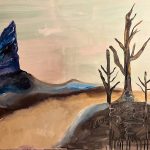
By Victor Hugo Mendevil

By Windy Martinez

By Jackie Martin
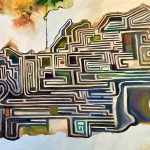
By Samantha Edmonds
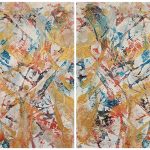
By Jeffrey J. Higa