
Letter from the Editor
By John Hardberger

2nd Place Fiction
2020 Summer Contest
I love the color, the light, the rich density of this magical story. The story of Hai Yen, the sixteen-year-old mute Vietnamese girl, resonated so strongly with my younger self. As emerging adults, we are often faced with the perils of the world and those who would harm. We each have our stories of passage. Though the world of Ca Mau, in southern Vietnam, may seem faraway, the writer was able to lovingly capture the essence of an emerging adolescence that was both precious and resilient. The story was a feast for the senses and left one with a hope that yes, good still resides in this world. Let us never forget we are surrounded by spirit/angels and others who watch and protect us in small, blessed ways. It was a great pleasure to inhabit this world and become part of its essential mercy.
– Denise Chávez
The Swallow
Father told me when I was seven that every Vietnamese name has a meaning. My name is Hai Yen. Tran Thi Hai Yen. My first name Hai Yen means the swallow, a sea bird known for its resilience and tireless wing. But he named me Hai Yen—a pretty name for a girl—because a day before I was born a swallow flew into our house and built a nest in a ceiling corner. Father said that was a good omen.
I was born mute. I’m sixteen today. It’s my birthday, a Friday. That means I have to stay in our family’s herbal store to help Mother inventory the herbal goods, which arrive every Friday. My grandparents own the store. Grandpa is an ethnic Chinese who married Grandma, a southern Vietnamese girl from Ca Mau. Grandpa is like a town doctor who practices the art of therapies to harmonize the yin and yang in the human body so that the flow of qi, life energy, can be unblocked. Grandpa has a room in the back of the store where he receives his patients. Mother manages the daily chores in the store and I help after school. Before I was born, Father was still on the other side, a communist propagandist, who occasionally slipped into Ông Doc town to buy herbal medicines at our family’s store and sometimes he would receive acupuncture from Grandpa. They became friends. Then a few years before 1975 Father defected to our side, the Republic of Viet Nam. In 1975, when South Viet Nam fell to communism, Father disappeared. For ten years. Then one day he came into our store, gaunt looking in threadbare clothes, his familiar long black hair now completely gray—an inmate just released from a socialist-reform camp by the Vietnamese communist government. Shortly after he married Mother.
Six months before I turned sixteen, Father fell ill.
On the last day of his life, Father asked me if I remembered the story he had told me when I was seven—how my name came about. I signed to him that the swallow brought good omen when it flies into a home. Father smiled a rare smile. He spoke with his eyes closed. I made a sign that I understood. I was the good omen.
Floating Market
The floating market on Ông Doc River runs through our town. Father took me there once when I was six. He carried me in his arms and we stood on a bridge looking down. I could see rows of boats and sampans moored along the riverbank and the water was silvery in the morning sun. Nobody knows how and when the floating market had come into being. Perhaps when some sampans came to rest along the sleepy bank, the oarswomen asked each other for a light, maybe a betel chew, a bottle gourd, a pumpkin, or a dash of nuoc mam—fish sauce. And, after a while, a little flea market took to life and then one day a floating market was born.
That morning he didn’t buy anything. We stood on the bridge as the sun was rising and the river shone white in the mist that hung like a translucent mosquito net over the sampans. The sleepy river woke at the first sounds of oars as skiffs thin as a leaf glided to and fro, bringing the first customers to the market. Father carried me down to the bank and asked if I wanted breakfast. The rich-egg redolence of pastries hung over the bank. I made hand signs and Father bought me a wedge of sponge cake, a porous pastry that looks like a sea sponge. Over the tranquil river a woman vendor’s voice called out her specialty. Rising from the bows of many of the sampans were long bamboo rods that arched over the water and dangling on the rod was the house’s specialty—the ripened-red hairy rambutans, the yellow-tinted papayas, the lime-green guavas, the deep-purple aubergines.
There used to be a boater who was here among all the boater merchants, and who sold nothing but one product.
Human merchandise.
She sat that day in the domed shelter hidden behind an all-black curtain hung across the entrance. You could have a peek at her and, if pleased, sit down and play a game of Chinese chess against the boat owner. His daughter, he would tell you, was sixteen. She must be pretty, for men of all ages accepted the invitation for a game of chess, and all left, losing money to the man.
That day Father decided to play a game of chess against the man. He didn’t peek into the dome. He just sat down and played. There was a small crowd who gathered in sampans alongside the man’s boat and watched in silence. Some of them were chess players and others were curiosity seekers. When the morning mist finally lifted hours later, the match was over. On the wooden board, nicked in several places, there were only a few chess pieces left. Father had checkmated the man. He didn’t bother to get to know his prize intimately. He simply shook the man’s hand while the crowd looked on in awe. Later Father told me during his ten years in the communist re-education camp, he had learned how to play Chinese chess and played every night before regimented bedtime, and played on when the oil lamps had been put out, having had to cover the chessboard with a thin blanket and lighting the board with a flicker of cigarette lighter for each move.
Father must have had a deep affection for the floating market, because it was something dear to the natives, which, he told me that we, the communist northerners, came to destroy.
The Hair Clasp
Last night when I was soaking my feet before bedtime, Grandma came in and dropped chunks of alum that looked like ice cubes. They frothed in the pan of warm water. Sometimes Grandma added a sliver of cinnamon and it gave the water an acrid scent. I made hand signs that I felt clean, the soles of my feet tingling and the tingling going up to my calves, and Grandma wiped my feet dry with a towel and said, “Little one, you have the most beautiful feet.” I sensed that I must keep my body pure and clean and I never forget the scent of cinnamon.
Grandma told me that Grandpa’s grandmother, who was Chinese living in China, had her feet bound. I asked what that was, pointing to my own feet. Grandma explained and I asked her how a girl whose feet were arch-shaped and small from binding could walk. Grandma minced back and forth and I laughed. She said it would be a horror to her if my feet were bound.
After soaking my feet, I lay in bed and sleep wasn’t coming. I felt warm in my feet and the warmth brought my hand down there to touch them. I pulled up the legs of my pajamas pants and looked at my legs, their long shapes and the arched shapes of the full calves white in the reflected streetlight. I looked down at my chest and knew why Grandma made me wear a brassiere when I went outside. I had become more conscious of my full bosom the day I found out from my classmate how she got her tortoise-shell hair clasp. She wasn’t as tall as me and she was flat-chested. Yet I envied her for her eyebrows. They arched over her eyes like ink brushstrokes. She said to me, “You like my hair clasp? It’s real tortoise shell.”
“It’s pretty,” I said.
“I got it for free.”
“How?”
There was this middle-aged man, she told me, who had a sundry boat and would come into town once a week. He docked his boat in a cove and the clinking chime he hung on his boat would tell you he was there with all kinds of trinkets once you came inside the domed shelter to satisfy your curiosity. She went in there and after looking around saw a tortoise-shell clasp.
“Isn’t it pretty on ya?” the man said in his purring voice.
She turned it in her hand, biting her lower lip, and nodded.
“How much money ya got?”
“I don’t have money.”
He scratched under his chin. “Get some money. I can’t keep it for ya.”
Reluctantly she handed the clasp back to the man. He raised his eyes from where he sat on the floor.
“You really like it, eh?”
She nodded, feeling like a mouse under his stare.
“Keep it.” He shrugged as she peered at him at a loss. “If you feel bad taking it, do somethin’ for me.” He pointed at her chest, coughed, spat and made a sign of unbuttoning her blouse. I have thought a lot about what she told me. When he had seen her breasts he said, “Come back next time and I’ll give you a nice bra. Lacy stuff. Pretty on your nice skin.” She said to me, “Do you want to come with me next time?” She eyed my chest. I could see a glint of envy in her eyes. I never considered her invitation. It was vulgar of her. I want to keep my body pure and clean because I remember how much care Grandma gave it.
First Time
On Friday I didn’t have to stay in our herbal store to inventory the herbal goods arriving in the afternoon. Mother let me go with Grandma to deliver prescribed medicine to some folks out of town. These folks showed their gratitude for what had cured their illnesses by giving Grandma a laughingthrush kept in a bamboo-slat cage. It was a cute, black-chinned thrush. Grandma said it could mimic sounds it heard. I sat holding the cage in my lap as we went downriver in a boat. A wind chime rang melodiously, the sound coming from another boat going upriver. For a moment I thought of the man who sold sundries from his boat and the tortoise-shell hairclasp. The laughingthrush puffed its gray-colored breast and sang pee-koo-pee-koo. Then it blinked. Round, honey-brown eyes.
It gazed toward a stand of black mangrove on the shallow edge of the riverbank. Hanging from the trees’ trunks were the picturesque curtainlike roots touching the water. Those roots nurtured oysters and snails that had attached themselves to them; that’s what Grandma explained, as she always did on our outings. She said pelicans and sometimes parrots or spoonbills sheltered in the trees. A kingfisher shot out of the foliage. The laughingthrush cocked its head, its white-browed eyes gazing after the kingfisher’s flight.
I patted Grandma as she braced herself against a sudden lurch. The boat was crossing a river mouth where a stream ran into it, swelling the current.
She looked back at me. “What, dear?”
I signed and pointed to the caged bird, and Grandma said a bird could survive in the wild if set free, but only an adult bird. A baby bird that grew up in a cage would likely die in nature. She asked me why I wanted to set it free and I thought of the way the bird’s eyes had fixed on the kingfisher, as if mesmerized. I signed again and Grandma said, “Let me think about it when we get home.”
The boat came side by side with a merchant boat, like those I had seen at the floating market. Shelved inside its dome were rows of jars and crocks of candies and preserved fruits, and in the bow were laid out rattan sieves. There were the orange-colored sesame balls, deep-fried and glistening, leaf-jelly cubes, molasses-brown, in plastic cups. Grandma bought a big jar of golden sugar which gleamed like sand. She said it was made from sugarcane. As our boat moved again, past the merchant boat’s stern, a young girl was washing herself. She didn’t see me. Skinny, long-haired, she looked younger than me. Her skin was pale white in the sun as she squatted in the stern over a pail of water, her floral-pink pantaloons pushed down to her ankles, washing her crotch with her hand. The water tinged red.
The first time I bled like that I was thirteen. Something evil had entered my body. I got under a blanket and cried. Grandma said, “Nothing’s wrong, dear. It’s normal for girls.”
The Leper Isle
Once, when I was seven, I went in a boat with Father to Leper Isle. It sat like a dark swell in midstream of the fast-flowing Ông Doc river. Father said a century ago the lepers made the isle their home. The ostracized caste fended for themselves in their refuge and over the years many of them had died from drowning when they took to the water.
Father didn’t tell me why he went there with me on that day. Years later I knew from Grandma, who said the isle used to be a Viet Cong haven during the war, a place for them to stash their cache of weapons and ammunitions. I imagine when Father was still a North Vietnamese communist, he had been to the Leper Isle. What brought him back there, I don’t know. Perhaps memories.
That same year the town halfwit was found dead on the bank of Leper Isle. Her body was snagged on the silt roots of crabapple mangrove. She was in her thirties, often trailed on the streets by mischievous children whom she chased off when they started throwing rocks at her. The year before she had become pregnant. Some river man must have lured her onto his boat. A fisherman or a sundries boat merchant. Or a shopkeeper in town who gave her a floral blouse and said its plum-colored fabric went nicely with her milky-white skin. And she was blessed with such fine skin. Sometimes she would casually squat down on a sidewalk, push her satiny black pantaloons down past her thighs and urinate with passersby moving up and down the sidewalk, many of them pretending not to look but those who peeped were men, salivating at the smooth white of her buttocks. I saw her grab any man who came within her reach during her pregnancy. “You dirty goat,” she said shrilly. “I’ve been looking for you. You made my belly swell up like this and you pull up your pants and scoot away.” And the men cringed then jerked away, some cursing, some red in the face. She liked to bathe at night and left her clothes on deadwood carried to the riverbank by high tides. Some rascals would hide her clothes and then watch her cavorting in the water, cursing and calling out the names of their ancestors, three generations deep. When they recovered her body on Leper Isle, they speculated that she must have drowned, or worse, been raped by those barge men who often went downriver late at night.
Then the stories went around that the halfwit woman sometimes came up at night on the riverbank, sitting without clothes on a rock facing Leper Isle, and waited for any man to come and copulate with her. I don’t know how much of it was true. But something about the woman had stayed with me. Perhaps it was the abnormality one is born with. She was born with no intelligence and I without the capability of speech. One day I asked Grandma why a person is born with a handicap while others are normal. Grandma took a moment to think, then pulled me into her and said, “It’s your karma. Pay for it in full before you become normal again.”
The Sundry Boat
One day last week Grandma and I rode home in an oxcart. We were the only two passengers and our cart was pulled by a big black bull. As we were leaving the open-air market there was a woman leading a cow by the halter ahead of us. It was a fawn-colored cow. The bull suddenly sprang, lifting its forelegs off the ground, and charged after the cow. It jumped over the cow’s rear end with the harness on its back, the collar around its neck, the wooden shafts of the cart on its sides, which pitched the cart up on a tilt, slamming its rear against the ground. We slid back. Grandma screamed. Her head bounced as it hit the slatted side of the cart. The old man who drove the cart lashed the bull with a whip, jerking it back on the reins. He cursed and shouted as he yanked on the reins until the bull relented and dismounted. The woman pulled her cow away but only after slashing her finger at the old man.
“Get that horny bull castrated,” she said. “Cut his thing off!”
Grandma found her tortoise-shell barrette on the ground just as the cart moved back, the bull still snorting and trampling the ground back and forth, and the wheel went over the hair claw and I could hear it snap. So Grandma berated the old man and he apologized to her until she calmed down and told him to get moving again. She was sore because that tortoise-shell hair clasp had been with her even before I was born.
I thought of buying Grandma another hair pin and then forgot about it. Earlier this week I was walking home from an errand by taking the riverbank and as I walked past rows of boats being docked at rest, I heard a wind chime. It was hung outside the curved dome of a sundry boat; one of its sides was clad with several tires while it was moored against the cinder-blocked wharf. The breeze swung the black-painted wooden turtle that swam above stringed bamboo tubes in ivory yellow. The tubes clanged with colored glass beads and they made mellow sounds in the breeze.
I hesitated before stepping down onto the boat’s deck. I liked the barrette that my classmate got among the other things sold on this boat. It wasn’t as nice as Grandma’s old hair clasp but maybe I could find another one just as pretty. When I bent low to enter the domed shelter I saw the man and thought of how my classmate got her hair claw from him and I almost stepped back out. He grinned at me from where he sat on a low stool. His tobacco-stained teeth were uneven and some were like a dog’s sharp teeth. He was holding a jar shaped like a garlic head when I entered. Slowly he uncorked the jar. The cork was made of a dried banana leaf twisted and tied with its fibers. I was wearing a knee-length black skirt and a short-sleeve white shirt and my hair kept falling across my face as I bent to find my footing under the low dome. A smell of fermented rice. Perhaps from what he drank in that jar. He took a sip from the jar and his eyes screwed to slits taking me in.
“Anything in particular I can get f’ya?” he said in his phlegmy voice.
I panicked. I don’t interact much with people except when I stay in Grandpa’s herbal store to help out with Mother. So I made hand signs to tell him what I wanted. His eyes opened as if something had just struck him on the head. “Ya can’t speak, huh? Can ya hear?”
I nodded.
“Ah, poor thin’n.” He gestured with his hand still clutching the jar. “Look ’round. Plenty of girlie thin’s f’a pretty girl like ya. Look ’round.”
I wasn’t going to stay any longer than I had to. He nodded, his nicotine-darkened lips pursed. “Have all sorts of girlie thin’s f’hair. In those containers, honey. Knickknacks. Them thin’s look pretty on ya. Necklaces, bracelets, lockets, earrings. Got a mermaid hair comb and all kinds of hair pins. Just look ’round, pretty youn’ thin’n.”
There were shelves nailed to wooden curved slats that supported the dome and on the shelves were glass jars and plastic containers, big and small, and hanging from the domed ceiling were knickknacks like jewelry in brass, wood-carved animals—a deer head, a painted beetle—blown glass ornaments. They jingled when a breeze blew in and my head touched a glass egg and I stopped moving. I turned to those clear plastic containers on the shelves. He groped his way to the stern. I picked up a brass necklace. It had a little girl on a swing. I put it on my chest where my shirt was opened at the top into a V. The metal felt cold against my skin. I put it back and picked up a pair of earrings. They gleamed in silvery white with two little birds, each with a little leaf dangling below. I don’t have my ears pierced but my classmate did, the one who got the hair clasp from the owner of this boat. She wore crescent-moon earrings, made of bone of some kind, bone-white and pretty. I saw the mermaid hair comb. It was bronze yellow and had a glass cabochon set in the center with a sitting mermaid’s picture in it. I really liked it, so I didn’t put it back. In a next container there were hair claws with blue or brown marbled grips, hair clips with a brass butterfly inset with colored glass stones. They looked too youthful for Grandma. Then, at the bottom of the container, I saw a tortoise-shell hair claw that looked like a rusty-red centipede with golden claws. It was pretty and simple looking. Just like Grandma.
As I held it in one hand with the mermaid comb in the other hand I felt the boat moving. I bent lower to peer out of the domed shelter and saw that the boat was in the midstream and the wharf was smaller in the distance. I saw him grope his way back in, bent, both hands on the wooden floor like a simian. Slowly he rose, still half crouched, until his head touched a tassel necklace dangling with painted beads. He gripped me by the wrists and brought my hands against his face. “Ya like ’em?” He sniffed my hands. “Ya smell so nicey. Lemme give ya somethin’ worth wearin’.” And he lifted the brass necklace that had the little girl on a swing and said, “Wear it. I have it in black glass too and aya that color is pretty on y’ youn’un.”
He smelled bad. I backed away. The sight of the distant wharf alarmed me. I made a panicked sound and it came out like a whine and he said, “I wish ya could speak ’cos ya must got a sweet voice and come, come, lemme put it on ya, youn’ thin’n.” He fumbled at the top button of my shirt and I pushed his hands away. He yanked down on it. The button snapped and for one second he seemed frozen as he stared at my chest and moaned, “Ah ya angel . . . ya skin . . . ya a beautiful youn’thin’n.” He pulled me down, his grubby face already buried in my chest where my shirt was pushed out like a Y and my bosom hung without a brassiere. “Ah ya smell so nicey . . . lemme smell yah sweet lil’ pot . . . now . . . now . . . doncha be scared . . .”
He pulled me down and his rough hand went up under my skirt and I clamped my legs and hit his face with the mermaid comb. The comb’s teeth raked across his stubbled face. He fell back touching his eyes and I stumbled out of the dome, my head hitting the stringed trinkets and they clanked. I waved frantically at a boat coming downriver toward us and I screamed but the sound that left my throat was garbled sound. He grabbed my hair and yanked me back. I swung around, my shirt flying, and felt the breeze on my chest. He dragged me back in. I hit him with my fist, the mermaid comb broke against his head and I hit him again with the other hand and broke the tortoise-shell hair pin too. He threw me down on the floor, his legs bent, planted on both sides of me, and leered down at me. “Ya have a notion of wat ya did?” A corner of his upper lip raised showing his yellowed canine tooth. “Ya ain’t gonna rob me of wat I want, not in did worl’ naw naw . . .” He flung up the bottom of my skirt just as the boat shook. I brought my hands down there, panting, nearly in tears, and he grabbed both of my hands by the wrists and made a strange guttural sound in his throat as he cut his eyes downward at my lower body. I saw a woman at the dome entrance, bent low, peering in. I knew her. The old woman who owned a riverboat. Grandma and I had ferried in her boat when Grandma had to go to Leper Isle to buy herbal pots.
The man snapped his head back to see the old woman crouching over him, holding a long oar in her hand.
“You dirty old goat,” she said, baring her red-stained teeth from betel chew.
He gingerly rose and as he did I slid away from him and stood up. My head hit the ceiling and the brass trinkets tinkled. The woman gestured at me with her hand, “Go out to the stern, dear thing. I’ll bring my boat up.” The man neither looked at me nor the old woman. He just remained on one spot, slouched.
I got off the sundry boat. The old woman, rowing her boat toward the wharf, cast a curious glance at me. “You don’t need to tell me anything, dear little one. I can’t understand you anyway. You can tell your grandma, though. Maybe someone can do something about it.” She kept rowing while I tucked in my shirt in and sat pinching the top of it with my fingers. I felt grateful to her, but I couldn’t speak. Like that sundry boat’s owner, the old woman drank too. When she ferried us to the Leper Isle she would wait for Grandma, sometimes with me in her boat, and waiting I’d doze and wake up to a yeasty, faintly sweet smell of rice wine and see her sitting on a reed mat toward the stern, a glass jar being warmed on a brazier. Sometimes coming back Grandma would share with her a cup of rice wine. Along the riverway to Leper Isle there were mangrove groves rising from tangles of roots from the muddy bank, forming a tall stand to bear the storms coming in from the sea. There were mangrove logs paving the steps that led to riverside shanties and sometimes as the boat passed by I would see mudskippers carried in by the tide walking on their fins, flicking their goggled eyes around. The Leper Isle was near the sea and between the shanties you could see huge fishnets hanging on poles. Sometimes a stench of fish followed you downwind.
For years, since I was seven, Grandma had gone to the Leper Isle to buy ceramic pots and she always ferried downriver in the old woman’s boat. I asked Grandma what was so special about those ceramic pots that she must go there to buy for Grandpa. She said a century ago it was a haven for the lepers until one day a band of brigands came and built their own sanctuary. It was built with the lepers’ labor. When it was completed, the bandits herded all the lepers to a pit and burned them. Afterward they dumped lime on the charred remains and filled the pit. The local government caught wind of the massacre and brought in its naval fleet to lay siege to the isle. After several weeks the bandits ran out of food and began killing one another. Those who came out to surrender were hung along the shore until shore birds and vultures pecked their flesh away. In the end the government troops moved in and, under the district chief’s order, buried alive every bandit in a pit next to the mass-burial ground of the lepers. After the war ended in 1975, an entrepreneur built a kiln on the isle. The hard clay came from the old burial sites. Once fired to 1200 degrees Celsius, the clay came out oxblood red. The ceramic pots they made had that dark red, glazed, sounding clear when you tapped it with your fingernails, and bounced off the cement floor when dropped. Grandpa cooked his herbs only in the clay pots made on Leper Isle. He stocked them and sold them to his clients.
When we reached the wharf, the old woman shipped the oar and looked at me still clutching the top of my shirt. “Listen, dear little one. You’re pretty and smart. But there’re people who think a handicapped person is something like an imbecile. A deaf, a mute. It brings out the predator in them. Like that old lewd goat. But you shouldn’t be ashamed of what you are. Just be more careful when you deal with people. You hear?”
I nodded. I wished to thank her, but I knew she wouldn’t understand my language. I walked home pinning the top of my shirt with my hand. I thought of the tortoise-shell hair clasp, the color of a rusty-red centipede, and I didn’t know if I should tell Grandma about what had happened to me.

Khanh Ha is the author of Flesh and The Demon Who Peddled Longing. He is a seven-time Pushcart nominee, finalist for the Mary McCarthy Prize, Many Voices Project, Prairie Schooner Book Prize, The University of New Orleans Press Lab Prize, a twice finalist of The William Faulkner-Wisdom Creative Writing Award, the recipient of the Sand Hill Prize for Best Fiction, Greensboro Review’s Robert Watson Literary Prize in Fiction, the William Faulkner Literary Competition, and The Orison Anthology Award for Fiction. His new novel, Mrs. Rossi’s Dream, was named Best New Book by Booklist and a 2019 Foreword Reviews INDIES Silver Winner and Bronze Winner.
Reporter, visual artist, and photographer Guilherme Bergamini is Brazilian and graduated in journalism. For more than two decades, he has developed projects with photography and the various narrative possibilities that art offers. The works of the artist dialogue between memory and socio-political criticism. He believes in photography as the aesthetic potential and transforming agent of society. Awarded in national and international competitions, Guilherme Bergamini has participated in collective exhibitions in 31 countries.
By Lindsay Wilson
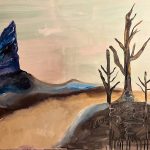
By Victor Hugo Mendevil

By Windy Martinez

By Jackie Martin
By Samantha Edmonds
By Jeffrey J. Higa