
Letter from the Editor
By John Hardberger

Jake and Tom tiptoe into my room at two a.m., blurry boys gliding like liquid through the shadows. I can make out Tom’s face, his glasses, his eyes wide and somber, one finger across his lips. He nods at me. I pull my covers back and slide out of bed, fully clothed, shoes on. At bedtime, Mom and Dad failed to notice that I didn’t change into pajamas or brush my teeth. Now I’m ready to break some more rules. “Let your eyes get used to the dark,” Tom whispers. Jake pinches my shirttail, and I can feel his breath on my neck as we follow our older brother. We step over my record player and brush past my Winnie the Pooh stuffed into my doll cradle.
Tom stops suddenly—Jake’s chest bumps into my back, and I bump into Tom. Thud, rustle, shoe squeak. Was the scuffle loud enough to wake up Mom and Dad? We three stand absolutely still by the back door and listen for any sounds coming from our parents’ room. I’m terrified because even our breathing seems loud enough to be heard from across the house. I grip Tom’s shoulder. Jake twists my shirt. My heart beats wildly.
No bedroom door cracks open.
No parental voice rings out.
Tom puts his finger to his lips again and nods at us. He reaches for the deadbolt. If you did not grow up with a violent parent, you might not grasp how thrilling this moment is. The commonly used language, “abused children,” always paints us as weak and passive. Yet, here we are, well-armed and ready for adventure. I’ve got the mini-baseball bat, and Jake has the switchblade. Our leader, Tom, is the worldly one at age ten, and he’s got a pair of nunchucks he made himself. I guess you could call us “bad kids,” but that’s not quite right either. How about “hooligans”? I like it. We are hooligans.
As Tom reaches for the lock, time stops.
My older brother must do this right, or he’ll wake my dad. When Dad caught us getting into the Easter Candy early, he dumped the candy in the trash and squelched the holiday. If our father catches us now, he might shove Tom around, like he’s done before. Or worse. We can’t really predict it. So, Jake and I hold our breath and watch Tom closely.
Tom squints as if he’s in pain and he twists the lock with a movement that’s impossibly slow.
The deadbolt slides open with a muffled click.
So that’s how careful you have to be, I think. Painfully careful.
We wait again, standing there, listening for any sound coming from our parents’ bedroom. Instead, it’s just our breath, choppy like we’ve been running. As we step into our backyard, Tom glides the door into place behind us.
We’re free.
We move quickly through the backyard and then the alley, and when we get out to the street, it’s my first time seeing my Central Phoenix neighborhood in the middle of the night. The ranch houses are dark blobs with single-bulb porch lights, sleepy and boneless, their usual daytime action stripped away. No joggers, no dog walkers, no cars cruising by. The asphalt looks so black and shiny that I expect it to be molten and sticky when I step down.
“Stay in the shadows,” Tom says as we duck into the next alley, and though he’s whispering, his voice rings out clear and crisp. There’s no whooshing traffic or buzzing lawnmowers, so even the most subtle night sounds are magnified, as if I’m bionic, as if I’m Jaime Sommers. Our crunchy footfalls add a rhythm to the crickets’ cadence. A bird chirps once. A dog follows us from inside his fence, and I can hear him snuffling along the wooden pickets. Tom is right, I think. This is fantastic.
Tom started sneaking out of our house after his five a.m. paper route made him fall in love with eerie silence and deserted streets. He’s taking us with him this time to cheer up Jake, whose allowance is being docked after a recent incident at the J.C. Penney garden department. I figure it must be working. Jake must be feeling pretty good now too, because I certainly am cranked up sky-high on dopamine and adrenaline.
Voices grumble from the shadowy apartment complex patios where cherries of cigarettes bob in the dark. The yellow glare of the 7-11 fluorescent lights makes the store look like some kind of supernatural oasis against the dark sky. The pineapple taste of the Slurpees we buy from the scruffy clerk matches the yellow lighting of the store, pure chemical sunshine.
The Slurpee sugar blasts me even higher, up and up, until I am at one hundred percent nitro joy. It’s all so sweet and simple. I’m allowed to be a little girl in love with life. The peak? The three of us spike our empty cups to the ground and run as fast as we can toward home, charging into the black night like a pack of wild dogs.
The high doesn’t last long for Jake, though, and the next day he falls into a funk about the J.C Penney garden store incident again. The moment seemed so unfair, even to Tom and me. Jake eventually forges a life-long grudge from it. He’ll complain about it throughout our adulthood. He’ll mutter, “That fucking J.C. Penney donkey,” during his heroin intervention in 2000.
Dad was discussing fertilizer with a clerk while all three of us waited, bored out of our minds. “Hey, look!” Jake called suddenly, to show us the only thing amongst the hoses and lawnmowers that actually looked like a toy, a foot-tall plaster donkey, molded to look like it was wearing a bright red Mexican blanket. Jake was fascinated by the light weight of the hollow plaster. “Look!” he said again, gripping the donkey by head and tail and lifting.
“No!” Tom and I both yelped at the same time, reaching toward our little brother, trying to stop his hands. Jake lifted the donkey up a mere foot off the ground, just enough to show us that it was hollow underneath. Then he put it back down. If the world were a fair place, nothing more would have happened. Instead, there was a cracking sound. The donkey’s lower half split off and fell to the ground where it lay upside down. Its underside of plain white plaster made the piece look like an eggshell. Soon the garden store salesman and my dad were hovering over us. “You break it, you buy it,” both of them said at the same time.
On the first Saturday payday after the incident, Tom and I feel sorry for Jake and we chip in to get him a Slurpee. He doesn’t thank us, though, and the next week he bellies up to the counter, just expecting to be treated.
This lack of gratitude is especially annoying since it comes from coddled little Jake who so often evades the harsher punishments inflicted on us older siblings. By the third week, Tom and I stop giving Jake money and revert to our usual mercenary ways. We convince our little brother to sell us his toy, and we take his Hot Wheels cars as collateral for high-interest loans. It’s the sibling black market.
I complete these transactions with no guilt. I’m not being mean. I’m just looking out for myself. It’s the way the world works.
Years later, as an adult, I’ll wish I was more generous with my brother.
As a kid, I just don’t know how. I’m always worried about losing what little capital I have myself.
At home, a reminder hangs above our couch, the word “Share” in the wooden letters Dad carved himself. Before I learned to read and had to ask my parents to pronounce the artwork for me, I thought it was a tribute to one of my favorite TV personalities, Cher. It made more sense to me that way.
Now each week, my dad walks right by this posted mantra of generosity, hands me my eighty cents, gives Tom his dollar, and leaves Jake empty-handed. Other than one gift each for Christmas and birthdays, we kids have to buy everything ourselves. With my allowance it takes two months for the tiniest set of Legos. Since Jake is making seventy cents a week, it’s going to be almost a year to pay off that donkey. Even if Jake hadn’t pissed us off, there’s no way Tom and I would be willing to financially support our brother for that torturously long period of time. We are too busy counting out our own meager dimes. As the weeks drag on, I forget Jake owes the money. Every Saturday when he reminds me, I think, Oh yeah, I guess that’s still going on.
I never consider asking my father to forgive Jake’s debt. Instead, I try to make things better for both of us by coming up with some money-making schemes. I figure if Tom Sawyer, the Our Gang kids, and that kid from the Great Brain books can do it, so can Jake and I.
First, we start with a perfectly legitimate lemonade stand on the curb in front of our house. We call out, “Lemonade for sale!” but the only person who responds is this guy on a ten-speed who yells back, “Your Momma’s for sale.” We ask our mom what this meant. She refuses to answer.
And then there is the guy who hires us to move the little pebbles from one side of his front yard to the other and back again like we’re a grade school chain gang. And Mrs. Harrison, who tries to teach me how to be a lady by paying me to sort her spools of thread, which just makes me think that if being a lady is that fucking boring, I am never going to do it.
After we determine that honest work totally sucks, Jake and I start imitating all the ways we’ve seen adults make easy money. We try to extort some cash from the garbage truck driver by setting up a roadblock “toll booth” in the alley. Then we “collect” money door to door for the Jerry Lewis telethon with the previous year’s can labels and badges. All our potential donors phone my mom. She sits us down and explains that we are not allowed to shake down the neighbors.
And then one day, when Jake and I have grown tired of playing on the junked cars in our friend Chris’s yard, we go into his house for the first time, and notice:
1) Chris has way more Legos than we do, lots and lots of Legos.
2) His mom has left a stack of signed checks on her desk.
Jake and I start flipping through Chris’s mom’s checks and there’s about two-hundred-and-fifty dollars there. Jake and I nod at each other, our heads filled with dollar signs, Legos, and check fraud. Right when we start stuffing the checks into our pockets, Chris says, “I don’t want to get in trouble.”
And now Chris is not my friend anymore, just an obstacle standing in the way of my maniacal mission for money. And he is starting to cry.
I have to think fast. We can’t have this crybaby telling on us. I flip through my mental archive of all the cop shows I’ve ever watched. Starsky and Hutch. Baretta. Kojak. How did the criminals deal with a snitch in those shows? I can’t remember. Finally, I say, “Look, man, we’ll give you half of the money.” It’s my chance to “Share,” just like that artwork in my living room.
Chris perks up. “Good luck. Come back fast,” he says as we leave.
Cue the Mission: Impossible theme. The two criminals:
We book it past the lunging three-legged dog, his teeth gnashing at our ankles—his chain snaps him back. Then, like a cuckoo clock, that same creepy old lady wheels out to her porch in her wheelchair, points a bony finger, and chants, “One boy die,” like she does every single time a kid passes by. We blow past her. Finally, we weave through four lanes of traffic on Osborn and skid to a stop at the bank drive-thru.
I don’t know much about banking, so I ask Jake. “Are the checks signed?”
“Yep,” he says. “Twice.” He flashes me the checks, showing that they are signed once on the front and once on the back, across the top. Jake and I cross our fingers and stuff all the checks into the glass tube that gets sucked away. A woman with long dark hair waves at us from behind the window, looking, at first, happy to have cute grade-school customers for once, mistaking us for kids with a savings account like our dad is always telling us to get.
I am fantasizing about the two-hundred-and-fifty dollars. I figure I’m going to have to carry all the cash in a big sack like Santa Claus. We’ll have so many Legos we will live in a Lego fort.
But now the teller is frowning at us. She’s not sending back the money.
Now that I’m older, I can see this whole thing from her point of view. She’s looking out at two grubby kids who are trying to cash some random woman’s canceled checks. She calls over her manager and they both frown at us. And she leans into her little microphone and her voice booms over the loudspeakers as she says, “Who are you?”
I am supposed to be “Barbara,” who’d had a thirty-dollar check made out to her. But I panic and forget the name and say nothing. Jake desperately tries the best tactic known to the kid world—he leans into the mic and says, “It’s my birthday?”
The adult frowns droop even lower, and the heads start shaking, and the manager picks up a phone, so Jake and I launch our bikes into four lanes of traffic, the adult drivers honking and screeching to a halt. To us they are just adults, these annoying older people who are always trying to get us to work for money in their world when we just want them to come play in ours.
We escape any punishment. Our parents never find out about this scheme. And for those few weeks I am thinking that Jake is right there with Tom and me, loving the excitement of sneaking out and the scams. As the youngest, he just follows along quietly, so I figure he is processing everything the same way I am. Then one day, Jake makes his big move.
He walks into the house with my mom, a stuffed bear under one of his arms and a stuffed Clifford the Big Red Dog under the other. Jake has this cocky grin on his face. “Where did you get those?” I ask, pointing at the stuffed animals.
“Mom,” he says. “And we had pizza and ice cream too.”
My blood courses with anger and jealousy. Jake has just scored the kind of toys it will take Tom and I months to save our allowances for, not to mention time alone with mom, which we are always fighting my dad for. Neither Tom nor I have ever been treated to a special outing and a purchase of toys like this. What the hell is going on here?
“Mom?!” I whine.
“Mom?!” Tom whines.
“I’ll explain later,” Mom says, plopping her purse down on the dining room table. She looks tired. And scared. At first, I think it’s that fearful look she always gets when she cheats my dad’s austere budget and sneaks us something extra, or worried, like the time Tom split his head open on the concrete and she rushed him to the hospital for stitches.
Later when we get her alone, she sits down on the couch with Tom and me on either side of her and whispers, “Jake said he wanted to kill himself. He said he was going to run out into traffic. He even knew the word ‘suicide.’”
I look at Tom who tucks his bangs behind his ear. He winces. I figure we are thinking the same thing. Yes, there is part of me that is worried about Jake. My little brother can’t smile in photos. He just scrunches up his face for every shot. He takes special classes for his learning disability. Still, I don’t buy it. I’m ninety-five percent sure Jake is playing my mom. My mom thinks it’s strange for a seven year old to know the word “suicide,” but all three of us know from TV what suicide is. Hell, “suicide” is the name for the drink you order from the 7-11 clerk, when you want him to just spray all the soda fountain flavors into one cup. To my mind, Jake’s ploy seems a lot like a kid threatening to run away from home, only my little brother has elevated the traditional manipulation to new heights with plenty of his dark, merciless genius.
For a few weeks afterward, Tom and I are terribly cruel to Jake. We are jealous. We are mad at him for upsetting our mother. We just don’t believe he’s suicidal.
“Yeah, right, you’re going to kill yourself,” I taunt him. “Why don’t you go ahead and do that?” It’s a test. A challenge. If Jake breaks down and tells us that he really wanted to get run over by a car, we could . . . I don’t know. Buy him another Slurpee? I just want him to admit he’s lying.
I’ve seen Jake lie to my dad’s face, like that time he shoplifted some bubble gum and pinned it on another kid. Another time, Jake told us that he saw the “One-boy-die” lady in the wheelchair choke a trick-or-treater on Halloween. I just refused to believe that ladies in wheelchairs would choke kids, so I decided that Jake was lying. Then there was the time he told Tom and me that a man had come into our house in middle of the night. We didn’t believe him until we saw the man-sized shoe prints in the mud and our neighbor came over to apologize for being so drunk that he entered the wrong house. It’s just easier not to believe Jake. It’s a safe default. Especially given Jake’s ability to accept some frightening facts.
I want to call Jake’s bluff. Because I just can’t wrap my head around the idea of suicide. I can’t imagine that any kids I know would want to kill themselves. Especially not my own brother. I’d like the world to make sense again. I want to give Jake back this harsh topic he’s introduced and make him own it fully. I want him to take it back.
Tom pushes Jake even harder. “Get some more toys first,” he says, “so we can have them when you’re dead.”
Jake doesn’t respond to our jabs. He just stares right through us. It’s a look we’ll see a lot later on.
I first saw this look on the ride home from the J.C. Penney garden store, when Tom and I tried to comfort Jake with promises that we’d buy him soda and candy, but he waved us off. Jake must have known already that Tom and I would never be able to really help him. He’d already watched us work too hard to extract each temporary moment of childish joy. Jake was shooting this brazen glare everywhere, out the window at other cars and pedestrians, out the windshield at the pale blue sky and palm trees, and finally right at my dad—this unwavering steady anger that was not hot and twitchy like my dad’s temper. Now I realize that perhaps Jake was the only one of us three not afraid of our father.
Maybe Jake never had access to a full range of emotions. Maybe he intentionally rejected all sentimentality and hope right there in the truck. Either way, I’ll always give him some dark credit for being so uncompromising that he never lets my dad off the hook.
Years later we will learn that our father always treated Jake more gently because he thought there was something wrong with him, that Jake’s day-and-night screaming as a newborn meant he’d come into the world already damaged. Maybe this coddling just made it easier for Jake to hate him.
Chicken. Egg. Chicken. It’s anyone’s guess. Still, it’s strange that our youngest pioneered the numbness strategy. He leapfrogged Tom and me while we were still dabbling in idealism. Jake didn’t seem old enough for this response to our father’s violence and withholding. The look he shot everyone in the truck didn’t fit his second-grader body and twiggy arms. With his home-cut blonde bangs and his freckled nose, my brother looked like an off-kilter Opie against the vinyl of the bench seat: a hooligan hard enough to target our mom.
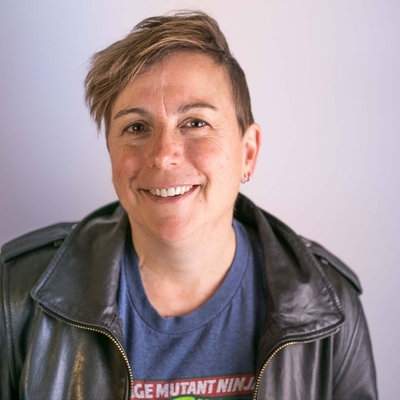
Molly McCloy holds a Nonfiction M.F.A. from The New School, has published work in Slate and Nerve, and is the winner of four Moth StorySLAMs. Currently she lives in Tucson where she teaches writing for Pima Community College and enjoys hiking in the desert with her wife, Rebecca, and their dog, Princess Pinwheels of the Purple Mountains. “Fragile Donkey,” is a narrative from the Grudge #1 section of her manuscript, Nine Grudges, a memoir that explores forgiveness, apologies, and, of course, grudges.
By Lindsay Wilson
By Victor Hugo Mendevil

By Windy Martinez

By Jackie Martin
By Samantha Edmonds
By Jeffrey J. Higa