Letter from the Editor
By John Hardberger

1st Place Nonfiction
2019 Summer Contest
From its first line, Border Sisters shimmers with astonishing lyricism. In it, we follow two sisters as they careen through life along the Rio Grande, where the air they breathe and the blood that courses through their veins is simultaneously defined by oneness and division. Muñoz-Hunt masterfully evokes the beauty and complexity of rural life in the Southwestern borderlands, and captures—with deep, rooted wisdom—the intractable bonds of landscape and family.
– Francisco Cantú
The transition from summer to fall in New Mexico is the most miraculous time of year, with miles of unharvested produce as far and wide as the mirroring skies. Giant corn mazes rise from the earth and consume curious children for hours and, at night, when the desert sun hides behind the moon, sounds of laughter fill the air. Majestic mesquite trees smell like rain, mingling in the aroma of freshly picked corn and chili churning in large metal roasters. These are daily occurrences along the Rio Grande, rituals of the Bordercanos who inhabit unofficial towns with dirt roads, adobe homes, and farm animals meandering from yard to yard.
In La Union, the town where my grandparents live and where their grandparents lived, their ancestral home still shelters them. The bones of this home are erected from la tierra, the same tierra stained with the blood of my family and our fallen ancestors, the same tierra that continues to breathe life into the food we eat. Somewhere in this lastingness, a nether space exists, tucked between those carefree summers and the weeks leading up to another school year.
It was during this time on the cusp of childhood la tierra had stained my hands and the border had embedded itself beneath my fingernails. La tierra had a way of resurrecting, year after year, in endless rows of harvest-ready crops. I had become one and the same with them and with the men and women wearing sombreros and enduring looks on their faces. The closer I came to one side of our border, the further I grew away from the other. In Padrino’s fields, our earthworm hands worked in and out of the soil—to the crops, from the crops to the bags—faster, stronger, and browner. We moved in unison, casting dancing shadows on the earth beneath the relentless New Mexico sun. The heat made those days last forever, suspending us in a brume of wonder and amazement. Tejano music throbbed in the background.
At the end of each workday, Padrino’s pickup squealed along like a whistle, letting us know that the day was over. His truck bounced down the dirt roads and kicked up swirls of dust around him. We wandered together in a single file line, waiting as if for Padre’s communion. Our starched sleeves and proud collars had finally succumbed to the endless streams of toiled sweat, working their way down, down and clinging to the brown skin and bones underneath. Lined in silence, one hand cupped inside the other, we waited for tokens and for the backs of every dingy white shirt in front of us to drift off one by one.
The assembly of white shirts wafting, like hanging sheets in the warm desert breeze. Ghosts heading toward the abandoned field nearby. Nobody said a word when the rows of makeshift, migrant houses appeared. It just was, and it had all existed before me. Within days, spray-painted visions of the Virgin arose on the facades of those shelters—mirages in the desert—candy-colored mausoleums. The earth smoked like ashes after a blaze until it was all gone.
I never stayed in the fields long enough to see the departure of those wandering Bordercanos. Like the endless rows of crops, the white-shirted ghosts disappeared one day. Harvest ticked along, dithering to an end, and school wound around again just like clockwork. It was the first day of school, and I had recess to occupy my mind.
Playing La Llorona never grew old. We took turns being the crying fabled woman who drowned her children in the Rio Grande, chasing each other around and moaning and hollering until the next unfortunate soul was tagged “it.” I was never La Llorona for more than a few seconds, leaving the slower boys in angry tears and mumbling something about me not having any boobs to slow me down, unlike my sister. She was in high school with their siblings, and I was nine years old and the fastest girl in elementary school.
“Trust me, you don’t want them boobs anyway,” she’d say. That was easy coming from the girl who had already gone through puberty at my age.
After school, on the walk to catechism, the slower boys scurried behind me, singing some stupid song they made up, “Boney Toni con chones color rojo…” I don’t remember much of that song, only that it ended with me running and jumping up and down in red panties, and, because I was built like a pole, the panties wouldn’t stay on. Eventually, the boys fell to the floor, after jumping up and down and grabbing at their pants. Their exaggerated laughs turned to fits of giggles, with them rolling around like Children of the Earth insects—flailing their arms and legs in chaos.
“Don’t worry yourself, Mija. Girls with the chichis find themselves pregnant,” Grandma said, as all of us kids arrived at her catechism class at Our Lady of Refuge. I wanted to collapse inside of my koala bear backpack.
“Buenas tardes, Miss Maria,” the boys greeted my grandmother. Maria Refugio Enriquez Muñoz was a force and wrangler of whispers and insignificant stories. Those whispers traveled in hushed waves of wildfire, and we never knew which direction they traveled from.
We took our seats, and the boys fingered their Bibles, trying to find the right passage to fend off her glare. This was a woman who slaughtered chickens and goats with her bare hands, then turned around to clean, cook, and serve them for dinner. She always bundled leftovers for Padre and the poor parishioners at Our Lady of Refuge.
I sat there still wondering how girls with boobs found themselves pregnant. The Virgin must’ve had big boobs, I thought, and bigger than my sister’s, since she hadn’t found herself pregnant yet, or at least I didn’t think so. The worst those boobs had done was slow her down a bit. Although, I’m sure the hundred-dollar bill they’d occasionally win her at the Chihuahua Charlie’s Wet T-shirt Contest came in handy—or so the stories went—she never actually got around to telling me.
Grandma had big boobs, too, and never found herself in such a way. Instead she found Jesus Cristo and wanted us to find him, too. That’s why she taught us the Bible. Or her interpretation of it, Mom said. Grandma always found creative ways to bring its lessons closer to home, and if we listened hard enough, we’d know just whose home they belonged to. Mom called it gossip. Grandma called it the “word of the Lord.”
That day, during Matthew 5:31-5:32, “It has been said, ‘Anyone who divorces his wife must give her a certificate of divorce.’ But I tell you that anyone who divorces his wife, expect for sexual immorality, makes her the victim of adultery, and anyone who marries a divorced woman commits adultery.” We all knew this lesson came at the expense of the schoolteacher who lived across the street from the church. Padre gave her an annulment from her husband, because things like divorce and raising children out of wedlock weren’t acceptable, though nobody said a word about it.
I hated that Bordercanos never ran out of insignificant shit to joke and gossip about. If words were lost in English, we’d just find them in Spanish, or if they were lost in Spanish, we’d find them in English. When it came time to discuss the things that really needed to be talked about—some girl’s uncle forcing his penis inside of her in the middle of the night, or the teacher who comforted her on his lap after school a little too long, or those defiant bruises protruding from places that were meant to remain concealed, or how everything later in life made her want to eat, purge, and self-medicate her problems away—we never seemed to find the words. Or if we did, it was too late to erase those stains, como la tierra.
“An annulment makes it not count, Grandma?” I asked.
“Si, Mijita. God wipes it clean, como este chalkboard,” she said, wiping the chalkboard free from its scribbled words.
“But what about the wedding?” I wondered how anyone could forget when there was photographic evidence.
“Como asi, it never existed.” She washed her smooth hands without water like a magic trick in front of the class. “Porque, no woman should pay the price of divorcio, if her husband sins with another man.” The boys looked away in horror, scooting their chairs away from each other.
Mom said the truth couldn’t be wiped away that easily. Grandma said Mormons didn’t know much about marriage. “Y que mas, they aren’t even allowed to eat the flesh and drink the blood of Jesus Cristo,” she’d say.
My sister and Mom were Mormons, and for that reason they never attended mass on Sundays. I told my sister that Holy Communion tasted like grape juice and hard, tiny tortillas.
Picking me up from catechism was Dad’s excuse to drive his car. It became his ritual. I could imagine him, as he walked toward the lone olive tree at the very end of our backyard. Its twisted roots gnarled above the surface and a swath of bushy leaves loomed overhead, but only on our side of the fence. The branches on the other side had somehow lost their lushness, and those bare boney limbs stretched out as if reaching for something. That tree didn’t belong in the desert terrain, but the border was a place of encounters, and the old tree sort of made sense where it was, with Dad’s bronzed beauty beneath it—a 1968 Corvette with a 427 engine. He’d carefully remove each cinder block from atop the brittle, blue tarp protecting her, and then take a lap around it.
Mom said before I was born it was Canary Yellow, and one day after I came to be, he drove up to the house and it was bronze. Nobody said a word about it. Mom only remarked that brown had a way of following him, even if it was bronze.
I can still hear the way those heavy fiberglass doors opened. In high school, they called him El Animal, and he had his pick of colleges to go to and play ball.
“Not like they were passing out scholarships to kids in this shithole border town,” Dad said.
After catechism class, Dad came inside to kiss Grandma on the cheek. She pinched his in return, gushing the usual baby-talk greeting,“¿Como-Estas-Mi-Bebe-Mi-Chiple-Mijo?” In his khakis and fitted polo shirt, he reminded me of the boys on school picture day, dressed in clothes they normally didn’t wear. After class, the boys lingered around to talk to El Animal about football.
According to the boys, a Chicano really made it in life when he got a gringa to be his wife. What I never found out was whether they knew the truth or if they chose to believe whatever they wanted. Like our border language—picking and choosing between English and Spanish—Bordercanos picked and chose their truths. I’d like to think that the real truth existed somewhere in-between.
El Animal received a one-year scholarship, sat on the bench during football season, couldn’t keep his grades up, married a non-Catholic woman with secrets who happened to be white, lost his business, dug ditches for his impromptu family, and had a bronze jalopy that wouldn’t make it past La Union.
Dad always left a little melancholy when all the praise and fanfare was over. The boys watched from the doorway at Our Lady of Refuge, as he went from side to side, unlocking the T-tops and storing them away, behind the leather bucket seats. They waved at us with admiration and envy. When they were no longer visible in our side view mirrors, it was just the two of us again inside Dad’s bronze-colored confessional.
One day that car would be my sister’s, if she managed to stay out of trouble. As it was, she already had a permit and was only a year away from getting her license, but the feat seemed almost impossible. Everyday feuds ended with her slamming the bedroom door and Dad shouting, “My house. My rules.”
When the arguing turned into name-calling, before blackout rage struck and lines were forever crossed—and sometimes they were—Dad would take out the screwdriver and the bedroom doors came down. That’s when I’d find her in the driver’s seat out by the old olive tree, the tarp pulled back halfway, and her eyes were somewhere far beyond the border. Crouching inside the chicken coop nearby to watch her, I imagined myself jumping in the passenger seat and asking her why she did the things she did, but I never got around to it. I realized then that some people lived without in-betweens—only highs and lows— jumping from side to side and never settling on either.
Beyond this parched landscaped were thirsty truths needing mouths to drink them in and spit them out to whomever would listen, to whomever would do something to change these circumstances, but I guess this was the way things were, or had to be. I didn’t know why, only that this way of life had existed before me.
“God baked you, Boney,” Dad said. “Different ingredients.” Whatever that was supposed to mean. I’m sure Grandma had talked to him about the boys teasing me.
“Boney.” I hated that nickname, maybe because I was. And, maybe because that damn name rhymed too well with Toni. Dad pressed a little harder on the gas, accelerating around the turns. Had he been alone, he would’ve closed his eyes and searched those meandering curves like he had so many times before.
“Ever wonder why she don’t look like you?” he asked. I found the edges of my thighs pressed hard against the tufted bucket seats, my fingers picking at the buttons below. I loved the sound of the engine, and yet its vibration scared me of its full power.
“Who?” I asked, never taking my eyes off the winding road ahead. Dad’s paw rested on the gearshift, readying for its next move.
“Erica,” he said. He was the maestro behind the wood and steel steering wheel. It was true. My sister had red hair, green eyes, and the type of skin that burns magenta in the sun.
“Because she looks more like Mom?” I asked, more of a question than an answer. My small frame swayed left, then right, and left again. Dad’s nostrils flared, and I could see the mestizo in him when he was thinking. He turned and gave me an awkward smile, despite his Fu Manchu.
“Your mom been talking to anyone?” He searched my eyes.
“When you drive to the city.” My voice cracked under the low rumble of the engine. He jingled loose change around from inside the center console. It was filled with shiny, new quarters, and he handed me four as a deposit. I cupped the quarters in my warm palms.
“Who?”
“Who?” My voice cracked under the low rumble of the engine, as I cupped the quarters in my warm palms. Then, Dad’s paw swiped at the gearshift, and the sound of the engine grew. Each swipe made my palms moist and his deep-set eyes shifted further and further away.
“Men?” He stared off in the distance. The engine roared and the wheels squealed wildly toward the embankment, and with another giant swipe, the desert sand sprayed high into the air and back on the embankment again—thrilling him to laughter.
“Well…” He growled.
I kicked my legs back and forth underneath the glove compartment, and my heart inched its way up my throat. I wondered how much he’d give me if I actually gave him a name.
“Regular people?” I guessed, half a question and half an answer, as I shoved the quarters in my pocket. His menacing smile made me feel guilty, made me want to give him a name, though I had none.
One last swipe brought the Vette to a low rumble and the pink part of his wide hand made its way to my knee. I remembered when that hand was softer, but digging ditches had taken its toll like the earthworm hands that belonged to the white-shirted ghosts from the fields.
Dad’s proud jaw slung forward, as he searched for words. I watched his coarse black hair blowing in the desert breeze. I could taste my heart inside of my mouth.
He said, “She ain’t your real sister.”
#
An unseen line was drawn in the sorrel tierra that day after catechism class when I found out she wasn’t really mine. I was nine years old. I spent the next seventeen years trying to make up for it—giving her loans, going to therapists with her, taking her to the doctor—diseases, medications, poor judgment in men. When I chose to accept that she was only half, and not fully, my responsibility, I walked away. We spent years after high school trying to free ourselves from the border, but it kept calling us back. Maybe that place where the Rio Grande separates two facing truths—Aztlán—was never supposed to be divided, or maybe that Catholic guilt and centuries of domination had convinced us Bordercanos that we’re not worthy of real ear-to-ear grinning happiness. That happiness was reserved for those far beyond the border. It had been four years since I last saw or spoke with my sister.
Then on a Friday afternoon, I received a call from a friend of mine who worked for CPS. Erica had overdosed. My six-year-old nephew had called 911. The paramedics were able to save her, but my nephew was in foster care. She didn’t want the authorities to call her family because she was afraid we’d take her son away, but that following Monday, his foster parents would be filing for permanent custody. If we wanted to do anything about this, we needed to be at the courthouse in Dimmit, Texas on Monday morning.
Last minute airline tickets to Podunk one and a half hours from Dimmitt, were way too much money. My mom, my brother, and I decided to drive. My friend said that Erica was nowhere to be found and she would not be attending the court hearing. We could handle things with her after we figured out how to take care of everything with my nephew.
Mom went into the courthouse first, while my brother and I found parking and called Dad to let him know that we had made it safely. We would call him later to let him know whatever we found out. Brett and I walked in, and an older woman smiled at us as we made our way to the back of the line at the metal detector. I put my items in the small container and placed it on the conveyor belt. People were always nice in Texas. It’s funny how each border state has its own personality. Only one state over, New Mexico Bordercanos were not so trusting. I noticed the woman still smiling at us. The man with her was not. I gave her a half smile and acknowledged him. Normally, I would’ve walked by them and not thought too much about it, but something about them piqued my interest.
They had on their best clothing, which consisted of jeans and a button-down shirt for him and jeans and a tired holiday sweater for her. The clothes didn’t fit, and I was quite sure the clothes didn’t belong to them either.
“Doesn’t that lady kinda look like an old version of Erica?” Brett asked, standing behind me.
“What?” I responded. “Sorta, but this woman’s an addict.” I guess this woman could have resembled Erica. But our Erica had long, lustrous hair and supple alabaster skin with freckles—the type of hair and skin that keep a woman ageless. This woman had short, dry, thinning hair and skin that had weathered from being out on the streets. The makeup powder she applied was as thick as pancake mix and only brought more attention to her sullen eyes and pitted skin. Her sad eyes were dark and colorless, unlike Erica’s vibrant green ones.
“Look at the way that dude’s holding her arm,” I smacked my lips and shook my head. They stood on the other side of the metal detector now. I wasn’t sure how they made it past security.
“How do you think we keep our women in line?” My brother joked. I shot him a disapproving look like I had so many times before, especially on those long road trips when we were kids. I no longer found that machismo humor funny. He continued, “That’s right, you’re a Latinx now!”
The guard at the end of the conveyor belt motioned us to hurry along.
“Come on. We’re at the courthouse,” I shushed him. “Besides, I’m not a fucking millennial like you. I don’t use that word.” We walked past the pair.
“You’re too good now. You use the word ‘fuck’ instead.” We both laughed.
“Toni! Brett!” the woman said. She was smiling and clearly happy to see us. Brett and I glanced at each other and back at the woman. My body started heaving, and I bent over in an effort to the control the vomit as it made its way to my mouth. I swallowed hard. No. This woman couldn’t be our Erica.
“I miss you.” She hugged me as I hugged my knees. I could feel every bone in her frail body. By the time I stood up, Brett was almost out the door.
“You need to get your shit together, Erica!” I said and pulled myself away from her, wiping the wrinkles from my dress and heading in the direction of my brother. How could she do this to us? How could she do this to her son? I turned one last time to see her sobbing in the arms of that man, still staring at me. Another man who was going to save her.
#
Maybe it’s not Erica, I tell myself, as Mom and I walk into the small white room lightly dimmed. Right in front of us, a table draped in a crisp white sheet is pushed against the wall with a single light shining down on her. Another white sheet is pulled up to her chest. I don’t remember walking toward the table, only looking down and tracing the dark lines underneath where the coroner had made his incisions. It would be a few months before we had the autopsy report. She wasn’t much of a priority. They had ideas on how she passed, but they were only theories. “Sorry, ma’am.” They said they had seen these types of deaths happen to these types of women before.
The air seems thicker than usual. Mom and I breathe in deeply. Though we never admitted it, we had been waiting for this moment—that phone call or knock at the door—hoping it wouldn’t happen, but knowing it would. A couple of months after seeing Erica at the little courthouse in Texas, the police came knocking.
I watch Mom comb Erica’s hair, and talk to her, smoothing out the imperfections and fixing her just right like she used to when we were kids getting ready for school.
“Erica,” she says her name in a way I’d never heard it said before. She is as radiant in death as we choose to remember her in life—before the rape, self-medication, abortion, self-medication, failed marriages, self-medication, CPS intervention, self-medication, battered women’s shelter, self-medication-overdose.
“Why?” Mom cries. We know the answer, but it had evaded us.
The detective had a box of her belongings, and if we called the number on the card, we could collect her things. It wasn’t much. They had found my sister’s deceased body on the cold floor of some extended-stay motel in Amarillo, and for a small fee, they could help us make arrangements to ship her body back to the border where she belongs.
I wait for those big green eyes to flutter open. Maybe I can will them to open. I stare until my vision blurs over. Erica’s eyes could light up a room and that laugh—that insatiable laugh. The kind of laugh that makes everyone around laugh, and sometimes it was too loud and I would try to quiet her down. I would do anything to hear it now. Please. “Why didn’t I hug you when I had the chance?” “Why didn’t I say, you’re coming with me?” Why couldn’t I find my words when I needed them? I want to hug her now but it seems empty. I feel her more in the air surrounding us rather than on the table in front of us.
“Momma loves you, sweet girl.” Mom closes her eyes and places her cheek next to Erica’s. My eyes well up, preserving that final moment like a sad snow globe, a distorted memory only to be shook up and repeated again and again.
I can’t go back to that day when I found out she wasn’t all mine, or to any of those days when she needed me—a real sister—not just half of one. I think of Dad’s Corvette, those lost green eyes, that chicken coop, and how maybe things could be different like those early New Mexico mornings in the fields before sunrise. Before the pink shadow crept along the parched horizon, before steam from exposed rows of earth permeated, before proud dispositions hunched in humility, our talking silhouettes would break into laughter and our senses pulsated in slow, deliberate beats. We were as we should’ve always been—together—on the same side of the Rio Grande before it divided us.
Bordercanos have a saying, “it’s en el agua”—the Rio Grande. Its muted reflection of the past has a way of keeping us border people treading the waters in between. For some reason or another, each one wants to be on the other side, but never fully belongs to either one. I always wanted to remain on Erica’s side but I never could quite find my words or way there, after that one ride home from catechism, I understood why. We were always destined to navigate the middle, with something or someone separating us. We were two halves, fragments looking for something to make us whole again, never knowing that we were and always will be border sisters.

Toni Muñoz-Hunt is a PhD student in Literature at the University of Texas at Dallas. This self-proclaimed Bordercana remains passionate about the geopolitical and geographical location from where she grew up, and has published works on the Border that have appeared in publications, like Columbia Journal. She has presented at conferences concerned with local and international border issues, from Southern Methodist University in Dallas, Texas to The University Culture Centre at the University of Bialystok in Poland. Muñoz-Hunt currently serves on the board of directors for Texas Women’s Foundation and is the chair of Grants Policy and Programs.
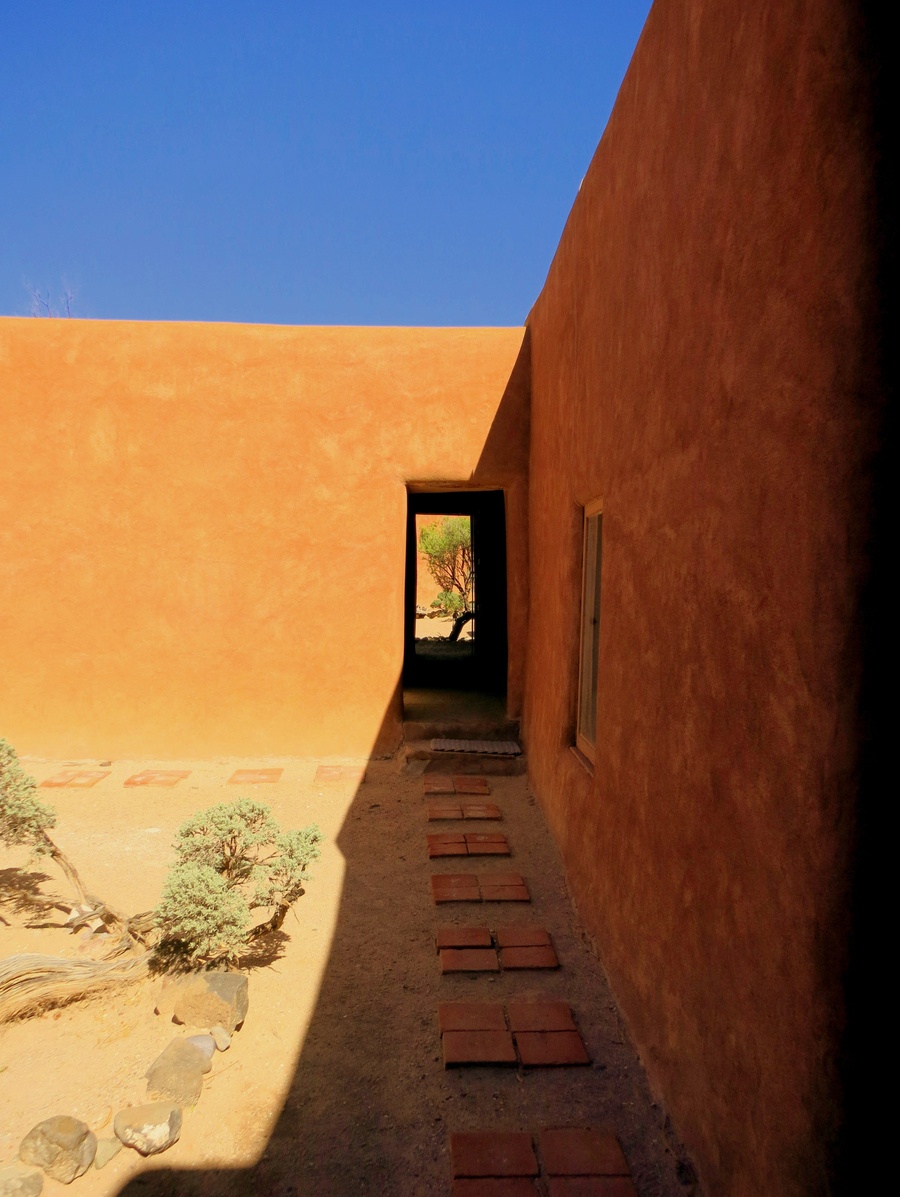
Patricia Joynes is primarily a nature photographer but deviates from landscapes when she observes interesting patterns and colors such as this courtyard and sky at the Georgia O’Keeffe studio in Abiquiu. Her photos are on book covers, in annual Blue Ridge Parkway calendars, a National Geographic Online story, and in literary journals. To see more of her work, visit her blog at www.patriciajoynes.wordpress. com.
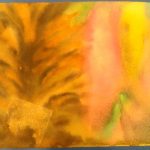
By Lindsay Wilson
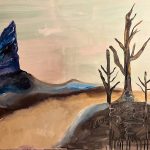
By Victor Hugo Mendevil

By Windy Martinez

By Jackie Martin
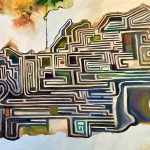
By Samantha Edmonds
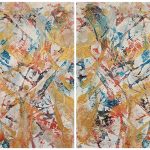
By Jeffrey J. Higa