Letter from the Editor
By John Hardberger

He sunk his paddle into the water and pulled through once more, steering his canoe to the sandbar’s shore. A dull soreness rested in the calluses of his hands, his shoulders tight and tired. He didn’t know what day it was or how many days he’d been on the river. He was hungry, his food almost gone.
Benjamin had always heard a person shouldn’t eat fish caught in the Ohio River, but if he were lucky enough to catch one, he wouldn’t hesitate. Nothing new. He and his mother had often driven her old Buick to the river bank and walked to their fishing hole underneath a downtown railroad trestle on a dirt patch hidden behind a stand of willows. They never threw anything back. “Better than food stamps, Benjy,” she’d say. They had always caught at least one, more often two or three. The fish, along with cornmeal and potatoes and some borrowed ketchup packets from the diner near the river, had provided enough food for the day.
It had to be August by now. It was hot and the fish hid deep beneath the water’s slow flow and he had caught nothing, hadn’t even felt his line twitch since his third day on the river. His journey had begun in June, two days after her funeral, the cheapest the funeral home would offer. The only other people who had attended were the priest and one of the owners of the mortuary, the one who had pitied him and accepted his plan to pay lay-away for casket and funeral.
He bought the canoe that same day. He was driving home when a glint of the late afternoon sun bounced off the shiny aluminum boat at a passing yard sale. Benjamin had no urge to buy a canoe until the light hit him in the eye, and he had no urge to paddle the Ohio until he bought the canoe. He paid with a hundred-dollar bill he’d found in her nightstand: his inheritance, along with her rusting Buick and three bulk boxes of Ramen and her fishing rod. He drove to the convergence of the Monongahela and the Allegheny and left the car in a lot next to a city park overlooking the river. He’d never been in a canoe. The varnish on the worn paddles was flaking, and he hadn’t known where to put his hands.
Now he beached the canoe and stepped out onto the sand. Willows and weeds grew scattered near the bank. A few cottonwoods rose high behind them. The sand sizzled the soles of his bare feet and its warmth seeped in-between his toes. Hundreds of logs were strewn on the beach, drying in the sun since the last rains, weeks ago.
When he was thirteen, three years earlier, his mother dragged him to a party on a sandbar that reminded him of this one. Late that night, she came to the tent to lie down, and Benjamin listened to her fidget. She moved and turned over and twitched for half an hour. “It’s no use,” she said aloud. She told him she needed water, left the tent, and rejoined the others raging through the night. The next morning, when he woke, he found she’d spent the early morning hours building a massive fire ring around a mound of driftwood stacked to her waist.
“I couldn’t sleep, Benjy,” she said, an ashamed smile on her face. “I decided I’d get the fire ready to cook on this morning.”
She lit the driftwood and they both watched as the flame rose. “Driftwood makes the best fires,” she told him. “It’s been lying in the sun drying out and when it gets set, it’s ready to burn, like old newspaper.” When the flame had fallen to a working-height, his mother rigged up a stand and placed a cast iron above the heat. She fried bacon, then threw a catfish fillet into the sizzling grease. While the others slept, he ate and she watched him. She said she wasn’t hungry. She told him then she didn’t want him to be around her friends anymore. He thought she’d stop seeing them, too. That turned out not true. In the years that followed, he often spent time alone, feeding himself noodles, sometimes skipping school. “If they aren’t good for me, they’re not good for you,” he heard himself often responding to her. But she couldn’t stop, and she got worse. He thought he could have done more to make her stop. He’d failed.
Benjamin set up his tent and took his fishing rod to the back current of a small inlet on the sandbar. There he imagined big fish lurking in the swirling waters, feasting on all the food flowing into the back current. After dropping his line in and propping the pole up with a Y-shaped stick, he sat on the sand next to a willow, pulled his knees to his chin, and watched as the bobber swirled, never dipping under. He thought to pray, but didn’t. Those prayers had been prayed and had not been heard and now he knew he’d never believe in all of that again. He again looked at the bobber, circling lazily, never falling. “God dammit to hell.” The thought of another noodle meal frustrated him.
He left the propped-up rod in the sand and began to collect driftwood, wondering about many things. He wondered why none of her friends had come to her funeral. Benjamin wondered why she’d ever begun to use. He had never known his father, and he wondered about him, too. He was just a man his mother had a relationship with, a man who’d told her he didn’t want to be a father. Then he left.
“Did you love him?” he asked her once.
“I loved him at least one night.” She laughed a little and then she saw his reaction. “Things happen, Benjy. It’s not so bad as everyone says. It’s just life. I’m glad for it.”
And his grandparents. He wondered about them. They’d disowned her after she and Benjamin had visited them a couple years ago. Her face was scabbed, and she pleaded again for money—just to get through the week till her next fast food paycheck.
“You are despicable,” his grandfather had said. “A disgrace. What kind of a mother are you?”
But now it was over, their daughter—their daughter who had graduated summa cum laude—was dead, and where were they?
He spent an hour collecting driftwood, the bundles heaped in his arms, and he stacked it in a mound taller than him. Some he moved into the fire ring, and once it caught the fire popped and crackled and soon raged. Day had moved to dusk and on to night. He decided to stay up with the fire as long as it burned.
Benjamin stared into it. Sometime tomorrow, if he estimated right, he’d land back at his hometown riverfront. He had no plan after that. He’d probably have to report somewhere, social services or foster care. But he didn’t need any of that. He could take care of himself; he’d been doing it for years.
He stared at the flame until smoke hit his eyes, causing them to water, but not tear. He hadn’t cried since her death. He rubbed his eyes and then saw her lying in bed the day she died. Her cheeks sunken, eyelids closed over bugged eyes, her frame so slight it seemed skin covering bone. Scabs marked her forehead. He didn’t want that image, but he could think of nothing else. He wanted to remember her from when she was younger and still living, before she’d started all of that. But he couldn’t imagine anything else. He only saw her at the end.
He rose and walked to his supplies in a plastic tub in the canoe to get a package of noodles, but then he remembered his fishing rod. He grabbed a flashlight and moved to the back current to check.
The line gave a jerk, then relaxed. He first thought it was a stick or some brush on the hook, but then it tugged again, and he knew it was something. The whiskers broke the surface first. Then the catfish’s great body emerged. He dragged it onto the shore, thumbed under the gill, and pulled out the hook. He grabbed his bucket, threw the fish in, rebaited his hook, and recast. Almost as soon as the sinker pulled the bait down, another giant fish latched on. And then it happened again, and again. As the night wore on, his bucket filled. Sometime under the moonlight’s shine, the night a blur, the fish quit biting, and Benjamin knew it was his time to quit, too. He looked at the fish squirming on top of one another inside the bucket.
He returned to the fire and stoked it. Benjamin filleted the fish, rigged the cast iron above the flame, and cooked all of them in a film of bacon grease leftover from a breakfast weeks back. He wrapped the ones he couldn’t eat now in foil and stowed them in the tub. Then he sat on a log and ate and loaded his stomach, while the driftwood campfire flickered, slivers of smoke escaping up through dark skies. When he was gorged, he lay down in the sand and slept, the coals beside him simmering down to a warm ash.
The ray of early sun shimmied through a break in the leaves of a willow tree and woke him the next morning. The fire was dead now, and sand flaked his hair. Benjamin broke camp and loaded the canoe. He urinated on the ashes, then pushed off into the river.
The large driftwood monument remained behind. When rains fell and waters filled the valley, the river would carry its pieces to the next sandbar, continuing like this for generations, just as it had for generations before him.
Benjamin drifted for hours, going as slow as the current took him. He crossed beneath a bridge and then another, and then another he recognized, and he knew he was near his hometown. Soon he was looking at familiar buildings along the riverfront, the spire of the church rising behind them. He saw the power plant and next the fountains of the city park where children were playing in the spurting water. And in the distance, the railroad trestle crossing the river. He drifted farther, and soon he recognized the spot where she had taken him to fish, a bare patch of dirt under the railway bridge, the willows behind it hiding them from the rest of the world.
He saw her then, pulling in a giant cat, smiling. “We’ll have to buy a whole bucket of cornmeal to get this one fried,” she’d said. She was laughing then and she raised her fist into the air and roared in excitement and she was a good person. No matter what anyone had ever said, or would ever say again, she was a good person. He knew that now. He had always known.
He blinked away water in his eyes and paddled stronger, crossing under the trestle. He moved faster, the canoe ripping a ‘V’ in the water, until he was again among trees and sandbars, miles downstream from home. His hands gripped the paddle. He didn’t notice the calluses aching with each stroke or the soreness in his shoulders. He paddled harder.
Miles later, he neared a stand of trees rising from an island in the river. He saw a sandbar where he would sleep the night. He stroked once more, pulling the paddle through the water and then guiding the canoe to the beach. He scanned the sandbar for driftwood.

Vince Tweddell is a graduate of the MFA in Creative Writing Program at Murray State University. He has published several short stories, most recently in Alligator Juniper. He currently lives in China where he teaches English at an international school. He and his wife, He Chang Yu, have two daughters, Sarah Anne and Laura.
Haylee Massaro is a writing instructor currently living and working in Pittsburgh, Pennsylvania. She attended the University of Pittsburgh earning a B.A. in English Literature and then went on to study English education at Duquesne University. Along with photography and visual art, she enjoys reading, writing, and traveling, when she’s not in the classroom.
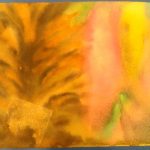
By Lindsay Wilson
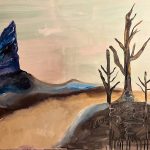
By Victor Hugo Mendevil

By Windy Martinez

By Jackie Martin
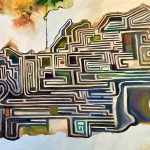
By Samantha Edmonds
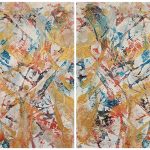
By Jeffrey J. Higa