Letter from the Editor
By John Hardberger

In May of 2017, Blue Mesa Review spoke to Mexican-American writer Jennifer Givhan on her work, which spans the topics of life, death, and femininity. Originally from the California-Mexico border, Jennifer Givhan now resides in Albuquerque, New Mexico where she is a writer, mother, editor, and educator. A prominent voice in the writing community, Givhan obtained a Masters in English from California State University and a Master of Fine Arts in Poetry from Warren Wilson college. Today, Givhan teaches composition at Western New Mexico University, in addition to online poetry workshops at the Poetry Barn.
Other honors include the Frost Place Latinx Scholarship, a National Latinx Writers’ Conference Scholarship, The Lascaux Review Poetry Prize, Phoebe Journal’s Greg Grummer Poetry Prize chosen by Monica Youn, the Pinch Poetry Prize chosen by Ada Limón, and seven Pushcart nominations. Her work has appeared in Best of the Net, Best New Poets, Poetry Daily, Verse Daily, Ploughshares, POETRY, TriQuarterly, Boston Review, AGNI, Crazyhorse, Witness, Southern Humanities Review, Missouri Review, and The Kenyon Review, among many others.
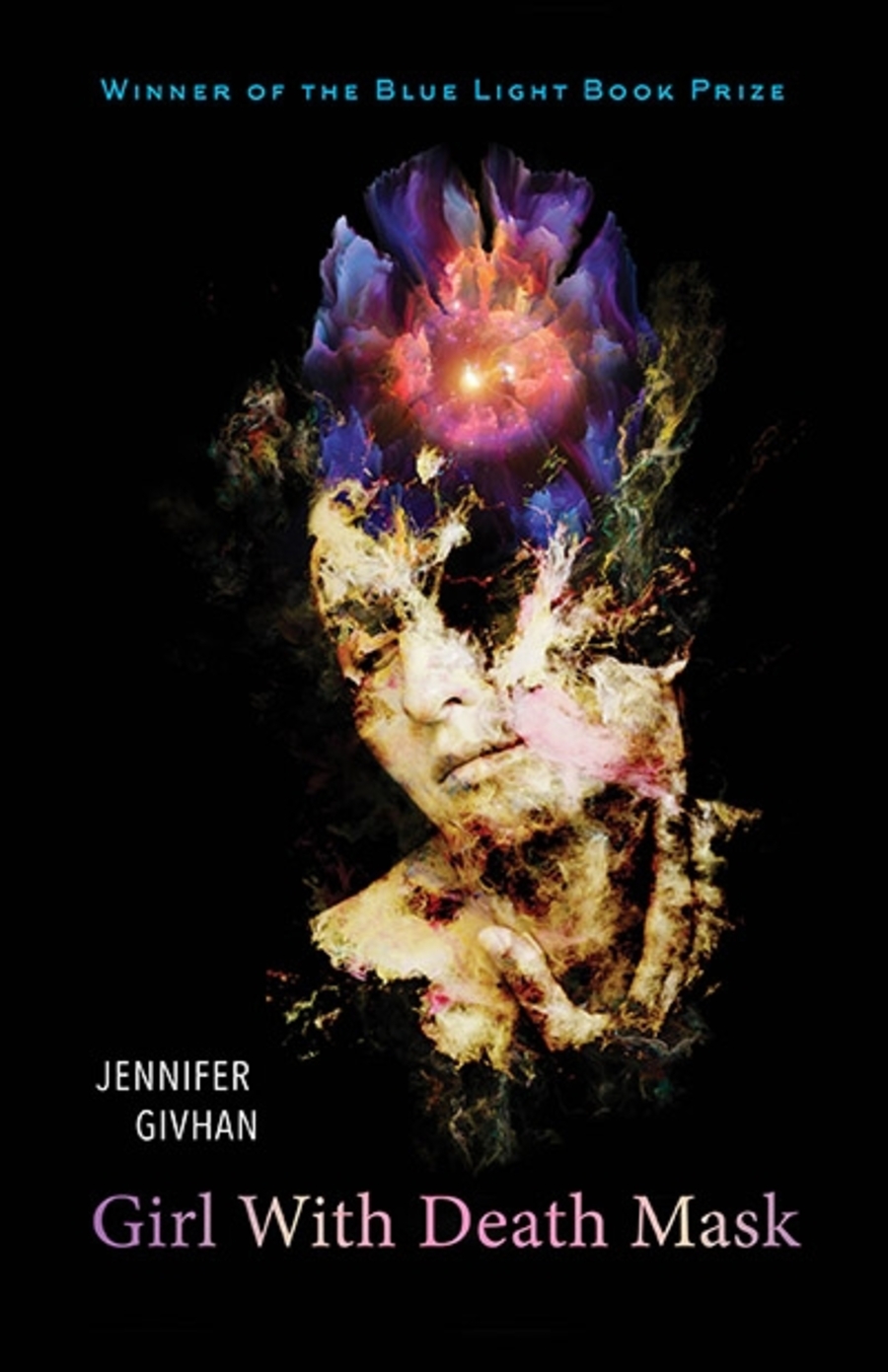
Givhan has been published over 100 times and was a runner up for Blue Mesa Review’s 2014 Poetry Prize. In 2015, she was granted the National Endowment for the Arts fellowship which was awarded to her in order to assist her literary prowess. At the time of our last interview, Givhan was working on a book of poems titled Protection Spell, which then became a finalist in the 2017 Miller Williams Poetry Prize. We wrote to Givhan to discuss her latest book, Girl with a Desk Mask. Winner of the 2017 Blue Light Books Prize, the collection is unafraid to talk about love, sex, and late nights.
You’re an editor at Tinderbox Poetry Journal as well as a writer. Can you talk a little about those roles? How they complement and how they contrast?
I see editing as a chance to give back to the community the support and encouragement that has been given to me; in my early career as a poet, a kind word from an editor when the rejections were pouring in meant everything to me, buoyed me. As a writer and as an editor, I know firsthand how important mentorship can be, that sense of community, that sense of finding others with whom the work resonates— it’s like finding kindreds, lights in the dark. Lately I’ve had to learn to pare back in my editorial roles because editing takes as much energy as writing, often, and I’ve needed to learn a balance since I don’t ever want to stop writing, but I only have so much steam at the end of the day. Several friends have pointed out that writing is also giving to the community, that taking time for ourselves as writers is also a kind of gift. This is something I’m learning for myself, as a mother/writer/editor.
You write poetry as well as fiction. Are you mostly a poet? How does poetry inform your fiction prose? Do the genres share themes for you?
I’m a poet at heart. I think in poetry, in rhythm, line, and song. And yet, I love a good story. There’s nothing quite like that Dark and stormy night. I write to ask my readers to pull up a chair. I have something to tell you. Whatever tools the Muse hands me to make that happen, I am grateful for. I have two novels forthcoming in the next two years, and I’m getting started on a third. I also have a poetry manuscript I’m working on. The two feel interchangeable for me. And they speak to each other. Next year, for instance, my novel Trinity Sight, about a Latina scientist who has fallen into an indigenous myth in the dystopian New Mexican desert, is coming out with Blackstone Press, and my poetry collection Rosa’s Einstein, about two sisters who go searching the desert circus wonderland for Einstein’s lost daughter and their lost scientist father, is forthcoming from University of Arizona Press. Both utilize myth, magic, the hero’s journey, and theoretical physics. And yet, they are night and day in terms of structure. Still, they come from the same core, the same poet’s heart, the same daydreamer’s hope that someday I’ll fall into a mythical wonderland and break all the rules of science—or finally understand.
Why did you decide to convey your story in four poetry movements, as opposed to one work of creative nonfiction, or even as a fictional character’s story?
I’m actually at work on a memoir, Quinceañera with Baby Fever, and have two novels forthcoming, both of which tackle motherhood/ girlhood from different angles and speak to my experiences as a Latina in the Southwestern borderlands, transforming via myth and the magical real. Poetry often speaks to me first and clearest, and I work through any other ideas I have through the poems – what the poems teach me, open up within me, I often then find ways to expand via fiction/nonfiction. But the poems speak first. Girl with Death Mask is the bridge I needed on my journey toward healing and survival – it is the guide and hope I leave my daughter, and those girls/women who find resonance and light within its pages.
Girl with Death Mask explores themes of womanhood. To you, what is most poetic about being a woman?
The endless possibilities for transformation. This is true of any human, yes. But I’m especially concerned in Girl with Death Mask of the opportunities for girls/women to transform – to break away from or stand apart from a society that has so often tried to trap us within our biological/reproductive functions and/or demean us within rape culture and the cult of beauty… At least this was true for myself as a girl growing up in a Mexican-American border town. My speakers find release in the transformative power of reclaiming their own voices, some even after death, such as Victoria in The Girl… Runs Away – where the takeaway is that, finally, she is believed. Her story is heard. My collection is a song for girlhood-turned-womanhood. The woman going back to girl and saving herself and those she collects in the net of her arms, in the net of her heart along the way.
Which movement within Girl with Death Mask do you think your readers will relate to most and why?
I hope all movements hold some discovery for readers – the first is the historical trauma, the girlhood mired by rape culture, the #MeToo lifeline reaching back through the speakers’ bloodline; the second is the speaker grappling through motherhood with the weight of trauma strapped to her body and soul; the third, a bridge, reconsiders the mythical La Llorona, a haunted figure who has traditionally terrified children, now reclaimed as a source of hope and light, a way out of the dark tunnel the speaker has found herself in; the fourth is the speaker transformed, unmasked, flying not away but back into herself, renewed, perhaps not completely healed, but armed with hope and knowledge, at the altar of staying alive, proclaiming, Whatever happened to my body My body kept me alive.
How do you want Girl with Death Mask to influence readers today?
I hope it will be the survival guide you need; or the map toward transformation. If you are unaware of rape culture and the lasting trauma it effects on girls/women, then I hope this will serve as the eye-opener you’ve needed. I hope it will be a two-way looking glass, where you can both find yourself and be carried away somewhere strange – somewhere into yourself where you can see yourself anew.
What’s next for you?
Finding joy. I catch glimpses in the writing, glimpses in the mothering and daughtering. I need to grab it and hold onto it, let it fly me away.
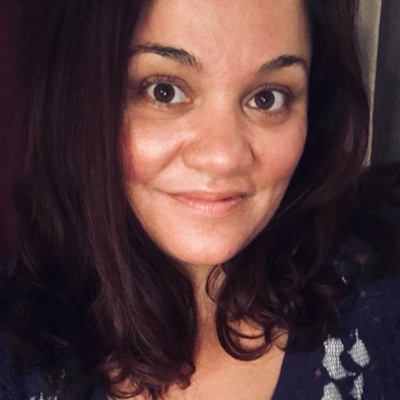
Originally from the California-Mexico border, Jennifer Givhan now resides in Albuquerque, New Mexico where she is a writer, mother, editor, and educator. A prominent voice in the writing community, Givhan obtained a Masters in English from
California State University and a Master of Fine Arts in Poetry from Warren Wilson college. Today, Givhan teaches composition at Western New Mexico University, in addition to online poetry workshops at the Poetry Barn.
Other honors include the Frost Place Latinx Scholarship, a National Latinx Writers’ Conference Scholarship, The Lascaux Review Poetry Prize, Phoebe Journal’s Greg Grummer Poetry Prize chosen by Monica Youn, the Pinch Poetry Prize chosen by Ada Limón, and seven Pushcart nominations. Her work has appeared in Best of the Net, Best New Poets, Poetry Daily, Verse Daily, Ploughshares, POETRY, TriQuarterly, Boston Review, AGNI, Crazyhorse, Witness, Southern Humanities Review, Missouri Review, and The Kenyon Review, among many others.
Givhan has been published over 100 times and was a runner up for Blue Mesa Review’s 2014 Poetry Prize. In 2015, she was granted the National Endowment for the Arts fellowship which was awarded to her in order to assist her literary prowess. At the time of our last interview, Givhan was working on a book of poems titled Protection Spell, which then became a finalist in the 2017 Miller Williams Poetry Prize
By Lindsay Wilson
By Victor Hugo Mendevil

By Windy Martinez

By Jackie Martin
By Samantha Edmonds
By Jeffrey J. Higa