Letter from the Editor
By John Hardberger

Mom taught me to drive when I was ten. She appeared in my doorway like a vampire. I thought she was a dream, but then I felt her fingers lace around my arm. I let out a yelp. She put her finger hand over my mouth and shushed me. “Don’t wake your sister,” she said. She led me to the driveway. She didn’t say where we were going, just pulled me through the darkness of the house.
“Get in,” she said, holding open the driver’s side door of her minivan. The dome light fell at my feet, and the security bell rang. Her eyes were small and tired. She smiled then kept nudging her head towards the seat.
“I won’t get in trouble, will I?” I asked.
“No, no you won’t. I promise.”
She took my hand and yanked me into the driver’s seat. Dad’s car was still parked next to the van. It hadn’t moved in months. Layers of wet leaves had become its new skin. Whenever I would ask Mom where he was she’d say, “He’s still sick, honey, but he’ll be back. He’ll be okay.” Then she’d ask what I wanted to eat even if I just ate. If I asked what he was sick with, she’d tell me they were still figuring it out.
The driver’s seat towered over me. The shoulder belt stuck to my face. A sticker on the sun visor warned that you couldn’t sit in the front seat until you were twelve. I hesitated to grab the wheel. I wasn’t even sure how to hold it. Mom grabbed my hands and placed them where they should go. “Ten and two,” she said. “It’s just like a clock.”
First, she taught me how to back out of the driveway. Then how to pull back in. Her hands were a bony cloud floating over the wheel and shifter. She spoke to me like a hostage negotiator. “Okay, easy now, go very easy.” The engine yanked the car down the driveway. Stones grumbled beneath the tires. “You can go a little faster,” she said. But I only hit the gas hard enough to let the van roll on its own until it ran out of speed. I was afraid to let go of the wheel, fearing the van would take off and fly out into the street, across the fields with us still trapped inside. Once I pulled out into the road, she made me switch seats then turned the car around and put it back in the driveway. Then we started over, only stopping so mom could run into the house to check on Ada.
She came again the next night, whispering, “Brendan get up,” before ripping me out of sleep and into the car. We worked on breaking, U-turns, and K-turns. She recited the rules of the road from a driver’s manual while I practiced. Her teaching was sleepy but relentless. I had to do everything perfect ten times in a row before we moved on. She came the next night, and the night after. It got to the point where I would lie in bed waiting, for her to open my door with the van keys jingling in her hand. After a couple of weeks, she let me drive on the road, our road only, and I could only drive as far as our closest neighbor’s mailbox.
“I just want to make sure you’ll both be okay,” mom said one night. “That if something happens you can take care of yourself and Ada.” I had parked the car a few feet from the McAllisters’ mailbox. The focus of our lesson that night was sudden stops. Mom had her head against the window and used the rearview mirror to watch the darkness behind her. Her breath made a patch of fog that she rubbed away between sentences. “Things won’t be like this forever,” she said.
“How much longer will they?”
“I can’t answer that right now.”
Then she was knocking on my window, telling me to get up.
“What happened?”
“We fell asleep. Hurry up, we need to check on your sister.” She looked hollowed out and afraid. She didn’t bother to turn the car around. She drove in reverse the whole way. The van wobbled back and forth. We were on the verge of spinning out of control. She slewed into the other lane and barely missed a telephone pole. The back bumper slammed into the end of our driveway. I was left in the van as she ran into the house.
One morning, I came downstairs and dad was sitting right there in the kitchen, in the chair he always sat in, the one with the uneven legs. He looked different, sunken and dried. He didn’t have that pale sick people look. Everything else around him was how it always was. His coffee mug sat at the corner of an unfolded newspaper. He read and sipped while mom banged pots and plates and slammed cabinet doors. I sat across from him.
“Hey bud,” he said. He swallowed hard and grimaced. His voice was so small.
“Brendan got third place in the science fair last week,” mom said.
“Hmm, what’d you do?”
“How music affects plant growth.”
“I thought it was a lot better than that one about ethanol and the cleaning products thing Katie Terrini did,” mom said.
“Are you better?” I asked.
“I liked the papier-mâché dinosaurs the fifth graders hung from the ceiling,” mom continued. “It was like a little Jurassic Park in there.”
Dad attempted a smile. Then he went back to flipping through his paper. I wasn’t sure if mom was keeping him quiet, or if he was finally calm now.
The last time I saw him, Ada and I were playing cops and ghost robbers in the backyard. It was dusk and October, and the days were just starting to get shorter. I was the cop like always, and Ada was the robber. We had reached the turning point of the game, where I would corner Ada against the porch and shoot her with my stick gun. She screeched as she pawed at her bullet wounds.
“You’ve killed me. I’ll be back. I’ll haunt you. I promise,” she yelled before collapsing on the ground with her arms and legs folded behind her body. Then her limp body rose, arms straight in front with hands dangling. “I told you I’d be back.” This was where she was supposed to chase me around the yard while moaning her plans for revenge. It was her favorite part.
We ran into the backyard, screaming threats at one another. We didn’t notice dad. The game had distracted us. I thought he was a tree at first. He stood in the middle of the yard, staring out into the woods. He was naked and still. Some parts of his body were thin and bony; pieces of flab hung from others. Ada and I slowly approached him. Trees blew in the wind around him, but he never moved.
“I can see dad’s no-no,” Ada said.
“Put your hands over your eyes,” I told her.
I stood in front of him.
“Dad?”
I poked his hip.
“Dad?”
Mom came running outside with a towel. “Cover your eyes. Cover your eyes,” she yelled. Through my fingers, I watched her walk dad into the house. She whispered in his ear and rubbed his back in tiny, fast circles.
Ada and I tried to run upstairs, but Mom stopped us. She made her body into a big “X” that blocked our way. “Go downstairs and wait for Aunt Marissa.” We could hear Dad wailing and punching the floor.
“A ghost has Daddy,” Ada whispered to me in the backseat of Aunt Marissa’s car. “He’s possessed. I read about it in this book.” Potholes and Aunt Marissa’s sharp turns bounced us into the air. Ada pulled the large hardback book on ghosts that she had bought at a library sale out of her backpack. She carried it everywhere. The title’s gold letters shined in the headlights of passing cars. The Encyclopedia of the Paranormal and the Occult. We spent three nights at Aunt Marissa’s and had to share a sofa bed with her beagles. Then mom took us home, and dad was gone
Ada said it was a possession whenever I brought up Dad. The morning he returned, I examined his movements at the breakfast table. Would the ghost know how to do everything dad did? Would it know to lick the corner of its lips after every sip of coffee? I shoved the idea out of my head. Ada stood in the kitchen staring at him, wondering if it was safe to come closer. I knew she still believed it. “Come here, honey,” dad said.
He wrapped his arm around Ada and pulled her against his ribs. Her hands hovered over his torso and back. Mom stopped making breakfast to watch. “You’ll be late for school if you don’t hurry,” she said, handing us our lunches and jackets.
“That’s not dad,” Ada said while we waited for the bus.
“Of course it is.”
“He didn’t smell or feel like dad. The ghost has completely taken over.”
I could’ve argued with her, told her this was serious, but I didn’t have the energy. It was something she was just going to have to grow out of, I thought. Her imagination was at the peak of its wildness. She believed mermaids lived in our toilet and that forks and spoons had feelings. I used to believe in dragons and think you could keep a lion as a house pet, but then I grew up. And eventually Ada would have to, too. She recited highlighted passages from The Encyclopedia of the Paranormal and the Occult. “The most common symptom of a ghostly possession is a sticky layer formed on the face and body of the affected person. See, Dad’s skin is sticky. I felt it when he hugged me. The second most common symptom is dry eyes.” She babbled about exorcisms until the bus came. I sat in the back with my friends, and she sat alone, flipping through her book.
Before dad got sick, he took me for a tour of developments he helped plan. The neighborhoods he planned and built were his pride and joy. If we ever drove by them with him, he’d say, “That beauty is brought to you by yours truly.” Ada was sick with the chicken pocks, and dad was in charge of keeping me out of the house so I wouldn’t catch them too. A grand tour of his developments was the best activity he could come up with. He snaked through rows and rows of homes. The roads had all been named after trees and nuts. The houses were identical. Others broke the pattern with their bad paintjobs and overgrown grass. Dad waved at the residents as if they should know him. Just when I thought we’d reached the end, more homes revealed themselves.
“You see, I wanted to go for regular straight roads that made blocks, so we could make better use of the land. But everyone else said that we could attract more high-end buyers with curved roads, because they would give the neighborhood a more whimsical feeling,” he said one day as we drove through one of the nicer neighborhoods. He explained the way the roads wound and diverged, the different lot sizes, that the nicer houses were hidden in the back for more privacy. Every bit of this place was filled with intentions.
We spent several afternoons doing this, even after Ada was better. He drove us all over South Jersey, through miles of crabgrass and strip malls. Sometimes, we’d stop in ones he hadn’t worked on. He’d list and point out things that were done improperly or lazily. “Amateur hour,” he’d said passing a home with asymmetrical front windows. We looked at abandoned homes with overgrown lawns and yellow notices stuck to the front doors. He tried to explain the housing crisis by comparing it to swimming pools and balloons. It didn’t make sense. He was like a haywire theme park robot. If I stepped out at a stop sign, would he just pull away and keep talking?
One day, he took me to a neighborhood near our house that we had always avoided. We passed by the sample house with the large red, white, and blue welcome banners in the yard. A half dozen of its clones were lined up beside it, all abandoned. Dad stopped. The road ended in a gravel field a quarter mile away, and that gravel field ended in a wall of pine trees.
“What happened?”
“We started working on it, drew up the plans and everything, then the contractors ran out of money and took off. We had such great names for some of them too. Pegasus Avenue, Hollow Wood Drive. Those roads led into other sections of the development that split off again, then ended in cul-de-sacs. Sort of like a bunch of big tree branches. Hallowed Grove. That was its name. We never even got the sign up.” It was the first time I realized he could be sad about things. He went on about Hallowed Grove for half an hour, moving his hands as if he expected the completed homes and paved roads to rise from the ground.
***
The crawl space smelled of mouse poop and mold. Torn pieces of insulation hung from the ceiling like stalagmites. Mom had been forcing Ada and me to play outside all the time since dad came home. But the yard had grown boring, so we decided to find out what was under our house. We wanted to catch the bull frogs and mice that lived there with an old fishing net. When it started to get cold, all sorts of creatures holed themselves up in there, eating, humping and crapping in there for months. Ada crawled around with a flashlight while I followed with the net. I found three kittens shriveled and dead in a corner. I pulled a fallen piece of insulation over their bodies then gently patted it down.
“What’d you find?” Ada yelled from the other side. She had a small frog trapped under her net. She listed off possible names for him. “King Slurp, Telemachus, Mr. Bigs, Bloop.”
“Nothing, just mice poop.”
She squished her face in disapproval. “Well don’t touch me with your hands until you wash them. What do you think of the name Mr. Green?”
Ada had put Mr. Green in an upside-down bucket. We could hear the rim of the bucket skidding against the floor as he tried to escape. I tried to hold it down with my hands. Ada sat on top of the bucket. Sweat dripped down our faces and soaked our clothes. It was hot down there, where all the things we forgot about ended up. Toys left outside, trash that had fallen out of the garbage can, things that clogged pipes and vents, extra pieces of the house from when it was built. Ada fell off the bucket, and it flipped over. Mr. Green hopped across the crawl space. We lay on our backs, staring up at the duct work and dangling yellow insulation. The ground cooled our limbs and collected moisture into small puddles. The weight of mom and dad’s steps made the floorboards squeak above us. We could only hear their muffled voices, not the actual words, just the shapes of sounds. Mom’s were much longer than dad’s low, short mumbles.
“I wonder if they’re talking about us,” Ada said. “I wonder if they know where we are.”
“They do. We told them, remember?”
“We could’ve run away, though, and they’d be totally clueless.”
“They can hear us through the vents.”
“I bet mom is nagging dad. She’s probably like, ‘You left the peanut butter opened on the counter again, and your dirty socks are on the living room floor.’” We laughed and rolled on the ground, not caring if we ended up in a puddle. Then I tried to do my best impression of dad.
“He’s probably like, ‘Alright, alright, but I got things I need to work on that are more important than peanut butter and stinky socks.” I started to laugh but stopped when I noticed Ada staring at me.
“Dad doesn’t work anymore,” she said. Mr. Green croaked. Mice squeaked and ran to their next hiding place. I heard her fumbling in the backpack that she kept the net in. “I think I know how to make him better.” She dangled a circle made of sticks and strings with a twig cross in the center. A combination of black bird and fake craft feathers hung from the ends of old shoelaces.
“What is that?”
“A dreamcatcher. Ojibwe used them to catch nightmares. So, I made one with a cross to catch the ghost and kill it.”
“You can’t kill a ghost. It’s already dead. It’s a dumb idea.”
“Well, all your ideas are dumb. Oh wait, you don’t even have any ideas.”
I made my way towards the exit. “Sticks and craft supplies aren’t going to help Dad.”
“Well neither are you.”
If dad did have a ghost, I thought I could talk it out of him. In school that year, we’d learned all about dealing with confrontations through conversation. The process had been explained to us through a puppet show. Mom was gone for a few hours. She had begun to leave us in dad’s care for small increments of time. As a precaution, she left me the car keys. Dad lay on the couch, watching the ceiling fan spin. “No input detected,” the TV read. I sat on the love seat, watching dad watch the fan. I didn’t know how to start this conversation. The puppet show didn’t give us a set of ice breakers for this situation. I waited for dad to start. I fidgeted and
cleared my throat so he’d notice me.
“What have you been up to, pal?” he asked. He kept his focus on the fan. He’d never called me pal before. “I feel like I haven’t seen you around.”
“You were gone for a while.”
“I was,” he said nodding in agreement.
“Why? Mom won’t tell me.”
“Starting off with some hardball questions.”
“Mom said you’re sick. Is it like a fever or something?”
“I’m not sick. It’s not like that. Sometimes things upstairs stop firing correctly. The brain is a complex machine.”
I hadn’t heard dad speak more than a few words since he’d been back. He struggled to speak those four little sentences. Were those dad’s words or the ghosts? What kind of words do ghosts know? I blurted out exactly what I thought a ghost would say.
“Boo.”
“Boo?” dad said. He finally sat up and looked at me. “I’m sorry, but I’m not feeling up to you and Ada’s games.”
If there was a ghost in dad, it was one of the smarter ones. He came and sat next to me. He hit every button on the remote, trying to get the TV to work. After a bit, he gave up and put his arm around me. Even though all of his weight was on me, he felt light. It was like he wasn’t even there. I wondered if ghosts were contagious. I went to wiggle away, but he gripped me tighter.
“This isn’t how any parent plans for things to turn out,” he said. “Things will be back to normal soon enough.”
“Mom keeps saying the same thing.”
“Then it must be true.” He grinned. His teeth looked yellow and weak. The TV finally kicked on and cast blue light all over the living room. Dad held onto me as we watched a daytime talk show. The first lady was the guest. She and the host danced to old disco songs. “See, just like old times,” dad said. Then mom pulled into the driveway, and he retreated to the couch and pretended to sleep.
I thought I might’ve fixed things, but that night dad got a butter knife out of the drawer then went over to the fridge. He opened the freezer and started chipping away the ice that had grown on the sides. Little flakes fell away and landed on the floor. When the end of the knife broke off, he stopped to look at it before he went back to work.
“Dad?” I said.
He kept hacking away. I tapped on his shoulder. Ice flakes landed on my shirt. His eyes were wide and empty as he stared into the freezer. Packages of frozen broccoli and peas got in his way, so he pulled them out of the freezer and let them hit the floor.
I left before mom could swoop in, before she would send me upstairs or carry dad away wrapped in a towel. I went to check on the birdhouses. The remains of ones we’d built years ago had been scattered all over the lawn. The replica of our house hung by itself deep in the woods. It had cracks in its high peaks. The chimney had fallen off and was buried under leaves somewhere. I checked for new nests, but it was still too cold out for that. There were just pieces of the sticks and broken eggshells from last year’s nest. Dad had a whole city planned out there. “It’ll be the Vegas of birdhouses,” he said. He had drawn up plans for a Seattle Sky Needle and an Alamo. Hours had been spent trying to make an Eiffel Tower, but he eventually accepted that some things couldn’t be made into birdhouses. The replica of our house was the only one we ever made. Dad, Ada, and I had spent an entire weekend putting it together. The three of us studied the outside of our house closely. Dad taught us how to use a protractor and a compass as we drew up plans in the garage. We made identical window panes, a front porch, and even hedges for it. When we were done, we hung it proudly from that tree.
I picked up the fallen chimney and placed it on the birdhouse’s roof. I imagined living inside it in a nest made of blankets. It seemed much more comfortable than a regular house. There was all that opened space. You could fill it with whatever you liked. I could see dad through the sliding glass doors. He was still chipping away at the ice like a dentist cleaning teeth. He moved like he didn’t fit in his own body. Maybe Ada was right. The guy that came home, the one chipping away at freezer ice, who also spent entire nights crying in the bathtub, that wasn’t dad.
***
The exorcism was Ada’s idea. Doctors and talking didn’t seem to help dad, so we tried the spiritual approach. There was a chapter in The Encyclopedia of the Paranormal and the Occult titled “The Exorcism at Home”. Ada insisted we could easily perform it ourselves. But exorcisms were for priests with big wooden crosses and ropes of garlic. Even if we could do it, how would we handle things if dad started floating or vomiting swarms of locust?
“It’s not that hard,” Ada explained. She pointed to a picture of a ghost being sucked out of a human body and into a goldfish. “It’s called transference. We need to find the ghost another soul to grab onto, an object of transference.” Mr. Green would be our object of transference. He’d been living in a shoebox full of grass all week.
Since we were too weak to restrain dad, we had to wait until he was asleep. The bedroom rumbled with his snores. Mr. Green responded with ribbits. Ada held her encyclopedia open while I waved a cross made of sticks at dad. I waited for him to wake up, float across the room, and strangle us both. He was a deep sleeper though.
“Okay, Mr. Green has to be out of the box,” Ada ordered.
I held the frog inside my fist. He was wet and smooth. He struggled, and I worried he might burst inside my hand.
“Next,” she said, “we must present Mr. Green to the ghost. We really gotta sell it to him. You have to recite this chant with me.”
I followed Ada’s finger across the yellowed book pages. Some of the words were long and frightening. There were letter combinations we’d never seen before. We took it slow, sounding out each word carefully. We didn’t want the ghost to think we were stupid.
“Dear spirit, we benevolent, living humans request that you leave the body of our loved one. Your possession of our loved one has caused great suffering, and we wish for our lives to return to the way we were. In return, we present you with and equally, if not greater, body. This body offers new experiences and pleasures. If you accept this offer, we will be forever grateful to you.”
Dad snorted and coughed. Mr. Green croaked.
“Was that it?” I asked.
Ada nodded.
It was a little disappointing. I didn’t expect it to be so quiet. There was no head spinning or bleeding
walls, just a couple small noises. We didn’t even get to see the ghost. Ada and I released Mr. Green in the backyard. I wondered what it’d be like to be trapped in a frog body. The ghost must not have been very happy with us. “Goodbye, thank you,” Ada and I said, waving. Mr. Green hopped towards the door. We slammed it in his face.
To celebrate Ada’s school play performance, we went to Applebee’s. She was one of the Lost Boys in Peter Pan. She had no lines aside from yelling incoherently with the rest of the tribe. We were all a bit on edge. Even though mom had started leaving us alone with dad, and dad hadn’t been walking around the house like a zombie, we still watched him closely. We paid attention to every blink and finger tap. Ada insisted his problems had hopped off with Mr. Green, but I still worried.
“So, Ada, did you have fun?” mom asked. “You were the best little Lost Boy I’d ever seen. Isn’t that right, honey?”
“Oh, yes she was, and the cutest,” dad said. His voice was returning to normal. He even did things like talk like a 20’s Radio announcer when we played Monopoly and sing in the shower again. Sometimes though, he still looked like he was slowly caving in. Earlier that night, in the dark of the school cafeteria, I could see his eyes retreating into their sockets. His cheeks and lips had shrink-wrapped his teeth while Peter Pan and Wendy sang “You Can Fly”.
“You were such a cute little angel in the Christmas play too,” mom said. “You’ve become quite the actress.” Ada soaked in the compliments while trying to mash as many chicken fingers into her mouth as possible. Mom thought that being incredibly nice to both of us would help make up for the past year. She’d call me handsome every morning when she handed me breakfast.
“When were you an angel?” dad asked.
“At the Christmas play. You missed that one. I told the shepherds, ‘God’s son has been born in Bethlehem’ and got to wear a halo.” Dad nodded his head in approval.
We continued our meal and talked about plans for summer. Mom mentioned a possible camping trip in the Poconos as she continued to order more food. “Hey, how often do we have a night like this,” she said. She was starting to look heavier. Some nights, I’d come downstairs and find her grinding her teeth and eating bags of chips and candy that she hid on the top shelves. I could hear her pacing on the hardwood floor, opening and closing cabinets until three in the morning.
“I’ll be right back. Gotta use the latrine,” dad said.
We ordered deserts while we waited for him, even though we were all moaning and holding our stomachs. Outside the window was a wall of fence surrounding the foundation where they were supposed to build another restaurant, but nothing more than a hole had been there for a year now. Coming to Applebee’s was something we did to feel alright after every little event, after all my baseball games, after daytrips to grandma’s. We knew the wait staff and half of them now addressed Ada as Cutie Pie and me as Little Man. I’d memorized the local sports memorabilia hanging from the walls and which seats were the most comfortable.
“Brendan, can you go check on your dad? He’s been gone for a bit,” mom said. She sipped from her drink then tried to get situated on the bloated booth cushion.
As I walked into the men’s room, a man stood in the doorway, keeping the door jammed with his shoe. “You don’t wanna. This guy in here’s getting dangerous.” I slipped under his arm and found dad punching and kicking the wall tiles. He didn’t say anything. He just breathed heavily with every blow. Air shot through his teeth in little hisses.
“Dad, dad, stop it.”
“Jesus Christ,” the guy in the doorway said. “Listen kid, come over here so I can help out your old man.” He tried to grab me and bring me back into the restaurant, but I pushed his hand away.
“Dad, what are you doing?” He tried to rip the paper towel dispenser off the wall. He pulled on it with his entire body. He put his foot up on the wall for more leverage. It looked like he was dancing. Once he realized it wouldn’t budge, he leaned against the towel dispenser and hugged its awkward shape while he cried.
A crowd gathered in the doorway. Mom came in followed by a team of teenage managers. “Derrick, what are you doing?” Mom and one of the managers tried to pull him off the paper towel dispenser. She fell and took dad down with her. The dispenser opened, and the rolls landed on them. Then the managers tried to pull them both off the floor. Dad’s hands flailed in front of his face, trying to wipe off the mucus and tears.
***
We knew we could never go back to Applebee’s again. Mom left us home with while she ran what she called emergency errands. Aunt Marissa played Jenga with us on the kitchen table. We could hear dad pacing and moving his desk chair across the floor. Despite her long, thin fingers, Aunt Marissa had trouble grabbing the wood blocks and would collapse the whole tower when she pulled one out. “Motherfucker,” she’d say, followed by, “Don’t tell your mom I said that.”
Dad passed by and went into the garage. There was some moaning and then the sound of things being thrown. Aunt Marissa turned on the TV and turned the volume up all the way. Four games of Jenga later, Mom came through the door with plastic bags and file folders. Aunt Marissa pointed to the garage. Before we could say bye to her, she had slipped out the door and was already backing out of the driveway. Ada and I quietly rebuilt the Jenga tower as mom went to let dad out of the garage. “Derrick,” she yelled. We heard her open and shut doors throughout the house. “Derrick.” She kept searching, going up into the attic and out to the shed.
“He’s gone, isn’t he?” Ada asked me. She kept arranging the blocks.
“I’m heading out,” mom said through the sliding glass door. “Aunt Marissa is going to come back and watch you.”
Once she left, Ada disappeared upstairs, then returned, holding the dreamcatcher. “We need to find him and get rid of the ghost for good.”
“We can’t. He’s gone forever. That dumb thing won’t do anything.”
She threw the dreamcatcher on the floor as hard as she could, but it just fluttered slowly. Then she stomped up the stairs, trying her best to make as much noise as possible. I went up to her room and found her cocooned in her purple comforter.
“I’m sorry,” I said
“Go away,” she yelled back.
Her room was cluttered with the leftovers of dozens of phases. Stuffed animals were stacked under Disney princess dolls. Dinosaurs were scattered all over a bureau covered in ceramic horses. And the walls, they were covered in strangers’ family photos with specters lurking in the background. She had spent hours in dad’s office printing them out.
“What if we left?” I asked her.
“Where though?”
“I don’t know, anywhere.”
“What about dad?
“I don’t think he’s coming back.”
“Can we go to the Grand Canyon?”
“Wherever,” I said.
We packed what we thought we’d need to live on our own. Clothes, batteries, and two frozen pizzas. We walked around the house and said goodbye to everything. Goodbye couch. Goodbye chipped Mickey Mouse mug. Goodbye creaky closet door. I went outside and put the birdhouse in my backpack. “We’ll put it in our new home so we don’t forget,” I told Ada. Then we yelled goodbye to mom and dad out the backdoor as loud as we could. They’d hear it somehow.
Ada sat with her bag on her lap as I tried to get dad’s car to start. The engine kept turning over but went out with a whimper. The two of us sighed with each disappointment. We hit the dashboard, begged God, and yelled at the car until it finally turned on.
I sped down the backstreets searching the flat, dark landscape for any sign of mom and dad. The leaves came off the car in large sheets that took flight before bursting into pieces. Some of them flew in through Ada’s window after she opened it to call for dad. They stuck to the inside of the windows and our face. I didn’t want to take my hands from the wheel to wipe them off my eyes, so I waited for the wind to take them. For a bit, we hoped we’d find our parents on the side of the road or in a field. We wanted to invite them to come with us, but they were nowhere to be found.
Ada held up a map. She couldn’t read it, so she just made up directions. I turned randomly throughout town. The windshield wipers couldn’t clean off the months of dirt, so I had to drive with my head out the window. The check engine light blinked. Ada’s window fell off the track, and she couldn’t roll it up again. But we kept going. We drove forever. We drove until the car fell apart. We drove until we didn’t recognize a thing.
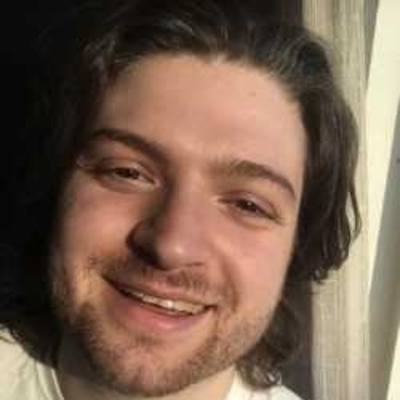
Mario Giannone holds an MFA from Cornell University, where he is currently a lecturer. He is currently at work on a novel.
Oates has been part of group shows in NYC at The Pen and Brush Gallery, Nurture Art Gallery, Momenta Art, and at Denise Bibro Fine Art. Works on paper by Oates are in numerous public collections including The Brooklyn Museum, The Smithsonian Libraries and the Franklin Furnace Archive at MoMA, NYC. Oates is a Fulbright Fellow for study a Edinburgh College of Art, Scotland.
By Lindsay Wilson
By Victor Hugo Mendevil

By Windy Martinez
By Jackie Martin
By Samantha Edmonds
By Jeffrey J. Higa