Letters from the Editors
by Gwyneth Henke and Amy Dotson

1
“Were you born there or here?” my Uber driver asked in a distinctly Iranian accent. He wormed the car back into airport traffic before resting his coffee-colored eyes on me through the rearview.
Under normal circumstances, I’d be down for a conversation in Farsi centered around our shared ethnicity. Still, I had just deplaned an extemporaneous four-and-a-half-hour flight home, and making new friends, especially with someone who may already know too much about me by dint of race, was the furthest thing from my mind. When I’d first caught a glimpse of him in the driver’s seat of his black BMW, I’d sensed our connection and decided not to acknowledge it unless he brought it up. As I predicted, that had happened immediately.
“Born in Iran but made in the U.S.A.,” I said.
“Farsi miduni?”
“Mifahmam,” I said, and he was pleased I spoke the mother tongue. “How long have you been in the U.S.?”
“Very short,” he said. His black hair was turning gray at the temples and dwindling at the crown; he was losing it in the way Dad had started losing his hair, in concentric circles from the center out. “Two years only,” he added.
“Do you like it here?”
“Kheili,” he said in Farsi, shaking a satisfied fist over his good fortune.
I praised his love for America, and he praised my praise for his love, and then I praised his praise for my praise and said we could switch to Farsi if it were easier for him.
He shook his head. “I have to practice my English.”
Thick accent aside, I was impressed with his diction and immaculate car. No cracks or wrinkles there. Spotless windows, vacuum lines in the floor mats, and offerings of miniature waters and individually wrapped mints in a tray on the console. The car was filled with the expected smell of cologne, large amounts of citrus and musk. In addition to our conversation, I’d anticipated a piquant aroma much the same when I’d seen his name on the app. “Nice car,” I said.
“My cousin’s,” he said in a smaller voice. “I don’t have a car.”
The Iranian men in my family required humility, which made Parviz’s display of insecurity a little jarring. I suddenly felt the willingness to engage with him. “Your cousin’s a generous man.”
“She is a girl,” he said with a self-conscious smile. Now he was showing off.
“The sentiment’s the same,” I said.
The Seattle skyline appeared through the fog, buildings perched on the edges of the cold, glistening waters of Elliott Bay. Cranes marked the city. We passed the defunct Rainier Beer factory.
“Your mom and dad live in Seattle?” he asked.
“We’re headed to my dad’s place now.”
He smiled at me through the rearview, gave me an attaboy wink, and said, “Mashallah! I’m sure they are happy you are coming home.”
“They are under no such obligation to be happy,” I said, solely for my own amusement.
Parviz asked if I was married. I told him that I was divorced with a daughter and a son. He assured me that Allah was forgiving and that being divorced was nothing to be ashamed of. I said I was relieved to hear that and then asked if he had a family, which, of course, he did, but they were back in Iran. Parviz was driven, so to speak, to relocate his entire family to the United States, personally sponsoring every single member if he had to, something Dad did.
He then told the familiar Iranian tale of having to start from the bottom in America. “Me, a doctor, I drive Uber and wash dishes,” he said and shrugged away Allah’s woeful providence. Growing up, I’d noticed an epidemic of highly educated Iranian men sought after by major institutions back in Iran performing jobs in America that they claimed were far below their proficiency and credentials.
“You’d think, after all these years, they’d figure out how to transfer those college credits,” I said dryly.
Parviz nodded gravely and returned to the topic of his family and how much he wanted his wife and daughter to be with him. But especially his mother. My mom didn’t know I was home. I’d come to be alone with Dad. He was dying of prostate cancer… again. The day before flying home, he’d told me over FaceTime that the cancer was back.
“How is that even possible? They took out your prostate five years ago.”
He clicked his tongue and jerked his head back. “Na Baba,” he said in Farsi, a forceful no. “Not the whole thing.” His face was thin with dime-sized patches of hair here and there that the razor had missed.
“They left some prostate? That doesn’t make sense.”
“This time, they’re gonna do radiation.” He jammed a sunflower seed into the corner of his mouth and snapped into it. Sunflower seed particles dotted his lips. I’d seen him go through a twenty-ounce bag on an NFL Sunday by himself countless times, his lips all puckered and cracked by the evening kickoff. “Surgery again could kill me,” he said. “Chemo would be too much.” His once saturnine face was now sallow, and what remained of his formerly thick, jet-black hair was now gossamer and white. Time had wrung out his Iranianness.
“I’m still stuck on the fact that they left some prostate in you,” I said.
“Come on, you know why.”
“So you can endure another bout of cancer?”
“What?” He pulled the phone closer to himself, and I was suddenly lost in the sprigs of white hair growing out of his ear.
“I can’t see you anymore,” I said.
“Huh?”
“Pull the phone away from your ear!”
“Chi gofti?” he said, again slipping into Farsi. The sudden lapses into his native tongue struck me as signs of cognitive decline. “What did you say?” he repeated, this time in English and the phone at a reasonable distance from his face.
“Why not excise the entire thing the first time?”
My dad looked at me with dark eyes no longer watchful, no longer conveying a fiery soul within, only shining with a wan light that bore an exhausted spirit. “Because I can’t get hard if there’s no prostate,” he said, taking the poetry out of everything.
I sighed. “But now you have cancer again.”
“And I’d rather have that than no . . .” He gestured downward. “Just imagine. It would be like having a dead mouse between your legs.”
“You’re eighty-two, Dad.”
“So? Someday you’ll be eighty-two and want a woman.”
“Was this always the plan? Your fingers crossed it wouldn’t come back?”
He sighed away my anxieties. Decades of anger and frustration had given way to fatigue long ago. “Life isn’t much at my age,” he said. “I don’t have the energy to travel the world, go out dancing, or do the fun things you do with your kids. Like I did with you and Kevin when you two were growing up. Remember?”
And I’m the one with the overwrought imagination.
“Get old like me,” he said, “and you’ll know things scarier than death.”
***
Parviz squeezed up to the curb in front of Dad’s condo and put the car in park. “How long are you here?” The day’s first raindrops pelted the windshield, puncturing his words.
“Just a couple of days.”
He turned around in his seat and handed me a business card with his name and number but nothing else. “Call me,” he said. I saw the man’s face fully. He had features I knew well: bushy brows, broad nose, dimpled chin, and a perpetual five-o-clock shadow. “I will take you back to the airport.” He made a face like we got each other.
“Sounds good.” I grabbed my day bag. “Khoda negahdar,” I said in Farsi, knowing he’d appreciate my prayer that Allah keeps him safe.
“Salam beresun,” Parviz said, sending his regards to my dad. “Mibinamet,” he added, saying he’d see me soon. A notification dinged on his phone. He looked at it and nodded, pleased. “Someone from here.” He motioned to my dad’s building.
I walked to the condominium’s main entrance as the rain fell harder. Getting soaked never bothered me. I craved Mother Nature’s fury unleashed. It was also a nice change from the unrelenting heat of Austin, where I was obliged to raise my kids.
Standing under the awning, I dialed the code for Dad’s place. The intercom crackled and rang for a while before I hung up and tried again, and again, no one answered. I used my phone to dial him, but it went directly to voicemail. I didn’t bother leaving a message. He knew I was coming.
I walked around the side of the building that faced the main road where Parviz’s car still sat idling. Dad lived on the second floor. I couldn’t see inside.
From his car, Parviz asked what was going on.
“He’s not answering!”
“Bia inja,” he said, waving me back to his car.
I told him I was fine, even as my clothes absorbed the rain and gathered weight. I sought shelter under the awning again and tried the intercom… again. It rang endlessly. I pictured Dad collapsed on one of the countless Persian rugs covering his carpeted floor, a scattering of sunflower seeds next to his lifeless body.
I unscrewed the aluminum pill holder on my keychain, shook out a Xanax, and chewed it to a paste. I thought about dialing a neighbor but doubted Dad was acquainted with any. I considered the police, but Dad would be pissed if they showed up.
As I was running out of options, the entrance door swung open. I caught it before it hit me in the face. A blonde woman in a tight green dress and white heels, holding a furry white coat above her head, clomped past me and into the rain. She teetered down the stairs and onto the slippery driveway to Parviz’s BMW.
I entered the building and encountered another formidable stench, one overpoweringly floral. Men like Dad equated it to female sexual provocation. I found it repellent. It smelled of the cosmetics department at Nordstrom where Mom used to work and had a similar headache-inducing effect on me.
The scent grew stronger as I walked the sparsely decorated halls of the condominium. Dad’s place was just past the bland painting of an Irish Setter standing in a grassy field. A pair of worn black tennis shoes sat on Dad’s plain orange welcome mat, the opening at the heels pressed inward because Dad wore them like slippers to shuffle to and from the mailbox.
I knocked. No answer. I tried the knob, but it was locked. I knocked again, firmly, and then heard something just beyond the door. “Dad?”
The door opened. His eyes were bloodshot and bugging out of his skull. “Why aren’t you inside?” he snarled. He sucked a bloody cut on his bottom lip.
“I was trying to buzz in,” I said, kicking my shoes off and nudging them beside his on the orange mat.
“Get in, get in, get in,” he said. His black button-up shirt and gray pants looked thrown on.
He shut the front door behind me, turned, and entered his bedroom. The floor in there was a mess of clothes and pillows. The mattress was half off the springboard. The room looked like it had been ransacked. He shut the door to his room, and I went to the hall bath to take a piss.
I flipped on the light. The bathroom mirror was covered in white foam spread thinly in spots, and thick in others. Like investigating a crime scene, I leaned in for a closer inspection. Olfactory forensics proved the foam to be minty shaving cream, likely Dad’s cheap, trusty Barbasol. The word “Jendeh” was smeared on one part of the mirror into the shaving cream. Farsi for “whore.” What Dad used to call Mom whenever he was angry with her, which had been constant.
I washed up and walked out. Dad was still in his room. I shuddered, imagining the likely condition of the master bath if the one in the hall looked like it did.
Dad’s condo was a hovel compared to the house he’d owned and then lost in the divorce to my stepmom. Luckily, he’d won all the gaudy Persian décor, like the collection of crystal vases of questionable authenticity and the numerous bejeweled tea sets. And because every inch of floorspace was covered in Persian rugs, the remaining Persian rugs he owned were pinned to the condo walls like tapestries, next to paintings of ancient Persian soldiers on horseback and dour old ladies in headscarves weaving.
Pictures of my brother and me as kids sat on a cabinet near the fireplace. In one, I’m about thirteen, a chubby kid with a fanged smile and a luxuriant unibrow. I wore a denim shirt and a leather bolo tie, an ensemble that was in stark contrast to my otherwise very ethnic appearance, to put it kindly. The fact that even one copy of that picture existed proved Allah’s nonexistence.
The same circular kitchen table of my childhood had survived decades of tumult too. I sat at it, among Dad’s many prescription bottles, including one for generic Viagra. In that very spot, I had once squeaked empty excuses for my behavior, a voice of suffocating fear from a mind hoping tomorrow wouldn’t bring the tyranny of more naïve expectations.
Dad exited his bedroom, patting those strands of memory he called hair. He looked less bug-eyed. “Why didn’t you come inside?”
“I told you, I buzzed but—”
“This is your home!” he said, spit shooting out of his mouth. His face was red. Maybe I’d embarrassed him. “Next time, just come inside,” he said, and then muttered a final, “Goddammit.”
The man was old and agitated and dying. But what was he pissed about? He’d won. He could claim the top victim status. The undisputed champ!
I held the old man with the unchanged libido in my arms for a while. He was deceptively small and ostensibly feeble. Actually, he felt more virulent.
“You look good,” I said.
“Are you kidding? Look at this.” Dad grabbed his bottom lip and bared his teeth; a few were missing, and all the others were thin and discolored like rotten plywood. He’d been handsome once. “They just fell out the other day,” he said.
I fought the urge to lunge straight into what had transpired before I’d walked in—the blonde in the coat. I’ve long wanted acknowledgment that Dad’s feral behavior had doomed the entire family. But I’d wasted so much of my life looking for something that wasn’t there and couldn’t squander another second. Besides, there was nothing I could do if the man intended on going out with a literal bang as well as a symbolic one. And what good was a deathbed conversion to celibacy anyway?
So, I simply asked if he was all right.
“Why are you asking?”
“Your lip is still bleeding.”
He sucked it in again, went back into his bedroom, and returned holding a book. “Rumi. I bring him with me when I go for my radiation. His words give me hope.”
According to Dad, his advanced age and recent health scares had refocused his mind on the hereafter. He was beyond ruminating on failure and discontent. Tortured thoughts and the painful feelings they caused were for those with time to waste. He was dedicated to cultivating inner peace.
“The wound is where the light enters,” he said, reciting Rumi from memory. “Nobody writes like that.”
“Are you okay to go for your treatment?” I asked. “You look flush, like after your third heart attack.”
“I had two heart attacks, not three.” Dad stared at me in malignant silence. So much for inner peace. “More than eighty years on this goddamn planet with no help from anyone.” He tapped his chest with the tip of his finger. “I know how to take care of myself. Nah fahmidi?” he asked, in Farsi, if, after all this time, I still didn’t understand how powerful he was.
His flash of anger brought me back to my childhood when the world within quaked. Even with a severe stutter, I had managed to spin fantasies to hide just how low some in my family could furrow, particularly me.
But I’d since abolished the impulse to hide the nasty bits. The stutter, on the other hand, endured and reared its spastic head in times of crisis. “Rrrr-rrread-read-d-dy? Ready?” I asked effortlessly.
My dad eyed me for a second. “You still got that problem?” He smirked and handed over his car keys. “Let’s get this shit over with,” he said, meaning his life.
2
I stuttered before I learned to speak. Not your run-of-the-mill, sliding-on-your-Ss kind of stutter. Mine was of the ego-shattering, soul-crushing, life-altering variety. Saying something simple like, I had cereal for breakfast, demanded a lot of work from my facial muscles. I was lucky to get out the word breakfast by lunchtime. So, I taught myself new ways of saying the same thing, such as replacing for breakfast with this morning, the S and M sounds soft and merciful, the whole thing a significantly easier dismount and landing. Of the entire English alphabet, vowels were the least menacing, downright sympathetic when up against letters like B and P. Still, every sentence demanded a long runway.
The list of a stutterer’s heartaches is long and overwhelming. Struggling to get a sentence off the ground must be the most painful one. Repeatedly failing to achieve smooth, coherent self-expression dampens the effect of your words. What’s the purpose of having consciousness if you can’t fully share your life experiences with other sentient beings? How could I ever explain what life was like for me to anyone unlike me?
***
“What’s it like being Iranian?” the chaperone asked. I was in the sixth grade, leaving an otherwise unremarkable field trip to Pike Place Market. Crammed inside a grunting, rattling wood-paneled station wagon with a handful of classmates, I thought I had misheard our chaperone, but no, she did pronounce the word Iran with a long I, which always irked me and still does.
“Wha-wha-what-what’s it li-li-like?” I sputtered like the car’s engine. Even today, all it takes is a tincture of unease to cause a relapse.
I’d never considered what it was like being me in that way, a way I had no choice being. What’s a proper response? Ululations out the backseat window and scare the shit out of everyone? I knew how Dad would’ve reacted to such an inquiry. Like him, I did not appreciate the innocent premise to the question, but unlike him, I didn’t call her an idiot, at least not to her face.
“But it isn’t your fault you’re Iranian,” she added. “You know that, right?”
My classmates were silent. To squash the awkwardness, I found myself agreeing with this idiot, that no, it wasn’t my fault. It wasn’t my choice at all. How does that sound?
At dinner that night, Dad asked if I had finished my homework yet, which was expected, but I hadn’t touched it at all, which wasn’t. I was too consumed with thoughts about returning to Pike Place to worry about homework. Specifically, I wanted to return to the comic book shop on the ground floor to pilfer the latest edition of Superman. A focused obsession with the Man of Steel defined my childhood. The archetype of the mild-mannered, physically and verbally inept gentleman who stammers as he speaks but possesses secret powers of unparalleled greatness revealed during times of distress was the most potent story ever planted in my young, fertile mind. I made it an obligation to keep up with my hero’s many storylines.
Instead of promising Dad that I would get to my homework after dinner, I blurted out what the chaperone had said. This was a foolish attempt at alleviating the anxiety I felt about disappointing Dad because nothing was more important than earning good grades. Dad looked at me like I needed to repeat myself. When I did, his whole facial structure changed.
“You must be kidding,” he said. It was difficult for some to understand what he was saying when he spoke through gritted teeth. But not me.
I’ve always hated discussing race. I avoid it like a lot of things because it rouses passions I can’t control. Dad felt differently. He was no social justice warrior; he was just inclined to identify with the marginalized and downtrodden. There’s no shortage of romance in seeing yourself as someone who overcame obstacles thrown in your way by groups higher on the social order, groups afraid of losing their station in life, no less to a perceived mongrel. As far as he was concerned, anyone who dishonored this romanticized self-regard would need to pay a heavy price.
On top of the touchy race subject, one of Dad’s cooks had drunk himself into a stupor that day. Dad reeked of food and misery for having been in the sweltering kitchen at the restaurant filling in again. He hated being a restaurant owner.
“That it wasn’t your fault…?” he repeated as if trying to make it make sense. His lips curled into a snarl. That angry face could burn a hole in concrete.
Madarjoon, my paternal grandmother, entered the kitchen with bowls of torshi and mastokhiar. Torshi is an Iranian-style escabeche but more sour than spicy, and mastokhiar is its palate-cooling dill-flavored yogurt counterpoint. They made for great side dishes to the night’s main course of shame.
She placed the bowls next to the cauldron of ghormesabzi at the center of our small, circular kitchen table, the place where Dad spent so much of his life re-examining and ridiculing the choices I had made. Madarjoon aimed her wrinkled face at me through her paisley hijab, eyed me pityingly, and then dipped into the ghormesabzi. Ladling the lamb stew over the mound of buttery rice on my plate, she whispered in Farsi that everything would be okay. Was that the question on the floor, whether the future promised better days?
“I’m coming to your school tomorrow,” Dad said.
I felt another bad episode coming on. “Nnn-nuh-nuh-nuh-nnno, no,” I struggled. “Puh-puh-puh-plee-plee-please don’t come-come-come to my school,” I stammered.
“Are you embarrassed of me?” he said. “Do I embarrass you?”
If only I could’ve flown away under my own power…
“Jendeh!” he said, meaning ‘whore’ in Farsi. Anger had a way of putting Dad’s misogyny on full display. “She works there?”
“She’s one-one-one of the mmmuh-mmmuh-moms who came on the field trip.”
He wasn’t listening anymore, too consumed with righteous anger, the worst kind. The next morning, he charged into Principal Eckhardt’s office splenetic and ready to unload.
“I don’t-don’t-don’t know who the fuck that woman thinks she is,” he said, denunciating with his index finger and spitting rage all over the principal’s desk. “Do you-you-you think it’s okay to say such a dumb thing? Do you?”
A debilitating stutter was just one of a handful of unpleasant traits I inherited from Dad. My stutter was more severe than his, though. Dad only stuttered when furious and speaking English: lips tightening, eyelids fluttering like a wounded fledgling trying to take flight after falling from the nest. It’s hard to take someone seriously when they stutter during a rage-fueled tirade; it breaks the tension, and not in a good way. But I never had to stifle a chuckle when a stutter overwhelmed Dad. Struggling to express his inner thoughts and feelings cogently was withering enough. Besides, mocking him would only annihilate us both. Iranians are not suicide bombers.
Dad lacked the tools to manage his stutter efficiently, which meant that in English, he lacked the persuasive skills to change anyone’s mind; he couldn’t crumple people the way he could in Farsi. In Farsi, this confrontation with Principal Eckhardt would’ve been one long, smooth, berserker tirade with no interruptions.
The English language exposed a vulnerability Dad spent his life trying to hide, like so many other things about himself. Not doing so resulted in torrents of self-loathing—something all stutterers who haven’t acquired coping skills feel after stammering in public. But Dad’s self-loathing manifested as rage, and hearing me stutter always pissed him off. He would bark at me to stop and take a deep breath, advice that made me self-conscious and worsened my stutter.
“Do you know anything about Rumi?” he asked Principal Eckhardt that morning in his office.
Oh no, I thought, here he goes.
“The great-great-greatest poet of all tuh-tuh-time!”
Defending his ethnicity by reaching back centuries and then ranting about it with Khomeini-like perorations was not uncommon. Dad would seize upon these grandiose ideas of Iranian greatness so intensively that he elevated them too high for me to grasp fully. With a direct connection to his ethnic homeland, it was easy for him to summon these passions, whereas I felt a close but somewhat detached connection to my ethnicity. I was born in Iran but came to the U.S. at the age of one, a boy between worlds.
Where did Dad’s energetic bloviating of the past leave me? Occasionally, these tales of Iran’s cultural significance created a Fortress of Ethnicity I could enter from time to time, roam around and appreciate, as if in a museum. This was not one of those occasions. I stood in the corner of the principal’s office, feeling myself shrink under the force of humiliation, wanting to burrow into the wall like a rat and disappear. The principal just sat there taking it too.
Dad had his finger in the air now. “And guess what-what-what else? He was Persian. That’s right. Omar Khayyam!” he said. “Omar Khayyam!” He briefly stopped ranting, believing that merely uttering the name of a Persian poet amassed significance if you just let it hang in the air for a second, the accumulating weight of historical greatness bearing down on you.
Iranians never call Iran Persia or themselves Persian; it’s an exonym Iranian-Americans use to make other Americans feel safe around us. Persia connotes an ancient and mysterious culture of ornate rugs, jangly belly dancers, and bejeweled royalty. Who wouldn’t find that collection of cliché images alluring? As a way of circumventing others’ prejudgment, Dad encouraged me to call myself Persian whenever asked about my background.
“The great-great-greatest architects, mathematicians, thinkers of all time!” he continued. And then solemnly, “Persians invented the concept of human rights. Human. Rights.”
Human Rights? Rumi? Omar Khayyam? Could anyone be more comically Iranian?
Dad quickly returned to spraying his anger everywhere, “Fff-fff-ffffive-five-five thousand years of history! It’s not my son’s fault he’s Iranian? Are you kidding me? It’s a goddamn privilege!”
Principal Eckhardt managed to squeeze in that he’d have a word with my teacher. “It’ll never happen again,” he added.
“It better not happen again, or else you’ll have a muh-muh-much bigger problem on-on-on your-your-your hands.”
It looked like Principal Eckhardt was suppressing a laugh.
Dad told me to get my ass to class while he returned to the ungrateful world of restaurant ownership. A single dad raising two boys, he had a lot on his mind in those days and not a lot of productive ways of blowing off steam.
***
I took speech therapy from kindergarten through third grade at Sunnycrest Elementary in Kent, Washington. This was many years before the dissolution of my parents’ marriage. My schedule was Mondays, Wednesdays, and Fridays right after first recess. Coming in from the playground, I braced for the crackle of the intercom and the school secretary announcing my name, telling me to “please report to Ms. Brady’s office for speech therapy.” I wasn’t allowed to go straight to therapy after recess and I never understood why.
I was already on my feet when the announcement came, clutching my neon-colored trapper keeper containing my Xeroxed workbook of lessons on how not to sound like my thoughts were fragmented. I rode another wave of susurrated mockery from the classroom down the hall to Ms. Brady’s office where I shut the door behind me like a refugee on the run.
Ms. Brady was middle-aged, had tight blonde curls, and wore thick reading glasses. She was the type who volunteered at soup kitchens and offered the shawl on her back to a shivering drifter. On our first day working together, she asked if I had a favorite thing, maybe a superhero I liked, maybe Batman or Spiderman. She was patient as I struggled with my hero’s name, and then took a perforated square of printer paper and a box of crayons and drew Superman’s insignia, using my input on color and design. She taped the insignia to the only window in the room, one that looked out onto the soccer field, and never said a word about it. The red and yellow S took on extra salience after that, lending the jolt of confidence I needed to get through my lessons, to say nothing of those superfluous intercom announcements.
I practiced the sounds, rhythms, and tongue-twisting aphorisms meant to rewire my brain. I play-stuttered with Ms. Brady, deliberately stuttering on sounds that I had less difficulty with as a way of developing strategies to overcome the severe stutter I did have with the more problematic sounds in my lexicon. Ms. Brady thought that having learned two languages simultaneously was a contributing factor to my stutter, which was already exacerbated by having a parent with the same problem.
“Simply let the words flow,” Ms. Brady would gently say, turning the pages of my workbook languorously, as if in a dream. While she made it virtually impossible for me not to try my very best, there was nothing simple about “letting the words flow.” Undermining what I truly wanted to communicate by picking words that were easier to say had been my way of life. Gradual improvements to my speech notwithstanding, I was determined to secure an even larger vocabulary.
***
I started reading books meant for adults at nine years old. Northwest Paperworks, the tiny bookstore behind Dad’s restaurant, adorned its shop window with new releases, and Whitley Strieber’s Communion, a supposed true accounting of an alien abduction, was one of those. The alien drawing on the book’s cover—a massive egg-shaped head with big black eyes—was equal parts terrifying and fascinating. Imagining the alien as something alive in the universe was almost inconceivable. What’s it like to be an alien? What’s it like to travel lightyears through space? What planet was it from?
The read was slow going at first. I kept stopping to look up words I didn’t know, and sometimes ones I thought I knew but wanted clarity. Soon the book’s plot was a distraction. I became convinced of the reality of cosmic interlopers with an ambiguous need to violate human bodies. I was also convinced that I would wake up on a slab in a brightly lit room surrounded by emotionally detached creatures. Most nights, I was too scared to sleep, but enjoyed being afraid, so much so that sharing this exciting feeling of dread seemed like a good idea.
One night, Peter Choi stayed over. He was the only other kid in my class with immigrant parents, so we naturally gravitated to one another. Peter’s dad was the owner of Choi’s Taekwondo School. Mr. Choi was short, lean, and muscular. He never looked out of breath, frustrated with an aging body, or exhausted with living. Peter’s dad was awesome.
That night in the dark, I read passages from Communion to Peter by flashlight, skipping to all the good parts. Outside of the warm, nonjudgmental walls of Ms. Brady’s office, this night was the first time I spoke without stuttering. Evidently, if the spoken words weren’t a rendition of my thoughts, I could effortlessly say them. Reading aloud was my superpower.
Lying in a sleeping bag on the floor of my bedroom, Peter’s gaze was fixed on the door, waiting for it to creak open like it does in the book, watching for a grey-skinned diminutive humanoid to crane its head inside and stare at him with large unblinking black eyes.
With his imagination easily threatening him, Peter told me to stop reading. He shifted away from me, rumpling the trash bag lining his sleeping bag. I wondered what Peter’s fearless dad felt about having a bedwetter son.
“Did you hear that?” Peter said. “What was that?”
It was nothing, of course; the house settling or the wind knocking around the dogwood branches outside. Peter’s Casio watch chimed, and he shut it off. The chime was meant to trigger Peter to get up and pee, whether or not he had to go. It took another couple of chimes before he got the nerve to creep across the hallway to the bathroom.
A second after he left my room, I heard a high-pitched, blood-curdling scream, and then the sound of someone running down the hall. I leaped out of bed and saw Madarjoon in her prayer dress—a one-piece covering from head to toe, all white with pink blossom patterns and an oval cutout for her face—chasing Peter with arms outstretched. She had just finished washing for Allah, had thrown on the prayer dress, and was exiting the bathroom when Peter ran smack into her. In the dark, she must have looked like a malevolent ghost trying to snatch him up.
We found Peter shaking and crying on the kitchen floor. He had urinated on himself. With all the lights on in the house and everyone up, Dad explained to him what had happened in an uncharacteristically calm and measured tone. But Peter could not be consoled. He wanted to go home, and Mr. Choi came and fetched his son.
When I returned to school that following Monday, an uppity blonde girl named Sarah, whose family owned horses and who trained in dressage, asked me if I worshipped the devil. Before I could even unload my backpack and sit at my desk, a rumor had gone around school that I came from a family of Satan worshipers. To hear it first from a blonde-haired, blue-eyed girl, a person who already struck me as the quintessence of Americana, widened the gap I felt between my inner world and the one I inhabited, between the nascent superhero within and the awkward, helpless boy on the outside.
The Clark Kent/Superman dichotomy was and is so deeply rooted in my mind that, even as an adult, I find myself reverting to a belief that I possess a secret greatness whenever faced with my humiliation. I continue to tell myself that someday, there will be overwhelming proof of said greatness.
Whether Peter made the slander exactly how I’d heard it or whether it evolved through a game of telephone mattered not. Having classmates call me a devil worshipper while asking why my grandmother haunted the halls of our home as a ghost at night produced the same anxiety as the onset of a bad stutter. At this point, I wasn’t stuttering much, but again found myself stuck in my tracks, body temperature climbing, jaw muscles tensing. I kept my mouth shut for a while, just like I used to before speech therapy. The link between my speech impediment and ethnicity was clearer than ever.
For the terrible trauma he endured, Peter stopped being my friend and then lied about me and my family, ripping away Madarjoon’s prayer dress to uncover something evil and strange, distorting her true character: a complicated, frail, yet fiercely determined matriarch with a direct line to Allah and His will. It seemed no one could bear to live life without answers and explanations—no matter how wrong.
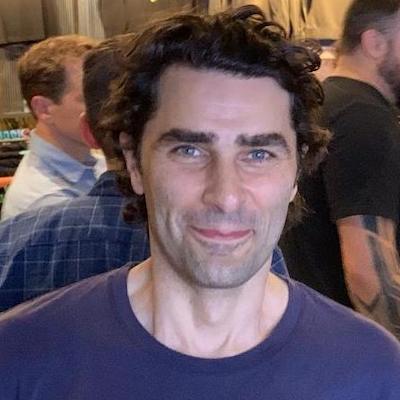
Born in Iran, Kian Razi fled to the United States with his family during the Islamic Revolution. Growing up in the Pacific Northwest, he discovered a love for writing while translating Farsi to English for his parents, realizing its power to express profound thoughts and unlock new worlds. Kian earned a BA from the University of Washington and an MFA from the University of San Francisco. A chapter from his memoir, Your Dad Is a Dog, was published in The Meadow, and the memoir itself is a 2024 finalist in the Writers’ League of Texas Manuscript Contest.
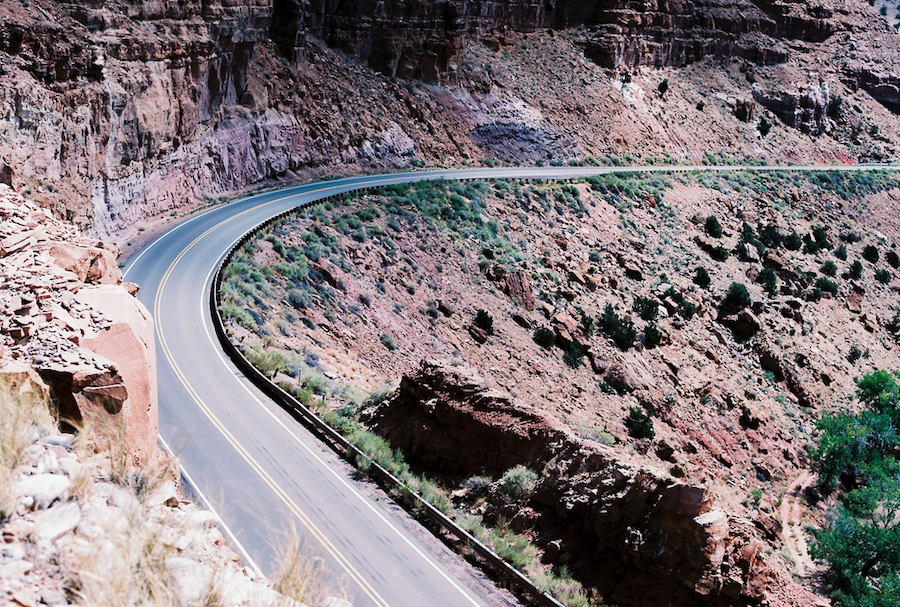
Andrew Rodden is a photographer and screenwriter local to Albuquerque, New Mexico. He primarily shoots on 35mm film, utilizing his camera to explore different land and cityscapes, both in his home state of New Mexico and around the world. In addition to his photography, Andrew has been working in the New Mexico film & television industry since graduating from Colorado College in 2021.
by Ceridwen Hall
by Patrick Holian
by Jeevan Anthony Narney
by Zoë Luh