
Letter from the Editor
By John Hardberger


I find her in old photos.
Horse Girl is maybe four, sitting cross-legged on the brown shag carpet of her bedroom. She towers above a garden of toy horses. She smiles wide, and her face flushes pink. Her gaze points upward, as if she’s thanking the heavens for her herd. The horses’ plastic coats gleam. These horses—thirty-four in total—vary in shape, size, color, and condition. Horse Girl’s collection includes golden palominos with cascading silver manes, miniscule paints and grays and bays, Appaloosas with scuff-dappled rumps, and fantasy ponies bathed in bubblegum pinks and butterfly blues.
If I sit with this photo long enough, I can almost feel these small horses in my hands. I can almost hear and feel the soft pattering of hooves against carpet. I can almost replicate a neigh, a whinny, or a huff from imagined nostrils.
*
Horse Girl, a timeline:
1995 or 1996: This is approximately when Horse Girl was born. She was two or three. I cannot remember Horse Girl’s origin. I imagine she was drawn to horse toys and to horsey picture books, such as Fritz and the Beautiful Horses by Jan Brett or The Cowboy and the Black-Eyed Pea. I know she watched the VHS Eyewitness: Horse countless times. After finding the documentary on YouTube recently—almost thirty years since I watched the program daily as Horse Girl—I was not surprised I still intimately knew each scene and music cue.
1997-1998: Arguably the peak of Horse Girl, as she actually rode horses. Mom sought riding lessons for Horse Girl when she realized how horse-obsessed she really was. The folks that ran the barn almost refused Horse Girl lessons because she was still so young. But they gave her ten minutes with an old, gentle palomino mare called Queen, who would become the horse she rode always. Horse Girl’s absolute focus on Queen and the task at hand startled the folks at the barn. It seemed a four-year-old could take lessons if she wanted it enough, and Horse Girl wanted to ride horses more than anything in the world. She began her lessons in earnest soon after and was eventually recruited to compete in a handful of rodeos and horse shows for the barn.
1999-2000: Horse Girl hibernated for a couple of years, as her family moved from Texas to Louisiana and Mom [understandably] did not seek a replacement barn and horse. In fact, Horse Girl would never ride again. The endeavor cost too much money and time. Horse Girl became Wildlife Girl for a while—she was obsessed with Steve Irwin and dreamed of traversing Australia in search of Irwin’s critters. Of course, her love for horses was not entirely extinguished. Horses are animals, after all, and she was on a mission to save all animals. But for a while her attention shifted from the equine and settled on the lizards that clung to the brick of the ranch-style home her family rented, or to the infant squirrels, limp in the mouth of the family miniature Schnauzer, that fell from their nests to an early demise.
2001-2002: Horse Girl emerged from her hibernation because her family moved from Louisiana to Lexington, Kentucky, the self-proclaimed “Horse Capital of the World.” To Horse Girl, Lexington was paradise. On drives around town, the backseat window framed endless views of horse farms: picturesque white fences curled around lush blankets of bluegrass, pristine barns perched atop rolling hills, and horses nosed dewy lawns. Horse Girl died and went to heaven during visits to Kentucky Horse Park and the races at Keeneland, and school days meant driving past downtown’s Thoroughbred Park and its stampede of bronze racehorses. Horse Girl daydreamed of her future as a jockey or horse trainer. In Kentucky, Horse Girl knew she’d be a horse girl forever.
2003-2004: Horse Girl and family moved back to Texas. She found her first Texas friend in a fellow horse girl, a girl who stayed a horse girl, who grew to ride horses as a hobby in adulthood. The two played pony on the playground, acting out stories in the vein of their favorite movie, Spirit: Stallion of the Cimarron. For her tenth birthday, homesick for the horse magic of Kentucky, she asked her mom for a derby-themed party with her new classmates. A few girls came to her house, and they wore big hats and ate chocolate cake topped with plastic horses and watched the derby live on television. And when the Athens Olympics rolled around, Horse Girl’s mom taped the equestrian eventing final. Every night for a couple of months, Horse Girl fell asleep to the horns and trumpets of John Williams’s “Olympic Fanfare and Theme,” thunderous applause, and the nostril huffs and hoof thuds of leaping horses.
*
This isn’t just a horse girl essay, or a horse essay. I’ve long tried to write just a horse girl essay, and it never works. In her essay, “I Don’t Love Horses,” T Kira Madden writes, “I’ve tried to write about horses so many times. But the thing about a horse is, it’s never about the horse.”
What is my own horse essay about, then, if not horses and my love for them as a child? I am no longer Horse Girl. But she’s the only version of myself my grandfather knew.
*
Horse Girl and “Bo,” A Timeline:
1995 or 1996: Horse Girl knew her grandfather—whom she called Bo—through play. Bo was a college football coach out in West Texas, but he and Lille, her grandmother, would spend a week or two here and there visiting Horse Girl and family in the central or eastern part of the state. Horse Girl was so small. It’s hard to remember. I know the old photos of Horse Girl and Bo are never stiffly posed. As subjects, the pair are active, always caught on camera in conversation or play. One of my favorite photos of Horse Girl and Bo features a plush horse. Horse Girl has brought this stuffy to the kitchen table where Bo sits, and Bo has placed the horse on top of his head. I can almost hear Horse Girl’s squeal.
1997-2000: Though Horse Girl lived far away from Bo, there were frequent phone calls and visits, holidays. And there’s a memory of one visit, particularly vivid, when Bo gifted Horse Girl and her smaller sister a basketball hoop. This portable treasure moved with the family from Louisiana to Kentucky to Texas and was a stubborn staple of the driveway for years and years. Horse Girl and Bo and her sister shot baskets for hours when Horse Girl got home from school that afternoon. There’s photos, of course: Horse Girl wears her Catholic school plaid jumper, sports tiny ruffle socks and little white Keds, and she and her sister reach for a rebound. Bo wears a red T-shirt and a spring offseason tan. He looks so damn pleased. I love this photo so much.
2001-2002: The golden years of Horse Girl and Bo. Horse Girl’s father and Bo were on the same coaching staff in Kentucky, the land of horses, and Horse Girl and her sister and mother took frequent trips to the grandparents’ house across town. Horse Girl savored the house’s eternal breakfast smell of sausage patties and strong coffee, and she loved the backyard fenced with white pickets. A clay-orange paint washed across the living room walls, framing Bo, solid in his recliner, in a holy kind of warmth. There he’d spin stories. At Christmas time, he became “Bo Claus,” bringer of plush rabbits (and only plush rabbits). Or his Bichon, an arthritic, sweet pup whom my great grandmother named “Poochie” when she rescued him before she died, moonlighted as a “Famous Dog Detective,” fighting crime and catching the popcorn Bo tossed his way.
And, of course, the horses. Mostly, Bo and Horse Girl would draw horses together on TV trays in the living room, filling legal pads with pencil-sketched ponies. Horse Girl labored over realistic drawings—as realistic as a little kid can get—and Bo excelled at cartoon equines, drawn quickly and presented to Horse Girl with a signature and a flourish. During Valentine’s Day and other holidays, he’d draw these ponies and self-portraits —a cartoon man with a grinning profile, a stalk of wheat between square teeth—on cards made from the thin legal pad paper. On the back of the cards, he’d scribble a price tag: twenty-five dollars. And a trademark: Goodner Special Cards: When You Want To Say Special Stuff! Or: Goodner Special Cards: Every one for someone special.
*
In this photo, Horse Girl rides in the Houston Rodeo. Queen’s mane is trim and braided, her tail long and flowing. Horse Girl herself wears her rodeo best: a sparkly blue button down, a gleaming belt buckle, tightly bunned hair, and a hat so huge that her face is lost to shadow. I’m told Horse Girl wore a touch of makeup for this rodeo. A smear of lipstick; a dab of blush. I’m told Bo’s only protestation to Horse Girl’s horse hobby was this makeup. He didn’t want Horse Girl to grow up too fast. But the makeup was the custom. And it’s still the custom. Today, when I scoured the Houston Rodeo’s Instagram page for evidence of youth participants, I came across a photo of a little girl atop a white horse, decked out in purple sparkles, and a big hat. She wore pink blush and lipstick.
I’m struck by Horse Girl’s posture. She sits up straight, clutches the reins in one hand and rests the other, loose in a tiny fist, against her thigh. After a little digging, I conclude she’s riding Western pleasure, a style that values a horse and rider’s ease.
I’m told that to compete in the Houston Rodeo’s youth horse show, Horse Girl’s team had to declare Queen alive. Queen was almost thirty years old, and because she hadn’t competed in so long, the circuit declared her dead.
I find this endearing now. An ancient horse thought dead, revived only by the obsession of a little girl.
And this essay: a beloved grandfather long dead, revived only by the enduring grief of a writer.
*
Horse Girl and Bo, A Dying:
2005, Winter: Horse Girl began her dying when her grandfather began his. First: you must understand that Horse Girl’s dying was not a literal death, like Queen’s death. But her grandfather’s dying is a different story.
Horse Girl learned of her grandfather’s brain tumor diagnosis in the winter of fifth grade. January. Newly retired from coaching, Bo and Lille were in town for a visit. Or a doctor’s appointment. I don’t know, and Horse Girl didn’t either. But in town he was. Horse Girl’s mom told her about Bo’s diagnosis and prognosis—not good—in Horse Girl’s bedroom, in a hushed voice choked with sadness. On the little white bookshelf by her bed, Breyer horses guarded Scholastic unicorn fantasies, and the day outside her window was gray and cool. Horse Girl couldn’t quite wrap her head around the diagnosis and what it might mean. For now, mom said, it meant nothing. Bo was still Bo, and she wanted Horse Girl and her sister to shoot baskets in the driveway with him, right now, like they’ve always done on his visits. Like nothing had changed.
Horse Girl and her sister shot the baskets. They played HORSE and “five-in-a-row.” Bo seemed like his normal self, but his blue eyes were glassy as he rebounded the missed shots and nothing-but-nets. He was distracted. Horse Girl was distracted, her thoughts dappled by unknowns and anxiety.
Horse Girl knew that everything was changing.
2005, Spring: Doodled horses in the margins of notebooks dwindled. Daydreams, once populated by palominos and Appaloosas, were interrupted by a vague sort of fear. Bo wasn’t yet sick, sick. Any symptoms were mild or close to invisible to Horse Girl. Daily phone calls to Bo on the way to school commenced like normal, his jokes as constant as her soggy bowls of Cheerios. But something was off. She and her mother and sister began bi-monthly weekend treks to Bo and Lille’s house in Oklahoma, and Horse Girl knew things must be serious because her mom didn’t love to drive so far. Admittedly, I can’t remember those weekends well for Horse Girl—glimpses, here and there, like the fat raindrops of lightning-cracked thunderstorms pounding the windshield, or Bo and the new Schnauzer puppy outside on the patio table, engrossed in a silly, one-sided conversation. There’s a photo of this meeting—Snoopy’s front paws are propped on the table, and Bo and Horse Girl and her sister pose to mimic intense contemplation at what the pup just “said”: thumb and forefinger pinch crinkled chins, gazes upturned. This photo is a sort of proof. Bo could still play most of the spring. Or it’s another sort of proof. This was one of the last times he truly played.
In April, Horse Girl’s first period happened—intense and scary, painful and properly bloody. Horse Girl’s anxiousness was ramped up by new hormones. What’s more, the house itself felt swollen with fear. Mom disappeared to the computer alcove in the evenings, printing hundreds of WebMD pages or blog posts, scouring dark corners of the internet for clues and cures of all kinds. A memory for Horse Girl that is simultaneously dim and vivid—the back of her mother at the alcove, her curls tied low on her neck, the room dark, the computer screen bright. Horse Girl’s body seemed to also sing fear that spring—a chronic cough plagued her. Croupy, violent fits interrupted school days and little leagues, and for months her chest ached.
2005, Summer: Horse Girl found herself in Houston without a hairbrush, visiting Bo as he pursued alternative treatments. The hotel was hot and crowded with folks escaping a hurricane. The elevator was full of kids killing time. Horse Girl’s hair matted where a ponytail sprung from her head. Bo was becoming more unlike himself—a swollen face and body, a slowed wit. Bo was tired. Horse Girl was too. Everything felt hard and sad. What’s more, Horse Girl’s dad was threatening to leave forever, back at home. And Horse Girl was just trying to keep everything—everyone—together.
2005, Fall: Another hurricane chased Bo and Lille out of Houston and up to us where they’d stay in the guest room. For a while this was good—Horse Girl saw Bo every day. But as each day passed, it seemed she increasingly encountered a shadow of self. Bo lay in the guest room in a hospital bed, and Lille tilted a straw toward his lips so he could drink his smoothie, thick and sweet to mask the taste and texture of pills. He’d prop up and sip coffee and thumb through a newspaper each day, glasses on his nose like normal. But then one day, a seizure, witnessed by Horse Girl’s little sister, and red lights flashed; sirens sang. A sick, sick Bo was whisked away to a hospital he’d never leave. Whataburger on Thanksgiving Day, in the hospital room. Number one with cheese, plain and dry, the fries salty and limp and the soda so bubbly it burned.
The night Bo died the moon was full and Horse Girl sat in the fifth-floor lobby and spoke to it, prayed to God in the vein of her Catholic schooling, pleaded for Bo to go to heaven: please, Lord. Christmas lights twinkled, and the window glass was cold. Bo died. And like her daydreams of ponies, Horse Girl—that specific version of my girlhood self—died too.
*
A photo: Horse Girl straddles Queen, poses. In the background are summer-green trees and beneath Queen’s hooves the ground is sand-soft. Queen is one thousand pounds of beautiful blonde muscle, and Horse Girl, all forty-ish pounds of her, relaxes in the tiniest of saddles.
Horse Girl smiles directly at the camera, radiant. She is damn happy, and you can tell. This might be the first day of her lessons because Horse Girl does not wear adequate riding attire—floral shorts, small white sneakers, a Looney Toons tank top. Horse Girl is the picture of blissful ignorance. The outfit screams MY MOM DOESN’T KNOW ANYTHING ABOUT HORSES AND HOW TO RIDE THEM, but Horse Girl doesn’t mind. There is not a hint of hesitation on her face, despite Queen’s size, the outfit. She wears no fear.
Horse Girl is not just ignorant of riding attire, of barn etiquette, or of the money it costs to ride her beloved Queen. Horse Girl’s ignorance extends toward life itself. In her world of horses, Horse Girl knows no real heartbreak. She knows no real loss. She does not know death, or that she could ever come close to it.
Once, Horse Girl fell from Queen. I do not remember falling. Instead, the fall is Mom’s memory. Slipped off or bucked off, Horse Girl tumbled from what seemed like the height of the sky. Upon landing, sand crusted the ends of her hair, the strips of her forearms, and the knees of her jeans. She was not injured and was unaware of injuries she could have sustained—broken bones, purple bruises, a dented skull. Maybe worse. Mom rushed to Horse Girl, terrified. Horse Girl said, “I’m ok! I’m ok!” and she sprung to her feet. She asked to remount her horse.
*
Maybe this is adding up to something. Maybe by writing this essay I’m giving into an impulse, an itch. An itch to go back for a bit, soak in a privileged innocence. Perhaps I put Horse Girl on the page because I can’t remember her very well, and I want to daydream about her. Become her again. To write is to sift through memory, and sifting through memory is like cleaning out a closet. I forgot about this old coat. Oh, it still fits. I want Horse Girl to fit. Horse Girl lived right before I discovered that everything does change, before I knew, really knew, that people die and leave, and the imagined futures we have for ourselves are precarious. She was possibility personified; a dreamer in a dreamworld of her own making. I want my dreams to be uncomplicated again.
To put Bo on the page means to attempt to revive the one person to never ask me to emerge from my dreamworld. He met me there, loved me without asking me to grow up, change, be something, or act a certain way. He chose to meet me where I wanted to be. Among the horses.
Examining Horse Girl and Bo is like examining a turning point. I didn’t grow up to be a horse girl or woman. After Bo died and my father left, I instead shifted full throttle toward Athlete, and then toward Writer, to futures perfumed by sweat and rubber and the musk of libraries rather than horsehair and leather saddles. But to remember is to flirt briefly with an impossible question: who would I have become if Bo hadn’t died? If I had stayed in Horse Girl’s dream world?
I don’t really want to dwell in the muck of that question. I can’t imagine another self now, and I don’t really care to.
I think writing about Horse Girl and Bo is a way to mourn. Bo never got to see me grow up. He never became acquainted with my other selves. He never got to give his perfect, uncomplicated love to the person I’ve become. He only knew Horse Girl. He does not know me now.
For me, he’s frozen in time too, robbed of complication. He’s almost too perfect in memory. A saint in Nikes, a head haloed by salt-and-pepper waves.
And here’s a problem too: I want to keep him perfect forever.
So we’re stuck like this, aren’t we?
Horse Girl and Bo.
I guess that’s the end of that.
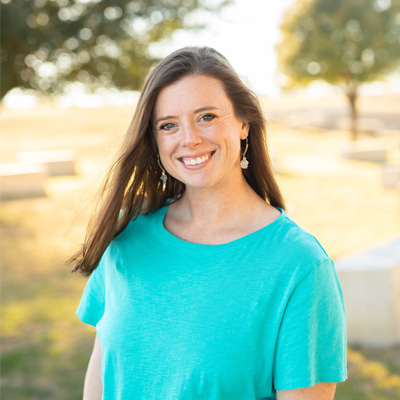
Kaila Lancaster holds a PhD from Oklahoma State University and is a lecturer at Stephen F. Austin State University. Her work has appeared or is forthcoming in Brevity, The Pinch, Third Coast, Puerto del Sol, and Harpur Palate, among others. When she’s not writing or teaching, you can find Kaila playing pickleball and birdwatching. She also hopes to take a horseback riding lesson in the near future.
Jim Ross jumped into creative pursuits in 2015 after rewarding career in public health research. With a graduate degree from Howard University, in ten years he’s published nonfiction, fiction, poetry, photography, hybrid work, interviews, and plays in 200+ journals on five continents. Photo publications include Alchemy Spoon, Barnstorm, Burningword, Camas, Feral, Invisible City, Orion, Phoebe, and Stonecoast. His photo essay publications include DASH, Kestrel, Litro, NWW, Pilgrimage, Sweet, and Typehouse. A Best of the Net nominee in Nonfiction and Art, he also wrote/acted in a one-act play and appeared in a documentary limited series broadcast internationally. Jim’s family splits time between city and mountains.
By Jose Oseguera
By Meghan Sterling
By Ivy Raff
By Marika Guthrie