
Letter from the Editor
By John Hardberger


This essay won first place in the Spring 2026 Contest Issue judged by Brittany Means, who wrote: “In ‘Illumination: An Essay in Two Acts,’ the author walks us through her reflections on growing up with a mother who struggled with mental illness. She deftly guides us along the journey through pain, resentment, understanding, and the desire to be different. I admired how the author found answers in the unanswered and structured each act to bring us along. This essay felt honest and hard-earned. My favorite line was, ‘…I’m terrified that one day, I’ll fall off a cliff into the darkness and leave her standing above me, wondering what she did wrong.’ It really encapsulates the terror of seeing a cycle perfectly and how easily we can repeat it.”
*
ACT I, SCENE 1
Lights up on a rag-tag quartet of adventurers, brought together by fate and a singular mission: to defeat TheDragon of Icespire Peak. We’ve been playing for an hour, only a fraction of time for most D&D enthusiasts. It’s certainly not long enough for my children, who joyously speak to each villager we encounter and explore every nook and cranny of every grotto. I agree when they want to investigate some cave or another. I cheer when my son rolls a natural 20, the optimal roll of the die, the roll that guarantees the best possible outcome for the player.
But my reactions are just a little delayed. My mind isn’t in the game; it’s too busy thinking about all of the problems that can’t be solved by rolling high on Perception or Medicine. In real life, there is no such thing as a natural 20.
Later, my husband – the dungeon master himself – pulls me aside.
“You don’t have to play if you don’t want to,” he says.
“I know. I want to.”
The lie hangs heavy in the air before I admit it. “I want to want to.”
And that is the truth. I want so badly to lose myself in the adventure and forget everything except the ferocious dragon that stands between our family and victory. Back in the real world, the dragons in my life are not so lethal – laundry, deadlines, work responsibilities, parenting obligations – but they loom large just the same. It often feels like my life is all side-quests and I’m rolling with disadvantage, never quite getting to my goals.
But when I say I want to play D&D, what I’m really saying is:
I want to connect with my kids.
I want them to see me as a whole person, someone who knows how to have fun.
I want to be my character, Emmaline Lightfoot, even for a few hours. Emmaline has armor, proficiency, spells. I have dishes to do.
Time is a limited resource. I am always trying to do something or finish something or start something, and a family D&D campaign feels like it should be the antidote to that, a time when I can just be. Imagine. Play. Yet somehow, I still have difficulty allowing myself to loosen my grip on my responsibilities, even for our family crusade.
I try to shake off the restraints of obligation. I think about how much time I spent as a child yearning for connection with my own mother, whose dragons were more ferocious than my own. I tell myself I am making memories with the kids, ensuring that they will not yearn as I did. I remind myself that it’s important to show them I can play, too. I promise myself I’ll be present.
I peel my attention away from the scrolling to-do list in my brain and roll for initiative.
I tell myself to smile.
ACT I, SCENE 2
Lights up on my siblings and I sitting around the living room while my father, eyes red from lack of sleep, tells us that this year, most of our Christmas will be spent in the rec room of a psychiatric hospital. I’m in high school.
My father sits in his chair, leaning forward with his elbows on his knees, calloused hands clasped. Sometimes he reaches up and rubs the spot between his eyebrows, the spot near the scar he got when he was playing hockey as teen. He still plays sometimes, which is surprising because he’s so busy with three jobs and four kids and a wife in psychiatric care; then again, he’s only in his 40s and playing hockey every couple of weeks is the lone outlet he has. He’s probably as tired of calling these family meetings as I am of being called. He tells us how it will go.
“We’ll open presents here in the morning, then we’ll go visit Mom for a few hours. I think they’ll be doing a little party for everyone. That will be nice, right?”
“Everyone” refers to the patients of the state hospital psychiatric wing and their families, or at least the families that will come to visit for the holiday. Not all of them will. We see it whenever we’re there – men and women who sit alone or wander in and out of the room. Sometimes my mother shakes her head and tells us, “He never has any visitors.” Sometimes she invites them to come over and chat. Other times, she sits silently, looking down at hands that have started to shake from medication, making me wonder if that’s why the other families stopped coming: because it’s just so hard to be there.
No one asks why Mom won’t be home on Christmas. We’re a few years in by now, and we’re pretty well versed in these hospital stays. Sometimes she’s gone a few days, other times many weeks. This is the first time she’ll miss a major holiday, but it was only a matter of time because the intervals between admittances have been getting shorter.
My younger siblings look disappointed, but I have only the capacity for anger. Anger that I have to spend such a large chunk of Christmas day in a sterile room with horrible furniture and strangers. Anger that this is still happening and only seems to be getting worse. I stare at the ugly brown rug. I imagine that I can see each fiber forming the soft surface beneath my feet, individual pieces that braid together into knots so tight that from far away, they look complete.
I stare at the floor until the family meeting is over, and then I call a friend to see if they want to go to a movie. They ask how I’m doing.
I shrug. “Fine.”
ACT I, SCENE 3
Lights up on a dim bedroom. I stand in the doorway and look at my mother, who is in her bed watching some daytime talk show, the light from the TV flickering on her face. She’s barely awake. I’m a senior in high school, and I dream every day of the life waiting for me in a few months, once I’ve graduated and moved away. I step into the room to tell her I’m going out.
Her eyes flutter open. “It’s a school night.”
“It’s 4pm.”
“Oh,” she exhales. She turns to look at the clock on her bedside table.
Her hair is short, dyed blonde, and as she moves, I can see it’s flattened where she’s been lying on a forearm for hours. Her movements are slow; the illness makes her tired, but so does the medication. As she squints at the clock, I start to turn toward the hallway.
“Be home for dinner,” she tells me.
“I’m going to eat with my friends.”
“No. Be home for dinner.”
I feel rage building inside me. I’ve been home from school for only a couple of hours, but it’s enough to feel claustrophobic, itchy, hot. My mother’s inability to get out of bed is a constant distraction. No matter where I go in the house, I can hear her TV, the occasional shuffle as she shifts positions, and the longer I stay here, the closer I get to letting the scream that’s building in my chest escape.
This is the thing you want to take a stand about? I want to yell. Making me stay home to eat a frozen lasagna? This is when you decide to be a mother?
It doesn’t matter that logically, I know she is sick. That I know she can’t want this. It takes everything I have to swallow my roar.
I get an idea. “You already told me I could go. Remember, I asked you yesterday?”
A part of me feels ashamed of the lie, but the rest of me tells that part to shut up, that this is justified. The memory loss resulting from her treatments has caused problems for me so many times – what’s the harm in turning it into a solution this once? I tell myself it’s better than screaming.
She doesn’t argue, just adjusts herself slightly so she can see the TV better. I go outside and sit on the grass to wait for my friends. It gets easier to breathe with every step I take away from the door.
ACT I, SCENE 4
Lights up on a dingy auditorium. I am still in costume–green flannel shirt, pigtails, big glasses–greeting my parents after the curtain call of our spring play. I have a lead part, a lot of stage time. The tale has been adapted, modernized, but I know ancient Greek comedies are not for everyone, and I feel certain that while my father got the jokes, my mother likely couldn’t follow the plot. She hands me a bouquet of flowers.
“This was my favorite play you’ve been in,” she says.
“What?” I’m delighted. “Really? You liked it?”
“Well, I had no idea what was going on the whole time,” she admits, “but you were in every scene so it was my favorite.”
I fight the urge to roll my eyes. She’s been back from the hospital for a week this time, and I’m surprised she stayed home long enough to make it to the show. I am tense around her, always afraid I’m going to set something off, always offended by her increasing confusion and volatility. I grit my teeth and thank her before heading backstage to change. I know I should be grateful, but I can’t bring myself to have such tender feeling.
What I hear her telling me in this moment is that I was right to expect that she wouldn’t actually get it. That I was right about her inability to follow along, take it in. I’m too frustrated to hear that what she’s really saying is I love watching you on stage, and I love that you love doing this, and I love you.
INTERMISSION
I spend years thinking that I will never know how to be a good mother.
ACT II, SCENE 1
Lights up on a damp, windowless therapist’s office. I’m six months pregnant. The man in front of me is old, short, Italian. His olive-hued skin and bald head remind me a little of the pictures I’ve seen of some of my grandfather’s siblings. I’m trying to explain what brought me here.
“Well, I’m pregnant, and my mom has a lot of mental health issues that she didn’t take care of until she was in her 30s, I mean she didn’t even know about them, technically, and then it all hit her all at once, and I guess I just think that probably that’s going to happen to me, too, so I should maybe get ahead of it now?”
I don’t know how to tell him that I think it’s already happening. That now that I feel my first child dancing in my belly, I’m terrified that one day, I’ll fall off a cliff into the darkness and leave her standing above me, wondering what she did wrong.
I don’t know how to tell him any of this, so I settle for facts. I tell him I was in middle school when suddenly my mother needed to be hospitalized, when suddenly her previously confusing and sometimes erratic behavior had an explanation. I casually mention that for my entire adolescence, I’d come home from school unsure if she’d be home, if she’d even be alive. I keep my voice steady as I tell him about the treatments that eventually worked but resulted in major side effects. I rush through the part where I tell him that sometimes, after a treatment, she wouldn’t remember my name, that we were related. I feel disconnected from my own story, like I’m a newscaster reading a report about something that happened to someone else.
Inside, I am screaming, this child doesn’t even have a name yet, but I’m already so afraid that one day I’ll forget it.
When he asks me about my mother’s diagnosis, I struggle because there have been several, and I’m not sure they’ve all been accurate, and we were never told much about the specifics, anyway.
“Don’t you want to know?” he asks.
“I guess I’m curious, but I don’t really want to have to have that conversation.”
He thinks I should sit down with her and talk about what it was like. I explain that this is not something my family does, but he won’t let it go. This will become a barometer for me when trying out new therapists: whether or not they insist I have a heart-to-heart with my mother.
“Listen,” I tell him, “it’s not going to happen any time soon. That’s not why I’m here.”
He smiles. “Well, I still think it would be a good thing to try.”
“Okay.”
I cancel my next appointment and never see him again.
ACT II, SCENE 2
Lights up on a dark black-box theater. I’m in my 30s, sitting in an audience with my parents and watching two actresses bring my script to life. They’re incredible, and around me there are strangers reacting in all the right ways, but I can’t enjoy it because I’m too worried that my mother will recognize our story in this tale. I’ve changed many of the details, but in the end, this is the story of a mother who wasn’t there, of an adult daughter who is still hurt and furious, of a conversation they’ve never been able to have.
The play closes without a full resolution between the two, but toward the end, the daughter declares that her mother is a good grandmother, and that this is enough for now. It’s so clearly my own truth, a truth I’ve never spoken, yet here I am, allowing it to be said in a room that includes my mother.
I wonder if she’ll notice. I wonder if I want her to.
The play ends. The lights come up. She is applauding enthusiastically.
After, in the car, she is astonished.
“I can’t believe you wrote that! It was so good. Where do you come up with these ideas?”
I smile at the compliment, surprised that it means so much to me. “I don’t know, Mom. Ideas just happen sometimes, I guess.”
My dad, driving, meets my eyes with his in the rearview mirror. He raises an eyebrow. I shrug. We leave it at that.
ACT II, SCENE 3
Lights up on a hotel room in Orlando. My husband and son have gone back to Magic Kingdom for some night-time exploring, but my daughter is sick in bed, dehydrated. Her face is flushed, her long blonde hair sticking to her skin. It takes everything in me to not say what I’m thinking which is Remember all those times I’ve told you to drink water over the last few days, remember how you refused and said you were fine, remember? Instead I say, “Drink this Pedialyte” and “Here’s a wet washcloth for your forehead” and “What will help you feel better right now?” She looks at me with exhausted hazel eyes and asks me to read to her.
I read for an hour before my throat starts to prickle and my eyes start to blur, and then I download the audiobook and give her my headphones so she can keep listening. I sleep in the bed with her that night so I can listen to her breathe, so I can wake up with her if she needs me, so I can rest my hand on her hot skin anytime I feel the urge.
I find myself wondering if my mother ever did this with me, if she ever read to me until her voice cracked or smoothed my hair out of my face when I was sticky with sweat. I have always assumed the answer was no because I don’t recall it, but what if that’s because at the time it felt like a normal thing, a thing that mothers do, not worth remembering? What if it happened when I was too young to retain it, or if it was pushed out of my hippocampus by new memories? Because in this moment it is impossible to imagine that any mother could see their child feeling so sick and not do everything in her power to comfort her, even if that mother is sick herself, even if she is ill-equipped for comforting.
But then again, if it had happened, wouldn’t I have some hazy memory of security, of the physical touch of a maternal hand, the murmured words of love? I try to remember.
Did she ever lie with me while I was sick, rub my back, kiss my head?
Suddenly, I wonder if I’ve been asking the right questions. Because there are other questions underneath mine. Did sheever get that? Did she ever know that gentleness? Was she even capable of giving something she may never have received?
ACT II, SCENE 4
Lights up on the inside of my car. My daughter sits in the front seat as I drive. We are having a conversation that is private, but during this conversation I tell her a little about my childhood. I tell her of missed holidays and vacations, of hidden histories that broke through the surface without warning, of medications that never seemed to work and treatments that finally did. I tell her only what she needs to know, but it is enough to break the cycle of silence.
She is surprised because the signs aren’t so obvious anymore. Because her grandmother is at every concert, every game, every birthday. As I watch her consider this, snapshots of their relationship come to mind. Laughing together over bowls of ice cream. Snuggling together on the couch. I’ve always been startled by the easy way my mother embraces my children. I didn’t grow up knowing the woman she is now.
As I drive the rest of the way home, I wonder if I should say more. She doesn’t seem to want to talk right now, but I promise myself that I will share what I can with her, even when it’s deeply uncomfortable, even when I don’t have the exact answers, even when it hurts.
I promise myself that I will not say anything that could turn her away from her grandmother. I will be measured. I will share what I know without judgment, without getting caught up in my own emotions. I will practice focusing only on the objective truth: My mother was sick, we all had a hard time, she spent many years trying to fix it, it’s not perfect now, but it’s gotten better. It’s so much better than it was.
ACT II, SCENE 5
Lights up on the D&D adventurers, ready to start the next branch of the campaign. They await their fourth, who is frantically trying to finish up some work in the next room.
“Emmaline!” They call my character name. “Do you want us to just start?”
“No! No, I’m coming!” I take a deep breath and decide to abandon the task at hand so I can join my family. My phone buzzes.
“Mom, if you’re too busy we can wait,” my kids offer, but they sound sad.
The buzz was a reminder text from the kids’ dentist. It’s a reminder that they have an appointment coming up, and I suddenly realize I need to reschedule it. I hover over the “Call Back” button for a moment, then write myself a note to do it tomorrow. It’s a Sunday afternoon and the ticker of must do and want to do and hope to do runs through my mind, as it always does. I know I can’t turn it off, but I can try to lower it to an appropriate volume.
“Okay, I’m here.” I settle in and grab my character sheet. “I swear, if we run into another ochre jelly this time, I’m going to lose it. Those things take forever to kill.”
My kids groan in agreement. My husband gives me a look that tells me he is 90% certain an ochre jelly is in our immediate future. We jump into the game.
When I say that I want to play D&D, what I’m saying is this:
I know I’m going to screw up, maybe more often than I’d like to admit.
I know I often feel stretched too thin, I know my frustration sometimes shows.
But when my kids tell stories about their childhood, I want to be in them. I want to be laughing, holding them, showing up for them. I want them to know with certainty that they have been deeply loved.
I play because sometimes I wish that I’d had a longer childhood, and I think that perhaps by joining the game I can give that back to myself, even just a little bit.

Jackie Martin is an educator and writer from the Boston area. Her work has been published by New Pages, Heuer Publishing, Smith & Kraus, Applause Books, Next Stage Press, Pioneer Drama, and others. Jackie recently received her MA in English from Bridgewater State University, where she was an editorial intern on the literary magazine Nerve to Write. When she is not reading, writing, grading, or planning, she delights in spending time with her husband, two children, and cats.
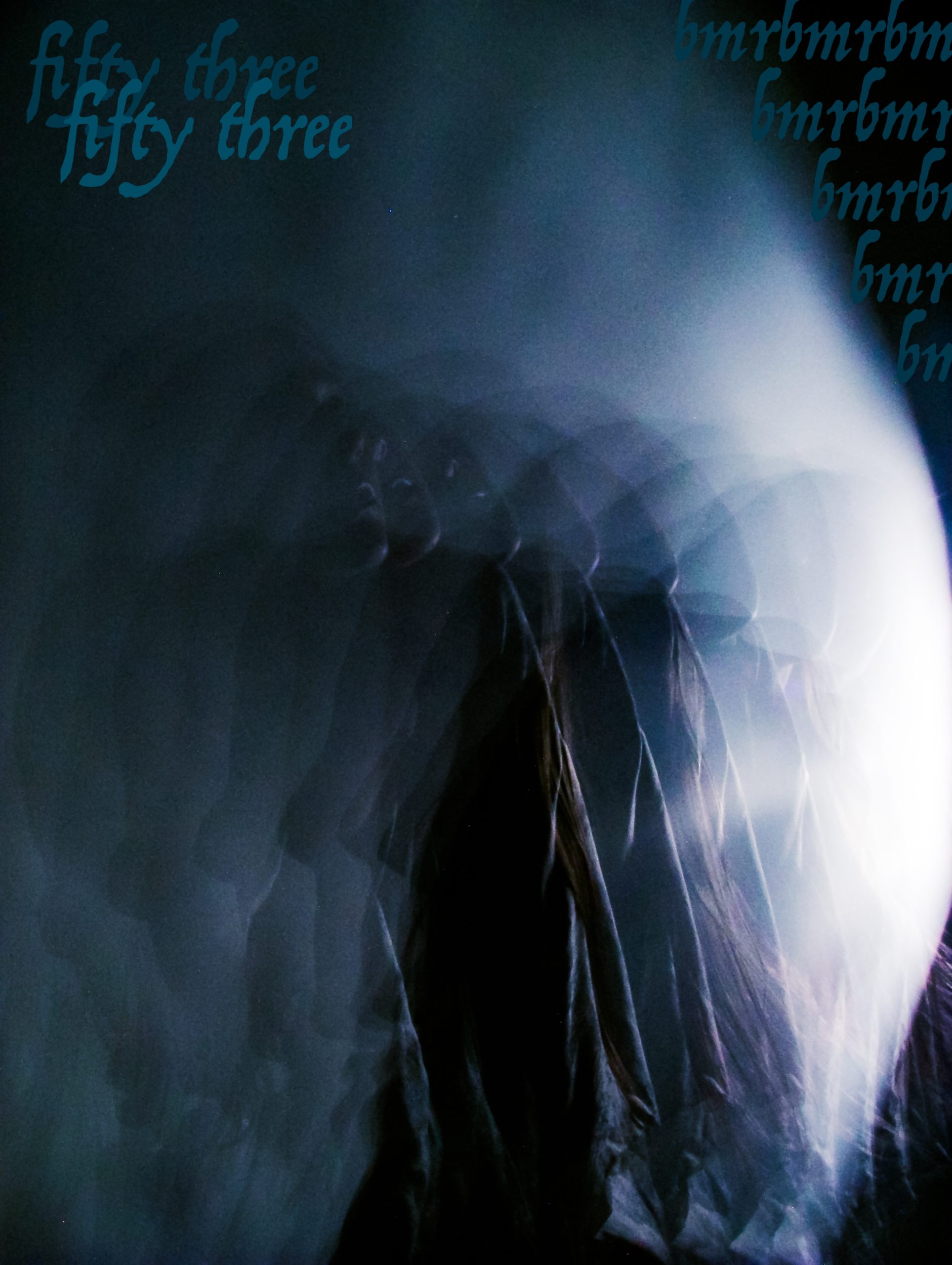
Coriander Focus is a full-time creator, working most in the mediums of Multimedia photography and written word. Coriander spent her youth deep in the mountains of rural Appalachia where her love of wild places was cultivated. She has since captured that love using fine art over the last 15 years. She has had her work displayed nationally across galleries, shows and publications since 2010. Notable highlights of Coriander Focus’ recent career have been Her Voice, Her Vision – Chesapeake Arts Center (2024) Windows to the Inside, Woman Made Gallery (2023) and Sarasvati Creative Space Residency (2022).

By Lindsay Wilson
By Victor Hugo Mendevil

By Windy Martinez